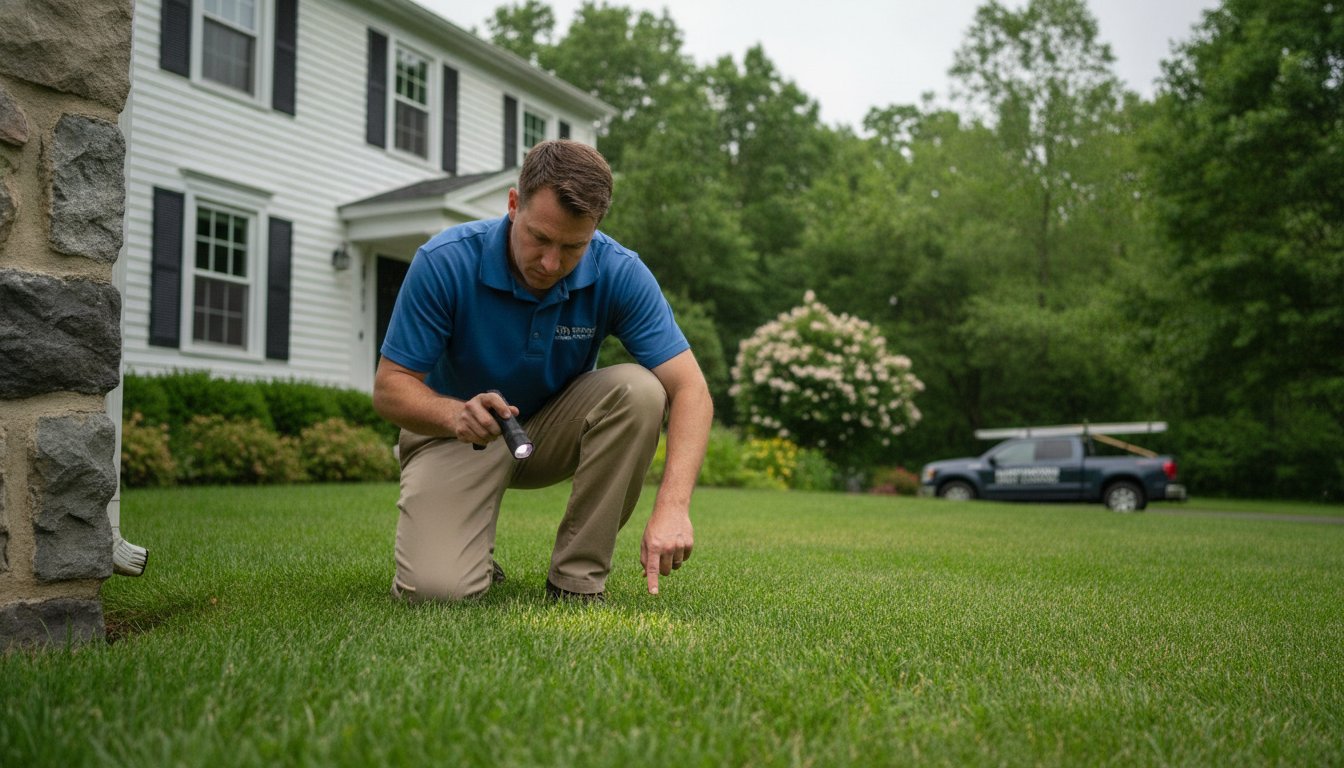
The “professional strength” label on a retail pesticide bottle is often more of a marketing tactic than a reflection of true chemical potency. Many property owners in Erie and Crawford Counties in Pennsylvania, as well as Ashtabula County in Ohio, find themselves trapped in a cycle of buying ineffective DIY sprays that fail to solve the underlying infestation. It’s completely natural to feel frustrated by these recurring pests or anxious about how various chemicals might affect your children and pets. You deserve a solution that works the first time without the guesswork of retail trial and error.
Understanding exactly what do exterminators use for general spraying is the first step toward gaining confidence in your pest management strategy. This overview provides a comprehensive look at the specialized product classes and precision methods that define modern, professional-grade protection. You will discover how licensed experts move beyond simple sprays to utilize a scientific approach focused on long-term prevention, ensuring your home remains a secure environment for everyone inside. By the end of this guide, the terminology and technology behind professional services will be clear and accessible.
Key Takeaways
- Learn the science behind active and inert ingredients that allow professional products to target pests while maintaining stability.
- Discover why professional formulations withstand weather and UV light better than standard retail sprays through advanced technology like microencapsulation.
- Understand what do exterminators use for general spraying to establish a strategic perimeter barrier and targeted crack and crevice protection.
- Gain confidence in the safety of professional services by learning about the strict EPA regulations and label requirements that licensed applicators must follow.
- Explore how chemical treatments work alongside Integrated Pest Management (IPM) techniques for a more holistic and long-term approach to pest control.
Understanding the Chemistry of Professional Pest Control
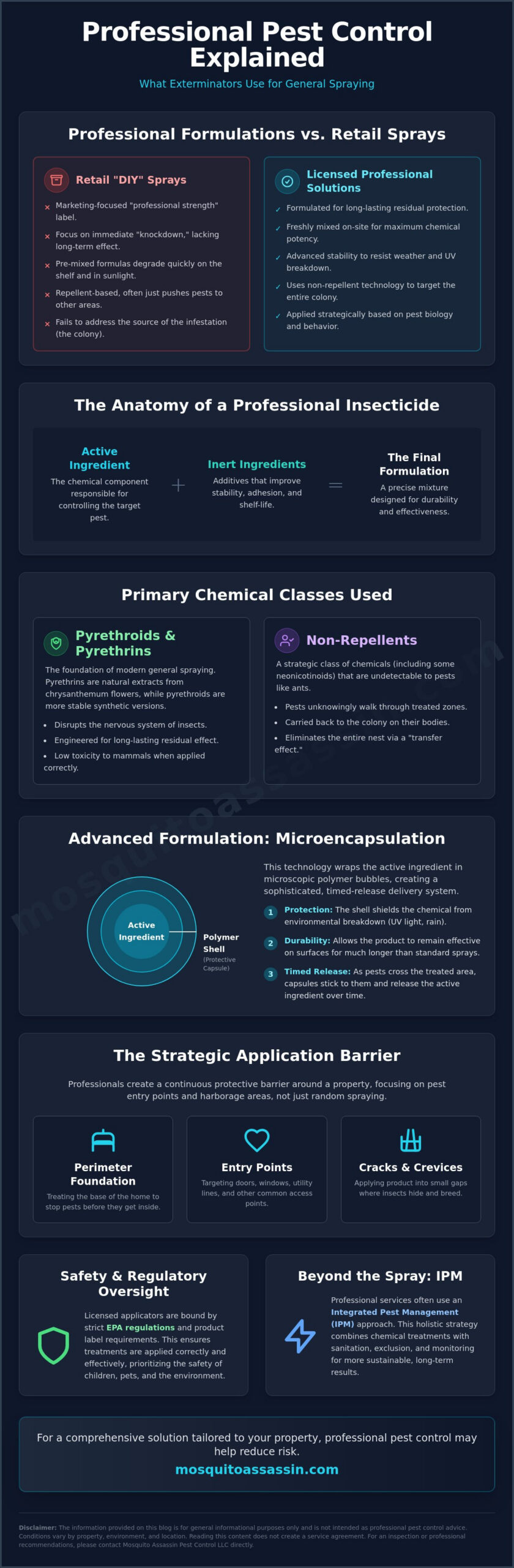
For homeowners in Erie and Crawford Counties, general spraying is the professional application of liquid insecticides designed to create a protective barrier around a property. It targets common invaders like ants, spiders, and crickets before they can establish a presence indoors. When property owners ask what do exterminators use for general spraying, they’re often surprised to learn that the liquid in the tank is a complex mixture of active and inert ingredients. The active ingredient is the chemical responsible for controlling the pest; the inert ingredients are additives that improve the product’s shelf life, help it adhere to surfaces, or ensure it mixes properly with water.
When investigating what do exterminators use for general spraying, it’s vital to recognize that professional formulations are built for durability. Licensed experts select specific products based on the unique biology of the target pest. They don’t rely on a one size fits all approach. While retail sprays often focus on immediate knockdown (killing a bug on contact), professional products emphasize residual protection. These chemicals are designed to remain active on surfaces for extended periods, providing a continuous shield against new arrivals for weeks or even months.
To better understand this concept, watch this helpful video:
Pyrethroids and Pyrethrins: The Foundation of Modern Spraying
The most common chemical class used in general pest control includes pyrethrins and pyrethroids. Pyrethrins are natural compounds extracted from chrysanthemum flowers. Because natural pyrethrins break down quickly in sunlight, chemists developed Pyrethroids, which are synthetic versions engineered for greater stability and longer lasting results. These compounds work by disrupting the nervous systems of insects like ants and spiders. When applied according to the strict federal label, they offer a high level of efficacy while maintaining low toxicity for mammals, making them a staple for residential protection.
Neonicotinoids and Non-Repellent Liquid Treatments
Another critical category involves non-repellent treatments, which represent a significant shift in how professionals manage social insects. Standard repellent sprays act like a “keep out” sign; pests can sense the chemical and simply find a different way into the home. Non-repellent chemicals, including certain neonicotinoids, are undetectable to pests. Ants or cockroaches can walk directly through the treated area without realizing they’ve come into contact with the product. They then carry the chemical back to the colony, sharing it with other members through grooming and feeding. This “transfer effect” allows for the total elimination of the nest rather than just killing individual workers found on the kitchen counter.
Why Professionals Choose Specific Formulations Over DIY Products
A common myth found on online forums is that professional pest control relies simply on higher concentrations of the same chemicals found in hardware stores. In reality, the answer to what do exterminators use for general spraying involves advanced chemical engineering that retail products can’t match. Professional concentrates are designed for stability and precision. While a pre-mixed retail bottle begins to degrade the moment it’s manufactured; professional products are mixed fresh on-site to ensure maximum potency and chemical integrity.
One of the most effective tools in a professional’s arsenal is microencapsulation (CS). This technology wraps the active ingredient in microscopic polymer bubbles. These capsules protect the chemical from environmental breakdown and provide a timed-release effect. As pests walk across treated surfaces, they pick up these tiny capsules, which then burst or wear down, delivering a lethal dose over time. This sophisticated delivery system is a primary reason why hired services are more effective than DIY attempts.
Residual Life and Environmental Stability
Chemical engineers specifically design these products to adhere to diverse surfaces like vinyl siding, porous brick, or treated wood. In regions like Erie, PA, where high humidity and frequent rain are common, retail sprays often wash away within days. Professional-grade formulations are built to withstand UV light and precipitation, often providing a reliable barrier for 60 to 90 days. This durability is maintained by adhering to Federal certification standards, which ensure that applicators understand the environmental impact and longevity of the materials they use. Utilizing a general pest control plan can help maintain this protective shield throughout the changing seasons.
Targeted Modes of Action
Professional pest management moves beyond just killing adult insects. When considering what do exterminators use for general spraying, you must include Insect Growth Regulators (IGRs). These specialized compounds don’t kill the insect immediately; instead, they mimic juvenile hormones to prevent larvae from reaching reproductive maturity. By disrupting the life cycle, professionals can stop an infestation from growing. This targeted approach is far superior to the “one size fits all” strategy of retail products, as it allows for specific treatments based on whether the target is in the egg, larval, or adult stage.
The equipment used to apply these products matters just as much as the chemistry. Professional sprayers are calibrated to produce a consistent droplet size. This ensures even coverage across every crack and crevice, preventing the pooling or drifting common with low-quality hand-pump sprayers. Consistent application ensures that the chemical remains exactly where it’s needed to protect the structure.
The Strategic Application: Where and How Professionals Spray
Professional pest control is a discipline of precision. While many people assume that “spraying” means treating every square inch of a property, modern experts prioritize targeted applications. This shift away from broadcast spraying (treating large, open areas) is a hallmark of responsible pest management. It ensures that products are placed exactly where pests travel and hide, minimizing environmental impact while maximizing results. When property owners ask what do exterminators use for general spraying, they’re often referring to a multi-layered defense strategy that begins at the foundation and extends to the smallest interior gaps.
Strategic application relies on a deep understanding of pest highways. Pests don’t wander aimlessly across a kitchen floor; they follow baseboards, utility lines, and structural seams. By focusing on these specific zones, professionals can intercept pests before they become a visible problem. This methodical approach is particularly important in regions like Ashtabula County and Crawford County, where seasonal shifts drive different types of insects toward the warmth and shelter of human structures.
Perimeter Barriers and Foundation Treatments
The primary line of defense for any home is the perimeter barrier. This involves applying a liquid treatment to the exterior foundation to stop pests from migrating from the soil into the house. A professional barrier typically covers a zone approximately two to three feet up the foundation wall and two to three feet out onto the adjacent soil or mulch. This creates a continuous “dead zone” that insects must cross to enter the building. In Crawford County, these treatments are often adjusted during the spring and fall to account for the increased activity of moisture-seeking pests like earwigs or overwintering invaders like boxelder bugs.
Crack and Crevice vs. Spot Treatments
Indoor protection is even more refined. Professionals use a technique known as crack and crevice treatment. Rather than applying product to open surfaces where residents or pets might come into contact with it, the applicator uses specialized fine-tipped wands to inject the product into the tiny gaps where pests actually live. These areas include:
- The spaces behind baseboards and crown molding.
- Gaps around plumbing penetrations under sinks.
- Expansion joints in the foundation or basement walls.
- The voids behind electrical outlets and switch plates.
This method is highly effective because it places the product directly into the pest’s nesting and harborage sites. It also significantly reduces the risk of human or pet exposure, as the product is hidden deep within the structure’s anatomy. When considering what do exterminators use for general spraying, it’s clear that the precision of the application is just as vital as the active ingredient itself. This level of accuracy is why professional pest control may help reduce risk more effectively than standard retail methods.
Disclaimer: The information provided on this blog is for general informational purposes only and is not intended as professional pest control advice. Conditions vary by property, environment, and location. Reading this content does not create a service agreement. For an inspection or professional recommendations, please contact Mosquito Assassin Pest Control LLC directly.
Safety and Regulatory Oversight of Professional Pesticides
A primary concern for property owners in Erie and Crawford Counties involves the safety of the chemicals applied around their families and pets. When asking what do exterminators use for general spraying, it’s essential to look beyond the active ingredients to the federal oversight that governs their use. In the United States, every professional-grade pesticide must undergo a rigorous registration process with the Environmental Protection Agency (EPA). This process involves years of testing to evaluate potential risks to human health and the environment before a product is ever cleared for residential use. The EPA frequently updates these standards; for instance, new rules regarding pesticide residue tolerances took effect on February 20, 2026, and April 22, 2026, reflecting the agency’s ongoing commitment to public health.
Professional pest control may help reduce risk because licensed applicators are trained to prioritize safety through precision. Modern formulations are designed to be highly effective against target pests while maintaining a profile that, when applied according to the label, allows for residential occupancy shortly after treatment. The focus is always on minimizing exposure through the strategic methods discussed in previous sections, such as crack and crevice applications. This methodical approach ensures that the products remain where they are needed and away from common contact surfaces.
EPA Registration and the Pesticide Label
In the pest control industry, the phrase “the label is the law” is a literal legal standard. The EPA-approved label on every professional product is a legally binding document that dictates exactly where, how, and how much of a product can be used. It includes specific instructions for protecting non-target animals and ensuring the safety of household members. Professional training ensures that every application in Ashtabula County adheres to these strict legal requirements. Misuse of these products by an unlicensed individual isn’t just ineffective; it can carry significant legal and safety risks. To ensure your home is treated according to these rigorous federal standards, you can view the available general pest control plans for your property.
Low-Impact and Green Alternatives
For residents who prefer a different approach, botanical-based sprays offer a viable alternative. These products often utilize concentrated essential oils like rosemary, peppermint, or geraniol to manage pests. While these green options are derived from natural sources, they work differently than traditional chemistry. They typically provide immediate knockdown but lack the long-term residual life of the microencapsulated products professionals often use for general spraying. Experts often use these in sensitive environments or as part of a more frequent service cycle. Understanding these limitations is key to choosing the right strategy for your specific property. If you have questions about which method fits your home, you can check the local service details to see what options are best for your area.
Disclaimer: The information provided on this blog is for general informational purposes only and is not intended as professional pest control advice. Conditions vary by property, environment, and location. Reading this content does not create a service agreement. For an inspection or professional recommendations, please contact Mosquito Assassin Pest Control LLC directly.
Beyond the Spray: Integrated Pest Management (IPM)
Professional pest control is more than a simple chemical application. It’s a comprehensive strategy known as Integrated Pest Management (IPM). This holistic approach views chemical treatments as just one tool in a much larger kit. When people ask what do exterminators use for general spraying, they should realize that the spray is most effective when it’s part of a broader plan that includes biological and structural considerations. For property owners in Erie and Crawford Counties, this means that a technician won’t just arrive and start spraying. They’ll first evaluate the ecosystem of the home to determine why pests are attracted to the structure in the first place. In an IPM framework, chemicals are used as a targeted intervention rather than a broad, repetitive solution.
This methodical approach ensures that the products are used responsibly and only when necessary. By focusing on the root cause of an infestation, professionals can achieve long-term results that a single spray cannot provide. Ongoing monitoring is a standard part of professional services in our region, allowing for adjustments as weather patterns change and new pests emerge throughout the year.
Inspection and Identification: The Critical First Steps
Accurate identification is the foundation of any successful treatment. Different species require different active ingredients and application methods. For example, a treatment designed for pavement ants might be completely ineffective against carpenter ants. Professionals look for “conducive conditions” such as standing water, wood-to-soil contact, or overgrown vegetation that provides a bridge to the siding. Understanding these factors is a key part of general pest control for homeowners. By identifying the specific threat, the applicator can select the precise chemical class needed, ensuring that the intervention is as targeted as possible before any product is applied.
Exclusion and Sanitation Strategies
A professional spray creates a vital barrier, but physical exclusion and sanitation maintain it. Pests are constantly searching for food, water, and shelter. Removing debris from near the foundation and keeping gutters clear reduces the pressure on the chemical barrier. Professionals often provide specific recommendations on sealing cracks around windows or installing door sweeps to block entry points. These professional pest control services near me often involve these consultative elements to help residents preserve the integrity of their property. When you understand what do exterminators use for general spraying, it becomes clear that the liquid barrier works best when it’s supported by a clean, well-sealed home environment. This partnership between the professional and the homeowner is the most effective way to keep homes in Ashtabula County pest-free.
Disclaimer: The information provided on this blog is for general informational purposes only and is not intended as professional pest control advice. Conditions vary by property, environment, and location. Reading this content does not create a service agreement. For an inspection or professional recommendations, please contact Mosquito Assassin Pest Control LLC directly.
Securing Your Property with Scientific Precision
Professional pest management is a precision-engineered science that far exceeds the capabilities of retail solutions. Gaining a clear understanding of what do exterminators use for general spraying reveals a sophisticated world of microencapsulated formulations and insect growth regulators designed to break the pest life cycle at the source. These advanced products, combined with strategic application methods, provide a durable barrier that withstands the unique environmental challenges found throughout Northwest PA and Northeast Ohio. By adhering to strict Integrated Pest Management (IPM) standards, licensed experts prioritize long-term prevention and structural integrity over temporary fixes.
Customized protection plans for residential and commercial properties ensure that every treatment is tailored to the specific biology of the target pest. This methodical approach provides confidence that the property is secure and household members remain protected. Professional pest control may help reduce risk. For a detailed inspection and expert recommendations, contact Mosquito Assassin Pest Control LLC. Taking a proactive stance today prevents minor sightings from becoming major infestations tomorrow.
Disclaimer: The information provided on this blog is for general informational purposes only and is not intended as professional pest control advice. Conditions vary by property, environment, and location. Reading this content does not create a service agreement. For an inspection or professional recommendations, please contact Mosquito Assassin Pest Control LLC directly.
Frequently Asked Questions
Is the spray used by exterminators harmful to my pets?
Professional sprays are applied with pet safety in mind, following strict EPA guidelines. Once the application has completely dried, it’s safe for cats and dogs to return to the treated area. The active ingredients are typically applied in such low concentrations that they don’t pose a significant risk to mammals when used according to the label instructions.
How long do I need to stay out of the house after a general spray treatment?
Most treatments require residents and pets to remain outside for approximately two to four hours. This window allows the liquid to dry and bond to surfaces. Drying times can vary based on humidity levels in Ashtabula County, so it’s best to wait until the surfaces are no longer damp to the touch before re-entering.
Will the rain wash away the outdoor pest control spray?
Rain won’t wash away a professional treatment once it has had time to dry. Modern formulations use microencapsulation technology to bond with surfaces like brick, wood, and vinyl. These products are engineered to remain effective even after exposure to the heavy rain and snow common in Northwest Pennsylvania.
Do exterminators spray the same chemicals inside and outside?
Applicators often use different products for indoor and outdoor environments. Outdoor treatments focus on creating a durable perimeter barrier that can withstand the elements. Indoor applications are much more targeted, focusing on cracks and crevices where pests hide. The choice of what do exterminators use for general spraying depends entirely on the specific location and the target pest species.
Can I buy professional-grade pest control sprays at a retail store?
Professional-grade concentrates are not available in retail stores. Retail products are often pre-mixed and have a much shorter shelf life. Licensed professionals have access to specialized formulations that are regulated by the EPA and require specific certification to purchase and apply safely, ensuring higher stability and efficacy.
How often should general spraying be performed for the best results?
Quarterly applications provide the most consistent protection against seasonal pest migrations. Each season in Crawford County brings different threats, from spring ants to fall spiders. Regular service ensures that the protective barrier is replenished before the previous treatment begins to break down, maintaining a pest-free environment year-round.
What should I do to prepare my home before the exterminator arrives?
Preparing for a visit involves clearing baseboards and moving pet food bowls away from the walls. It’s helpful to pick up toys and clutter from the floor to allow the technician easy access to the perimeter. For outdoor treatments, ensure that gates are unlocked and any debris is cleared from the foundation area.
Does professional spraying kill pests instantly or over time?
While some products provide immediate results, most professional sprays are designed to work over several days. This delayed action allows pests to carry the product back to their colony, leading to total nest elimination through a transfer effect. This strategy is a key part of what do exterminators use for general spraying to ensure long-term control rather than a temporary fix.
Disclaimer: The information provided on this blog is for general informational purposes only and is not intended as professional pest control advice. Conditions vary by property, environment, and location. Reading this content does not create a service agreement. For an inspection or professional recommendations, please contact Mosquito Assassin Pest Control LLC directly.