
Pennsylvania’s beautiful outdoors-from our rolling hills to our own backyards-should be a source of joy, not anxiety. Yet, the persistent threat of ticks and Lyme disease can make any parent or pet owner hesitate. You deserve to enjoy every moment without constantly worrying about your family’s safety. That’s why having a proven set of tick bite prevention tips PA residents can trust is not just helpful-it’s essential for your peace of mind.
As local pest control experts who live and work in the communities we serve, we understand these concerns firsthand. In this comprehensive guide, we are eliminating the guesswork. You will learn actionable, Pennsylvania-specific strategies to safeguard your property, properly check your family and pets after coming indoors, and confidently handle a tick if you find one. Consider this your definitive plan for taking back your yard and enjoying the outdoors with confidence.
Key Takeaways
- Learn how to properly prepare yourself and your family before any outdoor activity, from hiking to gardening, to create a personal barrier against ticks.
- Discover proven strategies to transform your own backyard from a tick habitat into a safe zone for your children and pets.
- Master the correct, step-by-step method for safely removing an attached tick to minimize the risk of disease transmission.
- This guide provides the comprehensive tick bite prevention tips PA residents need, covering personal repellents, yard maintenance, and professional treatments.
Understanding the Tick Threat in Pennsylvania: Know Your Enemy
When it comes to tick-borne illness, Pennsylvania is ground zero. For years, our state has consistently ranked among the highest in the nation for reported cases of Lyme disease, making it absolutely critical for families in Erie and Crawford counties to be proactive. Safeguarding your loved ones from these dangerous pests begins with a clear understanding of the enemy. The most effective tick bite prevention tips PA residents can use are rooted in knowledge of where ticks live, what they are, and when they are most active.
For a professional overview of essential prevention strategies, this video from Johns Hopkins Medicine is an excellent resource:
Ticks are not just a problem for deep-woods hikers. They thrive in common environments right here in our community, including wooded trails, areas with tall grass, damp leaf litter, and even your own backyard. Any time you, your children, or your pets spend time in these high-risk zones, you need a proven protection plan in place.
Common Ticks in Erie and Crawford Counties
To properly defend your family, you must know which specific threats you’re facing. Here in Northwest Pennsylvania, three tick species pose the most significant danger. For a comprehensive overview of the illnesses they transmit, Understanding Tick-Borne Diseases provides critical information. The primary culprits in our area include:
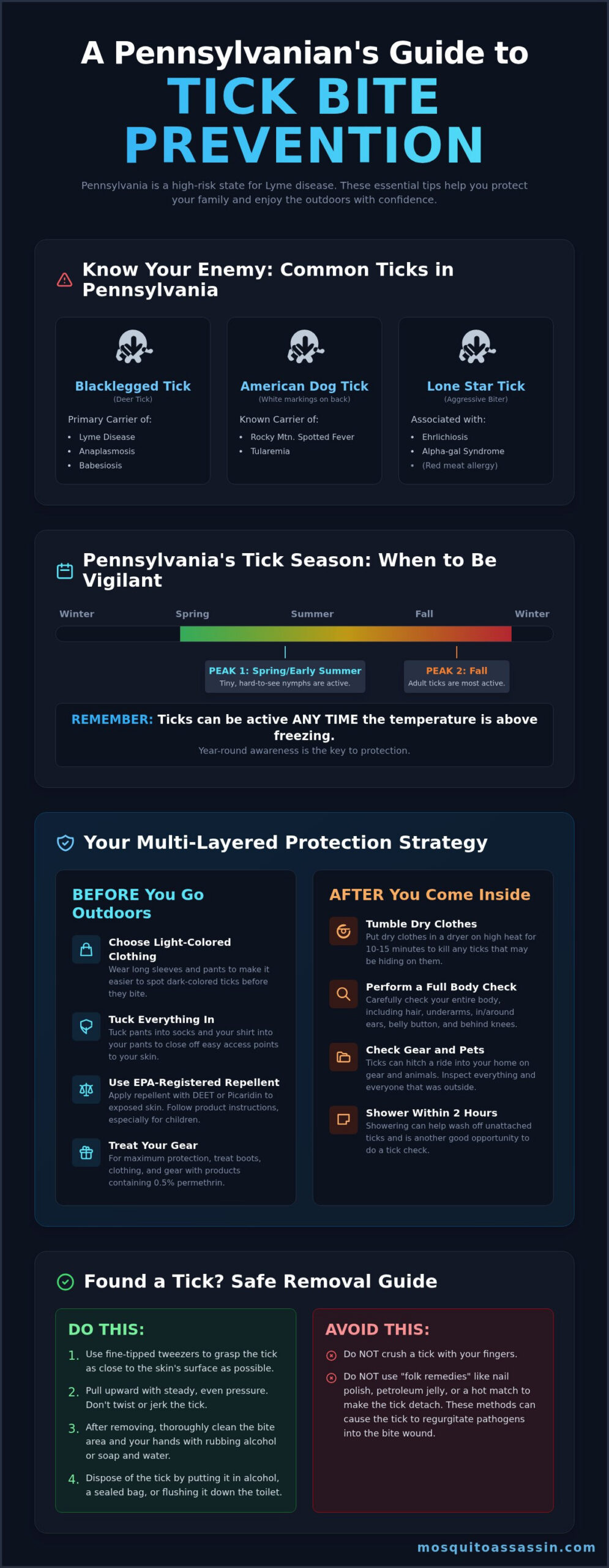
- Blacklegged Tick (Deer Tick): The most dangerous tick in PA, it is the primary carrier of Lyme disease, anaplasmosis, and babesiosis.
- American Dog Tick: Easily identified by the ornate white markings on its back, this tick is a known carrier of Rocky Mountain Spotted Fever and tularemia.
- Lone Star Tick: An aggressive biter, this tick is associated with ehrlichiosis and alpha-gal syndrome, which can cause a severe red meat allergy.
Pennsylvania’s Tick Season: When to Be Most Vigilant
Many people mistakenly believe ticks are only a summer problem. The reality is that ticks can be active any time the temperature is above freezing. However, their activity peaks twice during the year: in the spring and early summer when the tiny, hard-to-see nymphs are questing, and again in the fall when adult ticks are most active. This is why year-round awareness is the cornerstone of any reliable tick protection strategy for your home and family.
Personal Protection: Your First Line of Defense Against Ticks
Safeguarding yourself and your family begins long before you step outside. Effective tick bite prevention is an active process, not a passive hope. By adopting a proven, multi-layered strategy, you can dramatically reduce your risk of encountering ticks and the dangerous diseases they carry. These essential tick bite prevention tips PA residents need to know will become a simple, second-nature routine for enjoying the outdoors safely.
Before You Go Out: Dress and Repel
Your first layer of defense is what you wear and apply. Ticks are opportunistic pests, so your goal is to create a physical and chemical barrier that makes you an undesirable target. Follow this professional checklist before any outdoor activity, from exploring local trails to gardening in your Erie backyard.
- Choose Light-Colored Clothing: Wear light-colored long sleeves and pants. This simple tactic makes it much easier to spot a dark-colored tick crawling on you before it has a chance to bite.
- Tuck Everything In: Tuck your long pants into your socks and your shirt into your pants. This closes off easy access points for ticks trying to reach your skin.
- Use an EPA-Registered Repellent: Apply an insect repellent containing DEET or Picaridin to exposed skin. Always follow the product instructions, especially when applying to children.
- Treat Your Gear: For maximum protection, treat your clothing, boots, and camping gear with products containing 0.5% permethrin. It remains effective through several washings and is a powerful tool for repelling and killing ticks on contact.
After You Come Inside: The Critical 2-Hour Window
What you do upon returning home is just as critical as your preparation. Ticks often wander on the body for hours before attaching, giving you a crucial window to find and remove them. Make these steps a non-negotiable routine for everyone in the family, including pets.
- Tumble Dry Clothes First: Before washing, toss your clothes into a dryer on high heat for 10-15 minutes. The heat will kill any ticks that may have hitched a ride inside.
- Shower Immediately: Taking a shower or bath within two hours of coming indoors can help wash off unattached ticks and provides a perfect opportunity for a tick check.
- Perform a Full-Body Tick Check: This is the most important step. Use a handheld or full-length mirror to inspect your entire body. For a complete overview of what to look for, the official PA Department of Health Tick Guide provides excellent, state-specific resources. Pay special attention to their favorite hiding spots:
- In and around the hair and scalp
- Behind and inside the ears
- Under the arms
- Around the waist and in the belly button
- In the groin area
- Behind the knees
Finally, don’t forget your four-legged family members. Dogs are prime targets for ticks and can easily carry them into your home. Check your pets thoroughly every time they come inside, and consult your veterinarian about the best tick prevention products to create a complete shield of protection for your entire household.
Creating a Tick-Safe Zone: How to Protect Your PA Property
While personal repellents are your first line of defense when you’re out and about, the battle against ticks truly begins at home. Studies show that a significant majority of tick encounters happen right in our own yards. By transforming your property from a tick paradise into a hostile environment, you can dramatically reduce your family’s risk. These proactive landscaping and maintenance strategies are some of the most effective tick bite prevention tips PA homeowners can implement.
Landscaping Tips to Deter Ticks
Creating a tick-safe yard is about eliminating the damp, shady habitats where they thrive. Ticks can’t survive in short, dry, sunny areas. The goal is to create clear transition zones and remove their hiding spots. These landscaping strategies are endorsed by experts and align with the official Pennsylvania Department of Health guide to tick prevention for creating a safer outdoor space.
- Maintain Your Lawn: Keep your grass mowed to a height of three inches. This increases sun exposure to the soil, creating a drier environment that ticks hate.
- Create a Barrier: Establish a 3-foot-wide barrier of dry wood chips or gravel between your lawn and any wooded areas, stone walls, or tall ornamental grasses. This “tick moat” is a dry, inhospitable zone that ticks are reluctant to cross.
- Clean Up Debris: Remove leaf litter, brush piles, and tall weeds promptly. These are prime nesting and questing spots for ticks looking for their next meal.
- Place Equipment Wisely: Position swing sets, sandboxes, patios, and other recreational areas in the sunniest, driest part of your yard, far from tree lines and overgrown edges.
Discourage Tick-Carrying Wildlife
Ticks don’t travel far on their own; they hitch rides on animals. Deer are the primary transportation and reproductive host for adult deer ticks, while mice and other small rodents are key hosts for the nymph stage, which is responsible for most Lyme disease transmissions. Making your yard less attractive to these animals is a crucial step in tick control.
- Secure garbage cans with tight-fitting lids.
- Remove bird feeders, as spilled seed attracts rodents.
- Consider installing deer-resistant fencing around your primary yard area.
Professional Yard Treatments: The Mosquito Assassin Pest Control LLC Advantage
For the ultimate safeguard, nothing beats a professional barrier treatment. While the landscaping methods above reduce tick populations, our proven treatment process is designed to eliminate them. Our certified technicians apply a family-safe treatment that targets the cool, damp, and shady areas where ticks rest and wait for a host-like under decks, in shrubbery, and along the edges of your property. This powerful approach provides a reliable zone of protection, offering peace of mind that DIY tick bite prevention tips PA residents try can’t always guarantee. The treatments are highly effective and dry quickly, ensuring they are safe for your family and pets to enjoy the yard. Ready to reclaim your property? Contact us for a free estimate on our pest control services. This is also a key service for local businesses with outdoor seating; see our commercial services to keep your patrons safe.
Found a Tick? A Step-by-Step Guide to Safe Removal and Next Steps
Even with the best precautions, you might find a tick attached to yourself, a family member, or a pet. The most important thing is to stay calm and act swiftly. Prompt and proper removal is your best defense against the transmission of tick-borne diseases like Lyme disease. Panicking can lead to improper removal, which may increase your risk.
The Correct Way to Remove an Attached Tick
Forget the myths you’ve heard. The only professionally recommended method for tick removal is simple, direct, and requires one basic tool: fine-tipped tweezers. Follow these proven steps:
- Grasp Firmly: Use the tweezers to grasp the tick as close to the skin’s surface as possible. You want to grab its head and mouthparts, not its body.
- Pull Steadily: Pull upward with steady, even pressure. Do not twist, jerk, or crush the tick, as this can cause its mouthparts to break off in the skin or force it to regurgitate infectious fluids into the bite.
- Clean Thoroughly: After removing the tick, thoroughly clean the bite area and your hands with rubbing alcohol, an iodine scrub, or soap and water.
- Dispose Safely: Submerge the tick in alcohol, place it in a sealed bag/container, wrap it tightly in tape, or flush it down the toilet.
Crucially, never use folk remedies. Applying petroleum jelly, nail polish, or a hot match to the tick is ineffective and dangerous. These methods can agitate the tick, causing it to burrow deeper or release more saliva, increasing the risk of infection.
After the Bite: Monitoring for Symptoms
While following the best tick bite prevention tips PA residents trust is your first line of defense, knowing what to do after a bite is just as critical. For the next 30 days, be vigilant for early signs of tick-borne illness, even if the bite seemed minor.
Consult a doctor if you or a family member develops any of the following symptoms:
- A rash, especially the classic bull’s-eye (Erythema migrans) rash associated with Lyme disease.
- Fever and/or chills.
- Unexplained fatigue, headache, or muscle and joint aches.
Remember: Not everyone who contracts a tick-borne illness develops a rash. Any flu-like symptoms following a known tick bite warrant a professional medical evaluation. For comprehensive tick control that safeguards your property, contact the experts at Mosquito Assassin for a proven treatment plan.
Why DIY Isn’t Enough: Trust PA’s Local Tick Control Experts
Following personal safety measures and keeping a tidy yard are crucial first steps in protecting your family from tick-borne illnesses. However, when it comes to truly safeguarding your property, DIY solutions often create a false sense of security. For the most effective tick bite prevention tips PA residents can rely on, professional intervention is the key to comprehensive protection.
The Limits of Store-Bought Products
Consumer-grade granules and sprays you find at the hardware store offer a temporary fix at best. They have a low residual effect, meaning they break down quickly and wash away with the first heavy Pennsylvania rain. More importantly, effective application requires a deep understanding of tick biology. Ticks don’t just wander in open lawns; they hide in specific “hotspots” like dense ground cover, shaded perimeters, and under decks-areas that are easily missed without professional training.
The Mosquito Assassin Guarantee
This is where professional expertise makes all the difference. As a locally owned company, we aren’t a faceless national chain; our team lives and works right here, giving us firsthand knowledge of the specific tick pressures facing our communities. We safeguard your yard with a proven process designed for maximum effectiveness and family safety.
- Expert Technicians: Our licensed professionals are trained to identify and target the precise areas on your property where ticks thrive, ensuring no hiding spot is overlooked.
- Professional-Grade Treatments: We use powerful, long-lasting solutions that are proven to eliminate ticks while remaining safe for your children and pets once dry.
- Season-Long Peace of Mind: Our services are designed to provide a durable barrier of protection, giving you the freedom to enjoy your yard all season long. We proudly serve homeowners throughout Erie, Crawford, and surrounding locations.
Don’t leave your family’s health to chance with ineffective products. By partnering with a trusted local expert, you gain the confidence that your property is professionally protected. Implementing these professional tick bite prevention measures is the ultimate step in reclaiming your outdoor space. Contact Mosquito Assassin today to schedule a consultation and take back your yard with confidence.
Safeguard Your Family with Pennsylvania’s Tick Experts
Enjoying Pennsylvania’s beautiful outdoors doesn’t have to come with the constant worry of tick-borne illnesses. This guide has armed you with the essential knowledge for personal and property protection-from choosing the right repellent to creating a tick-safe zone in your yard. Mastering these tick bite prevention tips PA residents trust is your first line of defense, but true peace of mind comes from knowing your property is professionally secured against these persistent threats.
Don’t leave your family’s safety to chance. As a locally owned and operated Pennsylvania team, Mosquito Assassin provides a definitive solution. Our family-safe and pet-safe treatments are designed to eliminate ticks and let you reclaim your outdoor living space. We’re so confident in our proven process that we back it with our Pest-Free Guarantee: if pests return, so do we! Protect your family and reclaim your yard. Get a free tick control quote from Mosquito Assassin today!
Take the final step towards a safer, more enjoyable season outdoors. Your worry-free yard is just a call away.
Frequently Asked Questions About Tick Prevention in PA
What is the peak season for ticks in Pennsylvania?
The peak season for ticks in Pennsylvania typically runs from April through September when nymphs and adult ticks are most active. However, ticks can be present and seek a host any time temperatures are above freezing, even during warmer winter days. This is why year-round vigilance is one of the most important tick bite prevention tips PA residents can follow to protect their families and pets from tick-borne illnesses.
Are tick bites always painful or itchy?
No, tick bites are often completely painless and go unnoticed. Ticks secrete a small amount of anesthetic in their saliva, which numbs the area while they feed. Any itching, soreness, or the development of a rash-like the bull’s-eye rash associated with Lyme disease-usually occurs hours or days after the tick has detached or been removed. This stealthy nature is why performing daily tick checks after spending time outdoors is so critical.
Can ticks survive the winter in PA?
Yes, many tick species, including the deer tick that transmits Lyme disease, are well-equipped to survive Pennsylvania’s cold winters. They find shelter and insulation by burrowing into leaf litter, soil, or under snow cover. On unseasonably warm winter days, these ticks can re-emerge and become active, posing a year-round threat. Consistent property maintenance and awareness are essential for comprehensive protection against these resilient pests.
Is professional tick yard treatment safe for my children and pets?
Absolutely. When performed by a licensed professional, a tick yard treatment is designed with your family’s safety as the top priority. We use proven, family-safe products and adhere to strict application protocols. Typically, we advise that you keep children and pets off the treated areas until the product has fully dried. This precaution ensures the treatment is both highly effective against ticks and completely safe for your loved ones to enjoy their yard.
How long does a tick need to be attached to transmit Lyme disease?
In most cases, a deer tick must be attached for 36 to 48 hours or more to transmit the bacteria that causes Lyme disease. However, other tick-borne diseases can be transmitted much more quickly. Because of this, it is crucial to find and properly remove any attached tick as soon as possible. Prompt removal is your best defense and significantly reduces the risk of contracting a dangerous illness.
What is the most effective tick repellent I can use?
The most effective repellents for skin, as recommended by the CDC, contain active ingredients like DEET (20-30% concentration) or Picaridin. For an even stronger layer of defense, treat your clothing and outdoor gear with products containing 0.5% permethrin. Permethrin is not for use on skin, but it kills ticks on contact with treated fabric and can last through multiple wash cycles, offering proven and long-lasting protection.
Do all deer ticks in Pennsylvania carry Lyme disease?
No, not every single deer tick carries the bacteria that causes Lyme disease. However, Pennsylvania has one of the highest rates of Lyme disease in the nation, and studies show a significant percentage of the deer tick population is infected. Because you cannot tell if a tick is a carrier just by looking at it, it is essential to treat every deer tick bite as a potential risk and take immediate, appropriate action.