
On August 3, 2026, the Erie County Department of Health confirmed that mosquito samples from local trap sites tested positive for West Nile Virus. This discovery highlights a significant health concern for residents seeking effective seasonal mosquito control Erie PA. Most homeowners in the region have experienced the frustration of retreating indoors during peak summer months because store-bought candles and sprays simply don’t work. It’s difficult to enjoy a family gathering when you’re constantly swatting away pests and worrying about insect-borne illnesses.
You likely want a yard where children and pets can play safely without being covered in sticky, chemical-heavy repellents. Establishing a professional protection plan is the most reliable way to regain control of your property. By understanding the specific behaviors of local populations, property owners can take decisive action to minimize risks and maximize outdoor comfort throughout the warmer months.
This guide provides a comprehensive look at managing mosquito populations through precise timing, habitat mitigation, and professional protection strategies. Since the 2026 season officially began on April 1, matching your defense to the Great Lakes seasonal cycle is vital for success. You’ll learn how to identify overlooked breeding grounds and why professional methods offer more reliable results than DIY alternatives, ensuring a more enjoyable summer for everyone in the community.
Disclaimer: The information provided on this blog is for general informational purposes only and is not intended as professional pest control advice. Conditions vary by property, environment, and location. Reading this content does not create a service agreement. For an inspection or professional recommendations, please contact Mosquito Assassin Pest Control LLC directly.
Key Takeaways
- Learn how temperature thresholds dictate the start of the season and why beginning in May is critical to preventing population spikes later in the summer.
- Identify common breeding hot zones around your property, such as clogged gutters and low-lying lawn areas, to disrupt the mosquito life cycle effectively.
- Discover why professional barrier treatments provide more consistent results than over-the-counter options for effective seasonal mosquito control Erie PA.
- Understand the First Hatch rule and the importance of maintaining a consistent treatment cadence every 21 to 30 days for maximum protection.
- Explore how integrating mosquito management into a broader year-round protection plan can simultaneously address other seasonal threats like ticks and fleas.
Understanding the Seasonal Mosquito Cycle in Northwest Pennsylvania
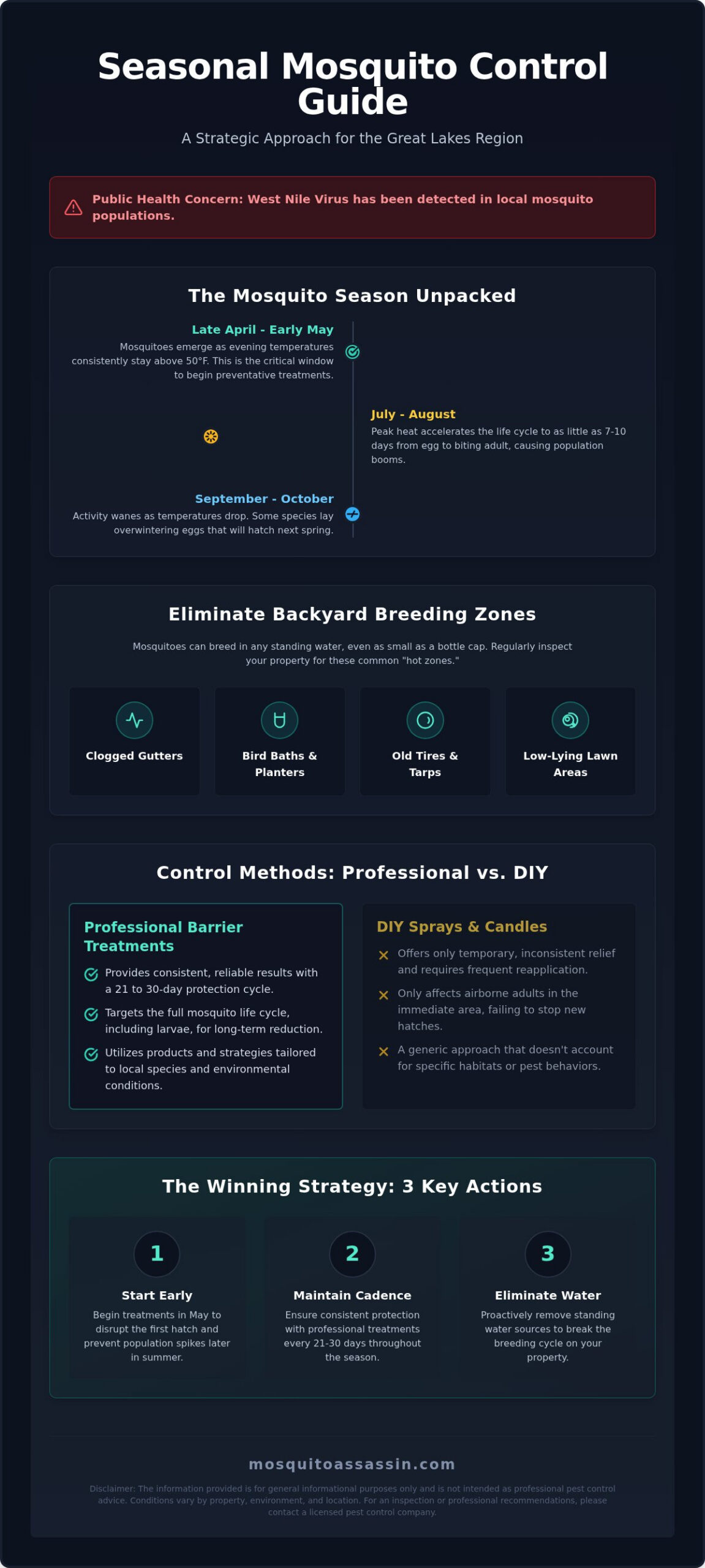
The mosquito season in Northwest Pennsylvania is dictated by the unique climate of the Great Lakes region. In 2026, surveillance and treatment activities in the area officially began on April 1. While the calendar says spring, biological activity follows the thermometer. Mosquitoes typically emerge when consistent evening temperatures stay above 50 degrees Fahrenheit. For residents in Erie and Crawford counties, this usually spans from late April through September. Effectively managing these populations requires a strategy for seasonal mosquito control Erie PA that accounts for these specific environmental triggers.
The Impact of the Great Lakes Climate
Living near Lake Erie changes the pest landscape. The lakefront produces high humidity levels that create ideal harborage for adult mosquitoes. They thrive in the moisture-rich air, which prevents them from dehydrating during the day. Additionally, heavy spring rainfall common in the tri-county area creates early-season breeding pools in low-lying areas. Geography matters; Erie’s proximity to the water requires a more rigorous approach than drier, inland regions of Pennsylvania. The lake acts as a massive moisture engine, accelerating the development of species like the Northern House Mosquito, which is a known vector for West Nile Virus.
Key Stages of the Mosquito Life Cycle
A mosquito’s life begins in standing water, where eggs hatch into larvae. This transition is incredibly fast during the peak heat of July and August. In these conditions, a mosquito can move from egg to biting adult in as little as seven to ten days. Understanding Mosquito Control Methods involves recognizing that treating only adult insects provides only temporary relief. Without addressing the larval stage in stagnant water, new generations will continue to emerge. Comprehensive seasonal mosquito control Erie PA must be a multi-step process that interrupts this cycle at every stage, from the initial hatch to the final maturation.
The tri-county area, including Ashtabula County in Ohio, faces pressure from several primary species. The Asian Tiger mosquito and the Eastern Saltmarsh mosquito are often found in urban and coastal environments. Each has different preferences for where they lay eggs, whether it’s in a discarded tire or a marshy depression. Local professionals who live and work in these neighborhoods understand that a generic approach doesn’t account for these behavioral differences. Effective management relies on identifying these specific species and their preferred habitats before they become a nuisance to your family.
Disclaimer: The information provided on this blog is for general informational purposes only and is not intended as professional pest control advice. Conditions vary by property, environment, and location. Reading this content does not create a service agreement. For an inspection or professional recommendations, please contact Mosquito Assassin Pest Control LLC directly.
Habitat Identification and Breeding Site Mitigation in Erie County
Effective management begins with a professional inspection to pinpoint “hot zones” where pests congregate. While adult mosquitoes are highly visible, a strategic approach focuses on source reduction to eliminate them before they hatch. This logic aligns with the broader goals of Pennsylvania’s Mosquito Control Program, which emphasizes surveillance and habitat mitigation to protect public health. By identifying specific areas on a property that hold standing water, residents can significantly disrupt the reproductive cycle. Professional mosquito control services help identify these vulnerabilities, ensuring that every corner of the yard is accounted for during the treatment process.
Common Backyard Mosquito Magnets
Erie properties often feature items that inadvertently trap rainwater, creating perfect nurseries for larvae. Homeowners should regularly inspect their yards for these common culprits:
- Tarps and Covers: Woodpiles or boat covers can collect small pockets of water that remain stagnant for weeks.
- Tires and Toys: Discarded tires or children’s plastic toys are notorious for holding water in shaded areas.
- Clogged Gutters: This is a hidden danger. Debris traps moisture high above the ground, creating elevated breeding pools that are difficult to see from the lawn.
It’s a biological fact that even a single bottle cap filled with water can host hundreds of larvae. In the humid climate of Northwest Pennsylvania, these small reservoirs don’t evaporate quickly, allowing mosquitoes to reach maturity without interruption. Addressing these drainage issues is a foundational step in any integrated pest management strategy.
Landscaping Tips to Reduce Pest Pressure
The specific foliage found in the PA and OH tri-county area plays a major role in mosquito survival. Dense shrubs, ornamental grasses, and tall weeds provide the essential shade adult mosquitoes need to escape the midday sun. Maintaining a consistent lawn height reduces these cool, damp resting spots. When grass is kept short, the soil surface dries faster, making the environment less hospitable for pests.
Airflow is another critical factor. Thinning out thick vegetation and pruning low-hanging branches improves circulation and allows more sunlight to reach the ground. This simple change can make a significant difference in the overall pest pressure on a property. While no plant offers a total shield, choosing certain varieties like lavender, marigolds, or citronella grass may naturally discourage activity in seating areas. Implementing these landscaping changes creates a more resilient yard that supports long-term seasonal mosquito control Erie PA efforts.
Disclaimer: The information provided on this blog is for general informational purposes only and is not intended as professional pest control advice. Conditions vary by property, environment, and location. Reading this content does not create a service agreement. For an inspection or professional recommendations, please contact Mosquito Assassin Pest Control LLC directly.
Evaluating Professional Treatment Methods vs. DIY Yard Sprays
Homeowners often reach for citronella candles, coils, or handheld foggers when the first swarm appears in June. While these products might provide a few hours of relief in a very small area, they rarely address the larger population. The primary challenge with store-bought solutions is their lack of residual efficacy. A candle only works while it is burning; a consumer-grade fogger usually dissipates within minutes. For a property owner in Northwest Pennsylvania, achieving true seasonal mosquito control Erie PA requires a more scientific approach that creates a lasting perimeter of protection rather than a temporary cloud of smoke.
Equipment is a major differentiator in this battle. Consumer-grade pump sprayers often produce large, heavy droplets that simply roll off waxy leaf surfaces or pool on the ground. In contrast, professional-grade mist blowers utilize high-velocity air to create a fine, pressurized vapor. This technology ensures that the treatment reaches the dense interior of shrubs and the high canopy of trees where mosquitoes actually reside during the day. This methodical application is a cornerstone of professional mosquito control services, ensuring that no hiding spot is overlooked.
The Science of Barrier Treatments
Professional barrier treatments are designed to adhere to the underside of leaves, which is the preferred resting site for adult mosquitoes. Modern pest control applications utilize specialized surfactants and weatherproofing agents. These additives help the product “stick” to vegetation, allowing it to remain effective even through the humidity and light rain common in Erie County. By targeting these specific resting sites rather than broadcast spraying into the air, professionals maximize the impact on the pest population while minimizing the amount of product needed. This targeted approach aligns with the best practices outlined by Pennsylvania’s Mosquito-Borne Disease Program, which advocates for integrated strategies that focus on efficacy and environmental responsibility.
Why DIY Often Fails in Northwest PA
The Great Lakes climate presents unique obstacles that often defeat DIY efforts. Frequent, sudden rain showers can wash away standard hardware store sprays before they have a chance to dry. Professional applications are timed based on local weather patterns to ensure proper bonding to the foliage. Additionally, many over-the-counter products fail because they don’t account for local pest resistance. Professionals monitor these patterns and adjust their methods accordingly. Without the specialized knowledge of local resistance and the proper equipment to ensure thorough coverage, DIY attempts often result in wasted effort and continued frustration throughout the peak summer months.
Disclaimer: The information provided on this blog is for general informational purposes only and is not intended as professional pest control advice. Conditions vary by property, environment, and location. Reading this content does not create a service agreement. For an inspection or professional recommendations, please contact Mosquito Assassin Pest Control LLC directly.
Strategic Timing: When to Start Mosquito Control for Maximum Efficacy
The “First Hatch” rule is a fundamental principle for effective seasonal mosquito control Erie PA. While the 2026 season technically began on April 1, May is the critical month for intervention. This is when the first generation of larvae emerges from overwintered eggs found in stagnant pools and damp soil. By targeting this initial population, you prevent the exponential growth that typically occurs during the humid heat of July. If the first hatch is left unchecked, a single pair of mosquitoes can result in thousands of offspring within just a few weeks. Early intervention sets a manageable baseline for the rest of the year.
The Importance of Early Season Intervention
Interrupting the first breeding cycle of the year is the most efficient way to reduce the total population. Mosquitoes have evolved to survive the harsh winters of Northwest Pennsylvania as dormant eggs. These eggs are incredibly resilient; they wait for the first stretch of consistent 50-degree weather to activate. Addressing these pests in May prevents them from becoming the biting adults that ruin June graduations and outdoor dinners. This proactive approach addresses the problem at its source before it becomes a widespread infestation. It provides a foundation for a pest-free summer that reactive, late-season treatments simply cannot match.
Maintaining the Protective Barrier
Establishing a consistent treatment cadence is essential for long-term success. Professionals typically recommend a cycle of every 21 to 30 days. This interval matches the residual life of professional-grade products and the reproductive cycle of the pests. Technicians serving the tri-county area monitor local rainfall and temperature shifts to ensure the barrier remains intact. Gaps in service allow populations to rebound rapidly as the protective barrier on the foliage begins to degrade. Consistency creates a cumulative effect. Each subsequent application reinforces the barrier, making it more difficult for new mosquitoes to establish a presence on your property.
This reliability is vital when planning for major outdoor events like weddings or holiday BBQs. Late-season protection is equally important. Many residents stop treatments in August, but activity often persists until the first hard frost. In 2026, West Nile Virus was confirmed in Erie County on August 3. This proves that the risk remains high well into the late summer. Continuing applications through September ensures that your outdoor spaces remain usable during the cooler autumn evenings. Exploring professional mosquito control service options is a practical first step for maintaining a comfortable yard throughout the entire season.
Disclaimer: The information provided on this blog is for general informational purposes only and is not intended as professional pest control advice. Conditions vary by property, environment, and location. Reading this content does not create a service agreement. For an inspection or professional recommendations, please contact Mosquito Assassin Pest Control LLC directly.
Integrating Mosquito Control into Year-Round Protection
Effective property management doesn’t end when the sun sets or the temperature drops; it evolves with the seasons. Integrating seasonal mosquito control Erie PA into a broader protection strategy ensures that outdoor spaces remain safe and comfortable from early spring through the first hard frost. While mosquitoes are a primary concern during the humid summer months, they are rarely the only threat. A comprehensive approach addresses multiple pests simultaneously, creating a more resilient environment for families in Erie and Crawford counties. Professional pest control may help reduce risk by maintaining a consistent exterior perimeter that pests cannot easily breach.
The transition from summer to fall marks a shift in pest behavior but not a decrease in necessity. As mosquito populations fade with the arrival of cooler weather, other pests like rodents begin seeking warmth and shelter inside residential structures. Transitioning from exterior barrier sprays to rodent exclusion and general pest maintenance prevents these opportunistic invaders from establishing a foothold. Ongoing protection is significantly more effective than reactive, one-time treatments because it relies on continuous monitoring and prevention rather than simply responding to an existing infestation. This proactive model is a core component of General Pest Control Plans designed for the Northwest Pennsylvania climate.
The Dual Threat: Mosquitoes and Ticks
Residents in the PA and OH tri-county area must remain vigilant about the overlapping activity of mosquitoes and ticks. Both pests thrive in the same damp, shaded environments found along the edges of wooded lots and dense landscaping. Because they share similar harborage sites, professional barrier treatments often address both threats with the same application method. This creates a more robust safety zone for pets and children who spend time in the yard. Since the Pennsylvania Department of Environmental Protection regularly identifies blacklegged ticks carrying pathogens in all 67 counties, addressing these “dual threats” through a single, managed plan is a logical choice for local property owners.
Long-Term Benefits of Managed Pest Control
Relying on a professional service provides peace of mind that comes from expert oversight. Local technicians who live and work in areas like Cranesville or Ashtabula understand the specific pressure points of the regional environment. They don’t just apply product; they monitor for changes in pest activity and adjust strategies as weather patterns shift. This consistent presence reduces the risk of indoor infestations by ensuring that the exterior perimeter is always reinforced. A managed approach saves time and reduces the frustration of dealing with recurring pest issues. For those looking to secure their property, visiting a local service page can provide more information on regional protection strategies.
Disclaimer: The information provided on this blog is for general informational purposes only and is not intended as professional pest control advice. Conditions vary by property, environment, and location. Reading this content does not create a service agreement. For an inspection or professional recommendations, please contact Mosquito Assassin Pest Control LLC directly.
Securing Your Property for a Pest-Free Summer
Achieving a comfortable backyard in Northwest Pennsylvania requires more than just reactive measures. By focusing on the “First Hatch” in May and implementing rigorous source reduction, you can disrupt the mosquito life cycle before populations become unmanageable. Professional barrier treatments provide the residual protection necessary to withstand the high humidity and frequent rainfall of the Great Lakes region. Integrating these strategies into a broader plan ensures your yard remains a safe haven for family gatherings throughout the entire year.
Local technicians serving Erie, Crawford, and Ashtabula counties bring specialized knowledge of regional pest patterns to every property. As a family-owned and locally operated business, Mosquito Assassin Pest Control LLC utilizes a proven multi-step process to help residents maintain effective seasonal mosquito control Erie PA. Taking proactive steps now prevents the frustration of being driven indoors during the peak of summer. It’s possible to reclaim your outdoor spaces and enjoy the warmth without the constant nuisance of pests.
To begin protecting your outdoor living space, request a professional mosquito control inspection for your Erie home. Professional pest control may help reduce risk on your property, allowing you to enjoy the season with confidence.
Disclaimer: The information provided on this blog is for general informational purposes only and is not intended as professional pest control advice. Conditions vary by property, environment, and location. Reading this content does not create a service agreement. For an inspection or professional recommendations, please contact Mosquito Assassin Pest Control LLC directly.
Frequently Asked Questions
When does mosquito season start in Erie, PA?
Mosquito season in Erie officially begins on April 1, but activity increases when evening temperatures stay above 50 degrees Fahrenheit. For 2026, surveillance and treatment activities followed this timeline across Northwest Pennsylvania. While the season technically runs through September, the risk remains until the first hard frost. Starting early prevents the first hatch from becoming an unmanageable summer infestation.
Is professional mosquito control safe for my children and pets?
Treatments are considered safe for children and pets once the application has completely dried, which usually takes about 30 to 60 minutes. Technicians follow strict professional standards to ensure the security of all household members and animals. It’s recommended to keep everyone indoors during the application process. Once dry, the product bonds to the foliage and is no longer a concern for contact.
How often should my yard be treated for mosquitoes?
Maintaining effective seasonal mosquito control Erie PA typically requires applications every 21 to 30 days. This cadence ensures the protective barrier on your foliage remains strong despite environmental degradation. Consistent intervals are necessary because mosquito populations can rebound quickly if a treatment window is missed. This schedule matches the reproductive cycle of the pests common in the tri-county area.
What happens if it rains right after a mosquito treatment?
Professional treatments are formulated with surfactants that help the product adhere to leaves even during light rain. If a heavy downpour occurs before the application has dried, the effectiveness may be reduced. In these cases, a follow up visit is usually necessary to reinforce the barrier. Technicians monitor local weather patterns closely to avoid scheduling during periods of significant rainfall.
Can I get rid of mosquitoes in my yard without using chemicals?
Source reduction is a critical component of habitat mitigation, but it rarely eliminates the entire population. Removing standing water from gutters, tarps, and birdbaths reduces breeding sites significantly. However, adult mosquitoes often fly in from neighboring properties. Combining these practical steps with professional barrier treatments provides the most reliable results for families seeking a pest-free outdoor environment.
Are mosquitoes in Pennsylvania dangerous?
Mosquitoes in Pennsylvania are confirmed vectors for illnesses like West Nile Virus. On August 3, 2026, the Erie County Department of Health confirmed positive samples in local traps. These pests are more than just a nuisance; they represent a documented public health risk. Professional monitoring and control strategies are essential for reducing the likelihood of contact with disease-carrying insects.
Does professional mosquito control also kill ticks?
Yes, professional barrier treatments often address both mosquitoes and ticks simultaneously. Both pests thrive in the damp, shaded areas of your yard, such as tall grass and dense shrubs. By applying the product to these specific resting sites, technicians create a comprehensive safety zone. This dual approach is a core part of many seasonal mosquito control Erie PA plans for local homeowners.
What should I do to prepare my yard for a professional treatment?
Residents should clear the lawn of toys, pet bowls, and debris before the technician arrives. It’s also helpful to keep the grass mowed to a standard height to minimize resting spots. Ensuring that gates are unlocked and pets are secured indoors allows the professional to conduct a thorough inspection and application. These simple steps help maximize the efficacy of the treatment process.
Disclaimer: The information provided on this blog is for general informational purposes only and is not intended as professional pest control advice. Conditions vary by property, environment, and location. Reading this content does not create a service agreement. For an inspection or professional recommendations, please contact Mosquito Assassin Pest Control LLC directly.