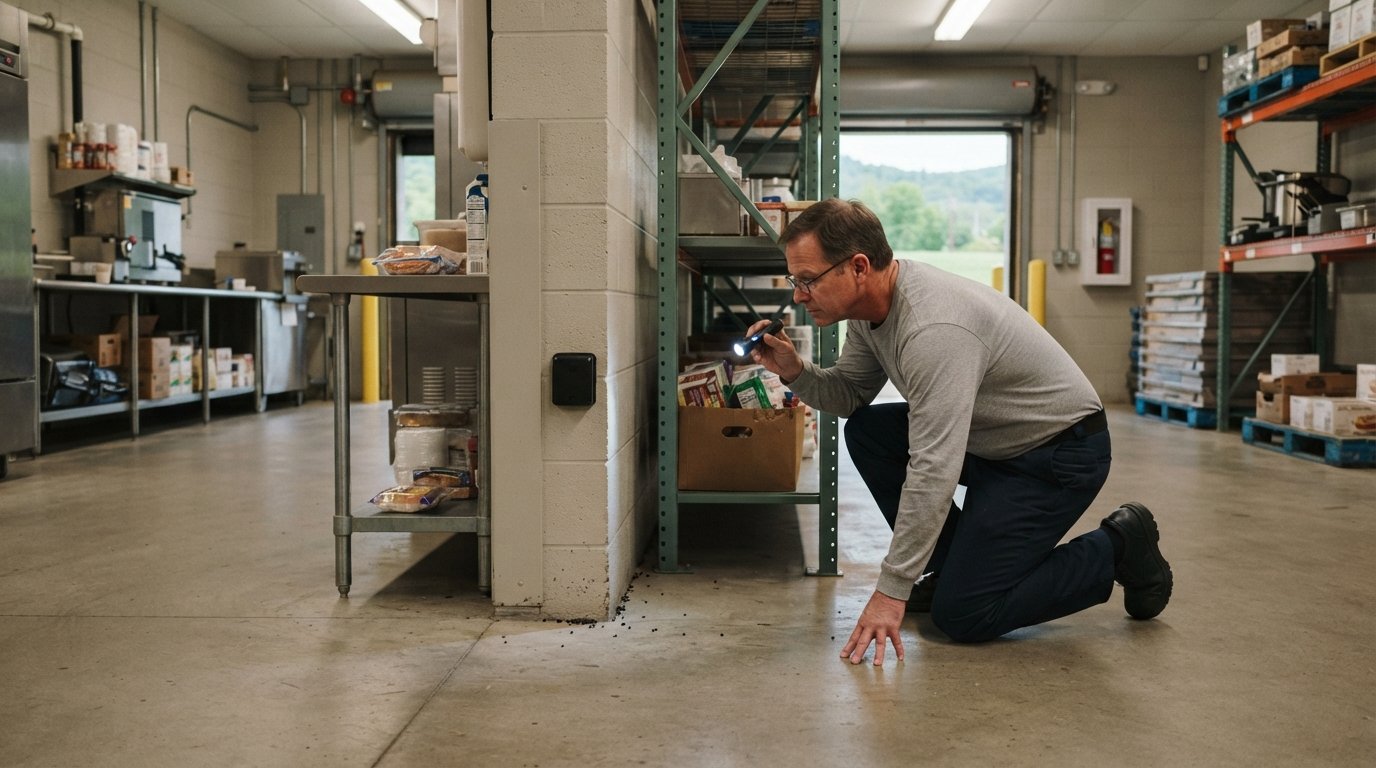
A single sighting of a pest in your facility is rarely the start of a problem; it’s often the signal that an infestation is already well-established. For managers in Erie, Crawford, and Ashtabula counties, the stakes are high. A failed health inspection or a string of negative customer reviews can cause lasting damage to a brand’s reputation that takes years to rebuild.
It’s natural to feel anxious about the hidden corners of a commercial property, especially during the peak rodent months in Pennsylvania and Ohio. You want to ensure your facility remains a safe and professional environment for both employees and guests. By learning how to identify the subtle signs of pest activity in a business, you can take control before property damage or regulatory issues arise.
This guide offers a practical checklist of early indicators to monitor. You’ll learn which high-risk areas require the most attention and how to move toward a professional resolution that secures your building for the long term.
Key Takeaways
- Recognize how early detection protects your business reputation and ensures compliance with local health inspections.
- Learn to identify the signs of pest activity in a business through subtle visual, auditory, and olfactory cues before they become obvious.
- Pinpoint high-risk entry points such as loading docks and utility gaps to stop infestations at the source.
- Distinguish between the unique indicators left by rodents and cockroaches to better understand the specific threats to your facility.
- Implement a long-term prevention strategy through professional monitoring and staff awareness programs to maintain a secure environment.
Why Early Detection of Pest Activity is Critical for Your Business
Identifying the initial signs of pest activity in a business acts as the first line of defense for any commercial facility. Small indicators, such as a single dropping or a smudge along a baseboard, are rarely isolated incidents. They are early warnings that, if ignored, can rapidly evolve into a full-scale infestation. For businesses in Northwest Pennsylvania and Northeast Ohio, where seasonal shifts drive pests indoors, proactive monitoring is the most effective way to maintain a safe and professional environment.
Compliance with local health department standards is another non-negotiable factor. Regulatory bodies in Erie, Crawford, or Ashtabula counties prioritize public health, and evidence of pests can lead to immediate citations. Beyond the legal requirements, a clean facility ensures that inventory remains uncontaminated and the building remains structurally sound. Professional oversight helps identify vulnerabilities in the building envelope before pests can exploit them.
The Financial Impact of Delayed Action
Ignoring pest activity leads to compounding costs. Rodents, which are particularly active in Pennsylvania during winter months, are notorious for gnawing on electrical wiring and insulation. This behavior can lead to expensive structural repairs or even fire hazards. Additionally, contaminated stock must be discarded, representing a direct hit to the bottom line. Understanding pest control methods and identification helps managers recognize these threats before they require extensive intervention. Regulatory fines and temporary closures due to health violations can further drain resources and disrupt operations.
Protecting Your Brand Reputation
In a digital-first world, a single customer sighting of a pest can go viral in minutes. Negative online reviews or social media mentions regarding sanitation can permanently stain a brand’s image. This loss of trust is often harder to repair than the physical building itself. Furthermore, a pest-free workplace is essential for employee morale. Staff members deserve a clean, secure space to perform their duties without the stress of an unsanitary environment. Establishing a routine through commercial pest control strategies ensures that the business remains a reputable pillar of the local community. Professional monitoring provides the peace of mind that the brand’s integrity is protected year-round.
The Three Senses of Pest Identification: Sight, Sound, and Smell
Pest identification is a sensory discipline that requires more than just a passing glance at a facility. While a direct sighting is the most obvious indicator, it’s often the last one to manifest before a population grows out of control. To protect your facility, you must use a combination of sight, sound, and smell to detect the earliest signs of pest activity in a business.
Visual Indicators and Physical Debris
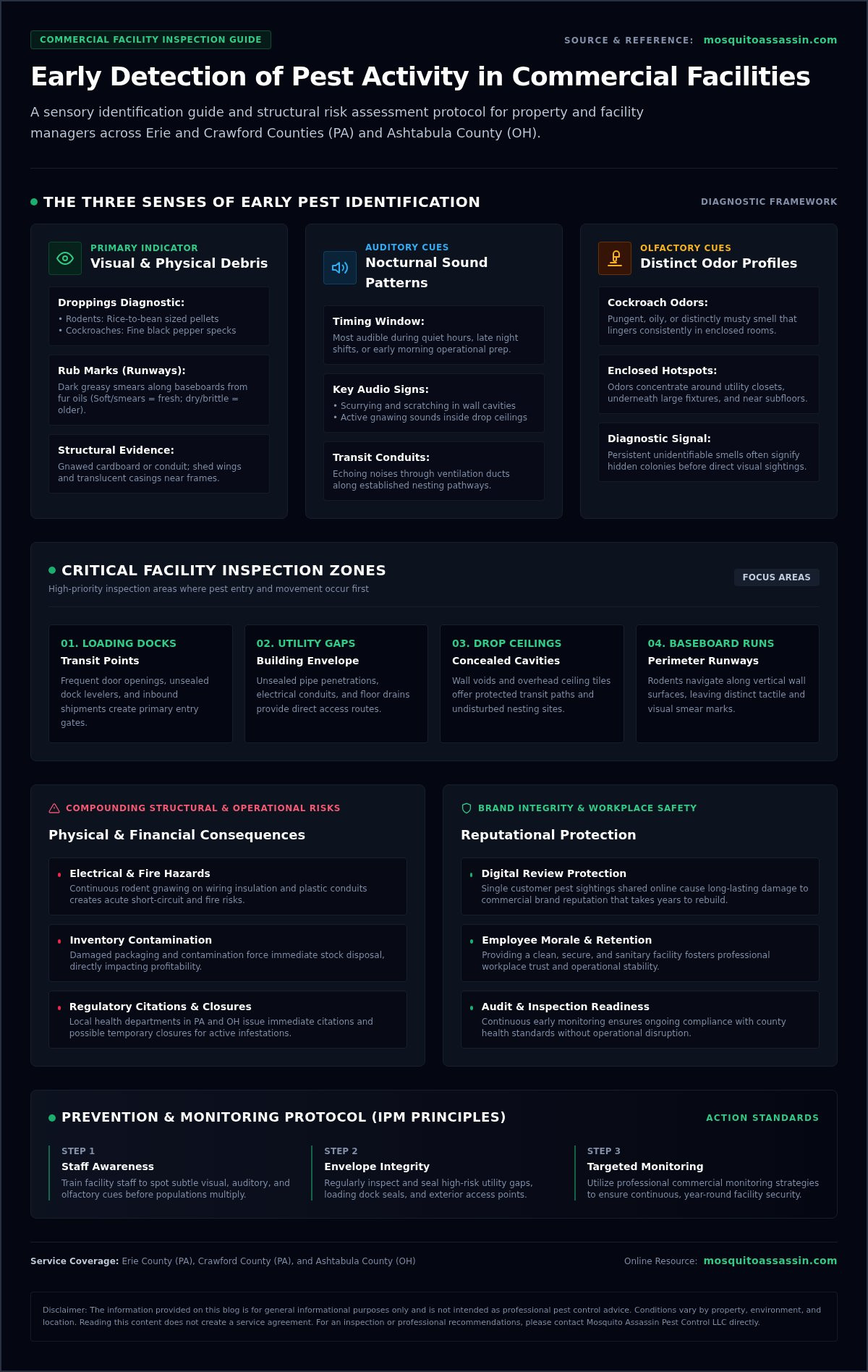
Visual evidence is usually the most concrete way to confirm signs of pest activity in a business. Droppings are a primary indicator; rodent droppings are typically the size of a grain of rice or a bean, while cockroach droppings resemble small specks of black pepper. Gnaw marks on cardboard packaging or plastic conduits are another red flag, as rodents must chew constantly to manage their teeth. You might also find discarded wings or translucent casings near window sills or door frames, which suggest an established colony nearby.
Tactile evidence is equally telling for managers who know where to look. Rodents often follow the same paths along baseboards, leaving behind dark, greasy smear marks known as rub marks. These are caused by the oils and dirt in their fur. Fresh rub marks feel soft and smear easily, while older ones are brittle and dry, helping you determine how recent the activity is. Following Integrated Pest Management principles, identifying these visual and physical cues allows for targeted intervention rather than broad chemical application.
Auditory and Olfactory Cues
The sounds of an infestation are often most audible during the quiet hours of the night or early morning. Scurrying, scratching, or gnawing sounds coming from wall voids, drop ceilings, or crawlspaces are classic indicators of rodent activity. In the quiet of a closed office or warehouse, these noises can be surprisingly loud, echoing through ventilation ducts. These sounds are rarely random; they usually follow a pattern as pests move between nesting sites and food sources.
Odors provide another layer of diagnostic information that many managers overlook. Cockroaches produce a distinct, musty, or oily smell that lingers in damp or poorly ventilated areas like basements and breakrooms. In contrast, an established rodent infestation often creates a sharp, pungent, ammonia-like odor caused by accumulated urine. If you detect these smells in your facility, professional pest control may help reduce risk and restore a sanitary environment. If you suspect your property is at risk, reaching out for commercial pest management can provide a definitive solution for your business in Erie, Crawford, or Ashtabula counties.
Differentiating Signs Between Common Commercial Pests
Understanding the specific signs of pest activity in a business allows managers to communicate clearly with professionals and implement the right exclusion strategies. While many pests seek the same basic needs (food, water, and shelter), the evidence they leave behind is distinct. Misidentifying a pest can lead to ineffective self-treatment or delayed professional intervention, which only allows the population to grow and the damage to worsen.
Rodent Activity in PA and OH Businesses
In Northwest Pennsylvania and Northeast Ohio, rodent behavior is heavily influenced by the climate. During the colder months in Erie and Crawford Counties, mice and rats aggressively seek entry into heated commercial buildings to escape the freezing temperatures. You’ll often find nesting materials like shredded paper, cardboard, or insulation tucked away in quiet corners of warehouses or storage rooms. These nests are frequently located near heat sources like water heaters or motor housings.
Beyond nests, look for evidence of tampering with food storage in employee breakrooms. A chewed corner on a snack bag or scattered crumbs is a clear signal of an intruder. Travel paths are also telling. Rodents are creatures of habit, often hugging walls and leaving dark grease stains known as rub marks. These marks help differentiate their activity from smaller crawling insects that don’t leave such heavy residue. Identifying these paths is crucial for effective rodent exclusion and maintenance.
Indicators of Small Crawling Insects
Small crawling insects like cockroaches and ants leave different but equally concerning marks. Cockroaches prefer damp, dark areas such as under commercial sinks or behind large appliances. They leave behind small, pepper-like specks of excrement and egg cases, known as oothecae. These cases are often found wedged into cracks or crevices and indicate an active breeding population. They’re often translucent or dark brown, depending on the species, and are a major red flag for health inspectors.
Ants and flies also leave specific clues that point toward sanitation or structural issues:
- Ant Trails: Pheromone trails serve as a roadmap, attracting more pests to food or moisture sources. Unlike the random movement of some insects, ants move in a disciplined line, often leading back to a gap in the masonry.
- Drain Flies: In commercial kitchens, the presence of flies often points to a breakdown in sanitation, specifically in floor drains or organic waste bins. They’re attracted to fermenting organic matter and indicate moisture control issues.
- Odor Markers: Many crawling insects leave behind chemical scents that signal to others that your facility is a viable home.
Recognizing these specific indicators is the first step toward a professional resolution. For comprehensive support, commercial pest control plans help manage these diverse threats effectively throughout the year.
High-Risk Areas: Where to Look for Pest Activity in Commercial Spaces
Pests don’t wander aimlessly through a commercial building. They concentrate in areas that provide easy access to food, water, warmth, and seclusion. For managers, knowing exactly where to look for signs of pest activity in a business is the difference between a minor cleanup and a costly remediation project. In the regional climate of Northwest Pennsylvania and Northeast Ohio, these high-risk zones change with the seasons, requiring a vigilant eye on the building’s interior and exterior perimeter.
Employee breakrooms and kitchens are often the primary source of attraction. Even small amounts of standing water under a sink or food residue behind a vending machine can support a growing population. Similarly, loading docks and delivery bays act as open invitations. These areas are frequently high-traffic zones where doors remain open for extended periods, allowing rodents and insects to slip inside unnoticed. Once inside, they often migrate toward utility closets and boiler rooms, which offer the consistent warmth they need during the harsh winters in Erie and Crawford counties.
Sanitation and Food Prep Zones
Regular inspections of food preparation areas must go beyond the countertops. Moisture is a major driver of infestations, so checking under industrial sinks and behind refrigeration units is essential. Floor drains are another common hotspot; if they aren’t cleaned regularly, they become breeding grounds for flies. Managers should also verify that all trash receptacles have tight-fitting lids and are emptied at the end of every shift to remove overnight food sources. Maintaining these standards is a critical part of commercial pest control and ensures your facility remains compliant with local health regulations.
Structural Vulnerabilities and Entry Points
The physical structure of your building often provides the very gaps pests use to enter. Utility penetrations for pipes and electrical lines are notorious for having small openings that mice or cockroaches can exploit. A gap as small as a quarter-inch is enough for a young mouse to squeeze through. Weather stripping on warehouse doors or exterior entries often wears down over time, creating a ground-level entry point that is easily overlooked. Storage areas filled with cardboard boxes are particularly dangerous, as cardboard provides both insulation for nests and a food source for certain insects. Identifying these vulnerabilities early allows for effective rodent exclusion and maintenance before a population becomes established. If you suspect your facility has been breached, professional pest control may help reduce risk.
Establishing a Professional Monitoring and Prevention Strategy
Transitioning from reactive identification to a proactive prevention strategy is the most effective way to safeguard a commercial facility. While recognizing the signs of pest activity in a business is a vital skill for any manager, it’s only the first step. A comprehensive approach focuses on building resilience through professional oversight, structural maintenance, and staff engagement. In regions like Erie and Crawford counties, where seasonal shifts dictate pest behavior, a consistent monitoring plan ensures that a building remains secure against local threats year-round.
Effective prevention also requires a commitment to exclusion techniques. This involves sealing the building envelope to deny pests entry in the first place. By addressing the gaps around utility lines or repairing worn weather stripping, you remove the physical invitation that many pests are looking for. When these structural improvements are combined with routine professional monitoring, the likelihood of a significant infestation drops dramatically.
The Role of Professional Inspections
Professional inspections go far beyond a visual sweep of common areas. Technicians use specialized tools to examine inaccessible wall voids, high shelving, and complex machinery where pests often hide. These assessments form the basis of a customized Integrated Pest Management (IPM) plan, which prioritizes long-term prevention over temporary fixes. By identifying structural vulnerabilities early, professional pest control may help reduce risk and prevent the financial fallout of a failed health inspection. This methodical approach is essential for maintaining the professional standards expected in Northwest Pennsylvania and Northeast Ohio.
Employee Training and Reporting
A successful prevention strategy relies on the eyes and ears of the people who work in the building every day. Employee education programs empower staff to recognize early signs of pest activity in a business, such as unusual odors or physical debris, before they become obvious to customers. Encouraging a culture of cleanliness in shared breakrooms and storage zones significantly reduces the resources that attract pests in the first place. Managers should implement a simple internal log for reporting sightings, ensuring that potential issues are communicated immediately to the maintenance team.
Consistent reporting allows for rapid intervention, which is far more cost-effective than remediating a large-scale infestation. To ensure your facility remains protected, you can Contact a professional for a commercial assessment to identify specific risks unique to your property. Combining professional expertise with a vigilant staff creates a multi-layered defense that protects both the building and the brand’s reputation.
Disclaimer: The information provided on this blog is for general informational purposes only and is not intended as professional pest control advice. Conditions vary by property, environment, and location. Reading this content does not create a service agreement. For an inspection or professional recommendations, please contact Mosquito Assassin Pest Control LLC directly.
Securing Your Business Against Hidden Threats
Identifying early signs of pest activity in a business is a fundamental part of effective facility management. By focusing on sensory cues like unusual odors or scratching sounds and regularly inspecting high-risk zones like loading docks and breakrooms, you can stop infestations before they impact your professional brand. Proactive monitoring ensures your property remains compliant with local health inspections and protects your bottom line from the costs of structural damage or contaminated inventory.
Understanding regional pest behavior is essential, especially given the intense rodent activity in Erie, Crawford, and Ashtabula counties during the colder months. Maintaining a clean work environment and a culture of immediate reporting helps keep your facility resilient against seasonal shifts. A methodical approach to exclusion and consistent monitoring is the most reliable path toward a secure operation. Professional pest control may help reduce risk and provide the peace of mind that your building envelope is thoroughly protected. Take the first step toward safeguarding your reputation by choosing a strategy rooted in local expertise and comprehensive protection.
Request a professional inspection for your business
Disclaimer: The information provided on this blog is for general informational purposes only and is not intended as professional pest control advice. Conditions vary by property, environment, and location. Reading this content does not create a service agreement. For an inspection or professional recommendations, please contact Mosquito Assassin Pest Control LLC directly.
Frequently Asked Questions
What are the most common signs of rodents in an office building?
The most frequent indicators include dark, rice-sized droppings found in desk drawers or utility closets and gnaw marks on electrical cords. Rodents are a major concern in Northwest Pennsylvania, especially during the winter months when they migrate indoors for warmth. You might also notice greasy rub marks along the baseboards where they travel. Recognizing these signs of pest activity in a business early prevents a small intrusion from becoming a full-blown infestation that threatens employee health.
How can I tell if my business has a cockroach problem before I see one?
You can identify a cockroach presence by looking for small, black, pepper-like specks of excrement and translucent brown egg cases hidden behind large appliances. These pests also produce a distinct, musty odor that lingers in damp areas like breakroom sinks or basements. Since cockroaches are nocturnal and highly secretive, these sensory cues are often the first warnings you’ll receive before actually spotting an insect. Professional monitoring is the most effective way to confirm their presence.
Are there specific pests that target retail stores in Pennsylvania?
Retail stores in Erie and Crawford counties frequently deal with mice, ants, and spiders, which are attracted to the shelter and food sources provided by stockrooms. Rodent activity peaks in Pennsylvania during the winter as they seek refuge from the cold, often nesting in cardboard shipping materials. Ants are also common in retail spaces that have employee breakrooms or sell snacks, creating visible trails toward moisture sources. Regular inspections help identify these local threats before they reach the sales floor.
What should I do if a customer reports seeing a pest?
If a customer reports a sighting, you should immediately document the location and time in an internal log and contact a professional for a commercial assessment. Prompt action is critical to protect your brand reputation and prevent negative online reviews. An inspection can determine if the sighting was an isolated incident or a symptom of a larger problem. Proactive reporting shows a commitment to sanitation and helps maintain a professional environment that satisfies local health department standards.
Can pests in a business cause structural damage?
Yes, pests can cause significant structural damage by gnawing on essential building components or compromising wooden supports. Rodents are notorious for chewing through electrical insulation and wiring, which can create fire hazards or lead to expensive equipment failures. Termites and carpenter bees also pose risks to the integrity of wooden structures if left untreated. Identifying the signs of pest activity in a business early is the best way to avoid these compounding repair costs and protect your property.
How often should a commercial property be inspected for pests?
Most commercial properties benefit from routine bi-monthly inspections to ensure that prevention strategies remain effective across changing seasons. In the local climate of Northeast Ohio and Northwest Pennsylvania, pest pressures shift significantly between the humid summer and the freezing winter. Ongoing monitoring through a year-round protection plan is the only way to catch vulnerabilities before they are exploited. This consistent schedule allows for the maintenance of exclusion seals and the adjustment of monitoring tools as needed.
What is the most common entry point for pests in a warehouse?
Loading docks and delivery bays are the most common entry points because they are frequently left open for extended periods during shipments. Pests also exploit small gaps around utility pipe penetrations and electrical lines that enter the building. Worn weather stripping on large warehouse doors provides another easy path for rodents and crawling insects. Sealing these structural vulnerabilities is a core component of a professional exclusion strategy designed to keep a facility secure and protect your inventory from contamination.
Disclaimer: The information provided on this blog is for general informational purposes only and is not intended as professional pest control advice. For an inspection or professional recommendations, please contact Mosquito Assassin Pest Control LLC directly.