
Choosing between a pest-free living space and the safety of a four-legged family member is a decision no Erie homeowner should ever have to make. It’s understandable to feel a sense of anxiety when common household pests Erie PA residents frequently encounter (like ticks, mosquitoes, and mice) begin to invade the property. The fear of exposing pets to toxic substances often leads to hesitation, yet leaving an infestation unchecked can be just as dangerous to an animal’s health. Professional pest management offers a sophisticated alternative to unguided DIY attempts, focusing on targeted applications that keep the most vulnerable members of the household out of harm’s way.
This guide provides the clarity needed to protect a home effectively and safely. It covers how professional methodology prioritizes animal well-being, explains the rising tick and mosquito pressures unique to Northwest Pennsylvania, and outlines practical safety protocols for every stage of the treatment process. Homeowners will learn how to distinguish between marketing claims and scientific standards, ensuring a pest-free environment and total peace of mind for every dog, cat, or bird in the family.
Key Takeaways
- Understand how Integrated Pest Management (IPM) uses a science-based approach to minimize chemical use while effectively managing infestations.
- Learn how the regional climate and lake-effect weather impact the behavior of common household pests Erie PA residents encounter throughout the year.
- Discover essential pre-treatment and post-treatment safety protocols designed to keep dogs, cats, and other household animals secure during professional service visits.
- Identify the health benefits of professional pest management, including reduced risks of tick-borne and mosquito-borne illnesses for both humans and pets.
Understanding Pet Safe Pest Control in the Erie Region
True pet safety isn’t just about the products in the bottle; it’s about the hands that hold it. Professional pest control combines the use of EPA-registered products with specific application techniques designed to protect animals. In Northwest Pennsylvania, managing common household pests Erie PA residents see every year requires a strategic balance between effective elimination and household security. Store-bought products often lack the specific labeling instructions found on professional-grade counterparts, making it easy for homeowners to over-apply or use chemicals in high-traffic pet areas.
DIY pesticide application carries significant risks, especially for curious dogs or cats that explore with their noses and paws. Unlike a homeowner using unguided sprays, licensed professionals in Pennsylvania and Ohio follow strict state-mandated standards for residential treatments. These regulations ensure that products are applied in a manner that minimizes exposure risk while maximizing the impact on target pests. By following professional standards, technicians ensure that the most vulnerable members of the family remain protected during and after service.
To better understand how to manage these issues, watch this helpful video:
The Difference Between Pet-Safe and Pet-Friendly
There’s a common misconception that “pet-safe” means a product is harmless in any quantity. In reality, safety depends on precise dilution ratios and allowing for proper drying times before pets return to a treated area. Professionals rely on The Science of Integrated Pest Management (IPM) to reduce the overall volume of chemicals needed. They also maintain detailed Safety Data Sheets (SDS) that provide critical information on product chemistry and emergency protocols. This level of transparency and technical precision offers a degree of protection that unguided DIY methods simply cannot match.
Why Erie Weather Impacts Pest Safety
The local climate plays a massive role in how treatments behave. High humidity from Lake Erie and frequent lake-effect rainfall can compromise the stability of outdoor barriers if they aren’t applied correctly. Heavy rain can cause runoff, potentially moving pesticides into areas where pets play. Lake-effect weather systems also create a damp environment where carpenter ants and spiders thrive, increasing the impact of common household pests Erie PA homeowners face. In Crawford County, seasonal pest migrations often drive rodents and insects indoors as temperatures drop. Effective management requires localized knowledge to ensure exterior barriers remain intact during humid summers and wet autumns without creating unnecessary risks for local pets.
The Science of Integrated Pest Management (IPM) for Pet Owners
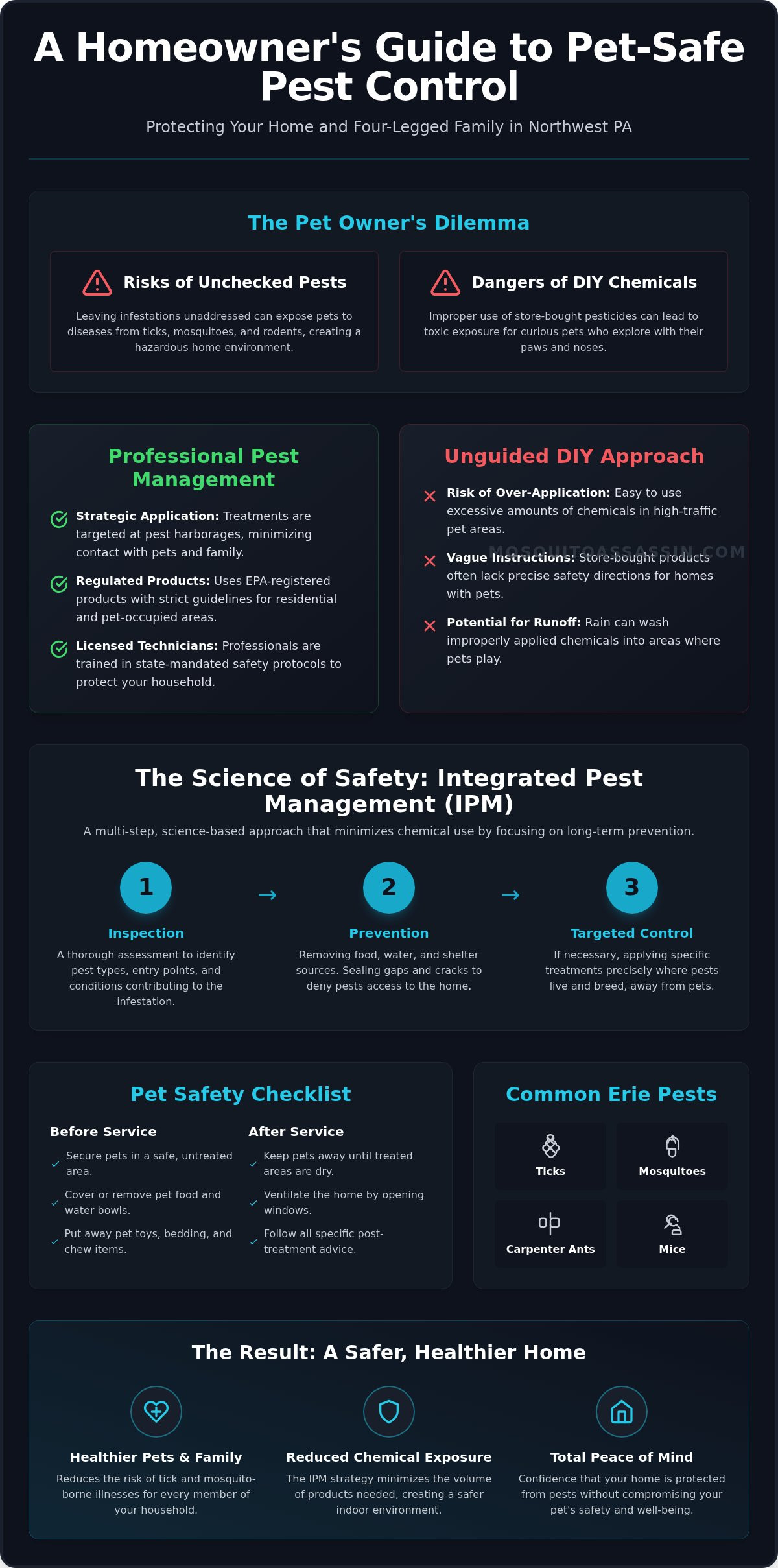
Effective pest control isn’t found in the bottom of a spray bottle. It’s a comprehensive strategy known as Integrated Pest Management (IPM). This science-based approach prioritizes long-term prevention over the reactive use of chemicals. For families with animals, this methodology is the gold standard. It begins with a thorough inspection to identify the specific common household pests Erie PA residents deal with, such as pavement ants or house mice, and focuses on removing their food, water, and shelter. By addressing the root cause of an infestation, the need for chemical intervention is naturally minimized. Professional pest control plans often rely on these preventative measures to create a hostile environment for pests while maintaining a comfortable one for pets.
Sanitation and exclusion are the first lines of defense in a pet-safe strategy. Simple actions like managing pet food storage and sealing gaps around utility lines can be more effective than broad-spectrum sprays. When a professional identifies specific harborages, they can apply treatments only where they’re needed. This precision ensures that the total volume of product introduced into the home is significantly lower than a standard DIY approach. For those seeking professional assistance, exploring specialized general pest control plans can help clarify how these methods are applied in a real-world setting.
Targeted Application vs. Broadcast Spraying
Broadcast spraying involves coating large surface areas with pesticides. This is often unnecessary and increases the risk of a pet’s paws coming into contact with wet products. Professional technicians prefer targeted applications, such as crack and crevice treatments. This method places products deep into the structural gaps where pests hide, keeping the material entirely out of reach for curious dogs and cats. Gel baits are another effective tool. These are placed in hidden areas, like behind appliances or inside wall voids, where an animal shouldn’t be able to reach them. Professional-grade equipment allows for this level of surgical precision, ensuring the treatment stays exactly where it belongs.
Strategic Exclusion and Baiting Techniques
Exclusion is the most pet-safe “pesticide” available. By sealing entry points with copper mesh, silicone, or specialized sealants, homeowners can stop pests from entering the living space in the first place. When rodent control is necessary, professionals use tamper-resistant bait stations. These heavy-duty containers are designed to be inaccessible to pets and children, requiring a specific key to open. They’re weighted or anchored to prevent them from being moved or chewed. Constant monitoring of these stations allows a technician to track pest activity without having to apply additional products prematurely. This methodical approach ensures that every action taken is necessary, effective, and secure for every member of the Erie or Crawford County household.
Managing Common Erie Pests Without Risking Pet Health
Protecting a home from common household pests Erie PA residents encounter is a vital part of pet health maintenance. Mosquitoes, ticks, and rodents are more than just nuisances; they are vectors for serious conditions like Lyme disease, Heartworm, and Anaplasmosis. While the pests themselves pose a threat, the methods used to control them must be handled with extreme care to avoid accidental exposure. Professional pest management focuses on high-impact, low-exposure strategies that prioritize the safety of household animals while effectively reducing the local pest population.
Mosquito and Tick Control in Pennsylvania Backyards
The geography of Northwest Pennsylvania, particularly areas near Presque Isle or local creeks in Erie and Crawford Counties, provides ideal breeding grounds for mosquitoes and ticks. Stagnant water and tall grasses are common harborages for these insects. To manage these risks, professional mosquito control services utilize barrier treatments applied to the foliage where these pests rest. A critical safety protocol for homeowners is ensuring pets remain indoors during the application and for a specific duration afterward until the product has completely dried. Once dry, the treatment remains on the plant surfaces to intercept pests, significantly reducing the likelihood of a pet bringing a disease-carrying tick into the home.
For other seasonal concerns like carpenter bees and spiders, professional strategies often rely on understanding pest behavior. Instead of heavy chemical use, managing these common household pests Erie PA often involves removing webs or using targeted treatments on specific nesting sites. This behavioral approach limits the footprint of the treatment area, keeping the rest of the yard clear for pet activity.
Rodent Management and Secondary Poisoning Risks
Rodent control requires a disciplined approach to prevent secondary poisoning, which occurs when a pet or local wildlife consumes a rodent that has ingested poison. Loose rodenticides or open bait trays are highly dangerous and are not recommended for homes with animals. Professional rodent control services prioritize the use of heavy-duty, locked bait stations that are specifically designed to be tamper-resistant. These stations keep the bait secure and inaccessible to dogs, cats, and non-target wildlife. They are typically anchored to the ground to prevent them from being moved by larger animals.
A truly effective rodent strategy follows a three-step process:
- Removal: Eliminating the current population using secure, professional methods.
- Maintenance: Regular monitoring of bait stations to ensure the property remains protected.
- Exclusion: Identifying and sealing entry points to prevent new rodents from entering the structure.
This methodical approach reduces the long-term need for interior chemical use and provides a sustainable, secure environment for every member of the Erie or Crawford County household.
Best Practices for Homeowners Before and After Service
Homeowner preparation is the foundation of a successful and secure pest management visit. While professional techniques are designed for safety, the active participation of the property owner ensures that risks are minimized. Managing common household pests Erie PA residents encounter requires clear protocols, especially when animals are part of the family. Clear communication regarding the specific location of pet beds, water bowls, and outdoor play areas allows the technician to adjust their application strategy accordingly. Property owners don’t need to be experts, but they do need to be partners in the process.
Preparing Your Property for a Pet-Friendly Treatment
Before the professional arrives, the exterior and interior of the home should be organized to prevent accidental contact with products. For outdoor treatments, clearing the yard of pet toys, water dishes, and waste is essential. Removing pet waste ensures the treatment reaches the soil and grass where pests like fleas and ticks harbor, rather than creating untreated islands where pests can thrive. Inside the home, pets should be secured in a crate or a room that isn’t scheduled for treatment. Notifying the professional about elderly pets or animals with known respiratory sensitivities is a critical step. When discussing habits with the technician, mention if a dog is a digger or if a cat frequently hides in specific basement corners, allowing the professional to avoid those high-traffic zones.
Post-Service Safety Protocols for Dogs and Cats
Following the application, the most important rule is the dry touch standard. Pets shouldn’t be allowed back into treated areas until all liquid applications are completely dry. Depending on humidity levels in Erie or Crawford Counties, this typically takes between one and four hours. For interior treatments, opening windows to encourage ventilation helps maintain air quality as the products settle. Homeowners should also monitor their animals for any unusual behavior as a general precaution, even when professional-grade, low-impact products are used.
Proper handling of pet-specific items is equally important. Any bedding or food bowls that were accidentally left in a treatment zone should be washed thoroughly. For those ready to schedule a professional assessment, contacting a local professional simplifies the process of securing a pet-safe treatment plan. By following these disciplined steps, homeowners can maintain a high standard of protection against common household pests Erie PA while ensuring the continued well-being of their animals.
Choosing a Reliable Professional Service in Northwest PA
Selecting a professional partner for pest management is a decision that impacts the long-term safety of a home. In Northwest Pennsylvania and Northeast Ohio, the environment dictates specific needs that only a localized expert can fully address. Professional pest control may help reduce risk for pets and families by replacing unguided chemical use with a disciplined, scientific approach. A provider’s understanding of regional cycles ensures that treatments are effective without being excessive, creating a secure environment for every member of the household.
Evaluating Credentials and Safety Standards
A reliable service provider must hold current state-specific certifications in both Pennsylvania and Ohio for residential service. These licenses ensure that the technician is trained in the latest safety protocols and understands the legal requirements for product application. When interviewing a potential provider, it’s essential to ask about the specific methodology used for properties with animals. A professional should be able to explain their use of Integrated Pest Management (IPM) and how they prioritize targeted applications over broad spraying. Clear service documentation and post-service reports are also vital. These records should detail exactly what was applied, where it was applied, and any specific observations regarding common household pests Erie PA homeowners should monitor.
Benefits of Year-Round Protection Plans
Reactive pest control often leads to a cycle of infestation and heavy chemical application. In contrast, year-round maintenance focuses on consistent prevention. Bi-monthly protection plans are designed to stop common household pests Erie PA families encounter before they can establish a foothold inside the structure. By maintaining a consistent exterior barrier, the need for interior chemical use is significantly reduced. This proactive approach results in a lower overall volume of products being introduced into the environment over time. Consistent maintenance also allows a technician to monitor for seasonal shifts, such as the increase in tick pressure during wet springs or rodent migrations in the late autumn. For more information on these strategies, exploring professional pest control services can provide a clearer picture of how localized protection works.
Local ownership is a significant advantage when managing regional pest cycles. A team that resides in Erie or Crawford County understands how lake-effect weather and local humidity levels influence insect behavior. This specialized knowledge ensures that treatments are timed correctly and applied with the highest degree of technical proficiency. By choosing a provider with deep roots in the community, homeowners gain a partner who is personally invested in the well-being of the neighborhood and its pets.
Disclaimer: The information provided on this blog is for general informational purposes only and is not intended as professional pest control advice. Conditions vary by property, environment, and location. Reading this content does not create a service agreement. For an inspection or professional recommendations, please contact Mosquito Assassin Pest Control LLC directly.
Securing Your Home and Protecting Your Pets
Managing the threat of common household pests Erie PA families encounter requires a disciplined approach that balances effectiveness with the safety of every animal in the house. By utilizing the principles of Integrated Pest Management and following strict pre-service and post-service protocols, homeowners can maintain a pest-free environment without compromising the well-being of their dogs, cats, or other pets. Professional oversight ensures that treatments are targeted and precise, addressing the root causes of infestations while minimizing chemical exposure.
Licensed professionals in Pennsylvania and Ohio provide the localized knowledge necessary to navigate the unique pest cycles of Erie and Crawford Counties. Year-round protection plans offer the most consistent defense against seasonal migrations and local disease vectors. For those seeking specific guidance on their property, a request for a professional inspection or recommendations may help reduce risk. Taking proactive steps today ensures a healthier, more secure living space for the entire family tomorrow.
Disclaimer: The information provided on this blog is for general informational purposes only and is not intended as professional pest control advice. Conditions vary by property, environment, and location. Reading this content does not create a service agreement. For an inspection or professional recommendations, please contact Mosquito Assassin Pest Control LLC directly.
Frequently Asked Questions
Is professional pest control safe for my indoor cat?
Professional pest control is designed to be safe for indoor cats when applied according to strict label instructions. Technicians focus on targeted applications in areas that cats cannot easily access, such as wall voids or behind heavy appliances. It’s essential to keep cats in a separate, untreated room until any liquid applications have fully dried. Once dry, the risk of accidental exposure is significantly reduced, allowing the animal to return to its normal environment safely.
How long should my dog stay off the grass after a mosquito treatment?
Dogs should remain off the treated grass until the application is completely dry to the touch. In the humid climate of Northwest Pennsylvania, this process typically takes between one and four hours depending on sunlight and air movement. Keeping pets inside during this window prevents them from picking up wet product on their paws or fur. Once the barrier treatment has dried on the foliage, it is secure for pets to resume outdoor play.
Can pest control chemicals harm my fish or reptiles?
Fish and reptiles are highly sensitive to airborne particles and require extra precautions during a service visit. Homeowners should cover all tanks with plastic wrap and turn off air pumps to prevent any product from entering the water or enclosure. If possible, moving smaller enclosures to a room that isn’t being treated provides the highest level of security. These animals should remain protected until the technician confirms that all applications have settled and the area is well-ventilated.
What happens if my pet eats a bug that was killed by pesticide?
The risk of a pet being harmed by eating a single insect killed by a professional treatment is extremely low. Professional-grade products are applied in highly diluted amounts that are effective against small insects but represent a negligible dose for a much larger animal like a dog or cat. However, if a pet consumes a large number of dead insects, it’s best to monitor them for any digestive upset and consult a veterinarian as a precaution.
Are the baits used for mice and rats dangerous to my dog?
Professional rodent control utilizes tamper-resistant bait stations specifically designed to keep dogs and other non-target animals away from the bait. These stations are made of heavy-duty plastic and are locked and often anchored to the ground to prevent them from being moved or chewed. This setup ensures that only common household pests Erie PA residents struggle with, like mice or rats, can access the material. Loose baits or open trays should never be used in homes with pets.
Do I need to wash my pets toys if they were left outside during service?
It is a best practice to wash any pet toys, bedding, or food bowls that were accidentally left in a treatment area during service. While professionals aim to avoid these items, cleaning them with warm, soapy water removes any potential residue and provides peace of mind. To prevent this, homeowners should clear the yard or treatment zones of all pet-related items before the technician arrives. This preparation ensures a thorough application without the need for extra cleanup later.
Is there a pet-safe way to get rid of fleas in the yard?
The most pet-safe approach to flea control in the yard is a combination of sanitation and targeted professional treatments. Keeping the grass mowed short and removing leaf litter eliminates the damp, shaded environments where fleas thrive. Professional barrier treatments can then be applied to specific harborages while pets are kept indoors. This combined effort reduces the overall need for heavy chemical use and addresses the flea life cycle more effectively than the common household pests Erie PA treatments found in retail stores.
What should I do if my pet accidentally enters a treated area too early?
If a pet enters a treated area before it has dried, the first step is to wash the animal’s paws or fur with mild pet shampoo and water. This prevents the pet from licking any wet product off their body. Homeowners should then monitor the animal for any signs of irritation or unusual behavior. If concerns persist, contacting a veterinarian or a pet poison control center with the specific product information from the service report is the most responsible action.
Disclaimer: The information provided on this blog is for general informational purposes only and is not intended as professional pest control advice. For an inspection or professional recommendations, please contact Mosquito Assassin Pest Control LLC directly.