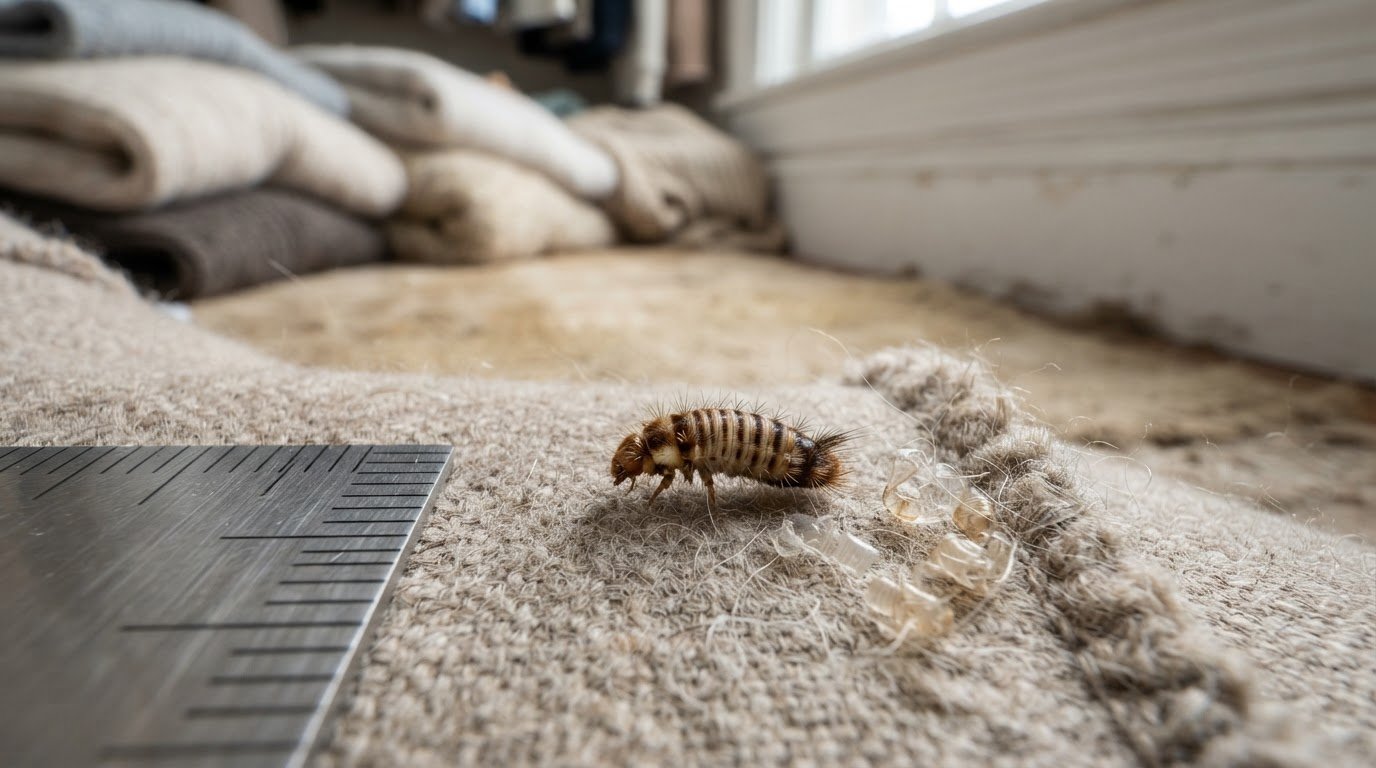
Found a tiny, bristly insect near a closet or damaged fabric and aren’t sure what it is? Carpet beetle larvae identification can be challenging because these pests are small and may be confused with clothes moth larvae or other household insects. To narrow it down, consider the insect’s appearance, where you found it, and any nearby signs.
It’s understandable to worry that clothing, rugs, or stored belongings may be affected. But one insect alone may not tell the whole story. Carpet beetle larvae are typically about 1/4 to 1/2 inch long, and their shape, coloring, and bristles can vary. Shed skins and fabric damage may offer additional clues.
This guide explains what to look for, how to compare carpet beetle larvae with common lookalikes, and what details to record if you seek professional identification. Use appearance, location, and surrounding evidence together to assess what you’ve found and decide what to do next.
Key Takeaways
- For carpet beetle larvae identification, look for an elongated body with visible bristles, while keeping in mind that color and shape vary.
- Check where you found the insect and whether shed skins, lint, or fabric damage are nearby.
- Compare body hairiness and surrounding evidence to help distinguish carpet beetle larvae from clothes moth larvae.
- Record the insect’s appearance and location, and take a clear photo beside a size reference to support identification.
- Recurring sightings, multiple shed skins, or ongoing fabric damage may warrant professional assessment.
Carpet Beetle Larvae Identification: What Do They Look Like?
Look for a small, elongated larva with a body that may be oval or tapered, noticeable bristles, and coloring that ranges from light brown to darker or banded shades. These features can help with carpet beetle larvae identification, but no single color or marking confirms what you’ve found.
Carpet beetle larvae are small, bristly insects with elongated bodies that may appear oval or tapered and vary in color and pattern. Many are about 1/4 to 1/2 inch long, though appearance can differ by species and development stage. You may also find papery shed skins, but a skin alone doesn’t show whether larvae are still active.
For a closer visual reference, watch this video showing a carpet beetle larva and adult:
Common carpet beetle larval features
Viewed from above, the body often looks longer than it is wide, with a rounded middle and a narrower end. Fine hairs or bristles may cover the body, giving it a fuzzy or rough appearance rather than a smooth one. Some larvae have visible bands or alternating light and dark areas; others look more evenly colored. Assess the overall shape and texture together instead of relying on one marking.
A shed larval skin can look like a dried, hollow version of the insect and may retain its bristly outline. Finding one is useful information to record, especially near susceptible materials, but the larva may have moved on. Consider the skin alongside any live insects and other signs.
Why one specimen may look different from another
Varied, black, and furniture carpet beetles are distinct groups, and their larvae don’t all look alike. Black carpet beetle larvae tend to be more tapered, while varied and furniture carpet beetle larvae are often more oval and densely bristled. Color and markings can also change as a larva develops, so a pale or dark appearance alone isn’t enough to identify the species.
The Varied carpet beetle reference describes one common species, but compare its details cautiously with what you observe. For a more reliable assessment, note the body shape, bristles, color pattern, and whether you found a live larva or a shed skin.
Where Carpet Beetle Larvae Hide and What Their Presence Can Signal
Carpet beetle larvae are more likely to be noticed in quiet, undisturbed places than in open areas. They may be found near materials they can feed on, including wool, silk, fur, feathers, and other animal-based fibers. Lint, hair, dead insects, and accumulated debris can also provide food. A sighting in one of these places is a reason to investigate, not proof of a widespread problem.
For carpet beetle larvae identification, consider the location alongside the insect’s appearance and other signs. The University of California IPM pest note describes carpet beetle habitats, food sources, and damage, providing context for assessing a possible find. A larva or shed skin near susceptible materials may warrant closer observation and further identification.
Common places to check when documenting a sighting
Check closets, stored clothing or textiles, rugs, and upholstered furnishings. Less-disturbed storage spaces, folds or edges of stored materials, and areas where lint and debris collect are also worth noting. These are examples, not a complete checklist. Household conditions vary, and finding an insect in one location doesn’t establish where it came from or whether more are present.
Record the specific location rather than simply noting that you found an insect indoors. For example, distinguish a larva seen near a wool rug from one found in a storage area with no visible fabric damage. That context can make later identification more precise.
Signs that may accompany carpet beetle larvae
Keep each observation distinct. A live larva is an insect; a shed skin is a dry, stationary casing left behind as the larva develops. Adult beetles are a separate life stage and don’t cause fabric damage indoors. Irregular holes or worn areas in fabric are clues to damage, but they can have other causes and don’t identify the insect on their own.
Note whether signs occur together and in the same area. Fabric damage near a shed skin provides useful context, but neither sign alone confirms carpet beetles or shows that activity is ongoing. Recurring sightings, several shed skins, or continuing damage may justify professional assessment if the source or insect remains uncertain.
If identification is unclear or activity continues, professional pest-control guidance may help assess what you’ve observed. Contact Mosquito Assassin Pest Control to ask about your concerns and whether further guidance is available.
Carpet Beetle Larvae vs. Clothes Moth Larvae: How to Tell Them Apart
Carpet beetle larvae and clothes moth larvae can both be found near damaged natural-fiber items, so location alone may not settle the question. Compare body shape and surface texture, then check for nearby evidence such as shed skins, silk-like webbing, or a case. These clues can narrow the possibilities, but they can’t confirm every specimen.
Observable differences between the two larvae
Carpet beetle larvae are usually bristly or hairy, while clothes moth larvae generally have a smoother, pale, caterpillar-like appearance. Clothes moth larvae may leave silk webbing or use a portable silk-like case, depending on the type and setting. Neither clue is guaranteed to be present. Color alone is not a reliable way to tell them apart.
| Clue | Carpet beetle larva | Clothes moth larva |
|---|---|---|
| Body form | Often elongated, oval, or tapered | Generally caterpillar-like and elongated |
| Hairiness | Typically visibly bristly or hairy | Usually appears smoother |
| Nearby evidence | Shed larval skins or irregular fabric damage may be present | Silk-like webbing or a portable case may be present |
These are general comparison points, not a definitive test. The University of California IPM guide describes carpet beetle species and the damage their larvae can cause. Compare the full set of clues, including the insect’s appearance and what is nearby, rather than treating one feature as conclusive.
Other lookalikes and when identification is uncertain
Small household larvae can be difficult to identify from memory, especially if the specimen is tiny, partly obscured, or seen only briefly. Other insects may also appear around stored items or fabrics. For clearer carpet beetle larvae identification, compare a sharp photograph with a reliable reference and note where the insect was found and whether there were shed skins, webbing, or fabric damage.
A comparison can narrow the possibilities, but it may not confirm every specimen. If the appearance and surrounding signs remain inconclusive, or sightings and damage continue, professional identification may help clarify what is present and whether further assessment is appropriate.

How to Document a Possible Carpet Beetle Larva
Clear observations can make carpet beetle larvae identification more reliable, especially if the insect is no longer visible. Record what you noticed without assuming that a single find confirms an infestation. A photo, precise location, and notes about nearby signs provide more useful context than a description from memory alone.
What details help clarify an identification
Use a simple sequence: note the date and exact location, then describe the object’s shape, visible hairs or bristles, markings, and approximate size. Avoid guessing the species. Record whether it was a moving insect, a stationary shed skin, or an object you couldn’t confidently identify.
- Photograph the specimen clearly. If possible, include a ruler or another familiar size reference in the frame. Use enough light and focus on the body’s outline and surface texture.
- Record nearby signs separately. Note whether similar specimens appeared nearby, and photograph any shed skins or fabric damage as separate observations.
- Describe the setting. Include what the insect was near, such as stored textiles, a rug, or an upholstered item, without treating its location as proof of the cause.
Keep your notes factual. “Small, brown, bristly object beside a wool rug” is more useful than “carpet beetle infestation,” which assumes both an identification and a broader problem that the observation alone may not establish.
When a photograph is not enough
A blurred image, poor lighting, or missing size reference can hide important details. A photo may also show a shed skin or debris rather than a live larva. If the image doesn’t clearly show body shape and texture, describe what remains uncertain instead of drawing a firm conclusion. Comparing a clear photograph with reliable identification references can help narrow the possibilities, but it may not settle every case.
If uncertainty persists, similar signs keep appearing, or fabric damage continues, professional pest identification may help clarify what’s present. A home observation can provide useful evidence, but it doesn’t by itself confirm an infestation. If you’re unsure what your observations indicate, contact a pest control professional to ask whether further assessment may be appropriate.
When to Seek Professional Help for Suspected Carpet Beetle Larvae
A single uncertain sighting may not establish an infestation. Consider seeking professional assessment if you repeatedly find possible larvae, notice several shed skins in the same area, or see fabric damage that continues. These signs are more useful when considered together, but they still need to be identified in context.
Professional advice may also help when you can’t tell whether you’re looking at a carpet beetle larva, a clothes moth larva, or another small household insect. For a broader overview of what homeowners can expect from pest management, see this general pest control guide.
What to expect from an identification conversation
A professional may ask where you found the insect or shed skin, how often signs appear, and whether fabric damage is nearby. Share clear photographs and notes about appearance, location, dates, and repeated sightings. These details can help explain the concern, but they don’t guarantee a specific inspection method, treatment, timeline, or outcome.
Before arranging help, confirm that the provider can assess the pest you suspect. Mosquito Assassin Pest Control LLC’s professional pest control services page describes its listed offerings. Contact the company to ask whether it can advise on carpet beetles specifically.
Finding relevant local information
Local professional help may be relevant for residents in Erie and Crawford Counties in Pennsylvania and Ashtabula County in Ohio. Check the company’s service area information to see whether your location is included. If identification remains uncertain or activity continues, contact the company for professional recommendations and ask whether it can advise on your specific concern.
Keep your notes and images available for that conversation. A careful record can help clarify what you observed, but a photograph or home observation does not confirm an infestation.
Disclaimer: The information provided on this blog is for general informational purposes only and is not intended as professional pest control advice. Conditions vary by property, environment, and location. Reading this content does not create a service agreement. For an inspection or professional recommendations, please contact Mosquito Assassin Pest Control LLC directly.
Use the Clues to Choose Your Next Step
Reliable carpet beetle larvae identification depends on more than color or a single sighting. Body shape and bristles, the location, and nearby evidence such as shed skins or fabric damage all help narrow the possibilities. Comparing these clues with common lookalikes can guide your next step, but unclear images or recurring signs may call for professional assessment.
Keep a clear photo and notes about where and when you found the insect, whether it was moving, and what signs appeared nearby. This record can help explain the concern without treating one observation as proof of an infestation.
Mosquito Assassin Pest Control LLC serves Erie and Crawford Counties in Pennsylvania and Ashtabula County in Ohio. If activity continues or identification remains uncertain, contact the company to ask about professional recommendations and whether it can advise on your specific concern.
With careful observations, you can take an informed next step without jumping to conclusions.
Disclaimer: The information provided on this blog is for general informational purposes only and is not intended as professional pest control advice. Conditions vary by property, environment, and location. Reading this content does not create a service agreement. For an inspection or professional recommendations, please contact Mosquito Assassin Pest Control LLC directly.
Frequently Asked Questions
What do carpet beetle larvae look like?
Carpet beetle larvae are small, elongated insects with visible hairs or bristles. Their bodies may look oval or tapered, and colors can range from light brown to darker or banded patterns. Appearance varies among species and as larvae develop, so color alone isn’t enough to identify one. Look at body shape and hairiness, then consider where it was found and whether shed skins or fabric damage are nearby.
How can you tell carpet beetle larvae from clothes moth larvae?
Carpet beetle larvae are generally bristly, while clothes moth larvae are usually smoother and caterpillar-like. Clothes moth activity may be accompanied by silk-like webbing or a portable case, but these clues aren’t always present. Both types can occur near susceptible fabrics, so location and fabric damage alone don’t confirm the insect. Compare several visible clues, including body texture, and seek help if the specimen remains unclear.
Can carpet beetle larvae be mistaken for bed bugs?
They can be confused at a quick glance, but their body forms differ. Carpet beetle larvae are elongated and bristly. Bed bugs are not larvae; they develop through nymph stages and typically have flatter, oval bodies without the conspicuous bristles of carpet beetle larvae. A brief or blurry sighting may not show these details clearly. Use a sharp photograph and reliable reference, and get professional identification if uncertainty persists.
Where are carpet beetle larvae usually found in a home?
They may be noticed in quiet areas near materials that can provide food, such as closets, stored textiles, rugs, or upholstered furnishings. Less-disturbed storage spaces and spots where lint, hair, or debris collect may also be worth noting. These are possible locations, not a complete checklist. Finding an insect in one of these places doesn’t by itself establish that it’s a carpet beetle or that an infestation is present.
What do carpet beetle larval shed skins look like?
Shed skins are dry, papery remains that can keep the larva’s elongated outline and bristly appearance. Unlike a live larva, a shed skin won’t move, though it may resemble a dried insect at first glance. Note where you found it and photograph it separately from any live specimen or fabric damage. A shed skin is a useful clue, but alone it doesn’t prove that larvae are still active.
Are carpet beetle larvae visible to the naked eye?
Yes. Carpet beetle larvae are generally large enough to see without magnification, although their small size and tendency to occur in less-disturbed places can make them easy to overlook. They are typically about 1/4 to 1/2 inch long, with variation by species and development stage. A clear, well-lit photograph beside a size reference can help capture details for later comparison.
When should I ask a pest professional to identify carpet beetle larvae?
Consider professional identification if sightings recur, you find multiple shed skins, fabric damage continues, or you can’t distinguish the insect from a lookalike. Share clear photographs and notes about where and when you found the signs. Professional pest control may help clarify next steps, but ask whether the provider addresses this pest, as carpet beetle-specific service isn’t confirmed for every company. One observation alone doesn’t confirm an infestation.
Disclaimer: The information provided on this blog is for general informational purposes only and is not intended as professional pest control advice. For an inspection or professional recommendations, please contact Mosquito Assassin Pest Control LLC directly.