
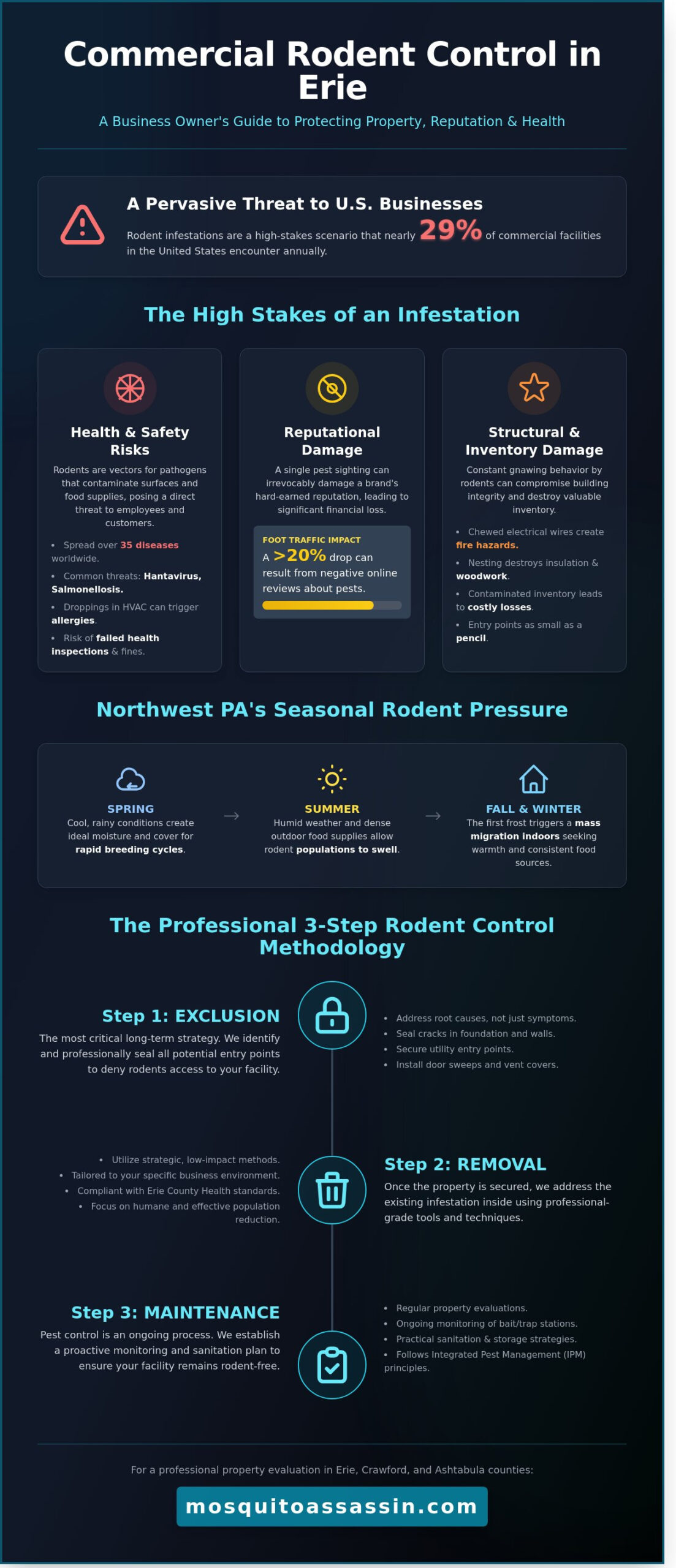
Last Tuesday at 5:45 AM, a restaurant manager in downtown Erie discovered a single chewed flour sack, a discovery that could lead to an immediate health department violation or thousands of dollars in lost inventory. It’s a high-stakes scenario that nearly 29% of commercial facilities in the United States encounter annually. When a business faces these property risks, implementing effective commercial rodent control erie becomes the most important step in protecting both the physical building and its professional reputation.
Business owners understand that maintaining a pristine environment is essential for customer satisfaction, and the presence of pests can quickly damage a brand’s hard-earned local standing. This article outlines the professional strategies used by experts to identify, manage, and prevent rodent activity in commercial properties throughout Erie and Crawford Counties. By exploring these methods, readers gain a better understanding of how to secure their facilities against structural damage and health risks. The following sections provide a detailed overview of professional inspection techniques, sanitation standards, and the long-term exclusion practices necessary for a rodent-free environment.
Disclaimer: The information provided on this blog is for general informational purposes only and is not intended as professional pest control advice. Conditions vary by property, environment, and location. Reading this content does not create a service agreement. For an inspection or professional recommendations, please contact Mosquito Assassin Pest Control LLC directly.
Key Takeaways
- Understand the structural and health risks rodents pose to local businesses and how to maintain compliance with Erie County health department standards.
- Learn how the specific climate patterns of Northwest Pennsylvania influence seasonal rodent behavior and migration into commercial buildings.
- Identify the systematic three-step methodology used in professional commercial rodent control erie to manage infestations by addressing root causes rather than just symptoms.
- Discover practical sanitation and storage strategies that serve as the most cost-effective way to reduce the attractiveness of a business property to pests.
- Recognize the importance of professional property evaluations to establish a baseline for long-term pest management in Erie, Crawford, and Ashtabula counties.
The Impact of Rodents on Commercial Properties in Erie
Rodent infestations represent a critical threat to the stability of businesses throughout Northwestern Pennsylvania. In Erie, the seasonal transition to colder months often drives mice and rats into heated commercial spaces seeking food and shelter. This migration leads to immediate operational disruptions. Securing reliable commercial rodent control erie is a priority for property managers who need to maintain a clean facility. Utilizing professional commercial services helps business owners address these issues before they escalate into long-term liabilities.
The Erie County Department of Health maintains rigorous standards for local facilities, especially those involving food preparation or public lodging. Failure to maintain a pest-free environment can result in failed inspections, fines, or immediate closure orders. Adopting the principles of Integrated Pest Management (IPM) provides a structured approach to exclusion and sanitation that aligns with local regulations.
To better understand the complexities of managing these pests in a business environment, watch this helpful video:
Health and Safety Risks
Rodents are known carriers of various pathogens that can contaminate surfaces and food supplies. The Centers for Disease Control and Prevention (CDC) notes that rodents can spread more than 35 diseases worldwide, including hantavirus and salmonellosis. Droppings and nesting materials often accumulate in hard-to-reach areas like HVAC ducts, where they can trigger allergies or respiratory issues in employees. Maintaining a sanitary environment is essential for workplace safety and protecting the health of the Erie community.
Reputational and Structural Damage
Gnawing behavior is a constant necessity for rodents, which often results in damage to electrical wiring and structural components. This behavior creates significant fire hazards in warehouses or offices when insulation is stripped from live wires. Visual sightings by customers are equally damaging; negative online reviews regarding pests can lead to a 20% or greater drop in foot traffic for local restaurants. Structural integrity is also at risk when rodents nest in insulation or woodwork, leading to costly repairs. Effective commercial rodent control erie ensures that these physical and reputational risks are managed through proactive monitoring and professional oversight.
Disclaimer: The information provided on this blog is for general informational purposes only and is not intended as professional pest control advice. Conditions vary by property, environment, and location. Reading this content does not create a service agreement. For an inspection or professional recommendations, please contact Mosquito Assassin Pest Control LLC directly.
Rodent Behavior and Seasonal Patterns in Northwest Pennsylvania
The climate in Erie and Ashtabula counties dictates the survival tactics of local pests. During cool, rainy springs where precipitation often averages over 3.5 inches per month, rodents find the moisture and cover necessary for rapid breeding. Humid summers follow, providing a dense outdoor food supply that allows populations to swell. When the first frost hits, typically by late October, these animals begin a mass migration toward the consistent warmth of heated commercial structures. Understanding these biological cycles is vital for effective commercial rodent control erie businesses require to protect their inventory and reputation.
Common Rodent Species in the Region
The House Mouse (Mus musculus) is the most frequent intruder in local storefronts and warehouses. These small mammals are highly adaptable and can fit through gaps the size of a pencil. In contrast, Norway Rats are frequently found near the Lake Erie shoreline and in urban centers. These rats are larger, more aggressive, and known for burrowing near foundations or under concrete slabs. Identifying whether a facility faces a mouse or rat issue helps determine the most effective management approach. This identification is the first step in a comprehensive pest strategy designed for long-term exclusion.
Climate-Driven Ingress Points
Erie averages over 100 inches of snow annually. Heavy snowfall often piles against exterior walls, hiding entry points near the foundation that rodents use to escape sub-zero temperatures. Summer humidity also plays a role in building vulnerability. High moisture levels can soften certain building materials or degrade older masonry; this makes it easier for rodents to gnaw through weakened barriers. Consistent monitoring is a core component of commercial rodent control erie professionals recommend for high-traffic facilities.
Following rodent prevention best practices from university extensions helps owners identify these structural vulnerabilities before the winter rush. Regular inspections are necessary because a building that appeared secure in July may have developed new gaps by November due to thermal expansion or moisture damage. If you notice signs of activity like droppings or gnaw marks, professional pest control may help reduce risk before an infestation grows.
The Professional Approach: Exclusion, Removal, and Maintenance
Professional pest management follows a systematic three-step process to ensure long-term results for local businesses. This methodology focuses on addressing the root cause of an infestation rather than just treating the visible symptoms. Instead of a one-size-fits-all solution, a customized plan is developed based on the specific layout and industry of the business. Licensed professionals utilize tools and techniques that are generally more effective than retail options found in hardware stores. This scientific approach ensures that commercial rodent control erie remains effective even in high-pressure environments like food service or logistics.
Step 1: Structural Exclusion
Exclusion involves sealing gaps, cracks, and holes that serve as potential entryways for pests. It’s a critical first step because mice can squeeze through an opening as small as 1/4 inch, while rats only need 1/2 inch to gain access. Professionals use durable materials like steel wool, hardware cloth, and specialized sealants that rodents cannot easily gnaw through. Focusing on the building envelope is the most effective way to prevent future intrusions in facilities throughout Erie and Crawford Counties. By hardening the structure, the reliance on reactive measures is significantly reduced.
Step 2: Effective Removal and Clean-Up
Removal strategies are selected based on the specific environment of the business. For example, food-safe traps are prioritized for restaurants and grocery stores to maintain health code compliance. Beyond removal, the sanitization of nesting areas is critical. This process removes pheromones that attract other rodents to the same location. Safe removal of waste materials, including droppings and nesting debris, helps mitigate the risk of airborne pathogens. Thorough clean-up is a hallmark of professional commercial rodent control erie, ensuring the workspace is returned to a hygienic state.
Step 3: Ongoing Maintenance and Monitoring
Regular check-ins allow for the adjustment of strategies as seasonal pest pressures change. In the Great Lakes region, dropping temperatures often drive rodents indoors, requiring increased vigilance during autumn months. Monitoring stations provide concrete data on pest activity levels within a facility, identifying “hot spots” before they become full-blown infestations. This data-driven approach often aligns with a state-level Integrated Pest Management plan, which emphasizes inspection and sanitation over the unnecessary use of chemicals. Consistent maintenance is often required to remain totally pest-free in high-risk industries. Business owners can find more information regarding these protocols by visiting commercial services.
Disclaimer: The information provided on this blog is for general informational purposes only and is not intended as professional pest control advice. Conditions vary by property, environment, and location. Reading this content does not create a service agreement. For an inspection or professional recommendations, please contact Mosquito Assassin Pest Control LLC directly.
Best Practices for Ongoing Rodent Prevention in Commercial Spaces
Preventative measures are the most cost-effective way to manage pests in a business setting. Statistics from industry reports indicate that reactive treatments for an active infestation can cost a business owner 2 to 3 times more than a consistent prevention strategy. Effective commercial rodent control erie depends on a proactive approach that removes the primary drivers of pest activity: food, water, and shelter. Consistency in daily operations creates an environment that is naturally inhospitable to rats and mice.
Sanitation and Waste Management
Waste management is the first line of defense. Rodents possess a keen sense of smell and are drawn to the scent of decaying organic matter from significant distances. All trash must be stored in heavy duty, tightly sealed containers and removed from the premises every 24 hours. Inside the building, breakrooms and kitchens require a thorough cleaning at the end of every shift. A single ounce of food or a small spill behind a refrigerator can sustain a rodent for several days. Outdoor dumpster areas should be situated at least 50 feet away from the main building entrance to ensure that foraging pests stay far from entry points.
Inventory and Storage Guidelines
Storage rooms are often the most vulnerable areas for commercial rodent control erie because they provide the undisturbed shelter rodents crave. Following specific storage protocols makes these areas easier to monitor.
- Store all inventory on pallets at least six inches off the floor to allow for clear sightlines during inspections.
- Maintain a 12 to 18 inch “inspection white line” between the wall and the stored goods.
- Organize storage rooms to reduce clutter, as stacked cardboard is a preferred nesting material for mice.
- Rotate stock regularly using a First-In, First-Out (FIFO) method to ensure no area remains undisturbed for long periods.
Educating staff on the early signs of activity is equally important. Employees should be trained to look for droppings, gnaw marks on packaging, or grease rubs along baseboards. Early detection typically leads to a faster and less expensive resolution. Professional assistance for detailed prevention audits is available at various locations throughout the service area.
For business owners concerned about property vulnerabilities, professional pest control may help reduce risk.
Implementing a Commercial Pest Management Strategy in Erie
A successful strategy for commercial rodent control in Erie begins with a deep understanding of the local environment. Business owners in Erie and Crawford counties face specific seasonal pressures, especially during the sharp temperature drops typical of October and November. A professional evaluation provides a baseline for the current state of the property, identifying existing tracks, droppings, or gnaw marks. This initial data point allows for a customized approach to exclusion based on the specific architecture of the building. Documentation of pest activity is frequently required for commercial insurance and health policies; in fact, nearly 85% of food-service audits require detailed pest management logs. Reviewing the team’s background can help business owners feel confident that their property is in the hands of experienced professionals who understand Pennsylvania’s regulatory requirements.
Evaluating a Pest Control Partner
Selecting the right provider involves more than a simple search. Focus on companies that utilize Integrated Pest Management (IPM) principles. This method prioritizes structural repairs and sanitation over repeated chemical applications, which can result in a 90% reduction in long-term pest issues. Ensure the provider is licensed and insured to operate in Pennsylvania or Ohio, as state-specific certifications guarantee knowledge of local pesticide laws. Ask about the frequency of service and the specific methods used for commercial exclusion. Monthly visits are standard for high-risk environments like warehouses or restaurants to ensure that entry points remain sealed against intruders.
Taking the First Step Toward Protection
Early intervention is the most effective way to prevent a minor issue from becoming a total infestation. A single pair of rats can produce up to 10 litters in a 12-month period, potentially leading to hundreds of offspring within a single facility. Scheduling a professional inspection helps identify vulnerabilities such as gaps in masonry or poorly sealed loading docks before rodents arrive. Implementing professional commercial rodent control in Erie may help reduce risk and protect the long-term health of the business. Proactive measures often cost 60% less than the intensive reactive treatments required after an infestation has already taken hold of a warehouse or storefront.
Securing Your Erie Business Against Rodent Risks
Rodent infestations can lead to significant structural damage and health code violations in Northwest Pennsylvania commercial spaces. Effective commercial rodent control erie relies on a systematic approach that includes professional exclusion, removal, and consistent maintenance. Licensed and insured technicians utilize customized plans to ensure commercial compliance with local health regulations. Since mice can squeeze through openings as small as 1/4 inch, identifying these vulnerabilities is a critical step in any prevention strategy. It’s essential to address these gaps before seasonal temperature drops drive pests indoors.
Business owners in Erie and Crawford Counties in Pennsylvania, along with Ashtabula County in Ohio, benefit from working with a locally owned and operated provider that understands regional pest behaviors. Maintaining a clean, sealed environment is the most practical way to protect a brand’s reputation and physical assets. For professional recommendations or to schedule an inspection, visit the Mosquito Assassin contact page. Proactive management creates a safer workspace and prevents the long-term costs associated with untreated infestations. Consistent monitoring ensures that small issues don’t become major liabilities for the business.
Disclaimer: The information provided on this blog is for general informational purposes only and is not intended as professional pest control advice. Conditions vary by property, environment, and location. Reading this content does not create a service agreement. For an inspection or professional recommendations, please contact Mosquito Assassin Pest Control LLC directly.
Frequently Asked Questions
How do I know if my business in Erie has a rodent problem?
Signs of a rodent problem include droppings, gnaw marks, and shredded nesting materials. A single mouse can produce 50 to 60 droppings in a 24-hour period, which are often found in dark corners or near food sources. You’ll also notice rub marks, which are dark grease stains left by rodent fur along baseboards. These indicators suggest it’s time to seek commercial rodent control erie to protect your inventory and reputation.
Is professional rodent control safe for use in restaurants and food processing plants?
Professional rodent control is safe for food environments when technicians follow Integrated Pest Management (IPM) protocols. These methods prioritize non-toxic trapping and physical exclusion over chemical applications in sensitive areas. Licensed professionals adhere to FDA Food Code section 6-501.111, ensuring that tamper-resistant stations and monitoring tools are placed away from food preparation surfaces to maintain a compliant and sanitary environment.
How often should a commercial building be inspected for rodents?
Most commercial buildings require monthly inspections to ensure long-term protection against pests. High-risk facilities like restaurants or grocery stores benefit from these 30-day checks to identify issues before they escalate. Lower-risk environments, such as professional offices, might move to a quarterly schedule every 90 days once a baseline of exclusion and sanitation is established and verified by a licensed technician.
What is the difference between residential and commercial rodent control?
Commercial rodent control erie differs from residential services because of the scale, regulatory requirements, and documentation involved. Business properties often have 5 to 10 times more potential entry points than a standard home, requiring more intensive exclusion work. Additionally, businesses must maintain detailed service logs to satisfy health department inspectors and third-party auditors, a requirement that doesn’t exist for private homeowners.
Can rodents in my office cause damage to the building’s electrical system?
Rodents in an office pose a serious threat to the building’s electrical system because their teeth grow 4 to 5 inches every year. To manage this growth, they must gnaw on hard materials, including plastic-coated wiring. The National Fire Protection Association indicates that rodents cause an estimated 20% of fires with undetermined origins in the United States, making prompt intervention essential for fire safety.
What should I do if a customer sees a mouse in my store?
If a customer reports a mouse, you should immediately sanitize the area and check for entry points within a 10-foot radius. Document the time and location of the sighting to help a professional technician narrow down the search area. Addressing the breach quickly is vital, as 75% of consumers say they wouldn’t return to a business after seeing a rodent according to industry surveys.
How long does it take to completely clear a rodent infestation in a warehouse?
Clearing a rodent infestation in a warehouse typically takes between 14 and 28 days depending on the building’s size. While initial trapping can remove a large portion of the population within the first 72 hours, total eradication requires sealing every entry point in the 50,000 square foot or larger facility. This timeline ensures that all existing rodents are captured and no new ones can enter the space.
Are there specific rodent regulations for businesses in Crawford County, PA?
Businesses in Crawford County must follow the Pennsylvania Department of Agriculture’s Title 7, Chapter 46 regulations regarding pest management. These rules mandate that retail food facilities remain free of rodents to prevent the transmission of 35 different diseases. Inspectors check for evidence of infestations during routine visits; failure to comply can lead to fines or temporary closure of the establishment until the issue is resolved.
For businesses concerned about local regulations or active infestations, professional pest control may help reduce risk. For an inspection, visit www.mosquitoassassin.com/contact-us or use the online portal at https://portal.gorilladesk.com/mosquitoassassin.
Disclaimer: The information provided on this blog is for general informational purposes only and is not intended as professional pest control advice. Conditions vary by property, environment, and location. Reading this content does not create a service agreement. For an inspection or professional recommendations, please contact Mosquito Assassin Pest Control LLC directly.