
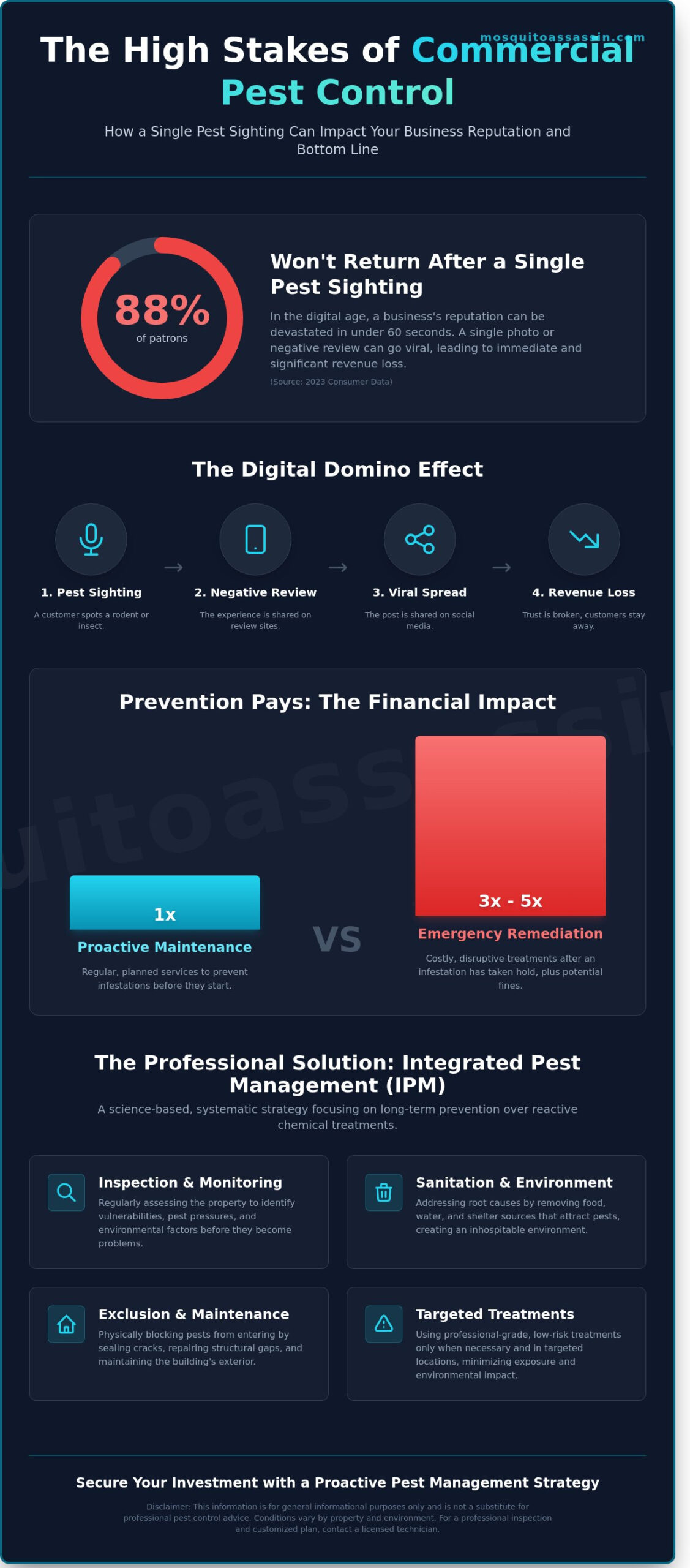
Imagine an Erie restaurateur opening a popular review site on a Tuesday morning only to find a viral photo of a cockroach near the buffet. It’s a nightmare scenario that can devastate a local business’s reputation in less than 60 seconds. You’ve worked hard to build your brand; the last thing you want is a surprise health department fine or a public relations crisis. Professional commercial pest control Erie PA is about more than just killing bugs. In 2023, consumer data indicated that 88% of patrons wouldn’t return to a business after a single pest sighting. Safeguarding your investment in Erie, Crawford, and Ashtabula Counties requires a proactive approach. Maintaining a sterile, professional environment is non-negotiable for success. This guide will show you how professional pest management protects your reputation, ensures health code compliance, and prevents property damage. You’ll learn about audit-ready documentation and long-term prevention strategies that keep your operations running without interruption.
Disclaimer: The information provided on this blog is for general informational purposes only and is not intended as professional pest control advice. Conditions vary by property, environment, and location. Reading this content does not create a service agreement. For an inspection or professional recommendations, please contact Mosquito Assassin Pest Control LLC directly.
Key Takeaways
- Understand how a systematic approach to pest management helps businesses maintain health department standards and protect their professional reputation.
- Discover the benefits of Integrated Pest Management (IPM), a science-based strategy that prioritizes non-chemical methods like sanitation and exclusion.
- Learn to identify and address common threats such as rodents and cockroaches through effective commercial pest control Erie PA strategies.
- Explore proactive prevention techniques, including structural maintenance and exterior sealing, to stop infestations before they impact operations.
- Recognize why customized plans and professional-grade tools are necessary to meet the unique sanitation requirements of different local industries.
The Role of Commercial Pest Control in Erie, PA
Commercial pest management is a rigorous, systematic method for identifying and managing pests within professional environments. In Erie, Pennsylvania, businesses face unique challenges due to the lakefront climate, which often drives rodents and insects indoors during seasonal shifts. Effective management relies on Integrated Pest Management (IPM), a strategy that focuses on long-term prevention by analyzing pest biology and environmental factors rather than relying solely on reactive treatments.
Maintaining a facility free of infestations is a fundamental requirement for operating within Erie County. Professional commercial pest control Erie PA involves routine monitoring to catch vulnerabilities like structural gaps or sanitation lapses before they escalate. It’s about protecting the building’s physical structure and the business’s bottom line. Regular inspections are necessary to identify these weaknesses, as pests can compromise electrical systems or contaminate inventory within a matter of days.
To better understand the intensity of professional pest management in a business setting, watch this report on local industry practices:
Protecting Business Reputation and Revenue
A single sighting of a pest can trigger immediate consequences for a local company. In the age of digital feedback, approximately 80% of customers state they wouldn’t return to a business after seeing a pest. Negative social media reviews can damage a brand’s image overnight, leading to a direct loss in revenue. Professional management helps maintain a welcoming space for clients and staff. Investing in long-term protection plans is statistically more cost-effective than emergency remediation, which can cost three to five times more than preventative maintenance services.
Compliance with Local Health Regulations
The food service and healthcare sectors in Northwest Pennsylvania must meet strict sanitation codes. The Erie County Health Department conducts unannounced inspections where pest activity can lead to immediate closures or fines. Licensed technicians provide the documentation required to prove a business is following a professional pest management schedule. These records are vital during audits, ensuring the facility remains compliant with state and local laws across Erie and Crawford Counties. Professional commercial pest control Erie PA ensures that businesses stay ahead of regulatory requirements and maintain a safe environment for the public.
Professional pest control may help reduce risk for business owners. For more information, visit the contact page or the online booking portal.
Disclaimer: The information provided on this blog is for general informational purposes only and is not intended as professional pest control advice. Conditions vary by property, environment, and location. Reading this content does not create a service agreement. For an inspection or professional recommendations, please contact Mosquito Assassin Pest Control LLC directly.
Understanding Integrated Pest Management (IPM)
Integrated Pest Management (IPM) is a science-based decision-making process that identifies and reduces risks from pests through a combination of techniques. For businesses seeking reliable commercial pest control Erie PA, IPM serves as the industry standard for achieving sustainable and safe results. This approach prioritizes non-chemical methods, such as exclusion and sanitation, to address the root causes of an infestation. Professional strategies focus on the life cycles of pests and their specific interactions with the environment, rather than relying on a one-size-fits-all solution.
The primary goal of this system is to manage pest damage by the most economical means while minimizing hazards to people and property. This methodology aligns with the EPA’s IPM Principles, which emphasize prevention and monitoring over routine chemical applications. By focusing on long-term prevention, commercial properties can maintain a healthier environment for employees and customers alike.
The Four Pillars of Commercial IPM
Effective IPM relies on four core stages to maintain a pest-free environment. These steps ensure that every action taken is necessary and targeted:
- Inspection: A thorough walkthrough of the facility identifies entry points, such as gaps in door sweeps, and potential food sources. In many commercial settings, a detailed inspection can reveal structural vulnerabilities that were previously unnoticed.
- Identification: This step ensures that the specific pest species is targeted with the correct methodology. Accurate identification is critical because different species require different management tactics.
- Monitoring: Professionals use specialized tools and data logs to track pest activity over time. This allows for adjustments based on actual pest pressure rather than guesswork.
- Action: When pest thresholds are exceeded, interventions are tailored to the facility. This includes mechanical traps, structural repairs, or localized treatments designed for maximum efficacy.
Climate Factors in Northwest Pennsylvania
Erie’s humid summers and lake-effect moisture create ideal conditions for various pests to thrive. High humidity levels often lead to increased activity from wood-destroying organisms and moisture-loving insects. During cool, rainy springs, local businesses often see a 25 percent increase in rodent and insect activity as these pests seek dry shelter indoors. Commercial IPM plans must adapt to these seasonal shifts in pest behavior. For instance, when temperatures first drop below 40 degrees Fahrenheit in late autumn, proactive exclusion becomes a priority to prevent rodents from entering warehouses or kitchens. Professional pest control may help reduce risk for businesses in Erie and Crawford Counties during these peak seasonal transitions. For more information, visit commercial services.
Common Pests Facing Erie County Commercial Properties
Business environments in Erie County are susceptible to various pests that threaten property and reputation. Effective commercial pest control Erie PA targets specific species based on the industry and building type. Rodents like mice and rats are a primary concern for the roughly 1,200 food service establishments in the region. These pests contaminate surfaces and chew through wiring, leading to potential fire hazards and structural damage. In warehouses, rodents can destroy packaging and leave behind waste that compromises the safety of stored goods.
Cockroaches are another resilient threat, especially in commercial kitchens and breakrooms. They thrive in warm, damp environments and can jeopardize sanitation standards by carrying pathogens. Similarly, flies are a significant nuisance in food handling areas. They spread bacteria like E. coli and Salmonella every time they land on a surface. Stored product pests like Indian meal moths or saw-toothed grain beetles can infest bulk inventory. A single infested pallet can lead to the loss of thousands of dollars in product, making early detection vital for financial stability.
Rodent Management in Urban and Suburban Erie
Exclusion is the first line of defense against local rodents. Mice can squeeze through a gap as small as 1/4 inch, which is about the size of a dime. Technicians use specialized materials like steel wool or hardware cloth to seal small gaps in building foundations and doorways. Professional commercial services focus on removing nesting materials and food attractants that draw pests inside. Since rodents are prolific breeders, ongoing maintenance is necessary to prevent new populations from becoming established in commercial spaces.
Insect Control for Offices and Retail
Ants and spiders are common issues that can distract employees and bother customers in professional settings. Effective strategies often rely on Integrated Pest Management principles to address the root cause of an infestation rather than just the symptoms. Targeted treatments focus on the building’s exterior perimeter to stop pests before they enter. By maintaining a clear barrier, managers can keep a professional atmosphere without the constant worry of visible insects. Regular inspections help identify moisture issues or landscaping choices that might attract pests to the storefront.
Developing a Proactive Pest Prevention Strategy
Sanitation serves as the primary defense in a robust commercial pest control Erie PA strategy. Pests require three essentials to survive: food, water, and shelter. By removing these resources, a business becomes significantly less attractive to invaders. A 2023 industry study indicated that nearly 90% of indoor pest sightings in commercial settings are directly linked to sanitation lapses or structural entry points. Effective waste management is a critical component of this process. Trash containers should be kept at least 20 feet away from building entrances and emptied daily to prevent odors from attracting flies or rodents. In food service environments, cleaning floor drains weekly can reduce small fly populations by up to 60%.
Exclusion and Structural Repairs
Structural maintenance prevents pests from gaining access to the interior. Professional inspections often reveal vulnerabilities that go unnoticed during daily operations. For example, a gap as small as 0.25 inches allows a mouse to enter a facility; while a cockroach needs only 0.06 inches for entry. Common entry points include utility line gaps, worn door sweeps, and damaged loading dock seals. Maintaining a dry environment is equally vital. Fixing plumbing leaks and ensuring proper site drainage prevents moisture buildup, which is a primary attractant for wood-destroying organisms and silverfish.
The Importance of Professional Monitoring
Professional monitoring stations provide essential data regarding pest pressure and movement patterns. Instead of relying on reactive treatments, technicians analyze these patterns to adjust the management plan as seasons change. In Erie County, pest activity shifts significantly between the humid summer months and the freezing winter. Data-driven monitoring allows for targeted interventions, which reduces the reliance on broad-spectrum chemical applications. Training employees to recognize early signs, such as droppings or chewed packaging, ensures that issues are reported before they escalate into full infestations.
Disclaimer: The information provided on this blog is for general informational purposes only and is not intended as professional pest control advice. Conditions vary by property, environment, and location. Reading this content does not create a service agreement. For an inspection or professional recommendations, please contact Mosquito Assassin Pest Control LLC directly.
Professional Solutions for Maintaining a Pest-Free Business
Licensed technicians utilize advanced materials and specialized equipment regulated by the EPA that aren’t available for general retail purchase. These professional-grade solutions provide targeted results that standard over-the-counter sprays often fail to achieve. For those seeking commercial pest control Erie PA, a systematic approach is necessary to prevent structural damage and inventory loss. By addressing the root cause of an infestation, professional management helps lower long-term maintenance costs. Service coverage for these specialized treatments extends across Erie and Crawford Counties in Pennsylvania, as well as Ashtabula County in Ohio.
Professional intervention provides a layer of security that DIY methods lack. Technicians use data-driven methods to track pest activity, ensuring that treatments are applied only where they’re most effective. This precision helps reduce the volume of materials used while increasing the success rate of the intervention. Professional pest control may help reduce the risk of infestations and property damage by identifying vulnerabilities before they’re exploited by pests.
Tailored Industry Solutions
Every business environment presents unique biological challenges. A warehouse has different risks than a restaurant. Food service facilities must adhere to strict health codes to prevent cross-contamination; meanwhile, industrial sites often focus on exclusionary methods to keep rodents out of loading docks. Healthcare facilities require even higher standards to protect vulnerable patients from allergens and pathogens carried by pests. You can learn more about the professional standards used in local commercial management to see how these protocols are implemented for different sectors.
Next Steps for Business Owners
Scheduling a professional inspection is the most effective way to identify entry points before they lead to a full-blown infestation. It’s helpful for local companies to review pest control prices to understand how to budget for year-round protection. For tailored recommendations, businesses in the location area should consult with a licensed provider to develop a strategy that fits their specific facility. Taking proactive steps today prevents the high costs associated with emergency remediation in the future.
Protecting Your Business Reputation
Protecting a company’s reputation starts with a rigorous approach to facility management. Implementing a customized Integrated Pest Management (IPM) plan helps businesses in Erie, Crawford, and Ashtabula Counties address the root causes of infestations rather than just the symptoms. These strategies focus on long-term prevention by combining structural maintenance with targeted professional interventions. Licensed and insured professionals in 2 states, PA and OH, provide the technical expertise needed to navigate the specific biological cycles of pests common to the Great Lakes region.
Reliable commercial pest control Erie PA depends on a consistent four-step process involving inspection, customized planning, treatment, and follow-up monitoring. Business owners who prioritize these proactive measures often see a measurable reduction in property damage and health code risks. It’s essential to maintain high standards for hygiene and structural integrity to keep local pests at bay. For those seeking professional guidance on facility safety, contacting professional pest control experts for an inspection can help identify hidden vulnerabilities. Taking these steps creates a safer, more professional environment for every visitor who walks through the door.
Disclaimer: The information provided on this blog is for general informational purposes only and is not intended as professional pest control advice. Conditions vary by property, environment, and location. Reading this content does not create a service agreement. For an inspection or professional recommendations, please contact Mosquito Assassin Pest Control LLC directly.
Frequently Asked Questions
Is commercial pest control required by law in Erie, PA?
Pennsylvania state law and local Erie County health codes require food service establishments to maintain a pest-free environment. Title 7 of the PA Code outlines specific sanitation requirements for businesses handling food. While non-food businesses might not have the same statutory mandates, failing to address infestations can lead to violations of local property maintenance codes or 100 percent loss of a certificate of occupancy.
How often should a business have a professional pest inspection?
Most commercial properties in the Erie area benefit from monthly or quarterly inspections to maintain a proactive defense. High-risk environments like food processing plants or restaurants often require monthly visits, while office spaces might only need quarterly checks. Regular monitoring helps identify issues before they become a 100 percent infestation. Consistent 30-day cycles are the standard for high-traffic retail locations.
Can pest control treatments be done discreetly?
Professional services are often performed during off-hours or with unmarked vehicles to maintain a business’s reputation. Many technicians schedule visits before 8:00 AM or after 5:00 PM to ensure minimal interaction with customers. Using low-profile bait stations and targeted applications also helps keep the process out of the public eye. Approximately 75 percent of commercial clients prefer service during non-business hours.
What industries benefit most from professional pest management?
Industries like food service, healthcare, and hospitality benefit most from commercial pest control Erie PA due to strict regulatory standards. According to industry data, 90 percent of restaurants will experience a pest-related issue if a preventative plan isn’t in place. Warehousing and retail also rely on these services to prevent property damage and inventory loss from rodents or insects. Maintaining a clean facility is essential for long-term success.
How long does a typical commercial pest treatment take?
A typical treatment for a 2,500 square foot facility usually takes between 45 and 90 minutes. The exact time depends on the size of the building and the specific pests being addressed. Initial inspections are often longer, sometimes reaching 120 minutes, as technicians must map out entry points and nesting sites throughout the property. Follow-up visits are generally shorter once a baseline is established.
What should employees do if they see a pest in the workplace?
Employees should immediately report the sighting to a designated manager and document the location, time, and type of pest seen. It’s helpful if they can take a photo with a smartphone to assist in identification. Staff shouldn’t attempt to use over-the-counter sprays, as these can interfere with professional baiting systems and scatter the pests into harder-to-reach areas. Clear communication prevents small issues from growing.
How does professional pest control help with health department audits?
Commercial pest control Erie PA provides the necessary documentation and logbooks that health inspectors review during annual audits. Having a record of regular inspections and corrective actions can prevent the 10 to 15 point deductions often associated with pest activity. Professional management ensures that a business meets the Integrated Pest Management (IPM) standards required by many regulatory agencies. These records prove that a business is proactive about sanitation.
Are commercial pest treatments safe for customers and staff?
Licensed professionals use products and methods that are specifically designed for use in public workspaces when applied according to the label. Integrated Pest Management focuses on non-chemical deterrents and targeted applications to minimize exposure. Technicians often apply treatments in areas inaccessible to the public, such as behind equipment or inside wall voids, to ensure a high level of safety. These methods follow strict federal safety guidelines.
For businesses in Erie and Crawford Counties, professional pest control may help reduce risk. To discuss a customized plan for a commercial property, visit www.mosquitoassassin.com/contact-us for more information.
Disclaimer: The information provided on this blog is for general informational purposes only and is not intended as professional pest control advice. Conditions vary by property, environment, and location. Reading this content does not create a service agreement. For an inspection or professional recommendations, please contact Mosquito Assassin Pest Control LLC directly.