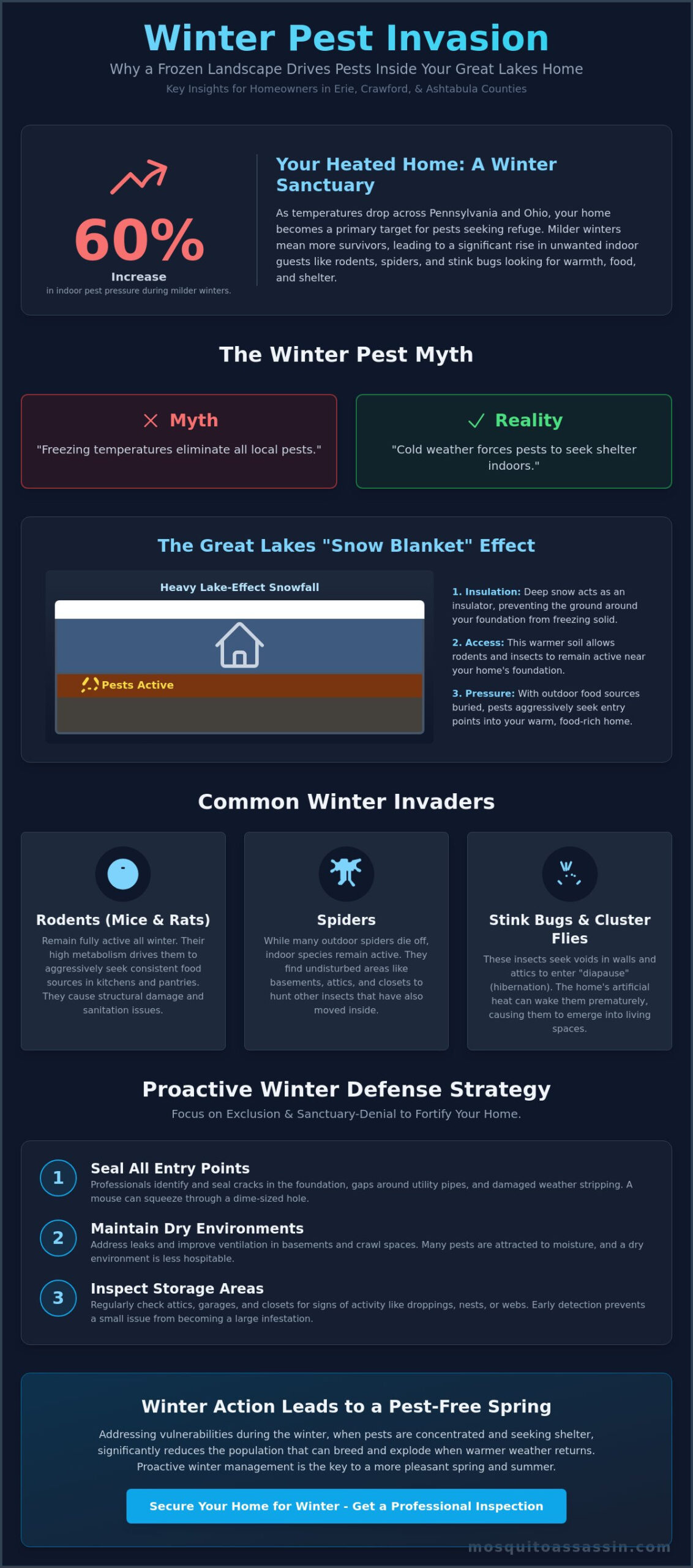
Why would a homeowner invest in winter pest control services when the ground is frozen and the insects appear to be gone? It is a common assumption that the Great Lakes winter acts as a natural reset for local ecosystems, yet the reality inside a heated home is often quite different. While the exterior environment remains harsh, the interior of a house becomes a primary sanctuary for survival. Data for the 2025-2026 season indicates that milder winters are leading to a 60 percent increase in indoor pressure from pests like rodents, spiders, and stink bugs in the region.
You likely agree that finding mouse droppings in the pantry or spotting a spider in the living room during the holidays is an unwelcome stress. This guide explains why professional winter management is essential for protecting properties in Erie County, Crawford County, and Ashtabula County from structural damage and sanitation issues. By focusing on exclusion and sanctuary-denial, homeowners can maintain a pest-free environment throughout the coldest months. This article examines common entry points, the behavior of overwintering insects, and the long-term benefits of prevention for the upcoming spring season.
Disclaimer: The information provided on this blog is for general informational purposes only and is not intended as professional pest control advice. Conditions vary by property, environment, and location. Reading this content does not create a service agreement. For an inspection or professional recommendations, please contact Mosquito Assassin Pest Control LLC directly.
Key Takeaways
- Understand why freezing temperatures in Pennsylvania and Ohio do not eliminate pests but instead drive them indoors toward heat and food sources.
- Learn how professional winter pest control services utilize structural fortification and exclusion to physically block rodents and insects from entering the home.
- Identify the specific behaviors of common winter invaders like rodents and spiders, which remain active indoors throughout the coldest months.
- Discover practical prevention strategies, such as maintaining dry environments and inspecting storage areas, to catch infestations early.
- Explore how addressing entry points during the winter can significantly reduce pest activity and pressure for the following spring.
Why Winter Pest Control Services Are Essential in Cold Climates
Winter pest control services involve the systematic identification and sealing of entry points that pests use to seek refuge from the elements. Many homeowners believe that the freezing temperatures characteristic of the Great Lakes region naturally eliminate insect and rodent populations. However, cold weather in areas like Erie County doesn’t eradicate these pests; it simply forces them to relocate. When the external environment becomes inhospitable, the climate-controlled interior of a home becomes the primary target for survival.
Professional management during the colder months shifts focus from broad outdoor barriers to the interior and the immediate perimeter of the structure. Maintaining this defensive line is a critical step in preventing a population explosion when spring temperatures arrive. By addressing vulnerabilities while pests are concentrated in specific nesting areas, homeowners can avoid the widespread infestations that often follow a winter of neglect. Professional pest control may help reduce risk by identifying these hidden sanctuary spots before they become unmanageable.
To better understand this concept, watch this helpful video:
The Biological Reality of Overwintering Pests
Many insects in Pennsylvania and Ohio enter a state known as diapause. This is a biological mechanism similar to hibernation where metabolic activity slows significantly to conserve energy. However, the artificial warmth generated by modern heating systems can disrupt this cycle. When a home stays at a consistent temperature, pests like stink bugs or cluster flies may become active prematurely. They often emerge into living areas in search of moisture or food. Survival mechanisms for local insects often involve producing specific proteins that prevent cell damage during deep freezes, meaning they’re ready to resume activity the moment they find a heat source.
Lake Effect Winters and Pest Migration
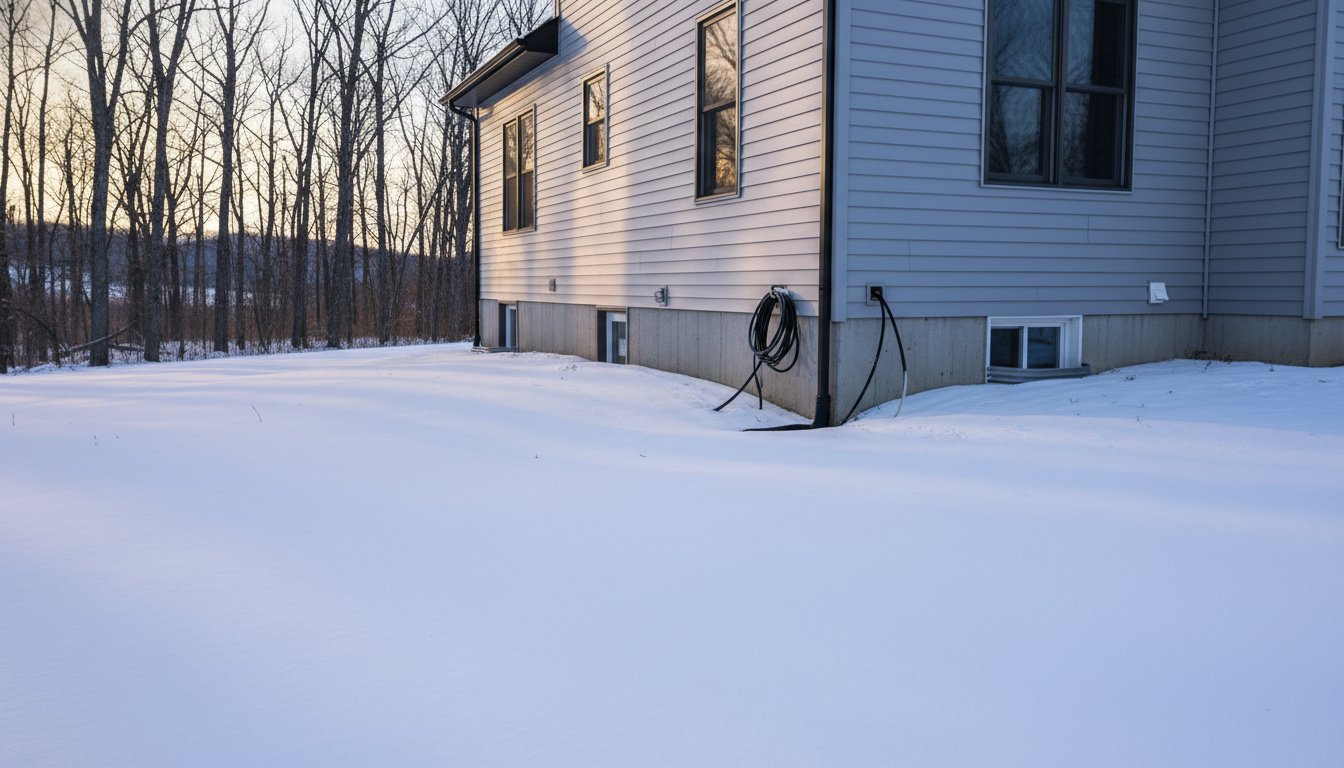
In Ashtabula and Crawford counties, heavy lake-effect snowfall creates a unique environment for pest migration. While deep snow might seem like a deterrent, it actually acts as a powerful insulator for foundations. This snow blanket prevents the ground near the home from freezing as deeply, allowing insects and rodents to remain active near entry points. Extreme cold puts immense pressure on rodent populations, such as mice and rats, to find consistent caloric intake. Because their natural outdoor food sources are buried, they aggressively seek out kitchens and pantries. During intense lake-effect storms, attic spaces and basements become primary targets for nesting because they offer undisturbed sanctuary away from the wind and snow.
Disclaimer: The information provided on this blog is for general informational purposes only and is not intended as professional pest control advice. Conditions vary by property, environment, and location. Reading this content does not create a service agreement. For an inspection or professional recommendations, please contact Mosquito Assassin Pest Control LLC directly.
Common Pests Found in Pennsylvania and Ohio Homes During Winter
While the previous section explained the environmental drivers behind pest migration, identifying the specific species that invade local properties is the next step in effective management. Rodents are the most frequent winter invaders because their high metabolism requires a consistent caloric intake that the frozen outdoors cannot provide. Unlike many insects, rodents don’t enter diapause; they remain fully active and destructive throughout the season. Homeowners often seek professional winter pest control services to address these mammals before they establish permanent nesting sites.
Spiders also remain active indoors where humidity levels and food sources are stable. While summer spiders often die off or lay eggs and disappear, indoor species can thrive year-round in the controlled climate of a basement or crawlspace. Additionally, cockroaches thrive in moisture-rich environments like kitchens and bathrooms. Because winter air is naturally dry, these pests congregate around leaky pipes or under sinks. Finally, overwintering insects such as brown marmorated stink bugs and multi-colored Asian lady beetles may emerge on sunny winter days, mistakenly believing spring has arrived due to the warmth hitting the home’s siding.
Rodent Behavior and Nesting Habits
Mice and rats are masters of finding small vulnerabilities in a home’s exterior. Common signs of an active infestation include small, dark droppings, gnaw marks on food packaging or baseboards, and greasy rub marks along walls. These animals target fiberglass or cellulose insulation because it provides the perfect material for nesting. By shredding insulation in attics and crawlspaces, they compromise the home’s energy efficiency. Beyond structural damage, rodents pose significant health risks. Their droppings and urine can contaminate surfaces with pathogens such as Salmonella or trigger respiratory issues in sensitive individuals. Professional pest control may help reduce risk by removing attractants and sealing entry points.
Spider Activity and Indoor Food Chains
It’s a common misconception that all spiders come inside from the garden when it gets cold. In reality, many indoor spiders belong to species that have evolved to live specifically in human structures. A sudden increase in spider sightings often indicates a secondary infestation of smaller prey insects like fruit flies, fungus gnats, or silverfish. Spiders typically congregate in undisturbed areas where they can spin webs without interference. Basements, dark storage corners, and the spaces behind large appliances are primary hotspots. While most local spiders are harmless, their presence serves as a biological indicator that the home’s “indoor ecosystem” is supporting a variety of smaller pests that require professional attention.
Disclaimer: The information provided on this blog is for general informational purposes only and is not intended as professional pest control advice. Conditions vary by property, environment, and location. Reading this content does not create a service agreement. For an inspection or professional recommendations, please contact Mosquito Assassin Pest Control LLC directly.
The Importance of Exclusion and Structural Fortification
Exclusion is the practice of physically blocking pests from entering a structure. It represents a shift from reactive treatments to proactive structural fortification. While the previous sections discussed the biological pressure of lake-effect winters, exclusion provides the physical barrier necessary to withstand that pressure. Many homeowners find that winter pest control services are most effective during the coldest months because pest activity is concentrated at specific entry points. Identifying these vulnerabilities now prevents an established infestation from taking root deep within the walls or attic.
Professional technicians focus on utility penetrations and foundation gaps during a winter inspection. These are the highways that rodents and insects use to navigate from the frozen soil to the warmth of a basement. Sealing these areas offers a permanent solution that significantly reduces the reliance on seasonal chemical applications in the future. By denying sanctuary to pests, property owners in Erie and Crawford counties can maintain a more sanitary living environment without constant intervention.
Identifying Common Entry Points
The most vulnerable areas of a home are often where plumbing, gas, and electrical lines enter the building. Over time, the materials around these penetrations can settle or degrade, leaving gaps. Damaged door sweeps and torn window screens also facilitate easy migration for spiders and stink bugs. A critical rule of thumb used by professionals is the pencil test. If a gap is at least a quarter inch wide, or roughly the diameter of a standard pencil, it’s large enough for a young mouse to squeeze through. These tiny openings are frequently found at the corners of garage doors or where the siding meets the foundation. Professional pest control may help reduce risk by locating these hidden breaches that are often missed during a casual walkthrough.
Materials Used in Professional Exclusion
Effective exclusion requires materials that can withstand the persistent gnawing of rodents. Professionals often use copper mesh or stainless steel wool to pack gaps before applying specialized sealants. Unlike standard expanding foam, which mice can easily chew through to create a tunnel, these metallic barriers provide a painful and impenetrable deterrent. High-grade elastomeric sealants are then used to create a weather-tight finish. Weather stripping is another essential component. While it’s often viewed as a way to improve energy efficiency, it also serves as a critical barrier against crawling insects. Using the right materials ensures that the fortification remains intact despite the extreme temperature fluctuations common in Ashtabula County.
Disclaimer: The information provided on this blog is for general informational purposes only and is not intended as professional pest control advice. Conditions vary by property, environment, and location. Reading this content does not create a service agreement. For an inspection or professional recommendations, please contact Mosquito Assassin Pest Control LLC directly.
Homeowner Checklist for Winter Pest Prevention
While structural fortification provides the necessary physical barrier against invaders, daily maintenance serves as the first line of defense. Professional winter pest control services are most effective when paired with consistent homeowner habits that remove the incentives for pests to remain. A clean and dry environment eliminates the food and water sources that attract rodents and insects during the harsh winters of Northwest Pennsylvania and Northeast Ohio. By following a systematic checklist, you can significantly reduce the likelihood of a mid-winter infestation taking root in your living space.
Regular inspections of storage areas like basements, attics, and garages are essential. Pests thrive in undisturbed environments, so moving boxes and checking for signs of shredded paper or droppings can help catch a problem before it spreads. Managing indoor humidity is also a critical factor. Because winter air is naturally dry, pests are aggressively drawn to any source of moisture within a home. Addressing these attractants now prevents the structural damage and sanitation issues that often occur when pests are left to nest until spring.
Kitchen and Pantry Management
Pantry pests and rodents are drawn to the scent of unsealed food. Cardboard packaging offers no protection against gnawing teeth, so dry goods should be transferred into airtight plastic or glass containers. It’s also vital to clean behind stoves and refrigerators where grease and crumbs accumulate over time. Finally, fixing leaks under sinks immediately removes the moisture sources that sustain cockroaches and silverfish throughout the coldest months of the year.
Exterior Perimeter Maintenance
Pest pressure often starts at the woodpile. Keep firewood at least twenty feet from the foundation to prevent it from serving as a bridge for rodents. Clearing dead leaves and vegetation away from the home’s perimeter removes the damp environments that attract overwintering insects. Additionally, ensure gutters remain clear of debris. Clogged gutters trap moisture against the roofline, eventually rotting wood and creating soft entry points for pests seeking the warmth of your attic.
Implementing these simple changes can make your property far less inviting to unwanted guests. For homeowners who want to ensure their defenses are complete, scheduling winter pest control services provides a professional evaluation of hidden risks. A thorough inspection can identify vulnerabilities that are often missed by the untrained eye, ensuring your home remains a sanctuary throughout the holiday season.
Disclaimer: The information provided on this blog is for general informational purposes only and is not intended as professional pest control advice. Conditions vary by property, environment, and location. Reading this content does not create a service agreement. For an inspection or professional recommendations, please contact Mosquito Assassin Pest Control LLC directly.
Professional Winter Pest Management Strategies
Professional winter pest control services provide the final layer of defense by identifying hidden nesting sites that are inaccessible to the average homeowner. While previous sections highlighted the importance of exclusion and sanitation, a professional inspection uncovers activity within the structural voids of the building. Licensed technicians utilize localized treatments that are both targeted and family-safe, ensuring the interior environment remains protected without unnecessary chemical exposure. Year-round protection plans are particularly valuable in the Great Lakes region because they ensure the exterior barrier is reinforced as soon as the ground thaws in the spring.
Ongoing monitoring is necessary because a home is a dynamic structure. House settling or damage from heavy winter storms in Ashtabula County can create new vulnerabilities in the foundation or roofline. Professional pest control may help reduce risk by catching these changes before they are exploited by a new wave of invaders. This proactive approach ensures that the structural fortification discussed earlier remains intact throughout the year.
The Comprehensive Inspection Process
A thorough professional evaluation covers the most secluded areas of a property, including crawlspaces, attics, and basements. These are the locations where pests such as rodents and spiders are most likely to establish long-term colonies. Technicians use specialized tools to detect activity behind walls, such as moisture meters that identify the damp conditions favored by cockroaches and silverfish. A customized plan is then developed based on the specific architecture of the home, whether it’s a historic farmhouse in Crawford County or a modern suburban residence in Erie. This tailored strategy ensures that every unique vulnerability is addressed.
Targeted Interior Treatments
When an infestation is detected inside the home, professionals use precise application methods like gel baits and dusts within wall voids. These materials are placed specifically where pests congregate, which is often far away from the reach of children and pets. This targeted approach is a core part of modern pest management, focusing on effectiveness while maintaining high safety protocols for residents. Addressing infestations at the source prevents pests from spreading to other areas of the house. Professional pest control may help reduce risk by utilizing these specialized protocols that provide long-term results while prioritizing the health of the household.
Disclaimer: The information provided on this blog is for general informational purposes only and is not intended as professional pest control advice. Conditions vary by property, environment, and location. Reading this content does not create a service agreement. For an inspection or professional recommendations, please contact Mosquito Assassin Pest Control LLC directly.
Securing Your Home for the Season Ahead
Maintaining a pest-free home in the Great Lakes region requires a shift from reactive treatments to proactive structural defense. As discussed throughout this guide, the biological drive for warmth and food during lake-effect winters pushes rodents and insects into human living spaces. Effective winter pest control services focus on identifying vulnerabilities, such as gaps as small as a quarter inch, and sealing them with durable materials like copper mesh. This proactive approach prevents the structural damage caused by nesting and the sanitation risks associated with overwintering insects.
Professional pest control may help reduce risk by providing a comprehensive evaluation of your property’s perimeter and interior voids. To safeguard your home, contact a licensed professional for a winter inspection. Utilizing a locally owned and operated provider from Cranesville ensures your technician understands the specific environmental pressures of Erie, Crawford, and Ashtabula counties. With the right combination of homeowner maintenance and professional oversight, you can enjoy a quiet, comfortable, and sanitary winter season. Mosquito Assassin is licensed and insured in both Pennsylvania and Ohio, utilizing family-safe treatment protocols to protect your household.
Disclaimer: The information provided on this blog is for general informational purposes only and is not intended as professional pest control advice. Conditions vary by property, environment, and location. Reading this content does not create a service agreement. For an inspection or professional recommendations, please contact Mosquito Assassin Pest Control LLC directly.
Frequently Asked Questions
Does the cold weather kill off all the bugs in the winter?
Cold weather does not eliminate pest populations in Pennsylvania or Ohio; it merely changes their behavior. Many insects enter diapause, a state of dormant metabolic activity, while others seek the artificial warmth of residential structures. Data from 2026 suggests that milder winters are increasing the survival rates of overwintering pests, leading to higher indoor pressure during the coldest months when pests seek sanctuary.
Why am I seeing spiders in my house during a snowstorm?
Spiders seen during a snowstorm are typically indoor species that live within the structural voids of your home year-round. These pests don’t come in from the cold; rather, the consistent indoor temperature and humidity allow them to remain active. Their presence often indicates a secondary food source of smaller insects, such as silverfish or fungus gnats, that are also thriving in the climate-controlled environment.
How do mice get into my house if I keep the doors and windows shut?
Mice enter homes through structural vulnerabilities rather than open doors or windows. A young mouse can squeeze through a gap as small as a quarter inch, which is roughly the diameter of a pencil. Common entry points include gaps around utility penetrations, cracks in the foundation, or compromised siding. Professional winter pest control services focus on identifying and sealing these hidden breaches to deny entry effectively.
Is it safe to have pest control treatments done inside during the winter?
Professional interior treatments are safe when performed by licensed technicians using targeted protocols. Modern pest management utilizes localized applications, such as gel baits or dusts placed deep within wall voids, to keep materials away from children and pets. These family-safe methods address infestations at the source while maintaining a healthy indoor environment during the months when families spend most of their time inside.
What are the most common signs of a winter rodent infestation?
The most frequent indicators of rodents are small, dark droppings and greasy rub marks along baseboards. Homeowners may also find shredded insulation in attics or gnaw marks on food packaging and electrical wires. Because rodents are nocturnal, hearing scratching sounds within the walls or ceilings at night is a strong sign that a population has established a nest within the structure during the winter.
Do I need to continue my pest service if I do not see any bugs?
Maintaining service during the winter is critical for preventing a population explosion when spring arrives. Professional winter pest control services focus on exclusion and sanctuary-denial, which are proactive measures that stop pests from nesting. By reinforcing the home’s exterior barrier and monitoring for structural changes, professionals ensure that the property remains protected even when active sightings appear low.
How can I tell the difference between a mouse and a rat infestation?
The primary difference lies in the size and shape of the droppings and the scale of the damage. Mouse droppings are small and pointed, similar to a grain of rice, while rat droppings are larger and blunt, resembling a bean. Additionally, rats leave larger gnaw marks and often cause more significant structural damage to heavy materials like wood or PVC piping compared to the smaller nibbles left by mice.
What should I do if I find a stink bug in my house in February?
Avoid crushing the insect, as this releases a pungent odor that can attract more pests. The best immediate action is to vacuum the bug and dispose of the bag or canister contents outdoors. Finding a stink bug in February indicates that the insect was already overwintering in your walls and was drawn out by indoor heat. This serves as a reminder to check for exterior gaps in your home’s siding.
Disclaimer: The information provided on this blog is for general informational purposes only and is not intended as professional pest control advice. Conditions vary by property, environment, and location. Reading this content does not create a service agreement. For an inspection or professional recommendations, please contact Mosquito Assassin Pest Control LLC directly.