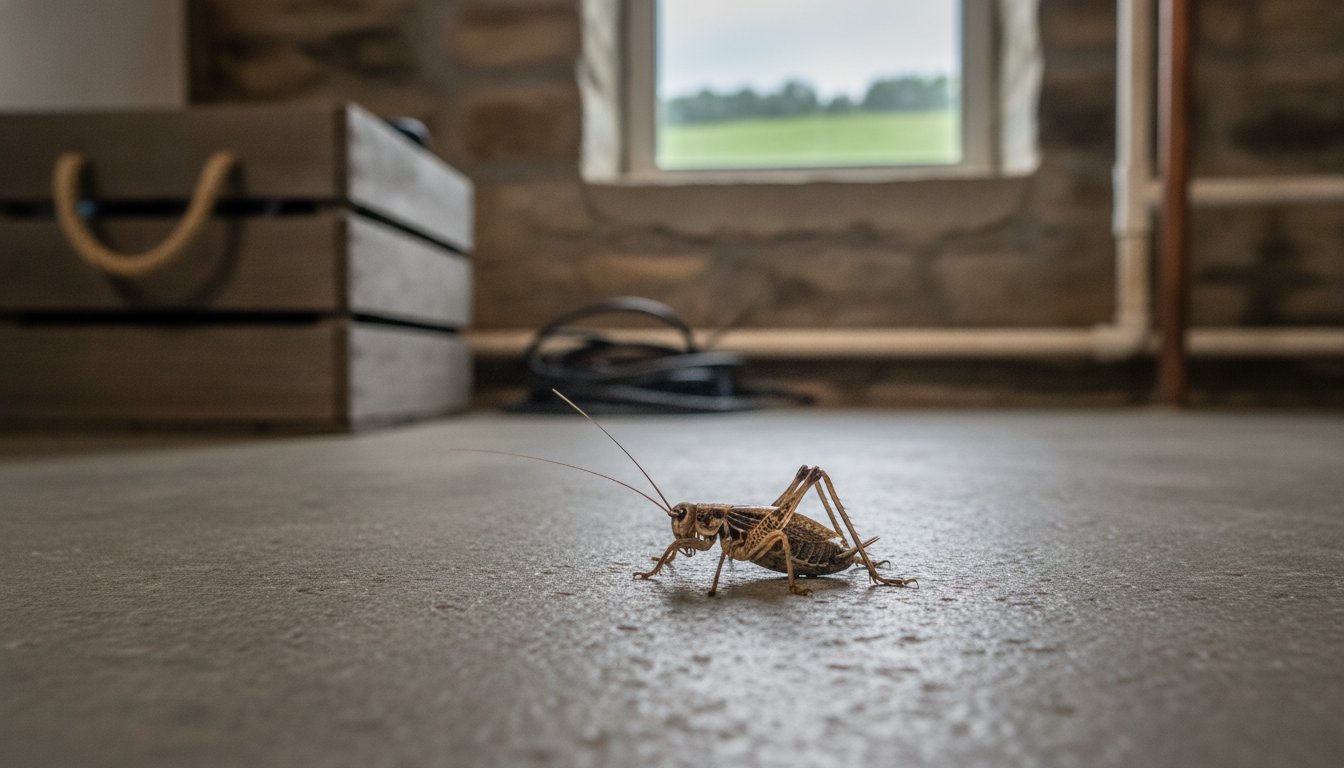
Did you know that a 2014 study suggested there could be as many as 700 million camel crickets living in and around homes across the eastern United States? It’s a startling figure that highlights just how common these pests have become. If you’re currently dealing with a cricket infestation in house, you know it’s more than just a minor nuisance. The relentless, high-pitched chirping often leads to significant sleep deprivation, while the sight of these insects jumping near your furniture creates a constant sense of anxiety. You’re likely worried about the safety of your fabrics, pantry items, and the overall comfort of your living space.
You probably feel that your home should be a sanctuary of quiet, yet the persistent noise makes relaxation impossible. This article provides professional insights tailored for residents in Erie and Crawford Counties in Pennsylvania and Ashtabula County in Ohio. You’ll learn how to accurately identify common invaders, understand the environmental factors that draw them inside, and develop a systematic plan for exclusion. The following sections explore the specific behaviors of house and camel crickets so you can protect your property and finally enjoy the silence you deserve.
Disclaimer: The information provided on this blog is for general informational purposes only and is not intended as professional pest control advice. Conditions vary by property, environment, and location. Reading this content does not create a service agreement. For an inspection or professional recommendations, please contact Mosquito Assassin Pest Control LLC directly.
Key Takeaways
- Learn to distinguish between common species like house and camel crickets to better understand their behavior and potential for property damage.
- Recognize the early warning signs of a cricket infestation in house, including loud nocturnal chirping and physical sightings in high-moisture areas like basements.
- Understand how regional weather shifts in Pennsylvania and Ohio drive pests indoors as they seek temperature regulation and consistent moisture sources.
- Discover practical exclusion methods, such as managing yard debris and using dehumidifiers, to create an inhospitable environment for invading insects.
- Identify when a breeding population has moved into wall voids or crawl spaces, signaling the need for a professional inspection to locate hidden nesting sites.
Identifying Cricket Infestations in Pennsylvania and Ohio Homes
In the Great Lakes region, a few stray chirps might seem like a simple part of the summer soundscape. However, a true cricket infestation in house occurs when a breeding population establishes itself within your walls, basement, or crawl space. While many see these insects as harmless, they can quickly transition from a musical nuisance to a destructive presence. As temperatures begin to drop in late summer and autumn across Northwest Pennsylvania and Northeast Ohio, the biological drive for warmth pushes these pests toward residential structures.
Distinguishing between an accidental intruder and a localized infestation is essential for proper management. A single insect that wandered in through an open door is a minor issue; seeing multiple life stages, such as nymphs and adults, indicates a growing population. Understanding the biology of crickets helps property owners realize that these pests aren’t just looking for a temporary visit. They’re seeking a permanent habitat with reliable food and moisture.
To better understand why these insects are drawn to your living space, watch this helpful video:
Common Cricket Species in the Tri-County Area
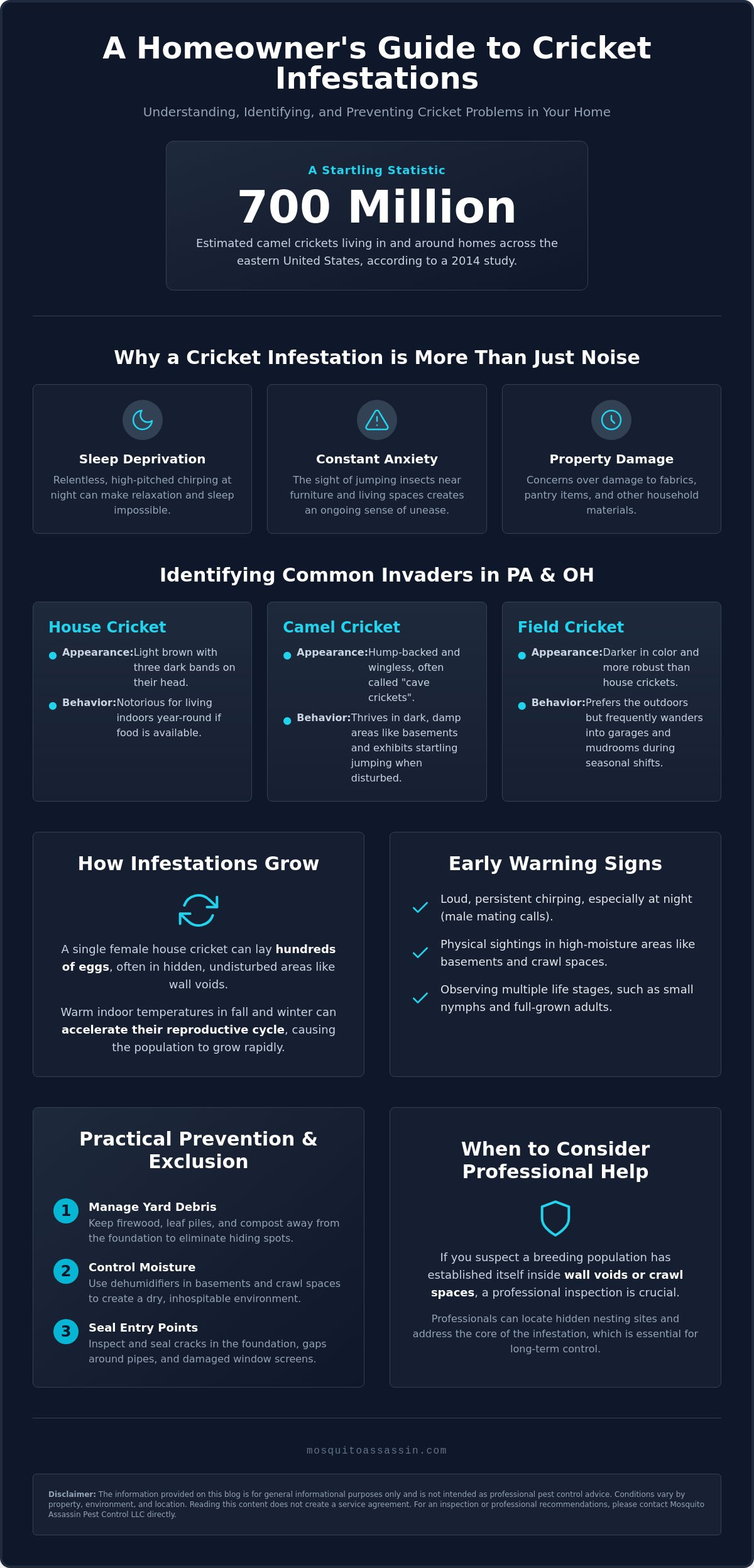
House Crickets are easily identified by their light brown color and three dark bands on their heads. They’re notorious for living indoors year-round if they find a food source. Field Crickets are darker and more robust. While they prefer the outdoors, they frequently wander into garages or mudrooms during seasonal shifts. In Erie and Crawford Counties, Camel Crickets (also known as cave crickets) are a frequent concern. These hump-backed, wingless insects thrive in dark, damp basements and are known for their startling jumping behavior when disturbed.
The Cricket Life Cycle and Breeding Habits
A small group of crickets can explode into a significant population in a short time. A single female house cricket can lay hundreds of eggs throughout her lifespan. These eggs are often deposited in dark, damp, and undisturbed areas like wall voids or behind large appliances. Warm indoor temperatures, common in heated Pennsylvania and Ohio homes during the fall, can accelerate their reproduction cycle. This creates a situation where the cricket infestation in house grows faster than most basic household cleaning can manage. Preferred nesting sites are almost always areas that remain undisturbed for long periods, providing the security the population needs to thrive.
Disclaimer: The information provided on this blog is for general informational purposes only and is not intended as professional pest control advice. Conditions vary by property, environment, and location. Reading this content does not create a service agreement. For an inspection or professional recommendations, please contact Mosquito Assassin Pest Control LLC directly.
Recognizing the Signs of a Growing Cricket Population
Detecting the transition from a few seasonal wanderers to a full-blown cricket infestation in house requires a keen eye for subtle clues. While the occasional insect is expected in Pennsylvania and Ohio during late summer shifts, certain markers indicate a population that is actively breeding and expanding. Identifying these signs early can prevent the frustration of sleepless nights and the cost of damaged property. It’s not just about seeing an insect on the floor; it’s about recognizing the evidence they leave behind in the quiet corners of your home.
Auditory Clues and Nocturnal Activity
The most obvious sign of a growing presence is the “calling song.” Only male crickets produce this sound by rubbing their wings together to attract mates. Because these pests are nocturnal, the volume typically peaks after sunset. A single chirp here and there might not be a cause for alarm, but a constant, multi-tonal chorus suggests a significant number of males are competing for mates within your living space. You can use these sounds to triangulate “hot spots” where activity is highest, such as damp basements, crawl space vents, or laundry rooms.
Property Damage and Material Risks
Physical damage to household items is a definitive sign of an established population. House and field crickets are attracted to fabrics, particularly those containing food stains, sweat, or starch. They don’t just graze on the surface; they leave behind ragged, irregular holes that can ruin silk, wool, and cotton garments. In many homes across Erie and Ashtabula, crickets also target paper products. They may chew on wallpaper or book bindings to reach the organic glues and starches used in their construction. If you find clothing in your hamper or items in your storage bins with mysterious holes, it’s time to look closer.
Beyond the noise and damage, look for fecal pellets. These small, black droppings often accumulate in undisturbed areas like the space behind water heaters or large appliances. Because crickets are attracted to heat and moisture, these locations serve as ideal hiding spots during the day. If you notice an accumulation of these pellets along baseboards or in corners, it’s a clear indicator of a persistent presence. Don’t overlook the pantry, either. While crickets prefer organic debris, they will readily move into dry goods if they find an opening in the packaging. If the sound of chirping is keeping you awake or you’ve discovered damage to your fabrics, professional pest control may help reduce risk and restore peace to your home.
Disclaimer: The information provided on this blog is for general informational purposes only and is not intended as professional pest control advice. Conditions vary by property, environment, and location. Reading this content does not create a service agreement. For an inspection or professional recommendations, please contact Mosquito Assassin Pest Control LLC directly.
Why Crickets Are Attracted to Residential Properties
Understanding what draws these pests to your home is the first step in breaking the cycle of a cricket infestation in house. While they are perfectly capable of living outdoors, residential properties offer a trifecta of survival resources: consistent moisture, stable temperatures, and abundant food. When the external environment becomes too harsh or too dry, your home essentially acts as a climate-controlled refuge. This transition is rarely accidental; it’s a calculated move by the population to ensure survival and successful reproduction.
Moisture is perhaps the most significant attractant. Crickets are highly susceptible to drying out, which is why damp basements, crawl spaces, and areas near leaking pipes are primary targets. In addition to water, crickets are attracted to bright exterior lighting. High-intensity security lights or unshielded porch lamps act as beacons for field crickets, drawing them from the yard directly toward the perimeter of your structure. Once they reach the foundation, they begin investigating for any small opening that offers a way inside.
Environmental Triggers in the Local Region
In Crawford County, heavy seasonal rainfall often saturates the soil, forcing crickets to seek higher, drier ground. This frequently leads them into garages and basements. Similarly, the high humidity levels common in Ashtabula homes create an ideal microclimate for camel crickets, which thrive in environments that mimic their natural cave-like habitats. As the cooling weather of late autumn arrives in Pennsylvania and Ohio, the “overwintering” drive kicks in. This biological urge pushes crickets to find a warm interior space where they can survive the freezing temperatures that would otherwise kill the population outdoors.
Common Entry Points and Structural Vulnerabilities
Crickets are experts at exploiting tiny structural flaws. Gaps in door sweeps and damaged window screens are the most common “highways” for entry. However, they also utilize utility penetrations, such as the small spaces around pipes, dryer vents, and electrical wires. Foundation cracks, even those that seem negligible, provide enough space for a nymph or a slender adult to squeeze through. Cluttered garages and storage sheds often serve as staging areas where crickets can hide and multiply before eventually migrating into the main living quarters of the home.
Effective cricket management strategies focus on identifying these vulnerabilities before the pests arrive. By sealing these gaps and managing the humidity levels within your home, you can significantly reduce the likelihood of an established cricket infestation in house. Maintaining a clear perimeter around the foundation by removing leaf litter and organic debris also removes the “welcome mat” that these pests use to navigate toward your entry points.
Disclaimer: The information provided on this blog is for general informational purposes only and is not intended as professional pest control advice. Conditions vary by property, environment, and location. Reading this content does not create a service agreement. For an inspection or professional recommendations, please contact Mosquito Assassin Pest Control LLC directly.
Long-Term Prevention and Exclusion Strategies
Breaking the cycle of a cricket infestation in house requires more than just reactive measures; it demands a proactive approach to structural and environmental exclusion. While previous sections detailed why these pests enter, long term management focuses on removing the “welcome mat” from your property. By treating your home as a fortress rather than a temporary shelter, you can ensure that the local cricket population remains outdoors where it belongs. Successful prevention is built on three pillars: moisture reduction, lighting adjustments, and physical barriers.
Sanitation is a critical first step. Crickets thrive in environments with abundant organic debris that provides both food and cover. Removing piles of leaves, stacked firewood, and heavy mulch from the immediate perimeter of your foundation eliminates the staging areas where crickets congregate before moving indoors. Additionally, switching exterior lighting from standard white bulbs to yellow “bug lights” or sodium vapor lamps can significantly reduce the number of field crickets drawn to your home at night. These simple environmental shifts create a much less attractive target for wandering pests.
Moisture Control and Habitat Modification
Because crickets are highly susceptible to desiccation, managing humidity is a powerful tool for prevention. In the humid climates of Erie, Crawford, and Ashtabula counties, basements and crawl spaces often become prime real estate for pests. Maintaining indoor humidity levels at 50 percent or lower using high capacity dehumidifiers can make these areas inhospitable. You should also inspect your property’s drainage system. Ensure that gutters are clear of debris and that downspouts direct water at least five to ten feet away from the foundation. Proper grading around the home prevents the pooling of water that crickets need to thrive and reproduce.
Exterior Exclusion Techniques
Older regional homes often possess small structural gaps that serve as primary entry points. A comprehensive inspection of your home’s exterior is necessary to identify these vulnerabilities. Focus on the following areas:
- Door Sweeps and Weather Stripping: Replace any worn or brittle seals on doors and windows. If you can see light under a door, a cricket can easily crawl through.
- Foundation and Siding: Use a high quality caulk or expandable foam to seal cracks in the foundation and gaps where siding meets the corner posts.
- Utility Penetrations: Check the areas where pipes, wires, and vents enter the structure. These are often overlooked highways for a cricket infestation in house.
- Storage Organization: Keep garages and sheds organized and avoid stacking cardboard boxes directly on the floor, as these provide the dark, tight spaces crickets prefer for nesting.
Implementing these strategies creates a multi layered defense that protects your home year round. If you have already taken these steps and still notice activity, professional pest control may help reduce risk by identifying deeper nesting sites within wall voids or under flooring.
Disclaimer: The information provided on this blog is for general informational purposes only and is not intended as professional pest control advice. Conditions vary by property, environment, and location. Reading this content does not create a service agreement. For an inspection or professional recommendations, please contact Mosquito Assassin Pest Control LLC directly.
When to Consider Professional Pest Management
While sealing entry points and managing moisture are essential steps, an established cricket infestation in house often reaches a point where residential cleaning and basic exclusion aren’t enough. DIY solutions like sticky traps or store bought surface sprays typically only address the insects you see. Unfortunately, for every cricket visible on a basement floor, many more may be hiding in wall voids, behind insulation, or deep within crawl spaces. When the population begins to breed in these inaccessible areas, professional intervention becomes necessary to restore the quiet and security of your home.
A nuisance becomes a significant risk when you notice recurring damage to expensive fabrics, silk, or upholstered furniture. If the relentless nocturnal chirping is causing sleep deprivation or if you find yourself constantly discovering new fecal pellets along your baseboards, the infestation has likely moved beyond the “occasional invader” stage. At this point, the population is no longer just wandering in; it has established a self sustaining colony within the structure of your property.
The Role of Year-Round Protection Plans
Ongoing management is often the most effective way to handle the seasonal surges common in Northwest Pennsylvania and Northeast Ohio. General pest control plans focus on creating a proactive perimeter barrier that stops crickets before they ever reach your foundation. Because crickets have a rapid life cycle, consistent maintenance ensures that nymphs are addressed before they reach reproductive maturity. This long term approach reduces the reliance on reactive, high intensity treatments by maintaining a constant shield around the home during the high risk months of late summer and autumn.
What to Expect from a Professional Inspection
A thorough professional inspection goes far beyond a simple visual check. It involves a systematic assessment of the specific environmental factors driving the activity. Professionals in Erie and Meadville look for the following during an evaluation:
- Species Identification: Determining if you’re dealing with house crickets or moisture loving camel crickets to tailor the management strategy.
- Moisture Mapping: Using specialized knowledge to find hidden leaks or high humidity zones in basements that serve as breeding reservoirs.
- Structural Analysis: Identifying subtle entry points in older regional architecture that a homeowner might overlook.
- Nesting Site Location: Finding the dark, undisturbed voids where the core of the population resides.
If your efforts to exclude these pests haven’t silenced the chirping, professional pest control may help reduce risk and protect your belongings from further damage. You can find more information about scheduling an assessment through the online booking portal to begin a clear plan for exclusion.
Disclaimer: The information provided on this blog is for general informational purposes only and is not intended as professional pest control advice. Conditions vary by property, environment, and location. Reading this content does not create a service agreement. For an inspection or professional recommendations, please contact Mosquito Assassin Pest Control LLC directly.
Restoring Silence and Security to Your Home
Managing a cricket infestation in house requires a systematic approach that moves beyond temporary fixes. By focusing on moisture control in basements and sealing structural vulnerabilities around door sweeps and foundation cracks, you can successfully remove the factors that draw these pests indoors. Identifying whether you’re dealing with house crickets or the jumping camel crickets common in Northwest Pennsylvania and Northeast Ohio is the first step toward a quiet, secure living environment.
When DIY methods don’t silence the nocturnal chirping or protect your fabrics from damage, expert intervention provides the necessary resolution. Residents in Erie, Crawford, and Ashtabula Counties can rely on a professional exclusion-first approach to address the root causes of seasonal surges. Taking proactive steps today ensures that your property remains a sanctuary rather than a habitat for invading insects. You can contact Mosquito Assassin Pest Control LLC for a professional inspection to reclaim your peace of mind.
Disclaimer: The information provided on this blog is for general informational purposes only and is not intended as professional pest control advice. Conditions vary by property, environment, and location. Reading this content does not create a service agreement. For an inspection or professional recommendations, please contact Mosquito Assassin Pest Control LLC directly.
Frequently Asked Questions
Can crickets cause actual damage to my house or belongings?
Crickets can cause significant damage to your belongings by chewing on natural fibers like silk, wool, and cotton. They are specifically attracted to fabrics soiled with perspiration or food stains. Beyond clothing, they may target paper products such as wallpaper or book bindings to consume organic starches and glues. Identifying a cricket infestation in house early prevents these pests from ruining expensive home decor and personal items.
Why do crickets only seem to chirp at night?
Crickets chirp primarily at night because they are nocturnal insects that become most active after sunset. The sound is a mating call, known as stridulation, produced only by males rubbing their wings together. By calling under the cover of darkness, males reduce their visibility to daytime predators while signaling to potential mates. This nocturnal behavior is why homeowners often discover an infestation only when the house becomes quiet for the evening.
Is a single cricket in the house a sign of a bigger infestation?
A single cricket isn’t always proof of a larger problem, but it should be treated as a warning sign. While an individual insect may have accidentally wandered in, seeing multiple life stages or hearing a persistent chorus suggests a breeding population. If the environment provides sufficient moisture and warmth, a few intruders can quickly establish a cricket infestation in house. Professional monitoring helps determine if the activity is isolated or systemic.
How long do crickets typically live once they move indoors?
Adult crickets typically live for two to three months after moving indoors, provided they have access to food and moisture. However, their total lifespan depends on the species and the temperature of the environment. While the adults eventually die off, the real concern is the eggs they may have deposited in dark, damp voids. Without intervention, new generations will continue to emerge, creating a cycle of activity that persists long after the original intruders are gone.
What is the fastest way to stop the chirping noise?
The fastest way to silence the chirping is to locate the source and address the environmental factors attracting the males. Using sticky traps in high moisture areas like basements can remove active adults quickly. However, localized treatments only provide temporary relief. Long term silence requires professional pest control to identify nesting sites in wall voids or crawl spaces. Reducing indoor humidity below 50 percent also makes your living space less hospitable for vocal pests.
Are crickets in the house a health risk to my family or pets?
Crickets are primarily considered nuisance pests, but they can carry certain bacteria and parasites, such as Salmonella. While they don’t transmit diseases as readily as rodents or roaches, their droppings can contaminate surfaces or open food containers in your pantry. For most families and pets, the primary risk is the stress caused by sleep deprivation and the potential for property damage rather than direct medical threats. Maintaining professional standards of sanitation helps mitigate these risks.
Can crickets bite humans or animals?
Crickets possess chewing mouthparts designed for breaking down organic matter, but they rarely bite humans or pets. If a cricket does bite, it’s typically a defensive reaction if the insect is handled or pressed against the skin. The bite is not venomous and usually results in nothing more than a small, temporary red mark. While the physical risk of a bite is minimal, the presence of these insects remains an urgent concern for property protection.
What is the difference between a house cricket and a field cricket?
House crickets are typically light brown or tan with three distinctive dark bands on their heads; they are capable of living their entire lives indoors. Field crickets are much darker, often black, and have a more robust appearance. While field crickets prefer to live in tall grass and mulch, they often seek shelter inside Pennsylvania and Ohio homes when the weather turns cold. Understanding these physical differences helps professionals tailor the management approach for each specific species.
Disclaimer: The information provided on this blog is for general informational purposes only and is not intended as professional pest control advice. Conditions vary by property, environment, and location. Reading this content does not create a service agreement. For an inspection or professional recommendations, please contact Mosquito Assassin Pest Control LLC directly.
Leave a Reply