
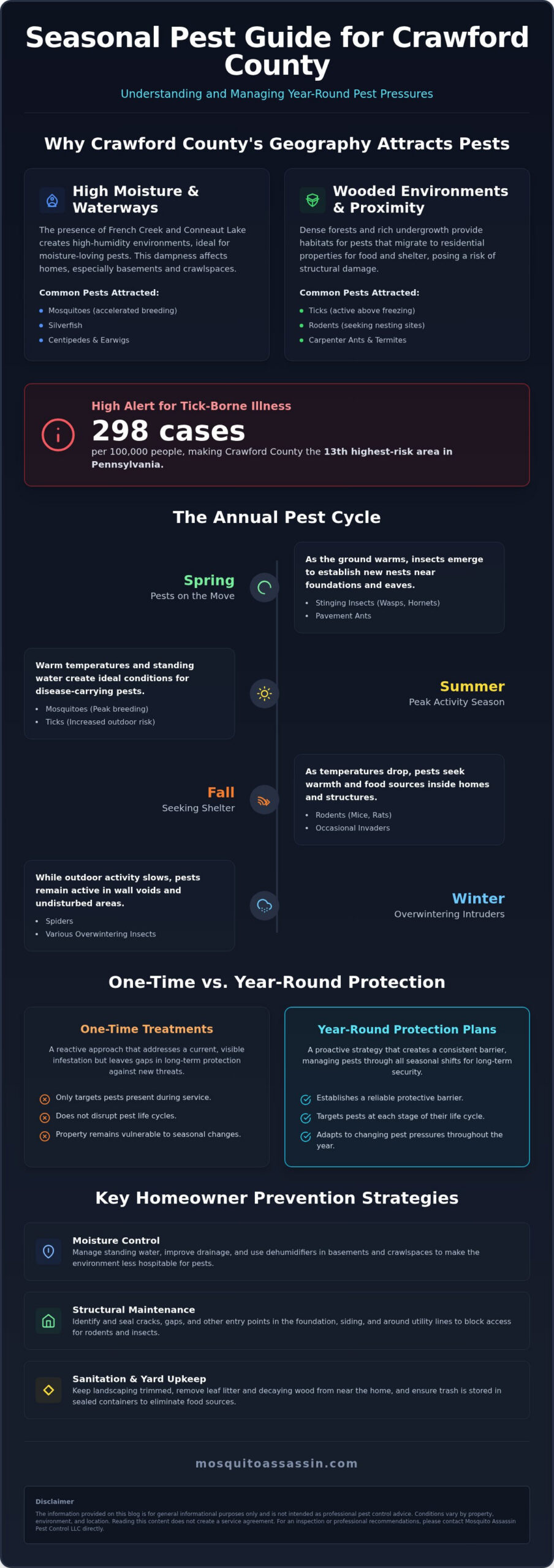
With a Lyme disease rate of 298 cases per 100,000 people, Crawford County ranks as the 13th highest-risk area in Pennsylvania for tick-borne illnesses. This data highlights a reality many residents face; the wooded and aquatic geography of the region makes consistent pest control Crawford County PA a necessity for protecting family health and property value. Most homeowners take deep pride in their living spaces, yet the persistent cycle of seasonal infestations often feels like an exhausting battle against the elements.
You can discover how to safeguard your property by implementing strategic seasonal prevention and understanding professional management insights. This guide provides a comprehensive look at the behavior of regional pests, the specific risks of property damage from rodents or termites, and the criteria for selecting a qualified local professional. By understanding these seasonal cycles, residents can transition from reactive stress to a state of long-term resolution and security for their households. Developing a proactive mindset ensures that your home remains a sanctuary regardless of the time of year.
Key Takeaways
- Learn how the local geography of French Creek and Conneaut Lake contributes to high-moisture environments that attract specific regional pests.
- Identify seasonal activity patterns to better prepare for spring stinging insects and summer mosquito risks.
- Discover why year-round protection plans offer a more reliable barrier than one-time treatments for consistent pest control Crawford County PA.
- Master foundational prevention strategies like sanitation and structural maintenance to limit pest entry points.
- Learn the essential steps for verifying professional credentials and the benefits of hiring local experts who understand the Meadville area.
Understanding Pest Pressures in Crawford County PA
Crawford County’s diverse geography presents a unique set of challenges for property owners. The abundance of water from French Creek and Conneaut Lake creates a high-moisture environment that serves as a primary driver for local pest activity. Effective pest control Crawford County PA isn’t just about treating symptoms. It requires a detailed analysis of how the local ecosystem interacts with human structures. Professional management strategies often utilize Integrated Pest Management to create long-term solutions by addressing the root causes of infestations rather than relying solely on reactive measures. These methods focus on understanding the life cycles of pests and their interaction with the Northwest Pennsylvania environment.
To better understand how environmental factors influence local management needs, watch this helpful video:
The Impact of Local Waterways and Humidity
High humidity levels near the county’s lake regions frequently lead to accelerated mosquito breeding cycles. Standing water, even in small amounts, provides the necessary habitat for larvae to develop quickly during the warm summer months. This moisture doesn’t just stay outside. Many homes in Crawford County feature older foundations or basements that are prone to dampness. Moisture-loving pests, such as silverfish, centipedes, and earwigs, find refuge in these cool, dark spaces. Managing standing water through improved drainage and the use of dehumidifiers is a critical first step for property owners. Reducing the humidity within a structure makes the environment far less hospitable for these opportunistic invaders, which often seek out damp wood or organic debris found in crawlspaces.
Wooded Environments and Wildlife Proximity
The rural landscape surrounding Meadville is characterized by dense tree cover and rich undergrowth. While aesthetically pleasing, these wooded environments provide ideal habitats for ticks and rodents. As the seasons transition, these pests often migrate toward residential properties in search of food or stable nesting sites. Carpenter ants and termites are particularly prevalent in homes situated near established forest lines where decaying wood and leaf litter are abundant. These insects can cause significant structural damage if their entry points aren’t identified and sealed. Regional geography dictates pest management needs because local environmental factors like soil moisture and canopy density determine which species will thrive on a specific property. Understanding these pressures allows for the implementation of more precise general pest control plans that account for the unique biological demands of the Pennsylvania landscape.
Common Seasonal Pests in Northwest Pennsylvania
Northwest Pennsylvania experiences distinct weather shifts that trigger specific biological responses in local insects and wildlife. Spring often begins with the emergence of pavement ants and stinging insects like wasps and hornets. These species seek out nesting sites near eaves and foundations as the ground warms. Understanding these shifts is vital for managing common pests in Pennsylvania. While many residents associate pest activity only with summer heat, the biological cycles of regional species ensure that property risks exist throughout the year.
Summer represents the peak for mosquito and tick activity. This period requires consistent intervention to protect residents from health risks associated with vector-borne illnesses. As temperatures drop in the fall, the focus of professional pest control Crawford County PA shifts toward rodent exclusion. Winter doesn’t provide a total reprieve. Spiders and various overwintering insects move deep into wall voids for warmth during the coldest months. Implementing general pest control plans can help manage these transitions effectively.
Mosquito and Tick Activity Cycles
Ticks in Pennsylvania are remarkably resilient. They remain active whenever temperatures rise above freezing. This means a mild winter day can still pose a risk to pets and family members. In Crawford County, wooded properties provide the perfect leaf litter habitat for these arachnids. Mosquitoes, by contrast, rely on standing water to complete their breeding cycles. Breaking this cycle requires professional management of both larval habitats and adult resting areas. Consistent treatments are necessary because a single overlooked container of water can produce thousands of new mosquitoes in less than two weeks.
Rodents and Structural Invaders
Rodents are master opportunists. A house mouse can squeeze through an opening as small as a quarter inch, which is roughly the size of a standard pen. Crawford County homes, particularly those with older stone foundations, often have numerous entry points. Common vulnerabilities include utility penetrations where pipes or wires enter the structure. These gaps act as invitations for mice and rats seeking shelter from the Pennsylvania winter. Professional pest control Crawford County PA standards involve a three-step process: maintenance of the exterior perimeter, removal of existing populations, and structural exclusion to prevent future entry. Sealing these gaps is essential for long-term protection. Stone foundations are common in Meadville. These structures often settle over time. This settling creates gaps that mice exploit. Identifying these hidden paths is the first step in a successful exclusion strategy.
One-Time Treatments vs Year-Round Protection Plans
Deciding between a single application and a recurring service plan depends on the specific biological threats present on a property. A one-time treatment serves as a reactive measure to eliminate an existing, visible infestation. However, it rarely accounts for the hidden life cycles of insects or the persistent environmental pressures found in Northwest Pennsylvania. Effective pest control Crawford County PA relies on a proactive strategy that aligns with the EPA’s IPM principles to ensure long-term suppression. While a single visit might stop a current problem, it doesn’t establish the chemical and physical barriers needed to prevent future arrivals.
When a Single Visit Is Appropriate
Specific instances exist where a one-time service is the most logical choice. For example, removing a single, isolated hornets’ nest on a porch is often a straightforward task that doesn’t necessarily indicate a wider property issue. However, one-time sprays are notoriously ineffective for social insects like ants or bed bugs. These pests live in complex colonies or hide deep within structural voids. A single application might kill the foragers you see, but it won’t reach the queen or the eggs. Follow-up visits are usually necessary to address the biological cycles of these pests, ensuring that new hatchlings are managed before they can reproduce.
Benefits of Recurring Pest Management
Year-round protection creates a persistent barrier that adapts to the changing seasons. As temperatures shift, different pests attempt to breach the home’s perimeter. Bi-monthly or quarterly plans ensure that the protective treatments remain active even as older applications naturally break down. This ongoing management is often more cost-effective than reactive emergency extermination, which frequently involves higher labor costs and more intensive chemical use. Homeowners with children or pets often find significant peace of mind in knowing their living environment is monitored by a professional who understands the specific regional threats. Reading a guide on General Pest Control can help clarify how these recurring barriers function. Additionally, professional monitoring allows for the early detection of wood-destroying insects like termites. These pests can cause thousands of dollars in structural damage before they become visible to the untrained eye. Regular inspections as part of a recurring plan ensure these threats are identified and managed before they compromise the integrity of the home. This level of oversight is a cornerstone of professional pest control Crawford County PA.
Proactive Prevention Strategies for Crawford County Homeowners
Sanitation is the foundation of any effective long-term pest management strategy. While professional treatments provide a necessary barrier, homeowner habits determine how attractive a property remains to local wildlife. Pests require three things to thrive: food, water, and shelter. By systematically removing these elements, residents can significantly reduce the likelihood of a major infestation. Implementing these habits alongside professional pest control Crawford County PA ensures that your home doesn’t become a target for seasonal migrations. It’s about creating a hostile environment for invaders while maintaining a comfortable one for your family.
Structural maintenance is the next line of defense. Small gaps around the exterior of a home act as open invitations. Before the Pennsylvania winter sets in, it’s vital to conduct a thorough walkthrough of the property. Sealing utility penetrations with high-quality caulk or stainless steel wool prevents rodents from finding warmth inside wall voids. Ensuring that door sweeps are flush with the threshold and that window screens are free of tears limits entry points for both crawling and flying insects. These proactive steps are far more effective than trying to manage an established population after the fact.
Interior Sanitation and Storage
Inside the home, food management is the highest priority. Storing dry goods, including pet food, in airtight glass or heavy plastic containers prevents attracting ants and rodents that can smell unsealed packages. Reducing clutter in basements and attics is equally important. Cardboard boxes provide ideal nesting material and hiding spots for spiders and silverfish. Transitioning to plastic bins for long-term storage removes these harborages. Proper trash management, including using bins with tight-fitting lids and regular cleaning of the containers themselves, removes the pheromone trails that often lead larger pests directly to your kitchen.
Exterior Maintenance and Exclusion
The area immediately surrounding your foundation dictates your pest pressure. Keeping mulch at least six inches away from the foundation reduces the moisture levels that attract wood-destroying insects. Similarly, trimming tree branches back from the roofline prevents easy access for ants and rodents that use limbs as bridges. Managing outdoor environments also involves regular gutter maintenance; clogged gutters create pockets of standing water and decaying organic matter that serve as breeding grounds for mosquitoes and various flies. If you’ve noticed signs of activity despite these efforts, understanding the specifics of Rodent Removal can help you decide when structural exclusion needs professional reinforcement.
Professional inspections can identify subtle vulnerabilities, such as failing crawlspace vents or hidden moisture leaks, before an infestation begins. You can secure your property’s perimeter and address these hidden risks by coordinating with general pest control plans tailored to the Crawford County climate.
Selecting Professional Pest Management in Meadville and Beyond
Choosing the right provider for pest control Crawford County PA requires more than just checking a price list. Property owners should prioritize verifying that a company is registered with the Pennsylvania Department of Agriculture. This registration ensures the business adheres to strict state regulations regarding chemical handling, applicator training, and record-keeping. Beyond legal compliance, look for professionals who actually reside in the local community. Technicians who live in Meadville or surrounding Crawford County towns possess a deeper understanding of regional pest cycles and the specific environmental pressures discussed earlier in this guide. They aren’t just contractors; they’re neighbors who understand the local terrain.
A professional approach begins with a comprehensive evaluation of the property. A surface-level spray is rarely enough to address deep-seated structural vulnerabilities. Evaluate the thoroughness of the initial inspection. A qualified expert will examine basements, crawlspaces, and attic voids for signs of activity or potential entry points. Professional pest control may help reduce risk to the property and its inhabitants by identifying these issues before they escalate into costly structural repairs or preventable health concerns. This systematic methodology ensures that the proposed treatment plan is based on data rather than guesswork.
Credentials and Professional Standards
Understanding the importance of licensed and insured technicians is vital for your peace of mind. These credentials signify that the staff has undergone rigorous training and maintains the professional standards necessary to handle specialized treatments safely. Pests such as bed bugs or termites require technical methodology that goes beyond general applications. For instance, termite management often involves detailed soil analysis or baiting systems that must be precisely installed to be effective. You can learn more About Mosquito Assassin and the commitment this local provider maintains regarding high professional standards within the community.
Taking the Next Step for Protection
Early intervention is key to preventing significant property damage from wood-destroying insects or rodents. If you’ve observed signs of activity or simply want to ensure your home remains a sanctuary, requesting a professional recommendation tailored to your specific environment is the most effective strategy. A customized plan accounts for your home’s unique geography, whether you’re located near Conneaut Lake or nestled in the woods outside Meadville. For those ready to secure their perimeter, using the Online Booking Portal allows for streamlined scheduling of an initial inspection. Taking action now prevents the seasonal cycles of Northwest Pennsylvania from compromising your home’s integrity.
Disclaimer: The information provided on this blog is for general informational purposes only and is not intended as professional pest control advice. Conditions vary by property, environment, and location. Reading this content does not create a service agreement. For an inspection or professional recommendations, please contact Mosquito Assassin Pest Control LLC directly.
Securing Your Crawford County Property for the Future
Effective management of regional pests requires a deep understanding of the local environment and the biological cycles of seasonal invaders. From managing moisture levels near Conneaut Lake to sealing structural gaps before the winter migration, homeowners have several proactive tools at their disposal. However, maintaining a truly secure perimeter often necessitates the expertise of a professional who understands the specific terrain of Northwest Pennsylvania. Relying on year-round protection ensures that chemical and physical barriers remain active even as regional threats shift from spring stinging insects to winter rodents.
For those seeking a comprehensive solution, pest control Crawford County PA is most effective when managed by a provider registered with the Pennsylvania Department of Agriculture. Licensed professionals servicing Meadville, Erie, and surrounding regions bring specialized knowledge in mosquito and tick control to protect your household from vector-borne risks. Contact Mosquito Assassin Pest Control LLC for professional recommendations to secure your home’s perimeter. Taking these steps today ensures a more resilient and comfortable living environment for the years ahead.
Disclaimer: The information provided on this blog is for general informational purposes only and is not intended as professional pest control advice. Conditions vary by property, environment, and location. Reading this content does not create a service agreement. For an inspection or professional recommendations, please contact Mosquito Assassin Pest Control LLC directly.
Frequently Asked Questions
Is professional pest control necessary if I do not see any bugs?
Professional intervention is necessary because many of the most destructive pests remain hidden within structural voids or crawlspaces. Termites and carpenter ants can compromise the integrity of a home for months before a homeowner notices a single insect. Regular monitoring as part of professional pest control Crawford County PA ensures that these silent threats are identified and managed before significant property damage occurs.
How often should a home in Crawford County be treated for pests?
Most residential properties in Northwest Pennsylvania benefit from quarterly or bi-monthly service intervals. This frequency allows a professional to refresh protective barriers as they naturally degrade and adjust strategies based on the current season. Consistent management is vital in this region due to the high moisture and wooded environments that provide constant pest pressure throughout the year.
Are pest control treatments safe for my children and pets?
Professional treatments are applied with the safety of household members and animals as a primary priority. Licensed technicians follow strict label instructions and utilize targeted application methods to minimize exposure. Once the applied products have dried, which typically takes a short period, children and pets can return to the treated areas. Communicating any specific health concerns to the technician before the service begins is always recommended.
What is the most common pest problem in Meadville, PA?
Ants and rodents are the most frequent concerns for homeowners in the Meadville area. The local geography, characterized by the French Creek watershed and surrounding timberlands, creates an environment where carpenter ants and house mice thrive. These pests often seek shelter indoors during the transition between seasons, making structural exclusion a critical part of any comprehensive management plan.
Can I handle a rodent infestation on my own?
While homeowners can set basic traps, professional management is usually required to eliminate the root cause of an infestation. Rodents reproduce rapidly, and a few visible mice often indicate a larger population nesting within walls. Professionals possess the specialized tools to identify hidden entry points and implement structural exclusion, which is the only way to prevent new rodents from entering the property.
How long does a typical professional pest service take?
A standard maintenance visit typically lasts between 30 and 60 minutes, depending on the size of the property and the specific pests being addressed. Initial inspections or specialized treatments for termites or bed bugs may require more time for a thorough evaluation. The technician will focus on high-risk areas like foundations, eaves, and utility penetrations to ensure the protective barrier is complete and effective.
What should I do to prepare my home for a pest inspection?
Preparing for an inspection involves providing clear access to the perimeter of your home and common problem areas like basements or crawlspaces. Moving furniture away from walls and clearing clutter from under sinks allows the technician to conduct a more detailed search for entry points or signs of activity. Providing information about where you have seen pests can also help the professional tailor their assessment to your specific needs.
Does pest control work during the winter months in Pennsylvania?
Pest management remains highly effective and necessary during the Pennsylvania winter. As temperatures drop, rodents and overwintering insects like spiders seek the warmth and shelter of residential structures. Winter services focus on interior monitoring and exterior exclusion to ensure that these pests don’t establish nests inside your wall voids. Maintaining these barriers year-round is a cornerstone of effective pest control Crawford County PA.
Disclaimer: The information provided on this blog is for general informational purposes only and is not intended as professional pest control advice. Conditions vary by property, environment, and location. Reading this content does not create a service agreement. For an inspection or professional recommendations, please contact Mosquito Assassin Pest Control LLC directly.
Leave a Reply