
Tag: pest control

  • What Attracts Cockroaches to a Clean House? Understanding the Hidden Causes

    What Attracts Cockroaches to a Clean House? Understanding the Hidden Causes

    A perfectly sanitized home can be just as inviting to a cockroach as a neglected one if certain environmental triggers are present. It’s a common source of anxiety and confusion to wonder what attracts cockroaches to a clean house, especially when you’ve put in the work to keep every surface spotless. The social stigma associated with these pests often makes the discovery feel like a personal failure, but cockroaches are highly adaptable survivors that look for more than just food scraps.

    You’ll discover why these insects often prioritize moisture and structural security over the cleanliness of your kitchen. This guide explains the non-food attractants that draw them in, such as hidden water leaks or cardboard storage, and helps you identify specific entry points around your property. By understanding these subtle factors, you can develop a professional prevention plan that focuses on long-term exclusion rather than just surface scrubbing. This information is designed to help residents in Erie, Crawford, and Ashtabula counties protect their homes from these resilient invaders.

    Disclaimer: The information provided on this blog is for general informational purposes only and is not intended as professional pest control advice. Conditions vary by property, environment, and location. Reading this content does not create a service agreement. For an inspection or professional recommendations, please contact Mosquito Assassin Pest Control LLC directly.
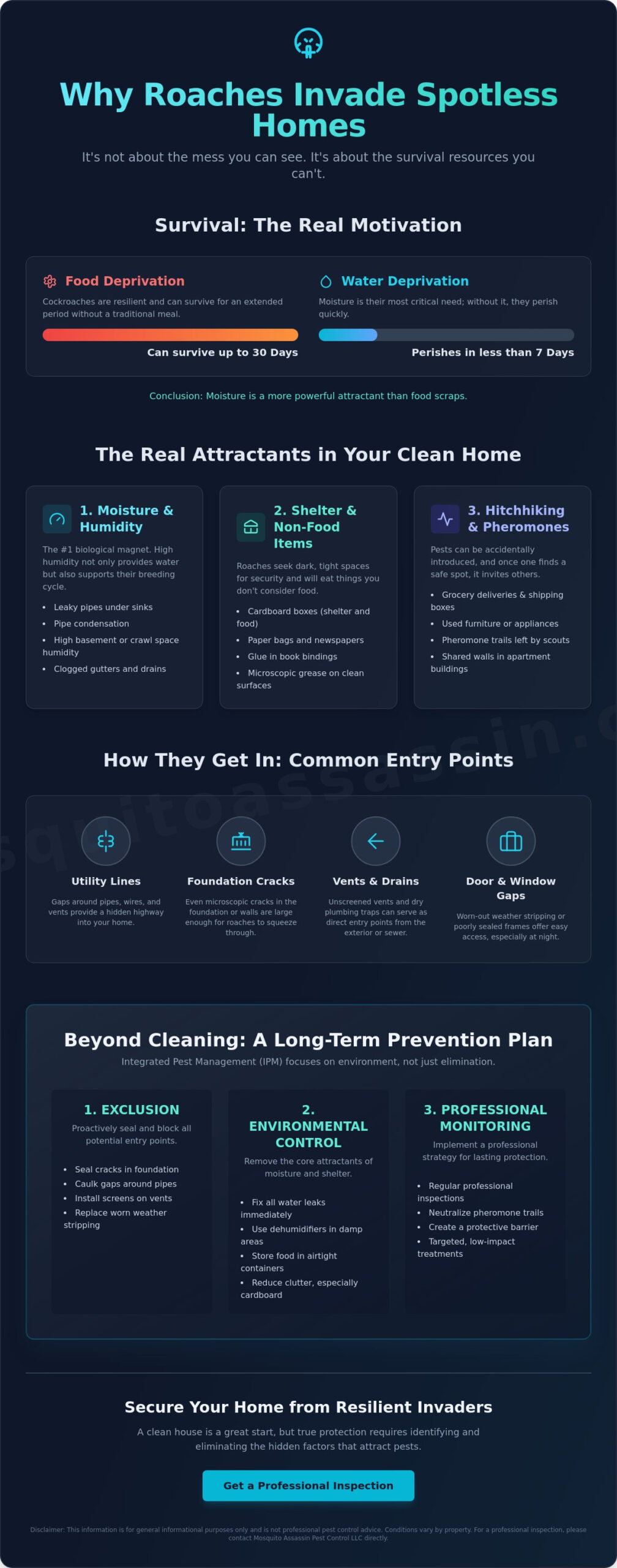
    Key Takeaways

    • Understand what attracts cockroaches to a clean house by looking beyond food to discover how cardboard boxes and paper bags provide both shelter and sustenance.
    • Identify hidden moisture sources like pipe condensation or high basement humidity that provide the essential hydration cockroaches need to survive.
    • Locate structural vulnerabilities around utility lines and plumbing that allow pests to bypass even the most secure doors and windows.
    • Recognize the risks of accidental introductions through grocery deliveries and shipping materials that act as transport for hidden insects.
    • Learn how Integrated Pest Management (IPM) strategies focus on long-term exclusion and environmental control rather than just temporary fixes.

    Understanding Why Cockroaches Invade Clean Homes

    Finding a cockroach in a house that you’ve just spent hours scrubbing is a disheartening experience. It challenges the common belief that pests only inhabit neglected or dirty spaces. However, understanding what attracts cockroaches to a clean house requires a shift in perspective. You have to move from human standards of cleanliness to the biological requirements of the insect. These pests don’t care about your aesthetic choices or how often you dust your shelves; they care about survival and reproduction.

    Cockroaches are biological masters of adaptation. While a crumb-free floor is an excellent deterrent, it doesn’t address the structural or environmental factors that roaches prioritize. Cockroaches are resilient pests that can survive for weeks without a single meal, making them far more patient than the average homeowner. They often enter homes in Erie County or Ashtabula County seeking shelter from the fluctuating Great Lakes weather or a reliable water source rather than a gourmet meal. If your home provides a stable temperature and a tiny bit of moisture, it’s a prime candidate for an invasion.

    To better understand why these pests appear in tidy environments, watch this helpful video:

    The Survival Needs of the Common Cockroach

    Cockroaches require very little to maintain a thriving colony. They can survive for up to 30 days without food, which means a clean kitchen isn’t an immediate deterrent for a scout looking for a new home. Moisture is their primary concern. In the humid climates of Pennsylvania and Ohio, basements and crawl spaces provide the ideal habitat. Their resilience is a major challenge for homeowners. For instance, in November 2025, the U.S. Environmental Protection Agency (EPA) registered a new active ingredient, isocycloseram, specifically to combat cockroach strains that have developed resistance to older treatments. German cockroaches exhibit an extraordinary biological resilience in residential settings, allowing them to thrive in microscopic cracks where moisture persists.

    Debunking the Dirty House Stigma

    The social stigma associated with cockroaches often leads to unnecessary anxiety and psychological stress. Many residents in Crawford County feel a sense of shame when they see a pest, assuming neighbors will think they don’t maintain their property. In reality, a spotless home still contains plenty of resources. Items like cardboard boxes, paper bags, and even the glue in book bindings serve as food sources for a hungry roach.

    Pheromones also play a critical role in why roaches stay. Once a single roach finds a safe spot, it leaves behind chemical trails that signal others to join. These aggregation pheromones tell other roaches that your home is a safe, humid environment. Establishing a plan for general pest control helps address these hidden biological attractants. Professional pest control may help reduce risk by neutralizing these chemical markers and creating a protective barrier that cleaning alone cannot achieve.

    Moisture and Humidity: The Primary Attractants

    While most homeowners focus on sanitizing counters and sweeping floors, moisture remains the primary biological magnet for pests. This is often what attracts cockroaches to a clean house even when every crumb has been removed. A cockroach can survive for nearly a month without food, but it will often perish in less than seven days without a reliable water source. In the humid climates of Erie and Crawford counties, environmental moisture provides everything an infestation needs to thrive regardless of surface cleanliness. These insects are highly efficient at detecting water vapor and will travel significant distances to reach a damp area.

    High humidity levels do more than just provide a drink; they actively support the cockroach breeding cycle. Egg cases, known as oothecae, require specific moisture levels to remain viable. If an environment is too dry, these cases may fail to hatch, limiting the population growth. However, the damp basements and crawlspaces common in the tri-county area provide the perfect incubator. When moisture is abundant, populations can expand rapidly, leading to a full-blown infestation that seems to appear out of nowhere in a tidy home. This biological dependency makes moisture control the foundation of any successful prevention plan.

    Hidden Water Sources in Kitchens and Bathrooms

    Pests are expert at finding water in places humans rarely look. Slow leaks under kitchen sinks can saturate cabinet wood or insulation, creating a micro-habitat that remains damp for weeks. Refrigerator drip pans and leaking dishwasher seals are also major contributors that provide a consistent water supply. In the bathroom, a lack of ventilation leads to condensation on walls and pipes. Utilizing bathroom exhaust fans to clear steam after every shower is a simple but effective way to reduce the local humidity that draws these insects in. Even a pet’s water bowl or a recently watered indoor plant can provide enough hydration to sustain a colony if left unchecked overnight.

    Managing Basement and Crawlspace Humidity

    Older foundations in Ashtabula County and Western Pennsylvania are often prone to seepage and dampness. To effectively deter pests, it is vital to maintain basement humidity levels below 50 percent using a high-capacity dehumidifier. This creates an inhospitable environment that disrupts their survival strategy. Integrating these moisture-reduction techniques with professional pest management strategies ensures that your home is no longer a viable habitat. If you are struggling to identify where moisture is entering your home, scheduling a professional inspection can help pinpoint these hidden vulnerabilities. Addressing the structural dampness of a property is a critical step that goes far beyond the reach of a standard cleaning routine.

    Disclaimer: The information provided on this blog is for general informational purposes only and is not intended as professional pest control advice. Conditions vary by property, environment, and location. Reading this content does not create a service agreement. For an inspection or professional recommendations, please contact Mosquito Assassin Pest Control LLC directly.
    What Attracts Cockroaches to a Clean House? Understanding the Hidden Causes

    Structural Vulnerabilities and Common Entry Points

    Even the most diligent cleaning routine cannot compensate for a compromised home exterior. Understanding what attracts cockroaches to a clean house often requires looking at the physical structure of the building itself. These pests don’t need an open door to gain access; they are opportunistic explorers that find the smallest weaknesses in a property’s defenses. While you might be focused on the state of your kitchen counters, a cockroach is likely focused on the gap where a utility line enters your siding. Once they find a way inside, your home’s internal framework provides a highway system that allows them to move between rooms undetected.

    Sealing the Exterior Perimeter

    The first line of defense is the exterior envelope of the home. Older houses, which are common in Meadville and Ashtabula, often settle over time, creating small shifts in window frames and door sills. These gaps are prime real estate for foraging pests. Dryer vents, cable line penetrations, and outdoor faucets are frequently overlooked entry points that provide direct access to the interior of your walls. A gap as small as one-sixteenth of an inch provides more than enough space for a juvenile cockroach to squeeze into your home. Installing high-quality door sweeps and refreshing worn weatherstripping can significantly reduce the chances of an accidental invasion. It’s about creating a seal that is tighter than the pest’s ability to compress its body.

    Internal Migration Pathways

    Once a cockroach enters a structure, it utilizes utility highways to navigate. Electrical conduits and plumbing stacks offer a protected environment where they can travel from the basement to the attic without ever being seen. This is particularly problematic in townhomes or apartment complexes where shared walls allow for the “neighbor effect,” a situation where pests migrate through shared structures. If a neighboring unit has an issue, the pests will naturally migrate through the wall voids in search of new territory. This explains why what attracts cockroaches to a clean house is often simply the proximity to an existing colony and an easy path forward. For residents seeking regional expertise, the location information highlights the specific pest pressures found in Erie, Crawford, and Ashtabula counties. Professional pest control may help reduce risk by identifying these hidden pathways and applying targeted exclusion techniques that block internal migration.

    Disclaimer: The information provided on this blog is for general informational purposes only and is not intended as professional pest control advice. Conditions vary by property, environment, and location. Reading this content does not create a service agreement. For an inspection or professional recommendations, please contact Mosquito Assassin Pest Control LLC directly.

    Accidental Introductions: The Hitchhiking Factor

    Sometimes the answer to what attracts cockroaches to a clean house is not a failure of sanitation but a simple logistical accident. Accidental introduction, commonly referred to as “hitchhiking,” allows pests to bypass your home’s exterior defenses entirely. Even in a spotless environment, a single package or grocery bag can serve as a vehicle for a hidden infestation. These insects are masters of concealment, often hiding in the very materials we bring into our living spaces every day. This explains why residents who maintain high standards of cleanliness still find themselves facing unexpected pest issues.

    The risk of hitchhiking has increased with the rise of home delivery services. In Erie and Ashtabula counties, the volume of shipping materials entering homes has grown significantly over the last five years. When a package sits in a warehouse or on a delivery truck, it is exposed to environments where pests may be present. Because cockroaches are nocturnal and seek tight, dark spaces, they easily slip into the folds of a box or the seams of a paper bag without being noticed by the homeowner.

    The Cardboard Box Connection

    Cardboard is one of the most common ways cockroaches enter a clean home. The corrugated middle layer of a cardboard box provides a series of small, protected tunnels that are the perfect size for nymphs and egg cases. Additionally, the starch-based glues used to assemble these boxes serve as a primary food source. To prevent an introduction, it is vital to break down shipping containers immediately and move them to an outdoor recycling bin. Replacing cardboard storage with airtight plastic bins is a proven method to remove this specific attractant from your basement or garage.

    Inspecting Second-Hand Items

    Purchasing used furniture or electronics can offer great value, but these items require a thorough inspection before they cross your threshold. Cockroaches are attracted to electronics because the internal components generate warmth, providing a stable micro-climate for breeding. When inspecting upholstered furniture, pay close attention to the seams, underside dust covers, and deep crevices where egg cases might be glued. If you suspect an item has been compromised, keeping it in a garage or shed until it can be professionally evaluated is a wise precaution. Identifying these issues early is a key part of comprehensive pest control and prevents a single item from turning into a house-wide problem. Professional pest control may help reduce risk by providing a thorough inspection of items that are difficult for homeowners to clear on their own.

    Disclaimer: The information provided on this blog is for general informational purposes only and is not intended as professional pest control advice. Conditions vary by property, environment, and location. Reading this content does not create a service agreement. For an inspection or professional recommendations, please contact Mosquito Assassin Pest Control LLC directly.
    Professional Prevention and Integrated Management Strategies

    Professional prevention relies on Integrated Pest Management (IPM), a comprehensive strategy focusing on long-term prevention. It combines sanitation, structural repairs, and targeted treatments. Understanding what attracts cockroaches to a clean house involves looking at the property as a biological system. Instead of just reacting to a pest sighting, IPM identifies root causes like moisture or entry points. This approach is now standard practice, as seen in the 2026 EPA guidance which encourages IPM techniques across residential facilities.

    Understanding what attracts cockroaches to a clean house is only the first step; taking proactive measures is essential because once a cockroach is visible during the day, the population has likely outgrown its hiding spots. Waiting for an infestation to become obvious before taking action leads to higher costs and more stress. By maintaining a consistent defense, homeowners can neutralize attractants before a colony establishes itself.

    The Role of Professional Inspections

    A licensed professional brings a trained eye to a property assessment. While a homeowner might see a clean kitchen, a technician looks for subtle signs of activity in hot spots like appliance motor housings or dark voids behind baseboards. During an inspection, professionals look for fecal spotting, cast skins, and egg cases tucked into microscopic crevices. Identifying these early markers is the first step in professional services for comprehensive care. These assessments also evaluate the structural integrity of utility penetrations and moisture levels in crawlspaces, which are major survival factors for resilient pests.

    Establishing a Prevention Perimeter

    Stopping pests before they cross the threshold is the most effective way to maintain a pest-free home. Exterior treatments create a protective barrier that disrupts the path from the yard to the foundation. These customized plans are specifically designed for the unique climate of Northwest PA and Northeast OH. The extreme humidity and seasonal shifts in Erie and Crawford counties require a perimeter that can withstand heavy lake-effect moisture.

    As of early 2026, the industry uses new tools like isocycloseram, an active ingredient registered by the EPA in November 2025. This helps manage populations that have developed resistance to older chemical classes. For an assessment of your home’s vulnerabilities, professional pest control may help reduce risk. Contact an expert here to begin developing a tailored prevention strategy.

    Disclaimer: The information provided on this blog is for general informational purposes only and is not intended as professional pest control advice. Conditions vary by property, environment, and location. Reading this content does not create a service agreement. For an inspection or professional recommendations, please contact Mosquito Assassin Pest Control LLC directly.
    Securing Your Home Against Resilient Pests

    Understanding what attracts cockroaches to a clean house is the first step toward a long-term solution. While surface cleanliness is a vital deterrent, it doesn’t address biological drivers like high humidity or hidden structural gaps. As highlighted by the EPA’s 2026 focus on Integrated Pest Management, effective control requires a methodical approach that goes beyond simple cleaning. By identifying moisture hot spots and sealing microscopic entry points, it’s possible to disrupt the survival cycle of even the most resilient insects.

    Licensed and insured professionals who live in the communities they serve throughout Northwest PA and Northeast OH provide the expertise needed to safeguard your property. Utilizing a proven IPM approach ensures that treatments are both effective and professional. It’s a relief to know that proactive maintenance can stop pests before they establish a colony. For a professional inspection of your property, contact Mosquito Assassin Pest Control LLC.

    Disclaimer: The information provided on this blog is for general informational purposes only and is not intended as professional pest control advice. Conditions vary by property, environment, and location. Reading this content does not create a service agreement. For an inspection or professional recommendations, please contact Mosquito Assassin Pest Control LLC directly.
    Frequently Asked Questions

    Can cockroaches live in a house with no food?

    Yes, cockroaches can survive for approximately 30 days without a single meal. They are highly opportunistic scavengers that will consume non-food items like hair, fingernail clippings, and the starch found in book bindings. In a spotless environment, they shift their focus toward moisture and warmth. This biological resilience allows them to wait out even the most thorough cleaning efforts until they find a new resource.

    Do cockroaches come through the drains in clean houses?

    Yes, cockroaches frequently use plumbing systems to enter homes because they are attracted to the damp, dark environment of the pipes. The organic film that builds up inside drains provides both a food source and a travel route that bypasses surface cleaning. Keeping P-traps full by running water regularly and using fine mesh drain covers can help block these common entry points in kitchens and bathrooms.

    Can I get roaches from my neighbors if my house is clean?

    Yes, cockroaches often migrate between units in townhomes or apartments through shared walls and electrical conduits. This proximity is often what attracts cockroaches to a clean house, as they follow utility lines in search of less crowded territory. Even if your property is sanitized, the “neighbor effect” means a nearby infestation can easily spill over into your living space through structural gaps.

    What is the fastest way to get rid of cockroaches in a clean home?

    Professional integrated pest management (IPM) is the most efficient way to eliminate a population. This method goes beyond surface cleaning to address the root causes like structural vulnerabilities and hidden moisture sources. Because cockroaches are experts at hiding in wall voids, professional pest control may help reduce risk by reaching nesting sites that are inaccessible to the average homeowner using standard cleaning tools.

    Is it true that cockroaches like the smell of bleach?

    No, cockroaches are generally repelled by the harsh chemical scent of bleach, but it isn’t an effective control strategy. While bleach kills on contact, it does not address the larger colony hiding behind walls or under appliances. Relying on strong scents can actually be counterproductive; it often drives the pests deeper into the structure of the home, making the eventual eradication process more difficult for professionals.

    Why do I only see cockroaches at night in my kitchen?

    Cockroaches are nocturnal insects with a strong biological drive to avoid light and human activity. The darkness provides security for them to explore what attracts cockroaches to a clean house, such as condensation on pipes or microscopic particles in a dishwasher filter. If you begin seeing them during the day, it’s a serious warning sign that the population has grown large enough to overcrowd their primary hiding spots.

    How do I tell the difference between a water bug and a cockroach?

    True water bugs are aquatic insects that live in ponds, while the term is often used locally in Northwest PA to describe larger roaches. Cockroaches have long, thin antennae and flat bodies, whereas true water bugs have shorter antennae and pincer-like front legs for hunting. If you find a “water bug” in your kitchen or basement, it’s almost certainly an Oriental or American cockroach seeking a humid environment.

    Does a single cockroach mean I have an infestation?

    Not necessarily, but it is a significant indicator that a colony may be nearby. Because they are nocturnal and secretive, seeing one individual often means there are dozens more hidden in wall voids or crawlspaces. A single egg case can contain up to 40 nymphs, which can lead to a rapid population spike within a few weeks. Immediate investigation is the best way to prevent a small problem from escalating.

    Disclaimer: The information provided on this blog is for general informational purposes only and is not intended as professional pest control advice. Conditions vary by property, environment, and location. Reading this content does not create a service agreement. For an inspection or professional recommendations, please contact Mosquito Assassin Pest Control LLC directly.
  • What Do Mice in Walls Sound Like? A Guide to Identifying Rodent Acoustics

    What Do Mice in Walls Sound Like? A Guide to Identifying Rodent Acoustics

    Is that rhythmic scratching in your bedroom wall just the house settling, or is it a biological intruder preparing to chew through your electrical wiring? For many homeowners in Erie and Crawford Counties, the sudden onset of nighttime noises leads to immediate anxiety and a significant loss of sleep. Understanding exactly what do mice in walls sound like is the first step in regaining control over your home environment. While structural settling is random, rodent activity is purposeful and typically follows a predictable nocturnal pattern.

    It’s natural to feel uncertain when you hear scurrying or gnawing behind the drywall. You want to know if you’re dealing with a mouse, a rat, or even a squirrel. This guide explains the specific acoustics of rodent behavior, helping you differentiate between various pests and structural sounds. You’ll learn how to identify these auditory signatures and determine when the situation requires a professional inspection. Because the average cost for a professional rodent inspection and initial trap setting in Pennsylvania was $158.56 as of May 2026, identifying the noise early helps determine if professional pest control may help reduce risk. This overview provides the clarity needed to address potential infestations before they escalate.

    Key Takeaways

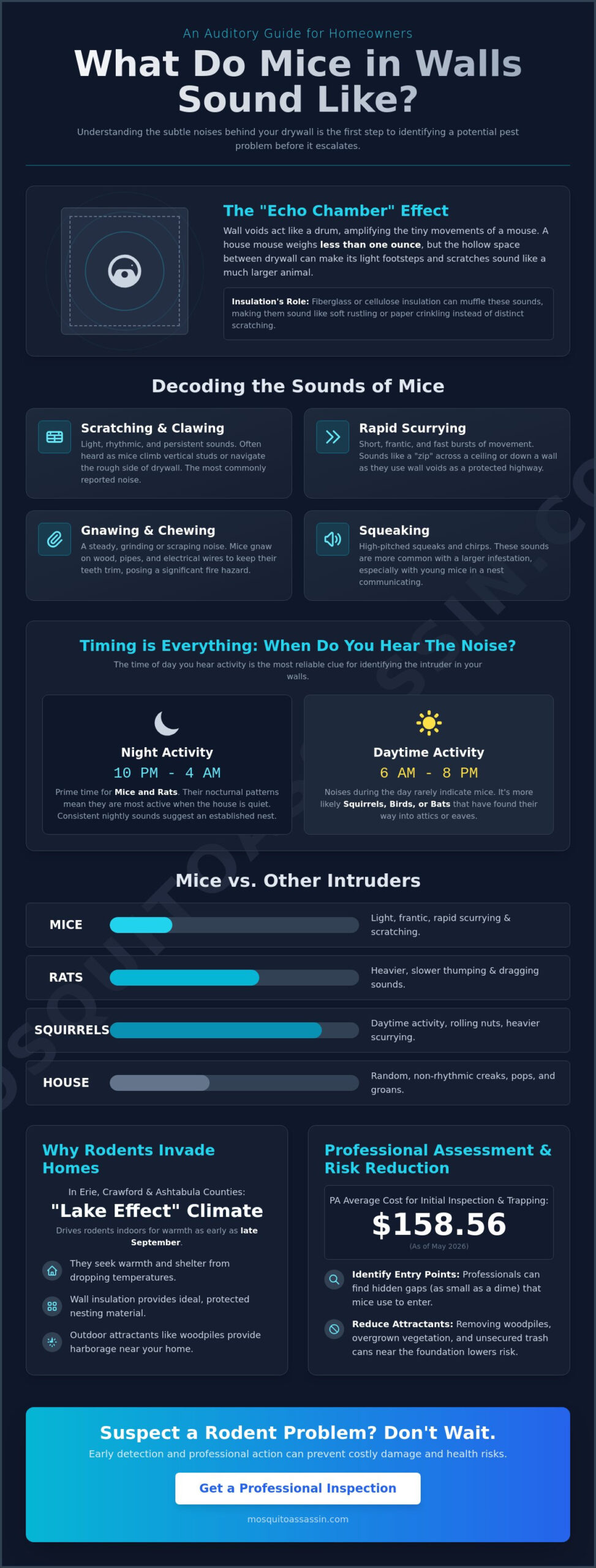
    • Understand how wall voids act as echo chambers, often causing the light movements of small rodents to sound much louder and more intimidating than they are.
    • Identify the specific rhythmic patterns of scratching and rapid scurrying to accurately determine what do mice in walls sound like during their peak nocturnal hours.
    • Differentiate between the light, frantic sounds of mice and the heavier thumping of rats or the daytime activity patterns typical of squirrels.
    • Recognize how the “lake effect” climate in Erie, Crawford, and Ashtabula counties drives rodents toward the warmth of home insulation as early as late September.
    • Learn how professional inspections identify hidden entry points and how reducing outdoor attractants like woodpiles can help lower the risk of a future infestation.

    Understanding the Acoustics of Mice in Walls

    Rodent acoustics refers to the specific frequency and pattern of sounds produced by mice during nesting, traveling, or feeding. For homeowners in Erie and Crawford Counties wondering what do mice in walls sound like, the answer often lies in the architecture of the house itself. Mice utilize wall voids as protected highways. These internal spaces provide safety from outdoor predators and easy access to fiberglass or cellulose insulation for nesting materials. Because these voids connect different levels of a home, they allow rodents to move undetected from the basement to the attic in a matter of seconds.

    Wall cavities act as echo chambers, creating a “stethoscopic” effect that amplifies minor vibrations. This structural characteristic often makes small movements sound much louder than they actually are. A house mouse weighing less than an ounce can sound like a much larger animal because the hollow space between drywall sheets acts as a drum. Understanding House mouse behavior and communication helps clarify why these sounds occur primarily when the house is quiet and ambient noise is low.

    To better understand this concept, watch this helpful video:

    The Role of Wall Insulation and Cavities

    The type of materials inside your walls changes how sounds travel through your home. Fiberglass and cellulose insulation provide muffled environments where scratching might sound like soft rustling or paper crinkling. In many Pennsylvania and Ohio homes, uninsulated interior walls allow sounds to travel vertically with ease. This makes it difficult to pinpoint the exact location of the rodent. Mice typically travel along the base of the wall or on top of horizontal studs, known as fireblocks. These wooden supports act as elevated paths through the structural frame, allowing rodents to move between floors without being seen.

    Why Timing Matters for Identification

    Timing is the most reliable way to distinguish mice from other intruders. Rodents are primarily nocturnal, meaning activity typically begins shortly after dusk and peaks in the early morning hours. If you hear noises during the day, they’re rarely mice. Daytime sounds more frequently indicate squirrels, birds, or bats that have entered the attic or eaves. Nocturnal patterns, specifically between 10 PM and 4 AM, are the primary indicators of a mouse or rat presence. Consistent nightly patterns suggest an established nest rather than a single transient rodent. When trying to determine what do mice in walls sound like, listen for these rhythmic bursts of activity during the quietest hours of the night. Professional pest control may help reduce risk when these sounds become a nightly occurrence in your living space.

    Common Sounds Produced by Mice in Residential Walls

    Determining what do mice in walls sound like requires listening for four primary behaviors: scratching, scurrying, gnawing, and vocalizing. Because a house mouse typically weighs less than one ounce, their movements are often described as light and frantic. Scratching and clawing are the most frequent sounds reported by homeowners in Erie and Crawford Counties. These noises occur as mice use their sharp claws to navigate vertical wood studs or the rough backside of drywall. Unlike the random creaks of a settling house, these sounds are rhythmic and persistent.

    Rapid scurrying often follows scratching. These are short, fast bursts of movement as the rodents travel between their nesting sites and food sources. This behavior is highly purposeful. If you hear a sudden “zip” across a ceiling or down a wall, it’s likely a mouse utilizing a wall void as a protected corridor. Recognizing these signs of mouse infestations early can prevent significant structural damage. While the sounds are often faint, the hollow nature of wall cavities can amplify them, making a single mouse sound like a much larger intruder.

    Vocalizations such as squeaking and chirping are less common but highly indicative of an established presence. These high-pitched sounds usually occur when multiple mice are interacting or when a nest of pups is present. If these noises are accompanied by the sound of rustling paper or crinkling plastic, it suggests the rodents are actively gathering materials for a nest. For residents in Ashtabula County dealing with these nightly disturbances, professional pest control may help reduce risk and restore quiet to the home.

    Identifying Gnawing Patterns

    Gnawing and chewing produce a persistent, rhythmic grinding sound. Mice must chew continuously because their incisors grow throughout their entire lives. The resonance of this sound changes based on the material. Gnawing on wooden structural elements produces a deeper, hollow sound. In contrast, chewing on plastic pipes or drywall creates a higher-pitched, rasping noise. One of the most concerning sounds is a light, repetitive clicking. This often occurs when a mouse chews on the plastic insulation of electrical wiring, which presents a serious fire hazard to the property.

    Scurrying vs. Thumping

    Understanding what do mice in walls sound like is the first step in differentiating a minor nuisance from a significant structural threat. Scurrying is rapid and suggests a small body weight, typical of a mouse. If you hear heavy thumping, dragging, or loud jumping, you’re likely dealing with larger rodents like rats or potentially trapped wildlife. Rats produce a much more deliberate, heavy sound when moving through wall voids. Additionally, if the noises involve heavy scratching followed by silence, it might indicate an animal that is stuck and struggling. Identifying these acoustic differences helps determine the specific type of intervention needed to safeguard your home.

    What Do Mice in Walls Sound Like? A Guide to Identifying Rodent Acoustics

    Mice vs. Other Household Pests and Structural Noises

    Distinguishing between biological activity and mechanical house noises is a common challenge for homeowners. When asking what do mice in walls sound like, it’s helpful to first rule out the physical sounds of the building itself. Structural settling is usually a single, sharp “pop” or “crack” rather than a repetitive scratching. These pops occur as the building materials adjust to weight or pressure. Biological sounds, conversely, are rhythmic, persistent, and often reactive to your movements. If a noise starts or stops when you walk into a room, it’s almost certainly a living creature.

    Timing is the most effective tool for species identification. If the scratching occurs during the afternoon, you’re likely hearing squirrels, birds, or bats. Mice are strictly nocturnal, with activity typically peaking between 10 PM and 4 AM. Squirrels often sound heavier and more frantic as they enter or exit the attic during daylight hours. By contrast, the light, rapid scratching of mice is almost exclusively a nighttime occurrence. Identifying these patterns early is essential for determining if professional pest control may help reduce risk.

    Mice vs. Rats: Frequency and Volume

    Rats are significantly larger than mice, often weighing between 5 and 18 ounces, compared to a mouse’s 0.5 to 1 ounce. This weight difference creates a distinct acoustic profile. Rats produce louder, heavier sounds and may be heard dragging large food items or nesting materials through wall voids. While mouse sounds are often localized to a specific room or wall segment, rats are more mobile and may be heard traveling across multiple floors. Their vocalizations also differ; rats are more likely to produce deep, guttural squeaks compared to the high-pitched, needle-like chirps of mice.

    Biological Noises vs. Structural Settling

    Homeowners in Erie, Crawford, and Ashtabula counties frequently experience thermal expansion in their homes. As temperatures drop at night, wooden framing and siding can creak, groan, or click as they contract. This is a predictable occurrence in the local climate. Water pipes can also create confusion through pipe hammer, a rattling or clicking sound that occurs when faucets are turned off. This can mimic the sound of scurrying, but it’s directly tied to plumbing usage.

    Understanding the habits of mice and voles in Pennsylvania provides the necessary context to separate these mechanical events from an actual infestation. Rodent sounds are erratic and reactive, while structural noises are often predictable based on temperature shifts or appliance use. If you hear a sound that follows a consistent, non-mechanical rhythm, it’s time to investigate further. Identifying the specific source of the noise is the first step toward safeguarding your home from potential structural damage.

    Why Rodents Enter Walls in Pennsylvania and Ohio

    Seasonal shifts in Erie and Crawford counties drive rodents indoors as early as late September. The “lake effect” climate common to the Great Lakes region creates significant temperature drops that force mice to seek the warmth of home insulation. As frost begins to settle on the ground, rodents become desperate for stable environments where they can nest away from the wind and snow. Homeowners often begin wondering what do mice in walls sound like during these first cold snaps as rodents transition from outdoor fields to structural interiors. Once they find a way inside, the fiberglass or cellulose insulation within your walls provides the perfect nesting material to survive a harsh winter.

    In agricultural areas such as Ashtabula County, rodent pressure often peaks during harvest seasons. As crops are cleared from the fields, mice lose their primary food sources and natural cover, leading them directly toward residential foundations. Establishing a general pest control plan can help address these seasonal migrations before rodents establish a permanent presence inside your structure. These pests aren’t just looking for food; they’re looking for a safe place to reproduce throughout the winter months.

    Regional Pest Pressure and Entry Points

    Older homes in Meadville and Erie often feature stone foundations or gaps in aging siding that allow easy entry. It’s a biological fact that mice can fit through openings as small as a dime, which is approximately 1/4 inch in diameter. This means even minor cracks in a foundation or gaps around utility line penetrations are high-risk areas. Common entry points also include crawl space vents, gaps under exterior doors, and holes where cable or plumbing lines enter the house. Over time, mice can chew through softened wood or old mortar to widen these gaps, making the home even more vulnerable to future intruders.

    The Progression of an Infestation

    Hearing sounds in one wall often leads to activity in the attic or crawl space as the population grows. Rodents reproduce rapidly; a single female can have up to 10 litters per year. This means a single “scratching” sound can represent a significant colony within just a few weeks. Persistent noises in the same location usually indicate a high-traffic runway or a primary nesting site. Mice leave behind pheromone trails that guide other members of the colony to these safe paths. Understanding what do mice in walls sound like helps homeowners identify these “hot zones” before the population spreads throughout the entire structure. To prevent long-term damage to insulation and wiring, professional pest control may help reduce risk in your specific neighborhood.

    Professional Assessment and Risk Reduction

    Identifying what do mice in walls sound like is the critical first step in protecting your property. Once you’ve recognized the rhythmic scratching or scurrying, a professional inspection is necessary to determine the exact nature of the intrusion. Professional pest control services in Erie and Ashtabula counties provide customized exclusion plans designed to seal entry points permanently. This systematic approach moves beyond simple trapping to address the root causes of the infestation. For a deeper look at managing an active population, refer to this rodent removal guide.

    What to Expect from a Professional Inspection

    A comprehensive assessment involves more than just looking at the wall where the noise originated. Technicians look for “rub marks,” which are oily, dark deposits left by rodent fur as they brush against baseboards and wall entries. These marks act as a map of high-traffic runways. An inspection of the attic and crawl space is also required to confirm the extent of the activity and identify nesting sites. Professionals use specialized tools, such as thermal imaging or borescopes, to locate nests without causing unnecessary damage to your drywall. This precision ensures that the treatment plan is targeted and effective.

    Reducing attractants around the home is equally important for long-term risk reduction. Consider the following steps to lower the pressure on your home’s exterior:

    • Manage Food Sources: Keep all pantry items in airtight glass or metal containers.
    • Clean Outdoor Areas: Remove fallen birdseed from under feeders and pick up pet waste promptly.
    • Organize the Perimeter: Move woodpiles at least 20 feet away from the foundation and trim overgrown vegetation.

    Next Steps for Homeowners

    Homeowners can assist the inspection process by documenting the specific times and locations where noises occur. Note if the scratching is localized to a single room or if it moves between floors. This information helps the technician narrow down potential entry points and nesting zones. Professional pest control may help reduce the risk of property damage and health concerns associated with rodent waste and chewed wiring. If you’re hearing persistent activity in the PA/OH region, contact a professional for a rodent assessment to restore the safety of your home.

    Disclaimer: The information provided on this blog is for general informational purposes only and is not intended as professional pest control advice. Conditions vary by property, environment, and location. Reading this content does not create a service agreement. For an inspection or professional recommendations, please contact Mosquito Assassin Pest Control LLC directly.
    Restoring Peace and Quiet to Your Home

    Identifying the specific acoustics of an infestation is the first step toward safeguarding your property. Whether you are hearing light scratching or rapid scurrying, knowing what do mice in walls sound like allows you to distinguish biological activity from the predictable thermal expansion of a home. Addressing these sounds promptly is essential, especially given that a single mouse can represent a rapidly growing colony within just a few weeks. Waiting to address nocturnal noises often leads to more extensive damage to insulation and electrical systems.

    For residents in Erie, Crawford, and Ashtabula counties, professional pest control may help reduce risk. A specialized rodent exclusion process identifies hidden entry points and seals them permanently to prevent future intrusions. As a locally owned and operated provider that is licensed and insured in both Pennsylvania and Ohio, Mosquito Assassin focuses on methodical, long-term solutions. You can schedule a professional rodent inspection or visit mosquitoassassin.com to get started. Taking action today provides the clarity and protection needed to maintain a secure, pest-free environment.

    Disclaimer: The information provided on this blog is for general informational purposes only and is not intended as professional pest control advice. Conditions vary by property, environment, and location. Reading this content does not create a service agreement. For an inspection or professional recommendations, please contact Mosquito Assassin Pest Control LLC directly.
    Frequently Asked Questions

    Can you hear mice in walls during the day?

    Nocturnal behavior makes it rare to hear mice during the day, as they typically remain inactive until after dusk. Diurnal activity might suggest a very large population competing for limited resources or a different animal like a squirrel. If you’re trying to identify what do mice in walls sound like, focus your listening on the hours between 10 PM and 4 AM when ambient noise is lowest.

    Do mice in walls eventually go away on their own?

    Mice will not leave a wall cavity on their own as long as it provides warmth and safety. Once a mouse establishes a nest in the insulation, it has everything it needs to survive the winter. Without professional intervention or exclusion, the population will continue to grow because these rodents can reproduce every 21 days, leading to a permanent infestation.

    What happens if a mouse dies in the wall?

    Odors from a mouse that dies in a wall typically become noticeable within 24 to 48 hours as decomposition begins. This distinct, pungent smell can persist for several weeks depending on the temperature and humidity. It may also attract secondary pests like blowflies or dermestid beetles to the area, which can create additional concerns for the homeowner.

    Can mice chew through drywall or wood?

    Drywall and wood are easily penetrated by mice because of their constant need to gnaw on hard surfaces. Their incisors grow approximately 0.3 millimeters per day, requiring them to chew to keep their teeth at a manageable length. This behavior often creates the persistent grinding or clicking sounds that residents hear at night, which can lead to significant structural damage.

    Is it possible to have just one mouse in the wall?

    It is statistically unlikely to have only a single mouse in your walls because they are social creatures that travel in family groups. If you hear the specific scratching that defines what do mice in walls sound like, it usually indicates an established colony rather than a solitary transient. A single female can produce up to 60 offspring in one year.

    Are sounds in the walls always a sign of rodents?

    No, sounds in the walls are not always a sign of a biological intruder. Thermal expansion in PA and OH homes can cause wood to pop, while water hammer in pipes can mimic scurrying. However, mechanical sounds are usually tied to temperature shifts or appliance use, whereas rodent sounds are erratic and reactive to movement in the room.

    How do professionals get mice out of walls?

    Licensed technicians use an integrated approach that combines strategic trapping with structural exclusion. This process involves identifying high-traffic runways and installing tamper-resistant stations to manage the population. Professionals also seal entry points with materials like steel wool or hardware cloth, which prevents new rodents from entering while they address the activity already present inside the wall voids.

    How long can a mouse live inside a wall cavity?

    Inside a protected wall cavity, a mouse can live for 12 to 18 months. Without the threat of predators or extreme weather, their survival rate increases significantly compared to outdoor populations. During this lifespan, they will continue to tunnel through insulation and gnaw on structural elements, making early identification of their presence essential for preventing long-term property damage.

    Disclaimer: The information provided on this blog is for general informational purposes only and is not intended as professional pest control advice. Conditions vary by property, environment, and location. Reading this content does not create a service agreement. For an inspection or professional recommendations, please contact Mosquito Assassin Pest Control LLC directly.

  • Outdoor Tick Spray Service: A Comprehensive Guide for Homeowners in 2026

    Outdoor Tick Spray Service: A Comprehensive Guide for Homeowners in 2026

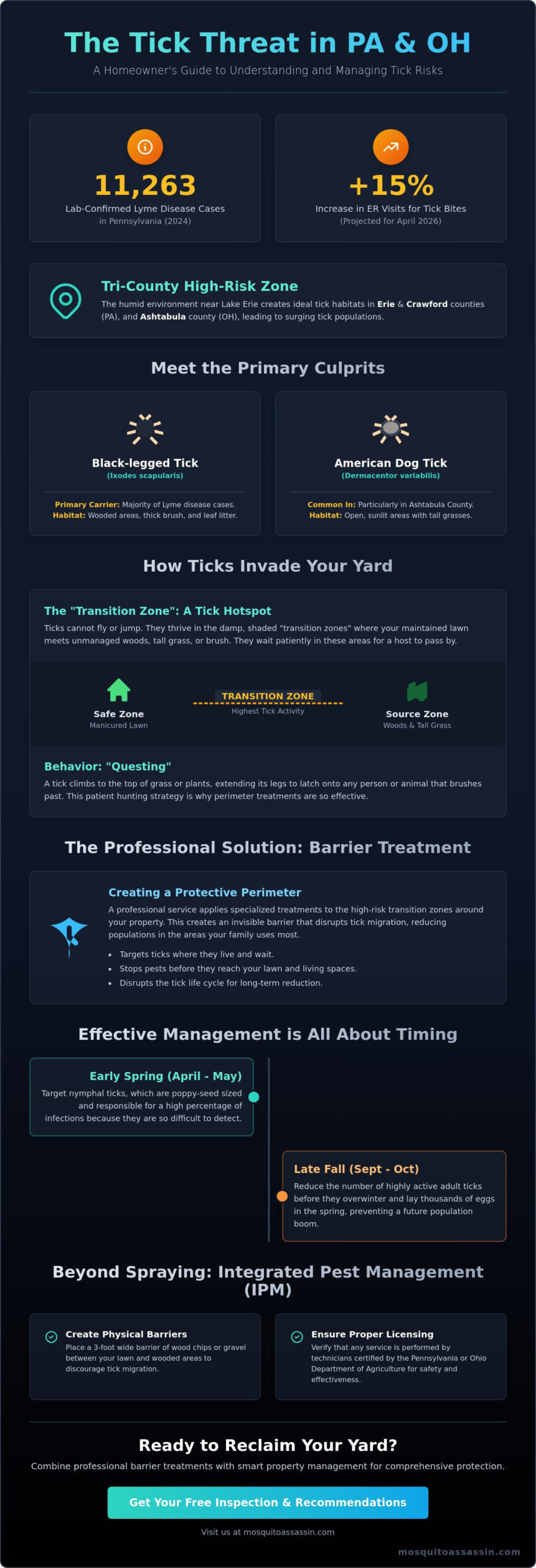
    With 11,263 lab-confirmed cases of Lyme disease in Pennsylvania in 2024 and a 15 percent increase in emergency room visits for tick bites in April 2026, the health risks in the tri-county region have reached a critical point. Many homeowners are now considering a professional outdoor tick spray service to address these concerns, as tick populations in Northeast Ohio have surged to record levels this season. It is natural to feel a sense of anxiety when letting pets or children play in the yard, especially when the effectiveness of various retail products remains inconsistent and confusing.

    This guide explains the science behind professional tick treatments and how they function as part of a comprehensive property management plan. You will learn about the differences between various treatment formulas (including 25(b) minimum-risk options) and how state-certified applicators navigate strict regulations in Pennsylvania and Ohio. By combining professional expertise with strategic landscape modifications, residents in Erie, Crawford, and Ashtabula counties can better manage their outdoor spaces and reduce the presence of these persistent pests.

    Disclaimer: The information provided on this blog is for general informational purposes only and is not intended as professional pest control advice. Conditions vary by property, environment, and location. Reading this content does not create a service agreement. For an inspection or professional recommendations, please contact Mosquito Assassin Pest Control LLC directly.

    Key Takeaways

    • Identify high-risk transition zones where residential lawns meet wooded areas to focus prevention efforts where ticks are most likely to quest for hosts.
    • Understand how a professional outdoor tick spray service creates a perimeter barrier to reduce populations in the areas of your yard used most frequently by families.
    • Learn to implement Integrated Pest Management techniques, such as using wood chips or gravel to create physical boundaries that discourage tick migration.
    • Ensure all property treatments are performed by technicians who are properly licensed and certified by the Pennsylvania or Ohio Department of Agriculture.

    Ticks in Pennsylvania and Ohio: Understanding Regional Risks

    An outdoor tick spray service involves the application of specialized products to yard perimeters to reduce tick populations before they reach your family. For residents in Erie and Crawford counties in Pennsylvania and Ashtabula County in Ohio, this protection is a necessity rather than a luxury. The region’s unique geography near Lake Erie creates a humid environment where ticks thrive in both wooded edges and tall grasses. Professional treatments focus on the specific areas where these pests hide, creating a barrier that disrupts their ability to migrate into your active lawn space.

    To better understand how these pests interact with your property, watch this helpful video:

    Common Tick Species in the Tri-County Area

    The black-legged tick (Ixodes scapularis) is the primary concern for homeowners in Pennsylvania and Ohio. This species is responsible for the majority of common tick-borne diseases reported in the state. In 2024, Pennsylvania recorded 11,263 lab-confirmed cases of Lyme disease, highlighting the prevalence of this species in wooded habitats. They’re often found in the leaf litter at the base of trees or in thick brush.

    American dog ticks (Dermacentor variabilis) are also common, particularly in Ashtabula County. Unlike the black-legged tick, the dog tick prefers open, sunlit areas with tall grasses. They’re hardy and can survive in drier conditions. Because ticks go through a multi-year life cycle consisting of egg, larva, nymph, and adult stages, a single treatment isn’t enough. Professional outdoor tick spray service protocols are designed to address these pests at various points in their development to ensure the population doesn’t rebound.

    The Importance of Seasonal Timing

    Local weather patterns in the Great Lakes region significantly influence tick behavior. While many believe ticks disappear in winter, they actually remain active whenever temperatures rise above 32 degrees Fahrenheit. This means adult ticks can be questing for a host even during a mid-winter thaw. However, activity typically peaks during two distinct windows in our region.

    • Early Spring: Applications during April and May target nymphal ticks. These are the size of a poppy seed and cause a high percentage of infections because they’re so hard to detect.
    • Late Fall: As temperatures drop in September and October, adult black-legged ticks become highly active. Fall treatments help reduce the number of adults that would otherwise overwinter and lay thousands of eggs in the spring.

    Effective management requires understanding these biological clocks. By timing treatments to match local emergence patterns, homeowners can maintain a more consistent level of protection throughout the year.

    Disclaimer: The information provided on this blog is for general informational purposes only and is not intended as professional pest control advice. Conditions vary by property, environment, and location. Reading this content does not create a service agreement. For an inspection or professional recommendations, please contact Mosquito Assassin Pest Control LLC directly.

    Tick Habitats and Behavior: Where Pests Hide in Residential Landscapes

    Ticks are patient, opportunistic hunters that don’t possess the ability to fly or jump. Instead, they rely on a unique behavior known as questing to find their next host. A tick will climb to the top of a blade of grass or the tip of a low-hanging branch, extending its front legs to latch onto any person or animal that brushes past. Because they move so slowly on their own, their survival depends entirely on being in the right place at the right time. A professional outdoor tick spray service focuses on these specific high-risk areas rather than treating the middle of a sunny lawn where ticks are unlikely to survive.

    The Science of Questing

    Ticks are highly sensitive to their environment. They use specialized sensors, called Haller’s organs, located on their front legs to detect carbon dioxide, heat, and vibrations from a distance. When a potential host approaches, the tick becomes alert and prepares to grab hold. You’ll rarely find ticks in the center of a well-manicured, sun-drenched lawn. This is because ticks are extremely vulnerable to desiccation (drying out). They require shady, moist environments with at least 80 percent humidity to maintain their internal water balance. If they stay in the sun too long, they will die from dehydration, which is why they retreat to the cool dampness of leaf litter during the heat of the day.

    Identifying High-Risk Zones on Your Property

    In the tri-county region of Erie, Crawford, and Ashtabula, the transition zone is the most dangerous area for tick encounters. This is the perimeter where your maintained grass meets woods, tall weeds, or decorative ground cover. Research suggests that the vast majority of ticks in residential yards are found within nine feet of this edge. These areas provide the perfect “nursery” environment: plenty of shade, high moisture, and a steady supply of hosts.

    • Woodpiles and Stone Walls: These structures are ideal nesting sites for white-footed mice and other small rodents. These animals are the primary reservoirs for pathogens. When rodents live near your home, they bring ticks directly into your landscape.
    • Dense Ornamental Plantings: Thick ground covers like pachysandra or ivy create a humid microclimate at the soil level. This protects ticks from the wind and sun, allowing them to remain active longer.
    • Leaf Litter: Accumulations of dead leaves provide an insulating blanket that protects ticks from temperature extremes, even during the colder months in Northwest Pennsylvania.

    Understanding these biological requirements helps homeowners prioritize their yard work. While maintaining your landscape is essential, professional pest control may help reduce risk by treating these specific zones where ticks are most concentrated. Managing the environment is a powerful way to disrupt the tick life cycle before they have a chance to quest for a host.

    Disclaimer: The information provided on this blog is for general informational purposes only and is not intended as professional pest control advice. Conditions vary by property, environment, and location. Reading this content does not create a service agreement. For an inspection or professional recommendations, please contact Mosquito Assassin Pest Control LLC directly.

    Outdoor Tick Spray Service: A Comprehensive Guide for Homeowners in 2026

    The Science of Professional Tick Barrier Treatments

    A professional outdoor tick spray service relies on technical precision rather than simple volume. Unlike a general broadcast application that blankets an entire property, a barrier treatment is a surgical approach. Licensed technicians use high-pressure sprayers to penetrate deep into dense foliage and reach the underside of leaves where ticks congregate to avoid the sun. This high-pressure delivery is essential. Standard handheld sprayers often lack the force to reach the humid micro-climates at the base of shrubs or within thick ground covers where ticks are most likely to survive.

    Perimeter vs. Broadcast Spraying

    Targeting the property edge is significantly more effective than treating a sunny, well-manicured lawn. Since ticks are concentrated within the first nine feet of the transition zone, the treatment focuses on creating a literal barrier between the woods and your living space. Professional equipment is calibrated to provide a consistent droplet size that adheres to organic matter. This differs from many retail products, which often wash away after the first heavy rain. In addition to sprays, comprehensive management may include the use of tick tubes. These are biodegradable cylinders filled with treated cotton that rodents take back to their nests. This targets ticks at their host source; the mice and chipmunks that bring them onto your property. Granular applications are also used in thick leaf litter to reach ticks that are buried beneath the surface where liquid sprays might not penetrate.

    Residual Effectiveness and Follow-Up

    Modern formulations are engineered to bind to the surface of plants and mulch, providing residual protection for several weeks. However, environmental factors like UV light and heavy rainfall naturally break down these products. In the Great Lakes region, where spring rains can be frequent, maintaining this barrier requires a recurring schedule. With tick populations in Northeast Ohio reaching record highs in 2026, consistent protection is vital to manage the ongoing threat. Technicians identify specific micro-climates on a property, such as shaded dog runs or the areas around stone walls, that require targeted attention.

    By understanding the local environment and the specific biology of regional ticks, a customized plan ensures that the treatment remains effective throughout the peak seasons. While environmental management is a key part of the process, professional pest control may help reduce risk by significantly lowering the number of questing ticks in your immediate landscape. This methodical approach provides a level of coverage that is difficult to achieve with standard DIY methods.

    Disclaimer: The information provided on this blog is for general informational purposes only and is not intended as professional pest control advice. Conditions vary by property, environment, and location. Reading this content does not create a service agreement. For an inspection or professional recommendations, please contact Mosquito Assassin Pest Control LLC directly.
    Integrated Strategies for Reducing Tick Populations on Your Property

    Effective tick control is rarely the result of a single action. It requires a partnership between a professional outdoor tick spray service and strategic landscape management. This approach, known as Integrated Pest Management (IPM), focuses on making the environment less hospitable for pests through multiple biological and physical methods. By reducing the humidity and shelter that ticks require, homeowners can significantly decrease the likelihood of these parasites establishing a presence in active yard spaces. This strategy doesn’t just target the ticks themselves; it addresses the entire ecosystem that allows them to thrive.

    Landscape Modification Tips

    Using woodchips or gravel to create a three-foot buffer zone between the lawn and wooded areas is a proven strategy for disrupting tick movement. This physical barrier serves two important purposes. It creates a dry, sun-exposed strip that ticks are reluctant to cross because they risk dehydration. It also provides a clear visual reminder for family members and pets to stay within the maintained safe zone. For properties in Erie and Crawford counties, where woods often meet suburban lawns, this separation is vital. Keeping playground equipment, patios, and deck areas at least ten feet away from the yard perimeter further reduces the chance of accidental encounters. Pruning low-hanging branches and thinning out dense ornamental shrubs increases sunlight and airflow, which naturally lowers the humidity levels at the soil surface.

    Managing Tick Hosts

    Ticks don’t travel long distances on their own; they rely on wildlife to move through the tri-county region. The white-footed mouse is the primary host for nymphal ticks and a major reservoir for the bacteria that cause Lyme disease. Reducing rodent attractants is a critical step in a comprehensive plan. Bird feeders often drop seeds that attract mice and chipmunks directly to your foundation. Moving these feeders to the far edge of the property and sealing trash containers can limit rodent activity. Deer are the primary hosts for adult ticks, often transporting them from deep woods into residential landscapes. Planting deer-resistant vegetation or installing physical fencing can help discourage these larger animals from bedding down near your home. Clearing leaf litter remains the most effective DIY task for homeowners, as it removes the damp insulation ticks use for protection during temperature fluctuations. For an inspection of your property’s specific high-risk zones, professional pest control may help reduce risk.

    Regular lawn maintenance also plays a role in this integrated approach. Keeping grass mown to a height of three inches or less allows the sun to reach the soil, creating a drier environment. When combined with a targeted outdoor tick spray service, these landscape changes create a multi-layered defense system that is much more effective than relying on any single treatment alone.

    Disclaimer: The information provided on this blog is for general informational purposes only and is not intended as professional pest control advice. Conditions vary by property, environment, and location. Reading this content does not create a service agreement. For an inspection or professional recommendations, please contact Mosquito Assassin Pest Control LLC directly.

    Choosing a Professional Tick Control Service for Your Home

    Selecting an outdoor tick spray service requires careful consideration of credentials and methodology. In both Pennsylvania and Ohio, anyone applying pesticides for hire must be a certified commercial applicator. This means they have passed rigorous exams administered by the Pennsylvania or Ohio Department of Agriculture. Beyond legal requirements, a reputable provider should emphasize a customized treatment plan. Every property has unique drainage, vegetation, and wildlife patterns that dictate where ticks are most likely to aggregate. Professional recommendations should always follow a thorough on-site inspection rather than a blind estimate over the phone. Homeowners should also inquire about safety protocols, ensuring that treatments are applied in a manner that respects the health of families and pets. This includes verifying that the products used are registered for residential use and that the technician follows all label instructions precisely.

    The Value of Local Expertise

    Pest pressure isn’t uniform across the country. Technicians who live in communities like Erie or Meadville understand the specific environmental factors of the Lake Erie region. They know how a particularly wet spring or a mild winter affects local tick emergence. This regional knowledge is essential for identifying the specific micro-climates on a property that require targeted attention. When a company is locally owned and operated, they’re often more responsive if pests return between scheduled visits. You can learn more about the importance of community-focused service on the Mosquito Assassin about page, which highlights how local roots contribute to more effective pest management. Local experts aren’t just visiting a territory; they’re protecting the neighborhoods where they also live and work.

    Establishing an Ongoing Protection Plan

    Because ticks and mosquitoes often thrive in the same shaded, humid environments, many residents find value in a combined mosquito control program. This dual-purpose approach ensures that the perimeter barrier addresses multiple pests simultaneously, providing a more comprehensive shield for the yard. When reviewing a service agreement, look for clear language regarding a satisfaction guarantee. A reliable provider stands by their work and will return to re-treat the area if the initial application doesn’t meet the expected results. This commitment is a hallmark of professional service, indicating that the company is invested in the long-term management of your property’s pest population. To confirm if service is available in your specific town, visiting the Mosquito Assassin location page is a helpful next step.

    Professional pest control may help reduce risk when managed by experts who understand the seasonal biology of the tri-county area. By choosing a licensed professional who prioritizes a methodical, integrated approach, homeowners can reclaim their outdoor spaces with greater confidence. Managing tick populations is a seasonal commitment, but with the right partnership, it’s possible to maintain a more comfortable environment for your family throughout the year.

    Disclaimer: The information provided on this blog is for general informational purposes only and is not intended as professional pest control advice. Conditions vary by property, environment, and location. Reading this content does not create a service agreement. For an inspection or professional recommendations, please contact Mosquito Assassin Pest Control LLC directly.
    Protecting Your Property for the Seasons Ahead

    Managing a property in the tri-county region requires a proactive approach to tick population control. By focusing on the transition zones where lawns meet wooded areas and implementing Integrated Pest Management strategies, residents can create a less hospitable environment for these parasites. A professional outdoor tick spray service provides the technical precision needed to reach questing ticks in their humid micro-habitats. This methodical approach, combined with regular leaf litter removal and rodent management, forms a comprehensive defense for your outdoor living space. Mosquito Assassin is locally owned and operated in Northwest PA and Northeast OH; utilizing licensed and insured technicians who understand regional pest pressures. Their satisfaction-focused service approach ensures that treatment plans are tailored to the specific needs of each property.

    Professional pest control may help reduce risk. Contact Mosquito Assassin for a property assessment to begin establishing a customized barrier for your yard. Taking these steps now ensures you can enjoy your outdoor space with greater peace of mind throughout the 2026 season.

    Disclaimer: The information provided on this blog is for general informational purposes only and is not intended as professional pest control advice. Conditions vary by property, environment, and location. Reading this content does not create a service agreement. For an inspection or professional recommendations, please contact Mosquito Assassin Pest Control LLC directly.
    Frequently Asked Questions

    When is the best time to start an outdoor tick spray service?

    The ideal time to begin treatment is in early spring, typically during April or May, when nymphal ticks first become active. Starting an outdoor tick spray service early in the season targets these younger pests before they have a chance to mature and reproduce. This proactive approach helps suppress the population before it reaches peak levels during the summer months.

    How long does a tick spray treatment last in my yard?

    A professional barrier treatment generally remains effective for approximately 21 to 30 days. Environmental conditions in the Great Lakes region, such as heavy rainfall or intense UV exposure, can cause the product to break down more quickly. Consistent, recurring applications are necessary to maintain a protective shield and ensure that the barrier remains intact throughout the entire active season.

    Is the tick spray service safe for my children and pets to be around?

    Treatments are designed to be family-safe and pet-safe once the application has completely dried on the foliage. Licensed technicians utilize products registered for residential use and follow strict application protocols to ensure the safety of your household. It’s important to keep everyone indoors during the treatment and for a short period afterward until the yard is dry.

    Do I need to be home when the tick treatment is applied?

    Homeowners do not need to be present for the application as long as the technician can access the perimeter of the property. Most professional services provide a notification once the treatment is finished, allowing you to go about your daily schedule without interruption. Simply ensure that all pets are indoors and that any gates or entry points are unlocked for the technician.

    Will the tick spray also kill mosquitoes and other yard pests?

    The formulations used in an outdoor tick spray service are often effective against mosquitoes and other common perimeter pests. Since these insects thrive in the same shaded, humid environments, a single barrier application can provide broad-spectrum protection. This integrated approach simplifies yard maintenance by addressing multiple pest concerns with a coordinated treatment plan.

    How soon can we use the yard after a tick treatment has been applied?

    The yard can typically be used within 30 to 60 minutes after the technician finishes the application. The primary requirement is that the product must be completely dry on the grass and shrubs before people or pets resume outdoor activities. Drying times can vary slightly based on local humidity levels and the amount of sunlight the yard receives.

    Does a professional tick spray guarantee I will not find ticks on my property?

    No service can provide a 100 percent guarantee because wildlife, such as deer and rodents, can continuously drop new ticks into the landscape. Professional pest control may help reduce risk by significantly lowering the number of questing ticks in your immediate environment. Using a professional service should always be combined with personal protection measures like regular tick checks.

    Can I spray for ticks myself using products from a home improvement store?

    While DIY products are available, they often lack the residual strength and professional-grade delivery systems required for effective control. Licensed professionals use high-pressure sprayers to ensure the product reaches the underside of leaves and deep into thick brush where ticks hide. They also have the expertise to identify specific micro-climates that are most likely to harbor pests.

    Disclaimer: The information provided on this blog is for general informational purposes only and is not intended as professional pest control advice. Conditions vary by property, environment, and location. Reading this content does not create a service agreement. For an inspection or professional recommendations, please contact Mosquito Assassin Pest Control LLC directly.

  • Black Widow Spiders in Pennsylvania: Identification and Prevention Guide

    Black Widow Spiders in Pennsylvania: Identification and Prevention Guide

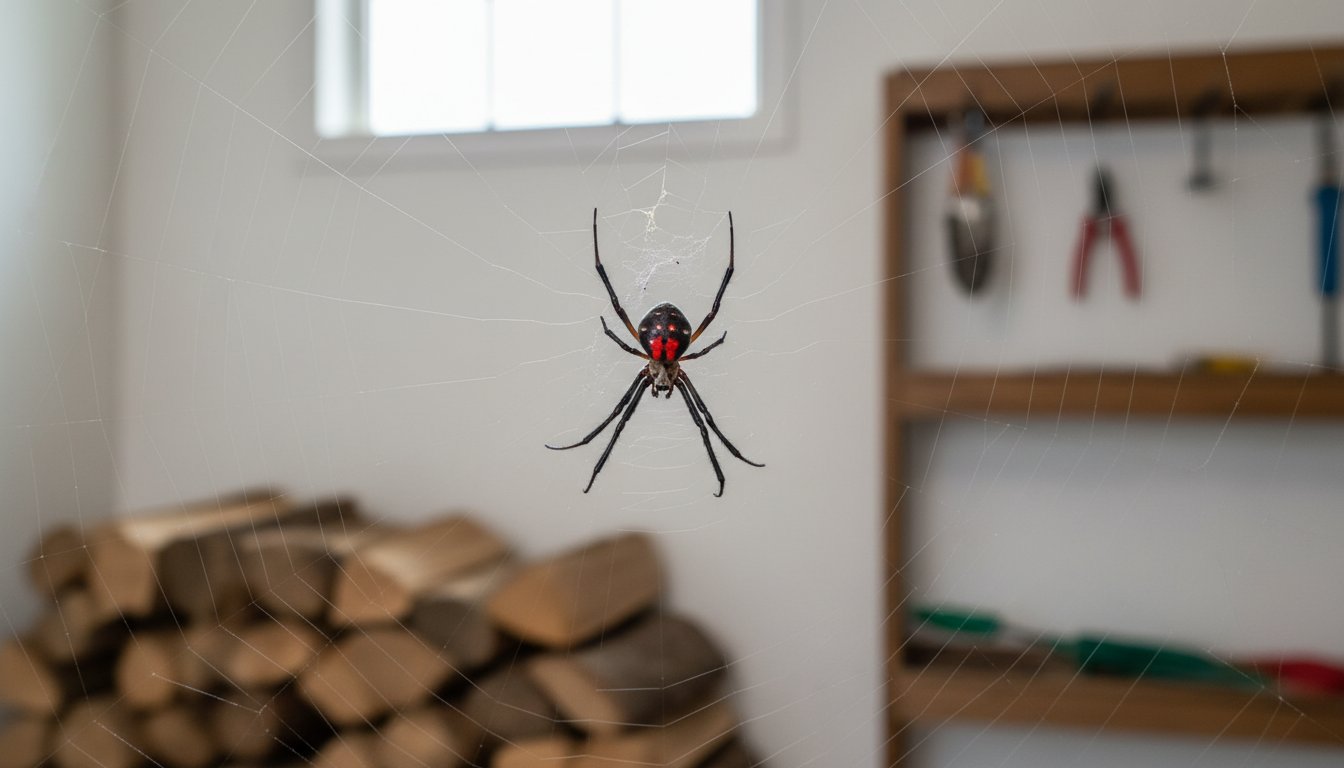
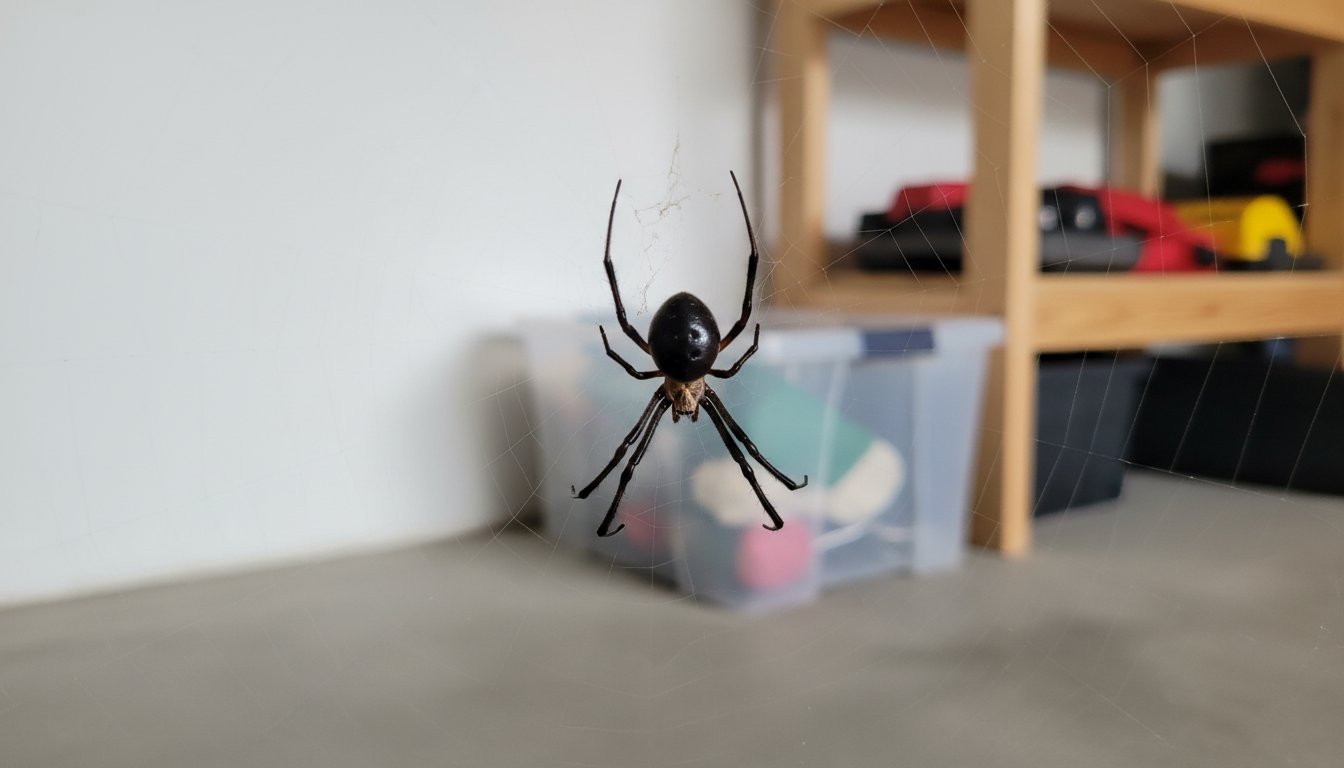
    Finding a glossy black spider with a bright red hourglass in your garage can be a heart-stopping moment for any homeowner. While approximately 2,200 people are bitten by these spiders across the United States each year, many residents don’t realize that black widow spiders in Pennsylvania are a common, native presence in local landscapes. Whether you live in Erie County, Crawford County, or Ashtabula County, understanding these arachnids is the first step toward maintaining a safe environment for your family.

    It’s understandable to feel uneasy about venomous pests lurking in undisturbed corners of your basement or shed. You want to protect your children and pets from potential bites without feeling overwhelmed by uncertainty. This guide provides the expert knowledge you need to identify local black widow species, recognize their preferred habitats, and implement professional-grade prevention strategies for your property. This article explores the specific behaviors of these spiders and provides actionable steps to minimize their presence around your home, ensuring you can manage your space with confidence and peace of mind.

    Disclaimer: The information provided on this blog is for general informational purposes only and is not intended as professional pest control advice. Conditions vary by property, environment, and location. Reading this content does not create a service agreement. For an inspection or professional recommendations, please contact Mosquito Assassin Pest Control LLC directly.

    Key Takeaways

    • Learn to distinguish between the Southern and Northern species of black widow spiders in Pennsylvania by identifying their unique physical markings.
    • Discover the specific outdoor and indoor habitats where these reclusive spiders prefer to build their webs, including woodpiles and quiet corners of garages.
    • Understand the defensive behavior of black widows and the primary risks associated with their neurotoxic venom.
    • Master effective prevention strategies, such as reducing environmental clutter and sealing entry points, to discourage spiders from nesting near your home.
    • Explore how professional pest management and Integrated Pest Management (IPM) techniques offer a comprehensive solution for long-term protection.

    Identifying Black Widow Spiders in Pennsylvania

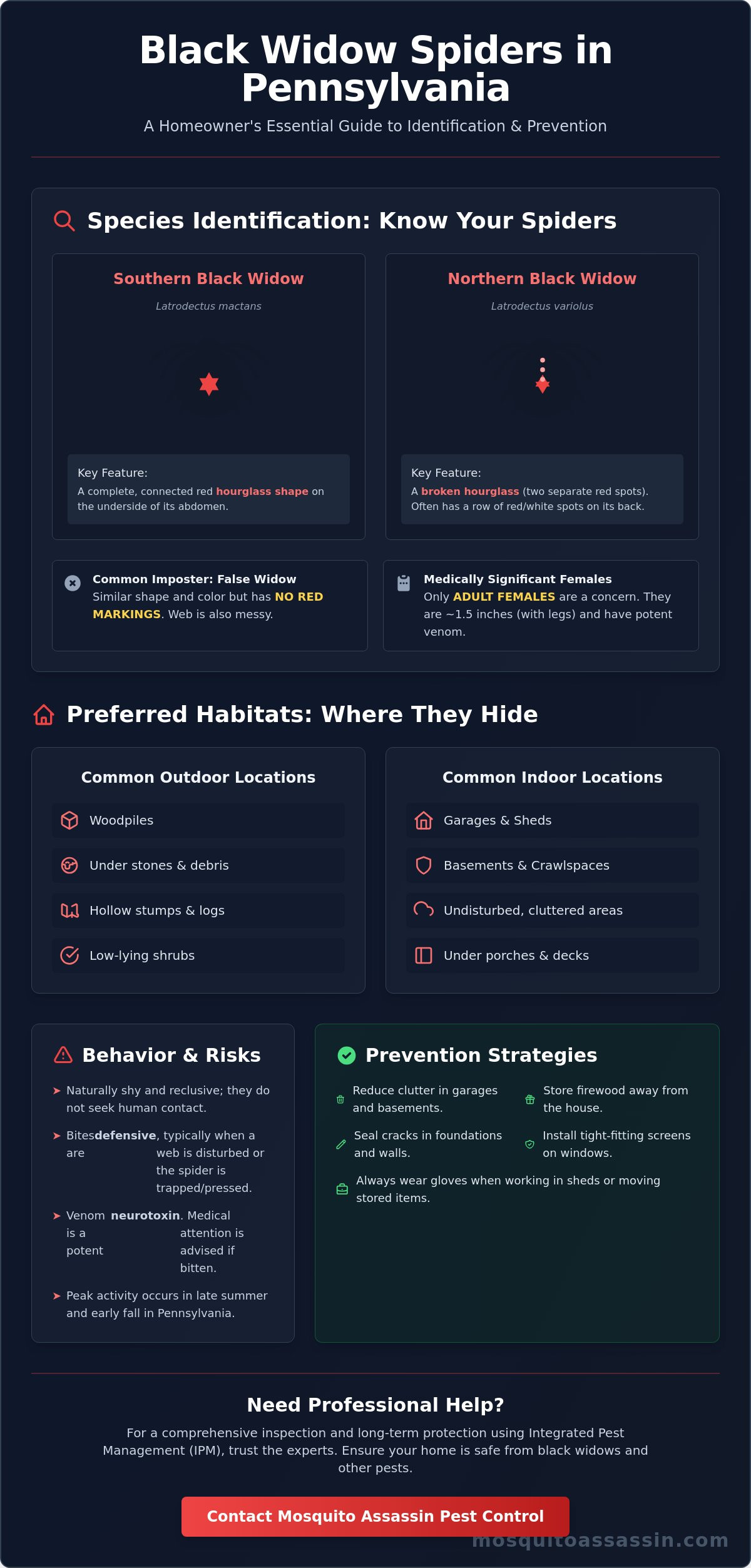
    Pennsylvania is home to two distinct species of widow spiders: the Southern black widow (Latrodectus mactans) and the less frequently discussed Northern black widow. While many people believe only one type exists, identifying black widow spiders in pennsylvania requires looking for subtle differences in their markings. Both species are members of the Theridiidae family, often called cobweb spiders due to their tangled, erratic web patterns that lack the symmetrical beauty of typical garden spider webs.

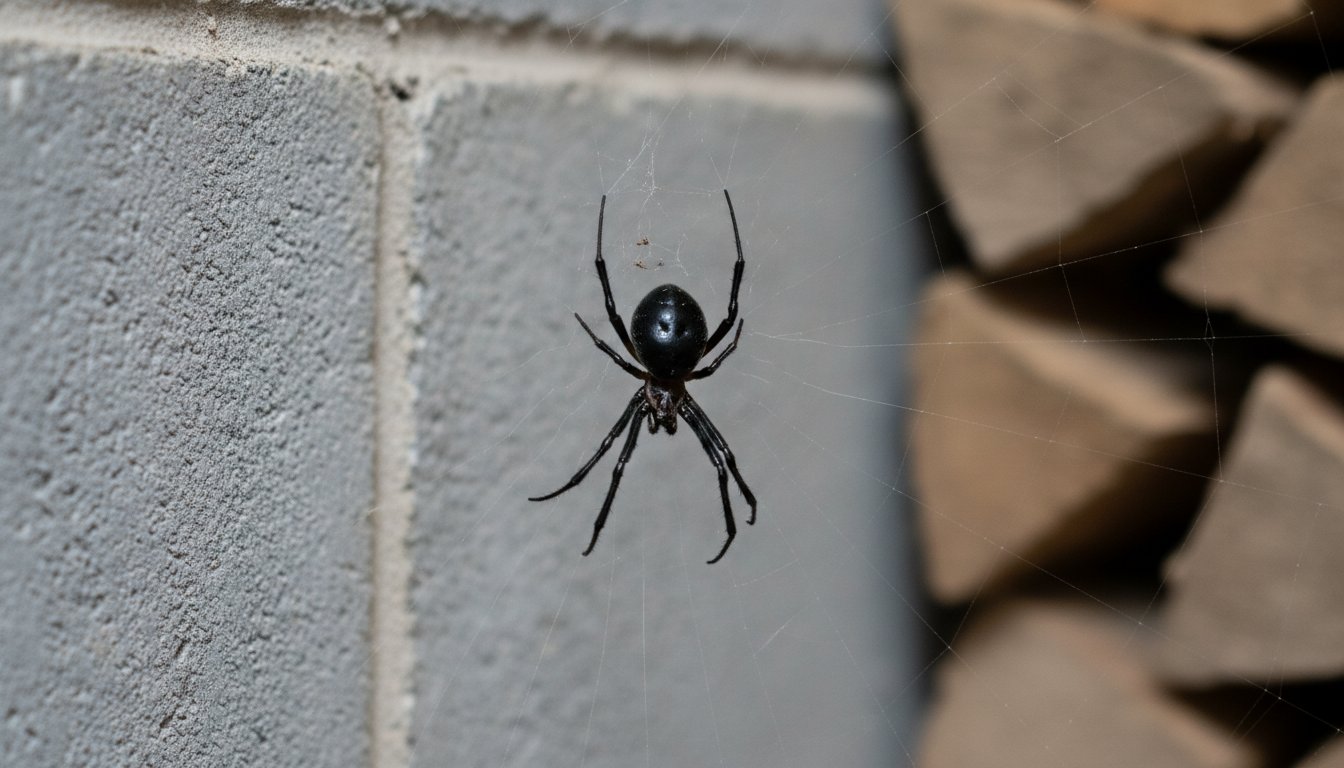
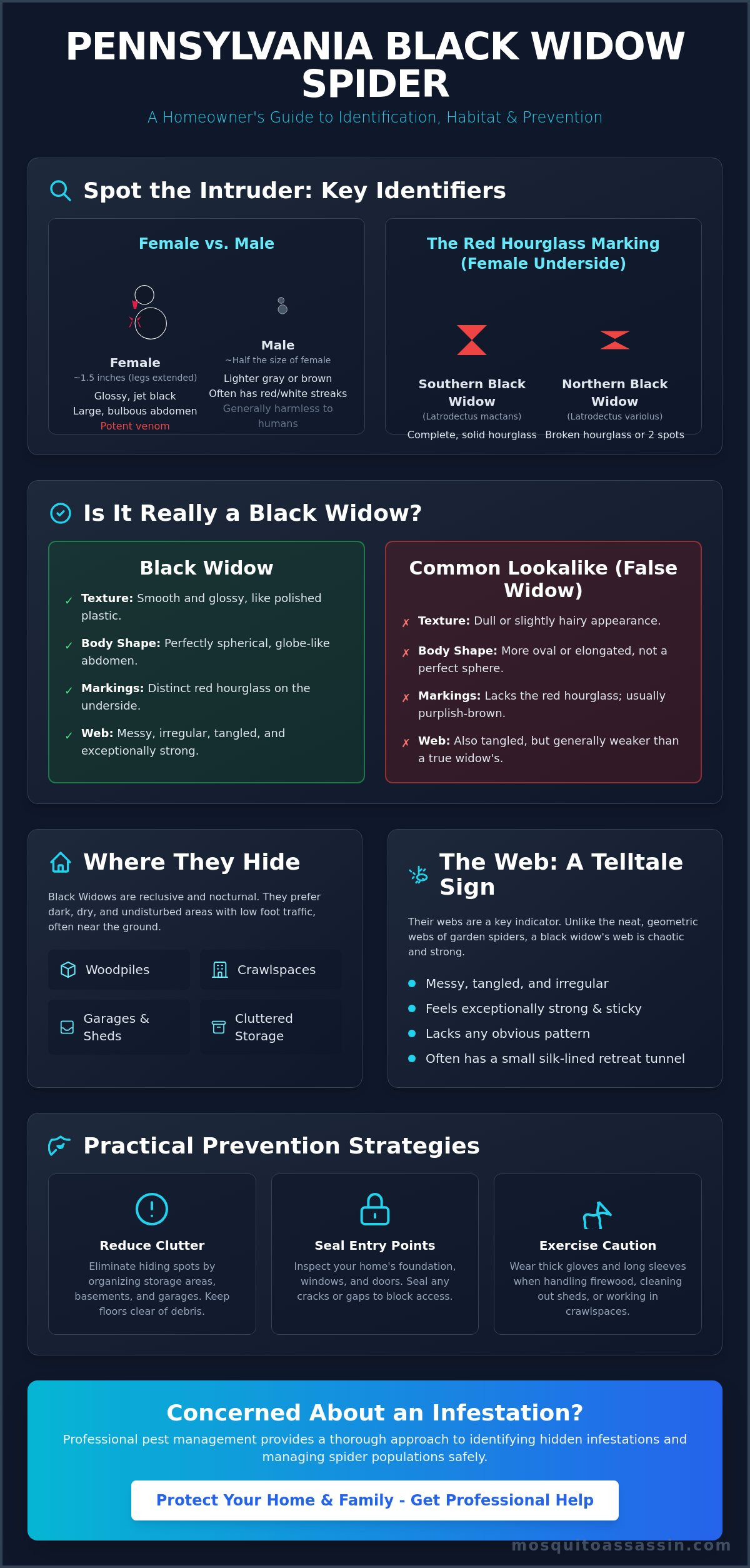
    Adult female black widows are the most recognizable. They possess a bulbous, glossy black abdomen that measures approximately 1.5 inches when the legs are extended. Males and juveniles look remarkably different; they are often smaller, brown or gray, and may feature white or yellow stripes. Only the adult females are considered medically significant to humans, as their venom is much more potent than that of the males.

    To help visualize these spiders in their natural environment, watch this helpful video:

    Southern vs. Northern Black Widow Markings

    The primary way to distinguish these two species is by examining the red markings on the underside of the abdomen. The Southern black widow features a classic, complete hourglass shape where the two triangles meet in the middle. In contrast, the Northern Black Widow (Latrodectus variolus) typically displays a broken hourglass, appearing as two separate red spots. Additionally, the Northern species often has a row of red or white spots running down the center of its back, a feature the Southern species usually loses as it matures.

    Common Spiders Mistaken for Black Widows

    Homeowners often misidentify several harmless species as black widows. The False Black Widow (Steatoda grossa) is the most frequent culprit. It shares the same dark, bulbous body but lacks any red markings. Common house spiders and other cobweb weavers also create messy webs in basements and garages, leading to unnecessary concern. The Latrodectus genus is the only medically significant cobweb weaver in Pennsylvania.

    Accurate identification is critical because it dictates the level of precaution needed. If you encounter a spider that matches these descriptions in your home or outbuildings, professional pest control may help reduce risk. Detailed inspections can confirm the species and locate nesting sites that are often overlooked. Understanding the physical differences between these species ensures you can accurately assess the presence of black widow spiders in pennsylvania on your property.

    Preferred Habitats and Seasonal Behavior in PA

    Black widows are naturally shy, reclusive arachnids. They don’t seek out human interaction; instead, they thrive in dark, sheltered environments where they can wait undisturbed for prey. In the wild, these spiders choose locations like hollow tree stumps, spaces beneath large stones, or the underside of dense shrubs. Around a residential property, they often find ideal nesting sites in woodpiles, under low-lying porches, or inside discarded equipment. While black widow spiders in pennsylvania prefer the outdoors, they frequently move into garages and crawlspaces if they find a steady supply of prey.

    According to the Penn State Extension on Black Widows, these spiders are most active during the warmer months. Sightings of black widow spiders in pennsylvania typically peak during late summer and early fall. This is when the population reaches maturity, making the adult females more visible as they guard egg sacs or expand their webs to catch larger insects before the winter freeze.

    Regional Habitat Factors in Erie and Crawford Counties

    Local environmental conditions play a significant role in where these spiders choose to settle. In Erie County, the high moisture levels near Lake Erie support large populations of flies, beetles, and other crawling insects. This abundant food source makes the region particularly attractive to black widows. In more rural areas like Crawford County, the prevalence of barns, outbuildings, and large woodpiles provides ample real estate for long-term nesting. Seasonal lakeside cottages that remain closed for several months are also prime locations for undisturbed web building, as the lack of human activity allows the spiders to establish themselves without interference.

    Understanding the Black Widow Cobweb

    One of the most effective ways to identify a potential infestation is by looking at the web itself. Unlike the symmetrical, circular webs created by orb-weaver garden spiders, a black widow’s web is erratic, messy, and lacks a discernible pattern. It often looks like a collection of tangled cobwebs rather than a functional trap. However, the silk of a black widow is notably stronger than that of most other spiders. If you poke it with a stick, you might even hear a faint “crackle” (a sound unique to the breaking of their high-tensile silk). Because they primarily hunt crawling insects, these webs are usually built near ground level, in corners, or behind stored items in garages and basements.

    If you discover these distinct webs in your storage areas, professional pest control may help reduce risk by identifying and treating active nesting sites.

    Disclaimer: The information provided on this blog is for general informational purposes only and is not intended as professional pest control advice. Conditions vary by property, environment, and location. Reading this content does not create a service agreement. For an inspection or professional recommendations, please contact Mosquito Assassin Pest Control LLC directly.

    Black Widow Spiders in Pennsylvania: Identification and Prevention Guide

    Understanding Black Widow Bites and Risks

    While the thought of a bite is intimidating, black widow spiders in Pennsylvania are not aggressive creatures. They generally avoid contact with humans and spend their lives hidden in quiet corners. Bites usually occur as a defensive reaction when a spider is physically pressed against a person’s skin. Because they don’t hunt humans, most encounters are entirely accidental. Understanding the nature of their venom and the circumstances that lead to bites can help homeowners stay safe while managing their property.

    The venom produced by these spiders is a potent neurotoxin. According to medical data on Black Widow Spider Toxicity, the venom primarily affects the nervous system of the victim. Approximately 2,200 people are bitten by black widows annually in the United States, yet there have been no recorded deaths since 1983. Symptoms often begin with immediate localized pain, similar to a pinprick, followed by slight swelling. Within an hour, symptoms can progress to muscle aches, severe abdominal cramping, or a general feeling of malaise. While these symptoms are painful, they are rarely life threatening for healthy adults.

    How Bites Typically Occur

    Most encounters happen in areas where the spiders feel safe and undisturbed. Reaching into a dark corner of a shed or picking up a piece of firewood from a stack are common ways people accidentally come into contact with them. Spiders often hide in stored items like gardening gloves, old boots, or cardboard boxes that have sat in a basement for months. Moving these items can startle the spider, leading to a bite as it tries to protect itself. Gardening in overgrown areas or cleaning out a long-neglected crawlspace also increases the likelihood of a defensive encounter.

    Safe Practices for Homeowners

    Taking simple precautions can significantly lower the chance of an accidental encounter with black widow spiders in pennsylvania. Homeowners should adopt these habits during seasonal cleaning or outdoor work:

    • Always wear heavy leather or rubber gloves when handling woodpiles or clearing debris from a garage.
    • Use a high-powered flashlight to check dark recesses of storage areas before reaching in with bare hands.
    • Shake out footwear, hats, and clothing that have been stored in outbuildings or basements before putting them on.
    • Keep outdoor storage areas organized to minimize the number of dark, tight spaces where spiders can hide.

    For households with young children, the elderly, or pets, the presence of venomous spiders is a valid concern. Professional pest management may help reduce risk by eliminating the food sources and hiding spots that attract black widow spiders in pennsylvania. A methodical approach to property maintenance ensures that these reclusive spiders don’t establish a presence near high-traffic areas like play sets or patio furniture.

    Disclaimer: The information provided on this blog is for general informational purposes only and is not intended as professional pest control advice. Conditions vary by property, environment, and location. Reading this content does not create a service agreement. For an inspection or professional recommendations, please contact Mosquito Assassin Pest Control LLC directly.

    Environmental Prevention and Exclusion Strategies

    Preventing black widow spiders in pennsylvania requires more than just removing an occasional web. It involves a systematic approach to environmental modification. Spiders are attracted to properties that provide two things: abundant prey and secure, dark hiding spots. By altering the conditions around your home, you can make the environment less hospitable to these arachnids and the insects they eat. This proactive strategy is often more effective than reactive measures because it addresses the root cause of the infestation.

    Interior Sanitation and Organization

    The inside of a home, especially unfinished areas like basements and crawlspaces, can inadvertently provide perfect nesting sites. Cardboard boxes are a major risk factor because they are often stored in dark areas and provide numerous tight gaps for spiders to squeeze into. Switching to airtight plastic bins is a simple yet effective change. Plastic bins don’t provide the same easy access and are less likely to harbor silverfish or cockroaches, which are common food sources for black widows. Regularly vacuuming or sweeping corners and behind large appliances is also crucial. This physical removal destroys webs and egg sacs before the population can grow. Additionally, managing moisture levels in crawlspaces with dehumidifiers can reduce the population of moisture-loving insects that attract spiders in the first place.

    Exterior Property Maintenance

    The perimeter of your home is the first line of defense. Because black widow spiders in pennsylvania often move from outdoor woodpiles to indoor structures, location matters. Moving firewood at least 20 feet away from the foundation and keeping it elevated off the ground reduces the chance of spiders migrating toward your siding. Vegetation also plays a role; shrubs, vines, and tall grass should be trimmed so they don’t touch the house. This creates a dry zone that discourages crawling pests from crossing into your living space.

    • Seal gaps around utility pipes and wires with caulk or expandable foam to block entry points.
    • Install door sweeps on all exterior doors, including the garage door, to eliminate ground-level gaps.
    • Repair or replace damaged window screens to prevent flying and crawling prey from entering.

    Outdoor lighting is another often-overlooked factor. Standard white or blue-tinted lights attract a wide variety of nocturnal insects. By switching exterior fixtures to yellow bug lights, you can significantly decrease the number of insects gathering near your doorways. Fewer insects mean fewer reasons for spiders to build webs in those areas. If you’ve noticed an increase in spider activity around your entryways, professional pest control may help reduce risk by identifying specific vulnerabilities in your home’s exterior.

    Disclaimer: The information provided on this blog is for general informational purposes only and is not intended as professional pest control advice. Conditions vary by property, environment, and location. Reading this content does not create a service agreement. For an inspection or professional recommendations, please contact Mosquito Assassin Pest Control LLC directly.

    The Role of Professional Pest Management

    While environmental modifications are essential for long term success, professional pest management provides a level of thoroughness that is difficult to achieve through individual efforts alone. Identifying the specific species and the full extent of an infestation requires a trained eye and a systematic approach. Professional intervention focuses on the biology of black widow spiders in pennsylvania to ensure that treatments are both effective and targeted. This methodical process moves beyond reactive measures, aiming instead to disrupt the life cycle of the spiders and their prey.

    What a Professional Inspection Includes

    A comprehensive inspection is the foundation of any successful management plan. Technicians look for more than just active webs; they identify the structural vulnerabilities that allow spiders to enter a home. This includes a detailed assessment of entry points such as gaps in the foundation, poorly fitted door sweeps, or unsealed utility penetrations. A professional also evaluates the surrounding environment to identify prey populations that may be sustaining the spider presence. If a property has a high volume of beetles, crickets, or silverfish, it will naturally attract more predators. Based on these findings, professionals provide specific recommendations for structural repairs or environmental changes to deter future nesting in Erie and Crawford Counties.

    Long-Term Protection and Safety

    Licensed professionals have the specialized equipment required to access difficult areas safely. Crawlspaces, high corners of vaulted ceilings, and deep recesses of unfinished basements are prime locations for black widows, but they can be hazardous for homeowners to inspect without proper gear. Using professional-grade tools ensures that these hiding spots are thoroughly treated without putting the residents at risk. Integrated Pest Management (IPM) represents the gold standard in modern pest control, focusing on long-term prevention through a combination of biological, cultural, and physical tactics. This approach minimizes the reliance on broad-spectrum applications while maximizing the safety of the household.

    Ongoing protection plans are designed to address the unique seasonal cycles of black widow spiders in pennsylvania and neighboring Ohio. These plans often include regular monitoring to ensure that new egg sacs are identified and removed before they hatch in the spring. Consistent oversight creates a reliable barrier against invading spiders, providing peace of mind for families in rural and suburban areas alike. For more information on customized plans, visit the about page or the location services page to see how professional pest control may help reduce risk on your property.

    Disclaimer: The information provided on this blog is for general informational purposes only and is not intended as professional pest control advice. Conditions vary by property, environment, and location. Reading this content does not create a service agreement. For an inspection or professional recommendations, please contact Mosquito Assassin Pest Control LLC directly.

    Maintaining a Spider-Free Home Environment

    Understanding the unique behaviors of black widow spiders in pennsylvania allows homeowners to take control of their property’s safety. Accurate identification between the Southern and Northern species, combined with consistent clutter reduction in garages and basements, forms a strong foundation for prevention. By sealing foundation gaps and managing outdoor lighting, residents in Erie, Crawford, and Ashtabula counties can significantly decrease the likelihood of accidental encounters.

    Long-term success often relies on a methodical, professional approach. A locally owned and operated provider that is licensed and insured in both Pennsylvania and Ohio offers the expertise needed to safeguard high-risk areas like crawlspaces. With five-star rated service and a commitment to integrated pest management, expert technicians ensure that seasonal cycles are monitored and managed effectively. Residents don’t need to manage these risks alone when professional support is available. For an inspection or professional recommendations, please contact Mosquito Assassin Pest Control LLC directly. Taking these proactive steps ensures your home remains a safe haven for your family and pets.

    Disclaimer: The information provided on this blog is for general informational purposes only and is not intended as professional pest control advice. Conditions vary by property, environment, and location. Reading this content does not create a service agreement. For an inspection or professional recommendations, please contact Mosquito Assassin Pest Control LLC directly.

    Frequently Asked Questions

    How common are black widow spiders in Pennsylvania?

    Black widow spiders are a native and relatively common species found throughout the state. While they aren’t as visible as common house spiders due to their reclusive nature, their populations remain stable in both urban and rural environments. You’ll most likely encounter them in undisturbed outdoor structures, woodpiles, or rural properties where human activity is minimal and insects are plentiful.

    Can a black widow spider bite be fatal?

    A black widow bite is rarely fatal for healthy adults, though it does require careful monitoring. There haven’t been any recorded deaths from these bites in the United States since 1983. The neurotoxic venom causes painful muscle contractions and systemic symptoms, but modern medical care effectively manages these issues. High-risk individuals, including children and the elderly, should seek immediate medical evaluation following a suspected bite.

    Where do black widows hide in a typical PA home?

    These spiders typically hide in dark, low-traffic areas such as basements, crawlspaces, and the corners of garages. In a standard Pennsylvania home, they often settle behind large appliances, inside cluttered storage rooms, or within boxes of seasonal decorations. They specifically look for quiet spots where their erratic webs can remain undisturbed for weeks at a time while they wait for crawling prey to pass by.

    What should I do if I find a black widow in my garage?

    You should avoid touching the spider or its web with bare hands if you discover one in your garage. Carefully removing the spider using a vacuum with a long hose attachment or a glass and a piece of stiff cardboard is a safe way to handle a single intruder. If you notice multiple spiders or egg sacs, professional pest control may help reduce risk by identifying the source of the infestation.

    Do black widows move into houses during the winter?

    Black widows don’t typically migrate into living spaces specifically for the winter, but they often seek shelter in attached garages or basements as temperatures drop. Most black widow spiders in pennsylvania overwinter in a state of dormancy called diapause. They usually choose protected outdoor spots like woodpiles or hollow logs, but they will readily utilize a crawlspace if it provides a stable environment and protection from the elements.

    How can I tell the difference between a black widow and a false black widow?

    The presence of a bright red hourglass marking on the underside of the abdomen is the most reliable way to tell them apart. False black widows share a similar bulbous shape and dark color but completely lack any red or orange markings. False widows often have a purplish-brown tint and may feature light-colored spots or lines on their backs, which are markings that adult female black widows do not possess.

    Are black widow spiders found in Erie, PA?

    Yes, black widow spiders in pennsylvania are frequently found in Erie and the surrounding Great Lakes region. The high moisture levels near Lake Erie attract a wide variety of insects, providing an abundant and consistent food source for these spiders. They are commonly spotted in lakeside cottages, boat houses, and residential storage sheds throughout Erie County, especially in areas that remain undisturbed during the off-season.

    What do black widow spider eggs look like?

    Black widow egg sacs are small, tan or off-white spheres that have a smooth, paper-like texture. Each sac is approximately 0.5 inches in diameter and can contain between 200 and 900 eggs. These sacs are usually suspended within the messy, erratic webbing and are vigorously guarded by the female spider. This guarding behavior is when the spider is most defensive and likely to bite if the web is disturbed.

    Disclaimer: The information provided on this blog is for general informational purposes only and is not intended as professional pest control advice. Conditions vary by property, environment, and location. Reading this content does not create a service agreement. For an inspection or professional recommendations, please contact Mosquito Assassin Pest Control LLC directly.

  • Pennsylvania Black Widow Spiders: Identification, Habitat, and Safety Guide

    Pennsylvania Black Widow Spiders: Identification, Habitat, and Safety Guide

    Could a single red hourglass marking in a dark corner of your basement change how you view your home’s safety? For many residents in Erie and Crawford Counties, the sight of a pennsylvania black widow spider is a source of immediate anxiety. It’s understandable to feel a sense of dread when you encounter a pest known for its potent venom, especially when it’s hiding in areas where your family spends time. While these spiders are reclusive, their presence in residential areas across the tri-county region is a reality that requires a calm, informed approach.

    You aren’t alone in wanting to protect your household from these elusive arachnids. This guide provides the essential knowledge you need to identify local black widow species, understand their preferred habitats in Pennsylvania and Ohio, and implement professional-grade prevention strategies. You’ll learn exactly what to look for in woodpiles or crawlspaces and how to reduce the risk of an accidental encounter through simple, effective property management. From identifying messy webs to securing entry points in Ashtabula County, this article provides the facts necessary to maintain a safe environment for families and pets.

    Key Takeaways

    • Distinguish between the Southern and Northern varieties of the pennsylvania black widow spider to accurately identify the species common in local environments.
    • Pinpoint high risk areas in Erie and Crawford counties, including woodpiles and undisturbed storage spaces, where these spiders are most likely to hide.
    • Gain insight into the defensive nature of black widows and the physical symptoms that may occur following an accidental encounter.
    • Implement effective prevention strategies, such as sealing structural gaps and managing clutter, to minimize nesting opportunities around the home.
    • Learn how professional pest management provides a thorough approach to identifying hidden infestations and managing seasonal spider migrations.

    Identifying Black Widow Spiders in Pennsylvania

    Identifying the pennsylvania black widow spider requires a keen eye for specific anatomical details. These spiders belong to the Latrodectus genus of spiders, a group known for their potent venom and distinct appearances. In Pennsylvania, residents may encounter two primary species: the Southern Black Widow (Latrodectus mactans) and the Northern Black Widow (Latrodectus variolus). While both inhabit the region, they exhibit slight variations in their markings that distinguish them from one another.

    Adult females are the most recognizable, featuring a bulbous, glossy black abdomen that measures approximately 1.5 inches in length when legs are extended. Males are significantly smaller, often reaching only half the size of females. Unlike the dark, uniform color of the females, males typically appear lighter with gray or brown tones and may have white or red streaks on their sides. They lack the dangerous reputation of their female counterparts, as their smaller mouthparts rarely penetrate human skin.

    To better understand how to spot these arachnids, watch this helpful identification guide:

    The Red Hourglass and Other Markings

    The most famous marker is the bright red hourglass on the underside of the female’s abdomen. For the Southern species, this is usually a complete, solid shape. However, the Northern pennsylvania black widow spider often displays a broken hourglass, appearing as two separate triangles or spots. Juvenile spiders present a different challenge; they often have white, orange, or red spots along their backs, which gradually disappear as they mature into their final adult form. These changing patterns can lead to confusion during different stages of the spider’s life cycle.

    Black Widow vs. Common Lookalikes

    Homeowners in Erie and Crawford Counties often mistake the False Black Widow (Steatoda grossa) for the real thing. While the False Black Widow has a similar rounded shape, it lacks the red hourglass and usually appears purplish-brown rather than jet black. Another key differentiator is the web. A widow constructs a messy, irregular web that feels exceptionally strong and sticky to the touch. These tangles lack the organized geometric patterns seen in common garden spider webs. Key physical traits to look for include:

    • Texture: Widows are smooth and glossy, while many lookalikes have a dull or slightly hairy appearance.
    • Web Location: Widows prefer dark, undisturbed areas near the ground, such as woodpiles or crawlspaces.
    • Body Shape: The female widow has a perfectly spherical abdomen, whereas cobweb spiders often have more elongated or oval shapes.

    If you suspect an infestation in your home or outbuildings, professional pest control may help reduce risk. You can learn more about the regions we serve by visiting our location page.

    Disclaimer: The information provided on this blog is for general informational purposes only and is not intended as professional pest control advice. Conditions vary by property, environment, and location. Reading this content does not create a service agreement. For an inspection or professional recommendations, please contact Mosquito Assassin Pest Control LLC directly.

    Habitat and Behavior: Where They Hide in PA and OH Homes

    The pennsylvania black widow spider is a reclusive creature. It doesn’t seek out human interaction. Instead, these spiders prioritize safety and proximity to food. They build webs in dark, low-traffic areas where they can catch crickets, beetles, and flies without being disturbed. Because they’re nocturnal, you’ll rarely see them active during the day. They spend daylight hours tucked into a “retreat,” which is a small, silk-lined tunnel at the edge of their web.

    If a web looks messy, tangled, and lacks a symmetrical pattern, it might belong to a black widow. Their silk is surprisingly strong. In fact, it’s known to be one of the strongest natural fibers. This durability allows their webs to remain intact in drafty areas like crawlspaces or barn rafters. While they’re famous for their venom, they have a shy temperament. They typically only bite when they’re squeezed or their web is directly threatened.

    Outdoor Habitats in Northwest Pennsylvania

    In Erie and Crawford counties in PA, as well as Ashtabula County in OH, outdoor environments provide plenty of real estate for these spiders. Firewood piles and hollow stumps are primary nesting sites. These locations offer tight crevices that protect the spider from predators and the elements. Stone walls and rock gardens are also common hiding spots. The gaps between stones create perfect, undisturbed voids for egg sacs.

    Detached structures are another major concern. Sheds, barns, and pool houses often sit idle for weeks. This lack of activity invites spiders to set up permanent residence. According to Penn State Extension on Black Widows, these spiders are well-adapted to various environments, often choosing spots near the ground. Homeowners should also check outdoor furniture and playground equipment. Spiders often hide underneath seats or inside plastic climbing structures that haven’t been used recently.

    Indoor Migration and Seasonal Patterns

    While they prefer the outdoors, the pennsylvania black widow spider can find its way inside. They usually enter through cracks in the foundation, gaps under doors, or through damaged window screens. This movement often happens during late summer and early autumn when activity levels peak. As temperatures drop, they look for stable environments with a steady supply of prey.

    Inside the home, they favor corners near floor level. You’ll often find them in basements, crawlspaces, and cluttered garages. They like to hide behind stored boxes or under large appliances. If you’re moving old cardboard boxes or reaching into a dark corner of the garage, it’s wise to wear gloves. Because they’re so secretive, an infestation can go unnoticed for a long time. If you suspect a presence in your storage areas, professional pest control may help reduce risk.

    Disclaimer: The information provided on this blog is for general informational purposes only and is not intended as professional pest control advice. Conditions vary by property, environment, and location. Reading this content does not create a service agreement. For an inspection or professional recommendations, please contact Mosquito Assassin Pest Control LLC directly.

    Pennsylvania Black Widow Spiders: Identification, Habitat, and Safety Guide

    Understanding the Risks: Safety and Bite Awareness

    The pennsylvania black widow spider is a reclusive creature that prioritizes hiding over confrontation. These arachnids are naturally defensive, meaning they don’t hunt humans or pets. Bites are almost always a last resort when the spider is squeezed, pinched, or otherwise provoked. While their venom is potent, the actual risk to healthy adults is often lower than public perception suggests. According to the 2021 National Poison Data System report, black widow exposures accounted for 1,005 reported cases in the United States, with a high percentage of patients requiring minimal medical intervention.

    Symptoms of a bite typically manifest within 20 to 60 minutes. Most individuals experience localized pain, swelling, and redness at the site. In more significant reactions, systemic symptoms like muscle aches, abdominal cramping, and nausea may occur. For accurate identification of these spiders and their relatives, the Penn State Extension guide to Pennsylvania spiders serves as a reliable resource for homeowners. Because of the potential for severe discomfort, professional pest control is a safer alternative to DIY removal. Attempting to clear webs or spray spiders without professional training increases the likelihood of an accidental encounter.

    When Bites Occur

    Most bites happen in transition spaces like garages, sheds, or basements. A common scenario involves reaching into a dark corner to grab a stored item or sliding a foot into an old boot that has been sitting in a mudroom. Woodpiles are another high-risk area. It’s vital to wear heavy work gloves when moving logs or cleaning out cluttered storage areas in Erie and Crawford Counties. While the venom is a neurotoxin, serious medical complications are rare for healthy adults. Most symptoms resolve within 48 to 72 hours with proper care.

    Protecting Pets and Children

    Children and small pets are more sensitive to the effects of a pennsylvania black widow spider bite due to their smaller body mass. A curious dog sniffing around a low-lying web or a child reaching under a porch can lead to an accidental bite. Keeping play areas clear of debris and regularly sweeping away webs from swing sets or patio furniture helps reduce these risks. Proactive inspections are particularly valuable for homes with toddlers who may not recognize the danger of a shiny black spider. Professional pest control may help reduce risk in residential areas across Ashtabula County and neighboring regions. If you suspect an infestation, you can reach out through the online booking portal for an expert assessment.

    Disclaimer: The information provided on this blog is for general informational purposes only and is not intended as professional pest control advice. Conditions vary by property, environment, and location. Reading this content does not create a service agreement. For an inspection or professional recommendations, please contact Mosquito Assassin Pest Control LLC directly.

    Practical Prevention Strategies for Local Homeowners

    Homeowners in Erie and Crawford Counties can significantly reduce the likelihood of an encounter with a pennsylvania black widow spider by addressing two main factors: shelter and food. These spiders are reclusive. They seek out dark, undisturbed spots where they won’t be bothered. Piles of cardboard boxes, old tires, or cluttered corners in a basement provide the perfect environment for a female to spin her web. Reducing clutter is the first step in a successful prevention plan. Pennsylvania is home to over 500 spider species, and while most are harmless, removing the hiding spots for the black widow is a priority for safety.

    Routine cleaning is equally vital. Using a vacuum or a long-handled broom to clear away webs in low-traffic areas like crawlspaces or garage rafters disrupts the spider’s habitat. If an egg sac is spotted, vacuuming it up and immediately disposing of the bag outside prevents hundreds of spiderlings from hatching inside the home. This mechanical removal is one of the most effective ways to manage populations without chemicals.

    Lighting also plays a role in spider activity. Standard incandescent bulbs attract nocturnal insects, which in turn attract spiders. Switching to yellow LED bug lights or moving outdoor light fixtures away from entryways can decrease the density of prey near the home’s foundation. Data from entomological studies suggest that yellow light spectrums attract up to 60% fewer insects than traditional white or blue-toned bulbs.

    Exclusion and Home Maintenance

    Sealing the home’s exterior is a primary defense against pests. Gaps as small as 1/16th of an inch can allow a pennsylvania black widow spider to slip inside. Homeowners should install tight-fitting door sweeps and replace worn weather stripping on all windows and doors. Outdoor maintenance is just as critical. Vegetation should be trimmed so there’s at least a 12-inch gap between plants and the house foundation. This creates a dry zone that spiders find less appealing. Additionally, firewood should be stored off the ground and at least 20 feet from the house. Always inspect logs for webs or egg sacs before bringing them indoors.

    Managing the Food Source

    Spiders thrive where prey is abundant. By controlling populations of flies, crickets, and beetles, the environment becomes less hospitable for predators. Integrated pest management strategies that target these common insects naturally discourage spiders from nesting. Implementing a consistent Mosquito Control program can also reduce the overall biomass of insects around a property in Ashtabula or Erie, leaving spiders with fewer reasons to stay. When general pest populations drop, spider populations typically follow within 14 to 30 days. For those dealing with a persistent presence of spiders or their prey, professional pest control may help reduce risk.

    Disclaimer: The information provided on this blog is for general informational purposes only and is not intended as professional pest control advice. Conditions vary by property, environment, and location. Reading this content does not create a service agreement. For an inspection or professional recommendations, please contact Mosquito Assassin Pest Control LLC directly.

    Professional Pest Management for Spiders

    Managing arachnid populations requires a systematic approach that goes beyond simple reactive measures. While many spiders are harmless, the presence of a pennsylvania black widow spider necessitates a more cautious and professional strategy. Expert pest management focuses on identifying the root causes of an infestation and implementing long-term solutions to prevent recurrence. This process relies on technical knowledge of spider biology and behavior to ensure the property remains less attractive to these pests.

    The Inspection Process

    A comprehensive inspection is the foundation of effective pest control. Licensed professionals examine the property to identify specific species and locate high-risk areas where spiders are likely to congregate. This includes checking dark, undisturbed locations such as crawl spaces, basements, and behind heavy appliances. Evaluating the severity of the spider presence is crucial; a single sighting may indicate a transient spider, while the discovery of multiple egg sacs suggests an established population.

    During this phase, technicians provide customized recommendations for exclusion and sanitation. They look for entry points like gaps around utility lines or cracks in the foundation that allow pests to enter. By addressing these structural vulnerabilities, property owners can significantly reduce the likelihood of a pennsylvania black widow spider finding its way indoors. Professionals also evaluate lighting and landscaping, as these factors often attract the insects that spiders rely on for food.

    Year-Round Protection Benefits

    Spider activity isn’t limited to a single season. In regions like Erie, Crawford, and Ashtabula counties, seasonal shifts drive spiders to seek shelter and warmth. Professional pest control may help reduce risk for homeowners by maintaining a consistent perimeter that prevents new spiders from entering. This year-round approach addresses multiple pest types simultaneously, creating a comprehensive shield for the home. Because spiders are predatory, reducing the overall insect population on a property naturally makes the environment less hospitable for them.

    The role of integrated pest management (IPM) is central to creating a long-term barrier. IPM focuses on non-chemical methods first, such as removing webs and clearing debris where spiders hide. When treatments are necessary, they are applied strategically to target specific areas of concern. This methodical approach ensures that the property is managed with safety and efficacy in mind. Those interested in the history and local commitment of the service provider can learn more About Mosquito Assassin and their role in the community. Consistent monitoring and maintenance are the most reliable ways to manage the risks associated with venomous spiders in Pennsylvania and Ohio.

    Disclaimer: The information provided on this blog is for general informational purposes only and is not intended as professional pest control advice. Conditions vary by property, environment, and location. Reading this content does not create a service agreement. For an inspection or professional recommendations, please contact Mosquito Assassin Pest Control LLC directly.

    Maintaining a Safe and Spider-Free Property

    Managing a home in Erie, Crawford, or Ashtabula County requires a proactive approach to seasonal pest safety. Identifying the pennsylvania black widow spider involves looking for the signature red hourglass marking and understanding their preference for dark, undisturbed spaces like woodpiles or cluttered basements. While these spiders aren’t typically aggressive, the potential risks associated with their bites make awareness and prevention essential for local residents. It’s helpful to maintain a clear perimeter around the home and seal small entry points to discourage nesting. When a population is established, professional intervention provides a methodical way to address the issue. Mosquito Assassin Pest Control LLC is a licensed and insured, locally owned and operated provider with a five-star rated service history. Taking steps to secure a property doesn’t have to be stressful when the right information and professional support are available. For those concerned about local spider activity, Contact Mosquito Assassin Pest Control LLC for an inspection to ensure the home remains a comfortable environment.

    Disclaimer: The information provided on this blog is for general informational purposes only and is not intended as professional pest control advice. Conditions vary by property, environment, and location. Reading this content does not create a service agreement. For an inspection or professional recommendations, please contact Mosquito Assassin Pest Control LLC directly.

    Frequently Asked Questions

    Are black widow spiders common in Pennsylvania?

    The pennsylvania black widow spider is native to the state but isn’t considered a common household pest. While they inhabit all 67 counties according to Penn State Extension, sightings remain relatively infrequent because of their reclusive nature. These spiders prefer undisturbed outdoor areas over active living spaces. Most residents will rarely encounter one during daily activities. If you see a dark spider with a red marking, it’s likely a Northern black widow, the most prevalent species in the region.

    How can I tell the difference between a black widow and a house spider?

    Identify a black widow by its shiny, jet-black body and the distinct red hourglass marking on its abdomen. Common house spiders, such as the American house spider, are typically smaller and have duller colors like tan or grey with spotted patterns. A widow’s web is also unique; it’s irregular, tangled, and much stronger than a standard cobweb. If the spider lacks the signature red mark and a glossy finish, it’s likely a harmless variety.

    Where do black widows usually hide in a garage?

    Black widows usually hide in dark, cluttered areas of a garage where they won’t be disturbed. They frequent corners near the floor, behind stacked cardboard boxes, or inside unused gardening boots. You might also find them tucked away in the back of workbenches or near woodpiles stored against the wall. Because they prefer low-traffic zones, any area that hasn’t been moved in 6 months is a prime candidate for a pennsylvania black widow spider web.

    What should I do if I find a black widow in my home?

    Keep a safe distance and don’t attempt to crush or handle the spider with your bare hands. While black widows aren’t aggressive, they’ll bite if they feel pinched or cornered. You can carefully trap it under a sturdy glass if it’s on a flat surface, but professional pest control may help reduce risk more effectively. It’s best to monitor the area for other spiders while keeping children and pets away from the immediate vicinity.

    Is it safe to remove a black widow web myself?

    Removing a web is possible if you wear heavy gloves and long sleeves to prevent accidental bites. Use a vacuum attachment or a long-handled broom rather than your hands to clear the silk. Since the spider may be hiding nearby in a crevice, avoid reaching into dark spaces blindly. If the web feels exceptionally strong or sticky like heavy-duty thread, it’s a sign of a black widow’s presence. Professional assistance is recommended for large infestations.

    Can black widows survive the winter in Pennsylvania or Ohio?

    Black widows can survive the freezing temperatures in Pennsylvania and Ohio by entering a state of dormancy called diapause. They seek shelter in protected voids, such as hollow logs or crawl spaces, where temperatures remain slightly more stable. Data from the Ohio Department of Natural Resources indicates they’re well-adapted to the local climate. Once temperatures rise above 50 degrees Fahrenheit in the spring, they become active and begin searching for prey again.

    Do black widows live in groups or are they solitary?

    Black widows are strictly solitary creatures and don’t live in colonies or groups. They’re highly territorial and will often kill other spiders that enter their space. You’ll typically only see them together during mating or when spiderlings first emerge from an egg sac. An egg sac can contain between 200 and 400 eggs, but the young quickly disperse to find their own individual hunting grounds to avoid competition and cannibalism.

    How can I prevent spiders from entering my basement?

    Prevent entry by sealing cracks in the foundation and gaps around basement windows with high-quality caulk. Reducing clutter is also vital, as it removes the hiding spots spiders crave. Since spiders follow their food source, managing moisture levels with a dehumidifier can reduce the insect population they prey upon. Keeping the perimeter of your home free of tall grass and woodpiles within 20 feet of the structure further discourages them from moving indoors.

    Disclaimer: The information provided on this blog is for general informational purposes only and is not intended as professional pest control advice. Conditions vary by property, environment, and location. Reading this content does not create a service agreement. For an inspection or professional recommendations, please contact Mosquito Assassin Pest Control LLC directly.

  • Black Widows in PA: Identification and Safety Guide for Homeowners

    Black Widows in PA: Identification and Safety Guide for Homeowners

    Last Tuesday, a homeowner in Erie County reached for an old storage bin in their garage and discovered a glossy black spider with a vibrant red hourglass. It’s completely normal to feel a surge of anxiety when encountering venomous pests in your living space. The presence of black widows in pa is a concern for many families throughout Crawford and Ashtabula Counties who want to safeguard their homes from potential bites.

    You can regain peace of mind by learning how to distinguish these spiders from common house spiders and identifying the specific environments where they thrive. This guide covers the physical characteristics of the Northern black widow, their favorite hiding spots in dark corners, and professional strategies to reduce the risk of an infestation. You’ll gain the knowledge needed to maintain a spider-free environment for your family and pets.

    Understanding spider behavior is the first step toward a more secure home. If you’re concerned about venomous spiders on your property, professional pest control may help reduce risk. Visit www.mosquitoassassin.com/contact-us for more information.

    Disclaimer: The information provided on this blog is for general informational purposes only and is not intended as professional pest control advice. Conditions vary by property, environment, and location. Reading this content does not create a service agreement. For an inspection or professional recommendations, please contact Mosquito Assassin Pest Control LLC directly.

    Key Takeaways

    • Learn to identify female black widow spiders by their glossy black bodies and the distinct red hourglass marking found on the underside of the abdomen.
    • Understand the regional differences between Northern and Southern black widows in pa, as Pennsylvania serves as a unique geographic intersection for both species.
    • Discover common hiding spots for these reclusive spiders, which typically prefer dark (undisturbed) locations such as storage areas and crawlspaces.
    • Implement effective prevention strategies such as reducing clutter and sealing exterior gaps to limit potential nesting sites around the home.
    • Explore how professional pest management may help reduce risk by identifying entry points and managing populations that a homeowner might overlook.

    Identifying Black Widow Spiders in Pennsylvania

    The black widow spider is a member of the Latrodectus genus native to Pennsylvania. While their reputation often precedes them, understanding how to recognize these arachnids is vital for homeowners in Erie and Crawford Counties. Identifying black widows in pa involves looking for specific markers that separate them from harmless local species. Only the adult females are considered medically significant due to their venom, which they use to paralyze prey. Males and juveniles are smaller, lighter in color, and don’t possess the same level of toxicity.

    To better understand this concept, watch this helpful video:

    Key Physical Characteristics

    The most recognizable feature of a female black widow is her bulbous, spherical abdomen. Unlike many other spiders that appear matte or hairy, the black widow has a distinct, glossy texture that reflects light. On the underside, or ventral side, you’ll find the iconic red or orange-red hourglass marking. This shape isn’t always a perfect hourglass; it may appear as two separate red spots or an incomplete triangle. In terms of size, an adult female’s body is about 0.5 inches long, which is roughly comparable to the diameter of a dime or a standard paperclip.

    Common Lookalike Spiders

    Several spiders in Pennsylvania are frequently mistaken for black widows in pa. Differentiating between them is key to maintaining peace of mind. Common lookalikes include:

    • False Black Widow (Steatoda grossa): These spiders have a similar bulbous shape but lack the red hourglass. Their bodies are typically dark brown or purplish rather than jet black.
    • Cobweb Spiders: Often found in damp basements, these spiders are smaller and have a duller, matte appearance compared to the glossy finish of a true widow.
    • Wolf Spiders: These are much larger, hairy, and do not spin webs. They are active hunters that stay on the floor, whereas black widow spiders prefer dark, recessed corners to build their irregular, tangled webs.

    If you encounter a spider that matches these descriptions in your home or garage, professional pest control may help reduce risk. You can find more information about our service areas in Pennsylvania and Ohio at mosquitoassassin.com/location.

    Disclaimer: The information provided on this blog is for general informational purposes only and is not intended as professional pest control advice. Conditions vary by property, environment, and location. Reading this content does not create a service agreement. For an inspection or professional recommendations, please contact Mosquito Assassin Pest Control LLC directly.

    Habitat and Behavior of Pennsylvania Black Widows

    Understanding the daily habits of black widows in pa is essential for effective property management. These spiders are notoriously reclusive; they avoid open spaces and light whenever possible. Instead, they seek out dark, cramped, and undisturbed locations to build their webs. While they remain active throughout the warmer months between May and October, they often migrate toward more permanent shelter as temperatures drop in late autumn. This seasonal shift often brings them closer to residential structures in Erie and Crawford Counties.

    A black widow web is distinct and easy to identify if you know what to look for. Unlike the symmetrical, circular patterns of common garden spiders, a widow’s web is a tangled, chaotic mess of silk. Despite its disorganized appearance, this silk is exceptionally strong. Scientific studies have shown it has a higher tensile strength than many types of steel. According to researchers at black widows in Pennsylvania usually display non-aggressive behavior toward humans. Bites typically only occur as a defensive reaction when the spider is accidentally pinched, squeezed, or pressed against a person’s skin while cleaning or gardening.

    Preferred Outdoor Locations

    In Western Pennsylvania and Ashtabula County, homeowners often find these spiders in outdoor areas that provide both protection and a steady supply of prey. Woodpiles and hollow tree stumps are primary nesting sites because they offer the humidity and darkness these arachnids crave. You should also regularly inspect the undersides of patio furniture and children’s outdoor play equipment, as these items often remain stationary for long periods. Other common spots include stone walls, rock gardens, and utility meter boxes. These structures provide the narrow crevices where a spider can retreat during daylight hours to avoid predators.

    Indoor Hiding Spots

    When black widows in pa move indoors, they gravitate toward low-traffic areas where they won’t be disturbed. Cluttered basements and crawl spaces provide ideal environments because they offer numerous hiding spots behind storage boxes or within structural gaps. Dark corners of garages are also frequent habitats, especially near seldom-used gardening tools or bins. You might find them behind large appliances or inside cardboard boxes that have remained stationary for several seasons. Reducing clutter and using sealed plastic bins instead of cardboard can lower the chances of an accidental encounter. If you suspect an infestation in your storage areas, professional pest control may help reduce risk by identifying high-pressure areas and nesting sites.

    Disclaimer: The information provided on this blog is for general informational purposes only and is not intended as professional pest control advice. Conditions vary by property, environment, and location. Reading this content does not create a service agreement. For an inspection or professional recommendations, please contact Mosquito Assassin Pest Control LLC directly.

    Black Widows in PA: Identification and Safety Guide for Homeowners

    Northern vs. Southern Black Widows: Regional Differences

    Pennsylvania sits at a unique ecological crossroads where the natural ranges of two distinct venomous spiders overlap. Homeowners searching for information on black widows in pa should understand that the state hosts both the Northern black widow (Latrodectus variolus) and the Southern black widow (Latrodectus mactans). While their appearances are remarkably similar at first glance, their habitats and physical markings differ based on their specific lineage. In regions like Erie and Crawford Counties, the Northern variety is the most frequent encounter. Conversely, the Southern variety becomes more prevalent as you move toward the southern border of the state.

    Despite these regional differences, both species possess a potent neurotoxic venom that requires respect and caution. The biological makeup of the venom is nearly identical between the two. A bite from either spider can cause significant physical distress, including muscle aches, nausea, and localized pain. Because both species are present within the state’s borders, residents must treat any shiny black spider with red markings as a potential safety risk. Professional pest control may help reduce risk by identifying these spiders before they establish large populations near your home.

    The Northern Black Widow

    The Northern black widow is the species most commonly found in the wooded environments of northern Pennsylvania and eastern Ohio. A key trait of this variety is the “split” hourglass marking on the underside of the abdomen. Instead of a connected shape, the red marking is typically broken into two separate triangles. Many individuals also display a row of white or red spots along the midline of their back, which can make them look slightly more colorful than their southern counterparts. These spiders prefer forest edges and more wooded environments. They often hide in hollow logs, under loose tree bark, or inside stone piles where they can remain undisturbed. This Penn State Extension guide to spiders provides further details on how these physical traits help experts distinguish the species in the field.

    The Southern Black Widow

    The Southern black widow is the “classic” version of the spider often depicted in media. It features the complete, connected red hourglass shape that most people recognize instantly. This species shows a much stronger preference for locations closer to human structures. It’s common to find them in barns, sheds, garages, and under porch railings. When comparing web placement, Southern widows often build their webs much closer to the ground than Northern widows. They favor dark, recessed corners of crawlspaces or the gaps under outdoor equipment. Because they thrive in man made environments, they are frequently encountered during routine home maintenance or cleaning projects. If you notice these distinctive webs in high traffic areas, visiting www.mosquitoassassin.com/services can provide information on professional management strategies to safeguard your property.

    Disclaimer: The information provided on this blog is for general informational purposes only and is not intended as professional pest control advice. Conditions vary by property, environment, and location. Reading this content does not create a service agreement. For an inspection or professional recommendations, please contact Mosquito Assassin Pest Control LLC directly.

    Preventing Spider Infestations Around the Home

    Effective spider control starts with making your property less attractive to pests. For homeowners concerned about black widows in pa, the most successful strategy involves removing the three things spiders need: food, water, and shelter. By systematically addressing these factors, you can significantly reduce the likelihood of a dangerous encounter. Spiders are opportunistic hunters; they won’t stay where they can’t find a steady supply of insects or a quiet place to hide.

    Managing outdoor lighting is a simple but overlooked prevention step. Standard incandescent or mercury vapor lights attract moths, beetles, and other flying insects. These bugs serve as a primary food source for spiders. Switching to yellow LED “bug bulbs” or moving light fixtures away from entryways can reduce insect activity by up to 60 percent. Fewer insects near your doors mean fewer spiders building webs in those high-traffic areas.

    Safety is paramount when working in areas where spiders might hide. Always wear heavy leather gloves when handling firewood, moving stones, or reaching into dark corners of a garage. It’s common to find black widows in pa tucked away in woodpiles or behind stored items in Erie and Crawford Counties. Taking this one precaution can prevent a defensive bite if you accidentally disturb a web.

    Exterior Maintenance Tips

    • Maintain the perimeter: Keep grass mowed to a height of 3 inches or less and trim all vegetation at least 12 inches away from the home foundation. This creates a “dry zone” that spiders and their prey find difficult to cross.
    • Manage firewood correctly: Store all firewood at least 20 feet away from the house. Keep the logs elevated off the ground on a rack to prevent moisture buildup and discourage nesting.
    • Disrupt web building: Use a broom or a high-powered vacuum to clear away old webs and egg sacs every 30 days. Consistent disruption makes the area feel unsafe for spiders, forcing them to relocate.

    Interior Organization Strategies

    • Upgrade storage containers: Replace cardboard boxes with plastic storage bins that feature tight-fitting, gasket-sealed lids. Cardboard often uses starch-based adhesives that attract silverfish and other insects that spiders hunt.
    • Seal the envelope: Inspect the foundation for cracks wider than 1/16th of an inch. Use high-quality silicone caulk to seal these gaps. Ensure all window screens are free of holes and that door sweeps make firm contact with the threshold.
    • Organize secluded spaces: Keep basements and garages well-organized to minimize dark corners. Pulling shelving units 2 inches away from walls allows for better airflow and easier inspections.

    Reducing clutter in storage areas limits potential nesting sites for spiders. When items are left undisturbed for months at a time, they become ideal habitats for various species. Regular cleaning and reorganization of crawlspaces and attics ensure that you catch any potential issues before they become full-scale infestations. If you notice an increase in spider activity despite these efforts, professional pest control may help reduce risk in your home.

    Disclaimer: The information provided on this blog is for general informational purposes only and is not intended as professional pest control advice. Conditions vary by property, environment, and location. Reading this content does not create a service agreement. For an inspection or professional recommendations, please contact Mosquito Assassin Pest Control LLC directly.

    Professional Pest Management for Venomous Spiders

    Professional pest management for venomous spiders involves a systematic strategy designed to safeguard the home environment. Licensed technicians bring a level of expertise that allows them to identify subtle entry points, such as gaps in siding or unsealed utility lines, which are frequently missed during DIY inspections. When homeowners encounter black widows in pa, professional pest control may help reduce risk by addressing both the spiders and their food sources. Technicians can identify foundation cracks as small as 1/16th of an inch where these arachnids might hide.

    Integrated Pest Management (IPM) serves as the foundation for these services. Instead of just reacting to a single spider, this approach focuses on long-term prevention through habitat modification and exclusion. Technicians evaluate the property to determine why spiders are attracted to specific areas. This might include identifying high-moisture zones or excessive outdoor lighting that attracts the insects spiders prey upon. By removing the incentive for pests to stay, homeowners see more sustainable results.

    When to Seek Professional Assistance

    Certain scenarios demand the specialized tools and knowledge of a professional. If sightings become frequent within living spaces like laundry rooms or finished basements, it often indicates an established population rather than a stray individual. Professional intervention is essential when infestations are found in proximity to areas where children or pets frequently play. These groups are more vulnerable to the effects of venom, making a swift response necessary.

    Safety is the primary concern when dealing with black widows in pa. Homeowners shouldn’t attempt to clear nesting sites in confined or hazardous locations. Crawlspaces, deep corners of garages, and cluttered sheds can be dangerous to navigate without proper protective gear. A licensed technician can safely access these zones to remove egg sacs and adult spiders, preventing a new generation from emerging and spreading throughout the structure.

    The Role of Year-Round Protection

    Maintaining a consistent defense is more effective than waiting for a problem to arise. Year-round protection plans establish a reliable barrier around the home’s exterior. In Erie and Crawford Counties in Pennsylvania and Ashtabula County in Ohio, seasonal shifts trigger changes in pest behavior. Spiders often seek indoor shelter as temperatures drop in the autumn months. Consistent monitoring ensures that these shifts don’t lead to an indoor infestation.

    Treating the perimeter is a critical step in stopping spiders before they cross the threshold. This involves applying treatments to the foundation and around windows and doors to create a deterrent for pests. For those interested in a comprehensive approach to home safety, viewing a General Pest Control guide provides further insight into how these systems work together. Professional pest control may help reduce risk by providing these layers of defense, keeping the interior of the home secure regardless of the season.

    Disclaimer: The information provided on this blog is for general informational purposes only and is not intended as professional pest control advice. Conditions vary by property, environment, and location. Reading this content does not create a service agreement. For an inspection or professional recommendations, please contact Mosquito Assassin Pest Control LLC directly.

    Protecting Your Pennsylvania Property

    Recognizing the distinct red hourglass of black widows in pa is a vital step toward maintaining a secure home. These spiders typically prefer dark, low-traffic zones such as basements, crawl spaces, or outdoor woodpiles. It’s important to remember that Pennsylvania is home to two medically significant spider species, making proper identification essential for safety. Practical prevention starts with reducing outdoor clutter and sealing small entry points around the home foundation.

    Professional pest control may help reduce risk through systematic inspections and integrated management. Technicians who are licensed and insured in PA and OH provide locally owned and operated expertise across Erie, Crawford, and Ashtabula Counties. These experts utilize family-safe treatment approaches to address infestations without compromising the household environment. For an inspection or professional recommendations, contact Mosquito Assassin Pest Control LLC today. Staying proactive is an excellent way to keep your living space comfortable and spider-free.

    Disclaimer: The information provided on this blog is for general informational purposes only and is not intended as professional pest control advice. Conditions vary by property, environment, and location. Reading this content does not create a service agreement. For an inspection or professional recommendations, please contact Mosquito Assassin Pest Control LLC directly.

    Frequently Asked Questions

    How dangerous is a black widow bite?

    A black widow bite is serious because it contains latrotoxin, a potent neurotoxin that affects the nervous system. While these bites are rarely fatal, with fewer than 1 percent of reported cases resulting in death according to the American Association of Poison Control Centers, they cause significant pain. Symptoms typically include muscle aches, nausea, and localized swelling that can last for 3 to 7 days.

    Are black widows common in Pennsylvania homes?

    Black widows in pa are present but typically prefer undisturbed outdoor areas or secluded parts of a structure. You’ll most likely find them in basements, crawlspaces, or garages rather than main living areas. Data from regional entomology studies suggest they’re less common than standard house spiders, but their presence increases in properties with high levels of clutter or insect activity.

    What should I do if I find a black widow in my house?

    Keep children and pets away from the spider immediately and do not attempt to handle it with your bare hands. If you must move it, use a sturdy container with a lid, but it’s safer to leave the spider alone and monitor its location. Professional pest control may help reduce risk by identifying if a larger infestation exists within the home’s dark corners.

    Can black widow spiders live in cold Pennsylvania winters?

    Black widows survive the freezing temperatures of Pennsylvania by entering a state of dormancy called diapause. They seek shelter in protected voids, such as stone walls, hollow logs, or heated foundations, where they can remain inactive for 4 to 5 months. Once temperatures consistently rise above 50 degrees Fahrenheit in the spring, they become active and begin searching for prey again.

    How can I tell the difference between a black widow and a false widow?

    The most reliable way to identify a black widow is the bright red hourglass marking on the underside of its shiny black abdomen. False widows belong to the same family but have a more brownish hue and lack the red hourglass, often displaying pale or white markings instead. While false widows can bite, their venom is significantly less potent than the neurotoxins found in the black widow species.

    What attracts black widows to a specific property?

    Black widows in pa are primarily attracted to environments that offer both protection and a steady supply of food. Properties with outdoor woodpiles, tall grass, or heavy debris provide the 2 most critical elements for their survival: hiding spots and insect prey. Reducing outdoor clutter and managing exterior lighting, which attracts the bugs spiders eat, can help make a property less inviting.

    Is professional pest control necessary for black widows?

    Engaging a professional is the safest way to handle a black widow problem due to the risks associated with their venom. Licensed technicians have the training to locate hidden nesting sites in crawlspaces or attics that homeowners often overlook. For a thorough evaluation of your property in Erie or Crawford Counties, you can contact a specialist through the online booking portal at https://portal.gorilladesk.com/mosquitoassassin.

    Disclaimer: The information provided on this blog is for general informational purposes only and is not intended as professional pest control advice. Conditions vary by property, environment, and location. Reading this content does not create a service agreement. For an inspection or professional recommendations, please contact Mosquito Assassin Pest Control LLC directly.

  • Organic Mosquito Spray: A Professional Guide to Natural Yard Protection

    Organic Mosquito Spray: A Professional Guide to Natural Yard Protection

    Imagine standing in your backyard in Erie County on a humid July evening, only to be forced back inside within ten minutes by a swarm of buzzing pests. It’s a common frustration for residents across Crawford and Ashtabula Counties who value their outdoor time but worry about the impact of traditional pesticides on their families. You likely agree that a mosquito-free yard shouldn’t come at the cost of peace of mind regarding chemical exposure. Fortunately, using a high-quality organic mosquito spray provides a professional-grade alternative that targets pests while remaining environmentally conscious.

    This guide explores the mechanics of botanical treatments and their proven effectiveness against the persistent mosquito populations found near the Great Lakes. Readers will discover which natural ingredients actually stand up to scientific scrutiny and how these methods fit into a comprehensive protection plan. By understanding the lifecycle of these insects and the specific properties of essential oils, homeowners can maintain a safer, more enjoyable outdoor environment throughout the peak summer months.

    Key Takeaways

    • Understand the crucial distinctions between USDA-certified products and general natural labels to ensure your yard receives authentic botanical protection.
    • Learn how concentrated essential oils used in an organic mosquito spray disrupt a mosquito’s ability to track carbon dioxide and heat.
    • Explore the scientific differences between immediate synthetic knockdown and the long-term repelling properties of botanical treatments.
    • Identify how to address unique humidity challenges and specific breeding hotspots found throughout the Lake Erie region, including Crawford and Ashtabula counties.
    • Evaluate why professional application techniques provide more consistent results than standard over-the-counter natural solutions.

    What Defines an Organic Mosquito Spray?

    Understanding organic mosquito spray requires looking past marketing buzzwords to the actual chemistry of the product. These solutions are formulated using botanical elements, which are oils or extracts taken directly from plants. These compounds evolved over millions of years to protect vegetation from being eaten by insects. In regions like Ashtabula County, professional applications use these natural defenses to create a barrier around residential properties. Unlike synthetic alternatives, these products break down more quickly in the environment, reducing the long-term chemical footprint on a property.

    The term “natural” is often used loosely in advertising, but true organic pest control involves specific botanical derivatives. Integrating a comprehensive overview of insect repellents helps clarify that while synthetic options exist, botanical derivatives offer a different mode of action. While the USDA organic seal is a standard in the food industry, pest control professionals focus on the source and safety profile of the active ingredients used in a yard.

    To better understand this concept, watch this helpful video:

    Key Botanical Ingredients and Their Roles

    Cedarwood oil is a cornerstone of organic pest control. It doesn’t just smell pleasant; it physically affects mosquitoes by disrupting their respiratory systems and interfering with the pheromones they use to navigate. Peppermint and lemongrass oils provide high concentrations of menthol and citral, which act as powerful aromatic repellents. Garlic-based solutions take a different approach. They mask the carbon dioxide and lactic acid scents humans emit, essentially making a backyard invisible to biting insects. These ingredients work together to create a multi-sensory deterrent that discourages pests from entering the treated area.

    Regulatory Standards for Natural Pesticides

    Many organic formulas fall under the EPA-exempt (25b) category. These are classified as minimum risk pesticides because their active and inert ingredients are considered safe for the environment when used as directed. This classification is vital for protecting local pollinators, such as bees and butterflies, which are often more sensitive to traditional synthetic treatments. Even though these products are natural, using licensed professionals in Erie and Crawford Counties ensures the formula is applied at the correct intervals for maximum effectiveness. Professionals understand the biology of the target pests and how weather patterns in the tri-county area affect the longevity of botanical oils.

    Organic sprays are most effective when used as part of an integrated pest management (IPM) strategy. This involves identifying breeding sites and managing stagnant water alongside the application of botanical barriers. Professional pest control may help reduce risk by combining these methods. For more information on professional standards, residents can visit the services overview or contact a specialist through the online booking portal.

    Disclaimer: The information provided on this blog is for general informational purposes only and is not intended as professional pest control advice. Conditions vary by property, environment, and location. Reading this content does not create a service agreement. For an inspection or professional recommendations, please contact Mosquito Assassin Pest Control LLC directly.

    Comparing Organic and Synthetic Mosquito Treatments

    Understanding the distinction between synthetic pyrethroids and organic essential oils is vital for homeowners in Erie and Crawford Counties. Synthetic treatments typically utilize pyrethroids, which are man-made versions of pyrethrins found in chrysanthemum flowers. These chemicals provide an immediate “knockdown” effect, neutralizing mosquitoes on contact and providing a residual barrier that lasts up to 30 days. In contrast, an organic mosquito spray relies on concentrated botanical oils like cedarwood, peppermint, or lemongrass. These oils primarily function through repellent properties and by disrupting the scent trails mosquitoes use to locate hosts.

    The environmental impact differs significantly between the two methods. Synthetic pyrethroids are broad-spectrum insecticides, meaning they can affect non-target insects, including bees and butterflies, if they come into direct contact with the wet product. Organic oils generally have a lower impact on these beneficial pollinators because they degrade much faster in the environment. Detailed data on how various active ingredients interact with the environment can be found in this insect repellents fact sheet from Oregon State University. This resource explains the science behind repellent efficacy and safety for those looking to minimize their ecological footprint.

    Safety Profiles for Families and Pets

    Residential properties in Ashtabula County often prioritize organic solutions to maintain a lower chemical footprint. While both synthetic and organic treatments are regulated for safety, organic options are frequently preferred for high-traffic yards where children and pets play daily. A key difference lies in the “dry time” requirements. Synthetic applications usually require residents to stay off the lawn for 30 to 60 minutes until the product has completely dried. Many organic formulas allow for faster re-entry, though professional best practices still suggest waiting until the spray has settled. Choosing a professional treatment plan ensures these products are applied at the correct concentrations for maximum safety.

    Effectiveness and Re-application Cycles

    Managing expectations is essential when using an organic mosquito spray. Because botanical oils are natural substances, they are highly susceptible to environmental degradation. UV sunlight and heavy rain, common in the Great Lakes region, break down these oils faster than synthetic compounds. While a synthetic barrier might last 21 to 30 days, organic treatments typically require a tighter schedule of 14 to 21 days to maintain a consistent repellent barrier. Consistent application is the most effective way to manage local mosquito populations throughout the humid summer months. Homeowners should monitor local weather patterns, as a period of heavy rainfall may necessitate an earlier follow-up to ensure the protective barrier remains intact.

    Disclaimer: The information provided on this blog is for general informational purposes only and is not intended as professional pest control advice. Conditions vary by property, environment, and location. Reading this content does not create a service agreement. For an inspection or professional recommendations, please contact Mosquito Assassin Pest Control LLC directly.

    Organic Mosquito Spray: A Professional Guide to Natural Yard Protection

    The Science of How Natural Repellents Work

    Mosquitoes are highly efficient biological hunters that rely on a sophisticated array of sensors to find their next meal. They track targets by detecting carbon dioxide (CO2) exhaled by humans and animals from distances of up to 100 feet. As they get closer, they use thermal receptors to sense body heat and chemical receptors to identify lactic acid and skin oils. An organic mosquito spray works by directly targeting these biological systems to prevent mosquitoes from successfully identifying a target.

    The effectiveness of natural treatments depends on high concentrations of specific plant extracts. These extracts don’t just smell pleasant to humans; they contain complex chemical structures that are toxic or repellent to specific insect nervous systems. By applying these concentrated oils to a property in Erie County or Crawford County, professional technicians create an environment that is biologically hostile to pests while remaining safe for families and pets.

    Sensory Masking Techniques

    Mosquitoes rely on their antennae to navigate. When a yard is treated with botanical compounds, the air becomes saturated with molecules that overwhelm the mosquito’s olfactory sensors. This process prevents the insect from “locking on” to the CO2 plumes or skin odors that would normally lead them to a person. Many professional-grade natural solutions rely on EPA-recognized natural ingredients such as cedarwood oil, peppermint oil, and geraniol to create this effect.

    Vapor pressure plays a critical role in how long these barriers last. High-quality organic oils have a specific evaporation rate that maintains a protective aromatic barrier over several weeks. Sensory masking is the process of using concentrated botanical compounds to interfere with a mosquito’s ability to detect and follow chemical signals from a human host. This creates a “cloaking” effect for the entire property, making it invisible to passing swarms.

    Larvicidal Properties of Organic Oils

    Effective pest management involves more than just repelling adult insects; it requires breaking the breeding cycle. Certain organic oils act as larvicides when they come into contact with standing water or damp soil. These oils create a thin film on the water’s surface that prevents mosquito larvae from breathing, effectively neutralizing the next generation of pests before they can fly. In areas like Ashtabula County, where summer humidity can lead to rapid breeding in shaded foliage, this dual-action approach is essential.

    Professional pest control may help reduce risk of future infestations by identifying and treating these specific micro-habitats. Homeowners can find more information about localized protection strategies at mosquitoassassin.com/location. Targeting the underside of leaves and dense brush is vital because that’s where 90 percent of mosquitoes rest during the heat of the day.

    Professional Equipment vs. Hand-Held Sprayers

    The science of the spray is just as important as the ingredients. Professional technicians use high-powered mist blowers that atomize the organic mosquito spray into tiny droplets measured in microns. This specialized equipment provides several advantages over standard hand-pump sprayers:

    • Deeper Penetration: The air-assisted blast forces the organic solution deep into thick shrubs and tall grass where mosquitoes hide.
    • Uniform Coverage: Mist blowers ensure every leaf surface is coated, leaving no “gaps” in the sensory barrier.
    • Surface Adhesion: Smaller droplets stick more effectively to vertical surfaces and the undersides of leaves, extending the life of the treatment.

    By using professional-grade tools, the treatment reaches the areas where biological activity is highest, ensuring the natural compounds can do their job effectively. For an inspection or to learn more about professional yard protection, visiting the online booking portal can provide immediate assistance.

    Disclaimer: The information provided on this blog is for general informational purposes only and is not intended as professional pest control advice. Conditions vary by property, environment, and location. Reading this content does not create a service agreement. For an inspection or professional recommendations, please contact Mosquito Assassin Pest Control LLC directly.

    Maximizing the Impact of Natural Treatments in PA and OH

    The unique climate of the Great Lakes region requires a strategic approach to yard protection. In Erie and Ashtabula counties, the proximity to Lake Erie creates a microclimate characterized by high humidity and sudden weather shifts. These factors directly influence how an organic mosquito spray interacts with the environment. Successful protection doesn’t just depend on the application itself; it requires a combination of professional timing and consistent property maintenance.

    Regional Climate Considerations

    High humidity levels in Northwest PA often exceed 70 percent during summer mornings. This moisture slows the evaporation of essential oils, which can be beneficial for longevity but requires precise application to ensure the product adheres to foliage. The regional mosquito season typically spans from May through September. During these months, the timing of treatments is vital. Professional applications are most effective when scheduled during dry windows, as the Great Lakes region can see average monthly rainfall totals of 3 to 4 inches during the peak of summer.

    Lake Erie weather patterns often bring heavy, sudden downpours. These events can wash away surface treatments if they haven’t had sufficient time to dry. Monitoring local forecasts helps ensure that applications occur at least 24 to 48 hours before significant rain is expected. This window allows the natural compounds to bond with the underside of leaves where mosquitoes hide during the day.

    Environmental Modifications for Better Results

    Property owners can significantly improve the performance of natural treatments by addressing local breeding hotspots. In Crawford County, rural landscapes often feature low-lying areas that collect water after spring thaws. Identifying these zones is the first step in a comprehensive plan. Standing water is the primary nursery for mosquito larvae; even a bottle cap full of water can host hundreds of eggs.

    • Clear Leaf Litter: Decaying leaves in Erie properties create damp, shaded environments that protect mosquitoes from the sun.
    • Clean Gutters: Clogged gutters are one of the most overlooked breeding sites in Ashtabula and Crawford counties.
    • Manage Low Spots: Filling in depressions or improving drainage in yards reduces the surface area available for egg-laying.

    Landscaping choices also play a role. Dense thickets of overgrown brush provide the perfect resting spot for adult mosquitoes. Thinning out heavy vegetation improves airflow and allows sunlight to reach the ground, which naturally dries out potential breeding sites. When these physical changes are combined with professional treatments, the overall mosquito population in a yard can be managed more effectively. For those seeking a tailored approach to their property, professional pest control may help reduce risk by identifying specific vulnerabilities in the landscape.

    Disclaimer: The information provided on this blog is for general informational purposes only and is not intended as professional pest control advice. Conditions vary by property, environment, and location. Reading this content does not create a service agreement. For an inspection or professional recommendations, please contact Mosquito Assassin Pest Control LLC directly.

    Selecting a Professional Organic Protection Plan

    Choosing a professional application for an organic mosquito spray often yields better results than retail products found in big-box stores. Retail bottles usually rely on low-pressure garden hoses that can’t reach the underside of leaves where 90% of mosquitoes hide during the day. Licensed technicians in Erie and Crawford Counties use high-volume mist blowers. These machines create a fine mist that penetrates deep into dense vegetation, ensuring the botanical oils coat every surface where pests harbor. This level of coverage is difficult to achieve with standard DIY equipment.

    Evaluating a service provider requires looking at their knowledge of Integrated Pest Management (IPM) protocols. A knowledgeable professional won’t just spray; they’ll look for the source of the problem. This includes identifying drainage issues or debris that traps moisture. In Ashtabula County, where wooded perimeters are common, understanding how to create a perimeter barrier is essential for effective suppression. Professional plans also allow for the seamless integration of tick control, as many botanical formulas are effective against multiple types of biting insects simultaneously.

    The Value of Professional Expertise

    Professional technicians are trained to identify cryptic harborages that the average homeowner might overlook. While a resident might focus on the lawn, a professional targets areas like the interior of hollow logs, the undersides of deck boards, and dense ornamental shrubs. These specific locations are where mosquitoes rest to avoid the sun. Utilizing comprehensive protection options ensures that the treatment covers more than just the visible areas. This methodical approach is vital for maintaining a comfortable outdoor space throughout the humid summer months.

    Consistency and the Pest-Free Goal

    Single applications rarely solve a season-long problem. Mosquitoes can go from egg to adult in as little as 7 to 10 days during peak heat. A consistent management plan creates a cumulative effect, where each visit reinforces the previous treatment. It’s a common mistake to wait until an infestation is severe before seeking help. Ongoing professional assessments, which can be requested through the online booking portal, help determine the correct frequency for a specific property. Regular inspections allow technicians to adjust the application based on recent rainfall or temperature shifts. Professional pest control may help reduce risk by maintaining a persistent barrier that discourages new populations from moving onto the property.

    Disclaimer: The information provided on this blog is for general informational purposes only and is not intended as professional pest control advice. Conditions vary by property, environment, and location. Reading this content does not create a service agreement. For an inspection or professional recommendations, please contact Mosquito Assassin Pest Control LLC directly.

    Securing Your Yard with Botanical Protection

    Choosing an effective organic mosquito spray involves understanding how plant-based oils interact with pest biology. These natural treatments provide a specialized alternative to synthetic options, focusing on disrupting the life cycle of mosquitoes without leaving long-term residues. Properties in Erie, Crawford, and Ashtabula counties often face unique pest pressures due to Great Lakes weather patterns; this makes precise application timing essential for success. Licensed and insured technicians are trained to identify specific breeding sites and apply botanical solutions that are safe for both families and pets. Maintaining a yard that’s comfortable for outdoor activities requires a consistent strategy tailored to the local environment. Professional oversight ensures these natural formulas are applied at the correct intervals to provide dependable protection throughout the peak season. It’s possible to enjoy a backyard without the constant nuisance of biting insects by using science-based, natural methods. Taking proactive steps now helps ensure a more comfortable summer for everyone. For those looking to reclaim their outdoor space, request an inspection for professional organic mosquito management to determine the best approach for a specific property.

    Disclaimer: The information provided on this blog is for general informational purposes only and is not intended as professional pest control advice. Conditions vary by property, environment, and location. Reading this content does not create a service agreement. For an inspection or professional recommendations, please contact Mosquito Assassin Pest Control LLC directly.

    Frequently Asked Questions

    Is organic mosquito spray as effective as traditional chemical sprays?

    Organic sprays provide a significant reduction in mosquito populations, though they typically require more frequent application than synthetic alternatives. Studies indicate that essential oil-based products can repel insects effectively for shorter durations. While synthetic pyrethroids might last 21 days, organic options often provide peak protection for about 14 days before the natural oils begin to biodegrade.

    How long does a professional organic mosquito treatment last?

    A professional organic mosquito spray treatment generally maintains its maximum effectiveness for 14 days. Environmental factors like high humidity or temperatures exceeding 90 degrees Fahrenheit can cause the botanical oils to break down faster. Because these natural compounds biodegrade quickly, scheduling service every 2 weeks ensures consistent protection throughout the peak season in Erie and Crawford Counties.

    Is it safe for my dog to be in the yard after an organic spray?

    Pets can safely return to the yard once the organic treatment has completely dried, which usually takes 30 to 60 minutes. These formulas use plant-based ingredients like cedarwood or peppermint oil that are designed to be family-friendly. It’s always best practice to keep animals inside during the actual application to prevent direct contact with the wet mist.

    Can organic sprays help protect against ticks as well as mosquitoes?

    Yes, many organic treatments are formulated to target both mosquitoes and ticks simultaneously. Botanical oils like cedar oil interfere with the pheromone receptors of ticks and can dissolve the exoskeleton of certain crawling insects. This dual-action approach is particularly useful for properties near wooded areas in Ashtabula County where tick activity is high.

    Do I need to be home when a professional applies the organic treatment?

    Homeowners don’t need to be present for the application as long as the technician has clear access to the yard. Professionals simply require that gates are unlocked and pets are secured indoors before they arrive. Most companies provide a digital notification or a door hanger once the service is finished to confirm the treatment is complete.

    What happens if it rains shortly after an organic mosquito application?

    If heavy rain occurs within 2 hours of application, the treatment’s effectiveness may be reduced by 50 percent or more. While organic oils are designed to adhere to foliage, they need sufficient time to dry and set on the underside of leaves. Professionals monitor local weather patterns in Pennsylvania and Ohio to time applications during dry windows for the best results.

    Are there any smells associated with organic mosquito treatments?

    Organic treatments usually leave a mild, pleasant scent of essential oils, such as cedar, mint, or lemongrass, for approximately 24 hours. Unlike synthetic chemicals that may have a harsh odor, these natural aromas dissipate quickly as the product dries. Most residents find the botanical scent refreshing rather than intrusive during the first day of treatment.

    How often should organic mosquito treatments be reapplied in Pennsylvania?

    In Pennsylvania, a reapplication every 14 days is the standard recommendation for an organic mosquito spray program. The state’s typical mosquito season runs from May through October, requiring approximately 10 to 12 treatments for full-season coverage. Maintaining this strict schedule prevents gaps in protection when local mosquito populations are at their highest levels.

    Disclaimer: The information provided on this blog is for general informational purposes only and is not intended as professional pest control advice. Conditions vary by property, environment, and location. Reading this content does not create a service agreement. For an inspection or professional recommendations, please contact Mosquito Assassin Pest Control LLC directly.

  • Child-Safe Pest Removal: A Comprehensive Guide for Families in PA and OH

    Child-Safe Pest Removal: A Comprehensive Guide for Families in PA and OH

    What if the standard store-bought spray used to stop ants is actually more concerning for a toddler than the insects themselves? Most parents in Erie and Crawford Counties feel caught in a difficult position. They worry about the bacteria cockroaches carry or the risk of Lyme disease from ticks, yet the thought of harsh chemicals near play areas is equally unsettling. This is why child-safe pest removal has become a priority for local households. It’s a common struggle when DIY natural remedies fail to provide lasting results. Finding a balance is essential for a healthy home.

    Professional Integrated Pest Management (IPM) provides a solution that balances effective eradication with high safety standards for families. According to the Environmental Protection Agency (EPA), IPM focuses on long-term prevention by managing the home environment rather than relying on heavy surface sprays. This guide explains how professional protocols protect children from both pests and unnecessary exposure. Readers will learn about targeted treatment methods used in Ashtabula County and discover practical steps to maintain a secure, pest-free environment.

    Disclaimer: The information provided on this blog is for general informational purposes only and is not intended as professional pest control advice. Conditions vary by property, environment, and location. Reading this content does not create a service agreement. For an inspection or professional recommendations, please contact Mosquito Assassin Pest Control LLC directly.

    Key Takeaways

    • Discover why Integrated Pest Management (IPM) serves as the industry standard for protecting households with children from pests and unnecessary treatment exposure.
    • Learn how professional child-safe pest removal protocols prioritize non-chemical methods, such as exclusion and thorough inspection, before considering targeted applications.
    • Understand the specific pest challenges facing families in Erie, Crawford, and Ashtabula counties and how to evaluate the effectiveness of various treatment options.
    • Find out how simple household preparations, such as clearing play areas and maintaining open communication with a professional, can improve the safety and accuracy of a service.
    • Identify the critical factors to look for when selecting a licensed pest management partner who emphasizes family-safe practices and protocol-driven solutions.

    Understanding the Need for Child-Safe Pest Management

    Child-safe pest removal is a protocol-driven approach to pest management that prioritizes the health and safety of children while effectively addressing infestations. This method isn’t just about the products used; it’s about a comprehensive strategy that considers the unique behaviors and biology of children. Parents in Erie and Crawford Counties in Pennsylvania, along with those in Ashtabula County, Ohio, often find themselves managing a dual risk. They must balance the very real dangers posed by pests, such as disease and physical injury, with the necessity of ensuring that any treatment applied to the home is handled with extreme care.

    To better understand this concept, watch this helpful video:

    Children are significantly more vulnerable to both pests and environmental factors than adults. Their developing bodies, faster metabolisms, and tendency to play on the floor increase their potential exposure to anything introduced into their living environment. Because kids are naturally curious and explore their surroundings with their hands and mouths, a standard broad-spectrum application of chemicals is no longer the industry preference. Instead, professional standards have shifted toward targeted applications that focus on pest biology rather than saturating a living space with product.

    Health Risks Associated with Common Household Pests

    The presence of pests in a home is a legitimate health concern. Cockroaches and rodents are known to carry allergens that can trigger severe respiratory distress and asthma attacks in sensitive children. In the regional climate of Pennsylvania and Ohio, ticks and mosquitoes represent significant threats as vectors for diseases like Lyme disease. Additionally, curious children are at a higher risk of encounters with stinging insects or spiders, which can lead to painful reactions or allergic emergencies if nests are located near play areas.

    Why Traditional Pesticide Views Are Changing

    The history of pest control has seen a major evolution from the heavy-handed chemical use of previous decades to the refined methods used today. Modern professional standards are rooted in The Principles of Integrated Pest Management (IPM), a science-based framework that emphasizes prevention, monitoring, and the use of the least-toxic effective methods. There’s a clear distinction between professional-grade protocols and over-the-counter DIY options. While DIY products often encourage a “more is better” mentality, professional child-safe pest removal focuses on precise placement in cracks, crevices, and wall voids where children cannot reach them. This shift ensures that the home remains a fortress against pests without compromising the safety of the family.

    Disclaimer: The information provided on this blog is for general informational purposes only and is not intended as professional pest control advice. Conditions vary by property, environment, and location. Reading this content does not create a service agreement. For an inspection or professional recommendations, please contact Mosquito Assassin Pest Control LLC directly.

    The Principles of Integrated Pest Management (IPM) for Families

    Integrated Pest Management (IPM) represents the industry gold standard for maintaining a healthy home. It’s a strategy that prioritizes long term prevention over temporary fixes. For parents seeking child-safe pest removal, IPM provides a framework that minimizes exposure to chemicals by focusing on the underlying causes of an infestation. Instead of merely treating symptoms, such as seeing an occasional ant, this method addresses the source. This might involve removing a rotting log near the foundation or fixing a moisture problem in a crawlspace. This rigorous standard is why many state regulations in Pennsylvania and Ohio require IPM practices in schools and daycares. It ensures that the environment remains hostile to pests but safe for occupants.

    Inspection and Identification

    Professional monitoring is the first line of defense. Identifying the exact species is critical because different pests require different strategies. For instance, a technician might find that a specific beetle is attracted to a spilled bag of grain in the pantry rather than structural issues. Understanding these biological nuances helps limit the scope of any necessary intervention. Citing Practical Steps to Prepare a Household, experts emphasize that identifying entry points and attractants unique to family households, like pet food bowls or crumb-heavy high chairs, is essential for effective control.

    Exclusion and Habitat Modification

    Prevention is more effective than a cure. Sealing cracks with silicone caulk or installing door sweeps keeps pests out physically without the use of chemicals. In Erie and Crawford Counties, managing moisture is equally important. Fixing a leaky pipe under a kitchen sink removes the water source that attracts silverfish and cockroaches. Yard maintenance also plays a vital role. Keeping grass short and removing leaf litter reduces the habitat for ticks and mosquitoes, creating a safer outdoor play area for children and pets.

    Targeted Application Techniques

    When treatments are required, they’re applied with extreme precision. Instead of broad surface sprays, professionals use gel baits tucked deep into wall voids or behind heavy appliances. These areas are inaccessible to curious hands or pets. For rodent management, the use of tamper-resistant bait stations is a non negotiable safety standard. These stations are designed to keep the bait secure and isolated from the living environment. This targeted approach ensures that child-safe pest removal remains the priority while still achieving total eradication of the pest population. Professional pest control services can help families implement these IPM strategies effectively.

    Disclaimer: The information provided on this blog is for general informational purposes only and is not intended as professional pest control advice. Conditions vary by property, environment, and location. Reading this content does not create a service agreement. For an inspection or professional recommendations, please contact Mosquito Assassin Pest Control LLC directly.

    Child-Safe Pest Removal: A Comprehensive Guide for Families in PA and OH

    Evaluating Child-Safe Treatment Options for Regional Pests

    Families living in Erie, Crawford, and Ashtabula counties face unique pest pressures due to the region’s diverse landscape and climate. When selecting Evaluating Child-Safe Treatment Options, it’s vital to distinguish between marketing claims and scientific efficacy. Many “natural” or “green” products available at hardware stores rely on essential oils that provide short term repellency but fail to eliminate the source of an infestation. If these substances are applied incorrectly or in excessive amounts, they can still cause respiratory irritation or skin sensitivity in young children.

    Professional protocols prioritize Integrated Pest Management (IPM). This approach focuses on long term prevention by studying pest life cycles and their interaction with the environment. Experts select products based on low toxicity profiles and high efficacy, ensuring that the treatment targets the specific biology of the pest without unnecessary chemical broadcast. This method is the foundation of effective child-safe pest removal, as it minimizes the volume of products used while maximizing results.

    Rodent Management in Family Homes

    Rodents are more than just a nuisance; they carry pathogens and can trigger allergies in children. Traditional loose rodenticides, such as pellets or grain baits, are generally avoided in child-safe plans because they can be scattered or moved by the rodents into areas where children play. Professional rodent removal utilizes a safety-first process. This strategy emphasizes mechanical traps placed in locked stations or inaccessible voids and exclusion techniques. Sealing gaps with durable materials prevents mice from entering, reducing the need for reactive treatments inside the living space.

    Mosquito and Tick Protection for Outdoor Play

    Outdoor safety is a major concern in Pennsylvania and Ohio, where the risks of Lyme disease and West Nile virus are well documented by local health departments. Professional mosquito control programs don’t just spray; they target the problem at its source. This involves identifying breeding sites, such as stagnant water in clogged gutters or flowerpots, and using larvicides that specifically target mosquito larvae. Strategic barrier treatments are then applied to the underside of leaves where adult pests rest, protecting play areas while keeping products away from high-touch surfaces.

    Ant and Crawling Insect Control

    Kitchen invaders like pavement ants or carpenter ants are common in the tri-county area. To maintain a child-safe pest removal standard, professionals often use containerized baits instead of broad-spectrum aerosol sprays. These baits are housed in tamper-resistant stations that keep the active ingredient enclosed and away from curious hands. The ants carry the bait back to the colony, providing a targeted solution that doesn’t leave lingering residues on countertops. Consistent general pest control focuses on the home’s exterior perimeter to stop insects before they ever reach the kitchen or nursery.

    Disclaimer: The information provided on this blog is for general informational purposes only and is not intended as professional pest control advice. Conditions vary by property, environment, and location. Reading this content does not create a service agreement. For an inspection or professional recommendations, please contact Mosquito Assassin Pest Control LLC directly.

    Practical Steps to Prepare a Household for Professional Service

    Preparation is the most critical phase in ensuring child-safe pest removal is both effective and efficient. When a technician arrives at a home in Ashtabula or Erie County, their ability to target specific pest harborage areas depends on the accessibility of the property. Clear communication regarding the presence of infants, toddlers, or pets allows the professional to adjust their application methods to suit the specific needs of the family. Homeowners should identify high-traffic play areas or specific rooms where children spend the majority of their time, as this information helps the technician prioritize safety protocols.

    Understanding the “wait time” is a vital part of the process. Most professional treatments require a period of 2 to 4 hours where the treated areas must remain undisturbed. This window allows products to dry completely and bond to surfaces, which significantly reduces the risk of accidental contact. Technicians will provide specific instructions based on the products used, but staying out of the home until the designated time has passed is a standard industry best practice.

    Pre-Service Checklist for Parents

    • Clear the Perimeter: Remove toys, shoes, and clutter from baseboards and corners. Since 70 percent of indoor pest activity occurs along these edges, technicians need unobstructed access to apply targeted treatments.
    • Secure Personal Items: Place all child gear, including high chairs, strollers, and play mats, in the center of the room or inside sealed plastic bins. Storing pet bowls and water dishes in a separate, closed cabinet prevents any accidental exposure.
    • Ensure Access: Unlock basement doors and clear paths to the exterior foundation. Professionals in Crawford County often find that pests enter through small cracks in the basement or crawl space; providing easy access to these areas ensures a more comprehensive inspection.

    Post-Service Safety Measures

    Once the service is complete and the recommended wait time has passed, parents should focus on maintaining a secure environment. Opening windows for 20 to 30 minutes after returning home can help facilitate fresh air circulation, although modern professional treatments are designed to be low-odor. It’s common to see an increase in pest sightings for 24 to 48 hours after a service as insects emerge from hiding spots; parents should promptly dispose of any dead pests found on the floor to keep them out of reach of curious children.

    Ongoing maintenance is the final piece of the safety puzzle. Professionals often recommend exclusion techniques, such as sealing gaps around windows or doors, to prevent future infestations. Monitoring bait stations, if used, ensures they remain undisturbed and functional. For families seeking more information on scheduling a visit, professional pest control may help reduce risk.

    Disclaimer: The information provided on this blog is for general informational purposes only and is not intended as professional pest control advice. Conditions vary by property, environment, and location. Reading this content does not create a service agreement. For an inspection or professional recommendations, please contact Mosquito Assassin Pest Control LLC directly.

    Selecting a Professional Pest Management Partner

    Licensing and insurance protect the homeowner and ensure the service provider meets state-mandated standards for safety and efficacy. In Pennsylvania and Ohio, licensed professionals must complete rigorous training and stay updated on the latest application techniques to follow current safety standards. Choosing a partner that prioritizes Integrated Pest Management (IPM) is a critical step for families seeking child-safe pest removal. IPM focuses on biological and physical controls first, minimizing the reliance on chemical treatments through habitat modification and exclusion.

    Local expertise in Northwest Pennsylvania and Northeast Ohio provides a significant advantage. Technicians familiar with the climate in Erie and Crawford counties understand how seasonal shifts drive pests indoors. Professional management can reduce the risk of accidental exposure to harmful substances by ensuring treatments are applied precisely where needed, often in areas children cannot reach. Licensed and insured professionals provide the expertise needed to safeguard a home without compromising the health of its youngest residents.

    Questions to Ask a Potential Service Provider

    Homeowners should ask specific questions before hiring a provider to ensure their methods align with family safety goals. It’s important to understand the specific approach a company takes before they begin work on the property.

    • What are the specific child-safe protocols used? Inquire about the protocols used for child-safe pest removal and request a list of product types to ensure they meet your standards.
    • Can I see a detailed inspection report? A thorough provider will always offer a detailed inspection report that identifies entry points and nesting sites before any treatment begins.
    • What is the follow-up process? A reliable service should provide clear communication on how they handle situations where pests persist after the initial visit and what their guarantee covers.

    The Role of Year-Round Protection

    Consistent monitoring is often more effective and safer than reactive, high-intensity treatments used only after a major infestation occurs. A year-round pest control plan allows for ongoing safeguarding of the home environment. This proactive approach identifies potential issues early, which can limit the amount of product needed over time. Finding a partner familiar with the specific pest pressures in Ashtabula, Erie, and Crawford counties ensures the protection plan is tailored to the local environment. Professional pest control may help reduce risk for growing families. For an evaluation or to learn more about localized protection, visit the online booking portal.

    Disclaimer: The information provided on this blog is for general informational purposes only and is not intended as professional pest control advice. Conditions vary by property, environment, and location. Reading this content does not create a service agreement. For an inspection or professional recommendations, please contact Mosquito Assassin Pest Control LLC directly.

    Securing a Healthy Home Environment

    Maintaining a pest-free home doesn’t have to compromise the safety of children or pets. Implementing Integrated Pest Management (IPM) strategies allows families to address infestations through a combination of sanitation, exclusion, and targeted treatments. Research from the Environmental Protection Agency (EPA) indicates that IPM focuses on long term prevention by addressing environmental factors that attract pests. Choosing a professional partner committed to child-safe pest removal ensures that every action taken is methodical and evidence-based. It’s vital to rely on licensed and insured professionals who are locally owned and operated in Northwest PA and Northeast OH, specifically serving Erie, Crawford, and Ashtabula Counties. These specialists provide tailored inspections that reflect the specific environmental conditions of the region. For professional recommendations or a detailed home inspection, contact a specialist today. Taking these proactive steps helps create a safer, more comfortable living space for everyone in the family.

    Disclaimer: The information provided on this blog is for general informational purposes only and is not intended as professional pest control advice. Conditions vary by property, environment, and location. Reading this content does not create a service agreement. For an inspection or professional recommendations, please contact Mosquito Assassin Pest Control LLC directly.

    Frequently Asked Questions

    Is professional pest control safer than DIY methods for children?

    Professional pest control is safer for families because licensed technicians possess the training to apply products with precision. Many homeowners who attempt DIY treatments accidentally over-apply chemicals or use products in high-traffic areas where children play. According to data from the Environmental Protection Agency, professional application follows strict federal guidelines that prioritize targeted placement over broad spraying.

    How long should children stay away from a room after it has been treated?

    Children should typically remain out of a treated area for 2 to 4 hours after the application is complete. This timeframe ensures that liquid treatments have fully dried and any necessary ventilation has occurred. It’s important to wait until surfaces are dry to the touch to prevent any accidental skin contact or inhalation of damp product.

    Are the baits used for ants and roaches dangerous if a child finds them?

    Ant and cockroach baits are hazardous if ingested, but professionals mitigate this risk through strategic placement. Technicians place these baits deep within wall voids, behind heavy appliances, or inside tamper-resistant stations that require a key to open. The National Pesticide Information Center notes that while the active ingredient concentrations are low, keeping these materials out of reach is a standard safety protocol.

    Can professional pest control help with my child’s allergies or asthma?

    Professional pest management can significantly reduce asthma triggers by eliminating pests like cockroaches and rodents. The Asthma and Allergy Foundation of America reports that 63% of homes in the United States contain cockroach allergens, which are known to cause severe respiratory distress in children. Removing the source of these biological allergens helps create a cleaner breathing environment indoors.

    What should I do if my child touches a treated surface?

    If a child comes into contact with a recently treated area, wash the affected skin immediately with plenty of soap and water. Most modern pest products are applied to baseboards or crevices where contact is unlikely, but accidents can happen. Monitoring for skin redness or irritation is a practical step, and parents can consult the product’s safety data sheet for specific ingredient information.

    How often should a home with children be inspected for pests?

    Homes in Erie and Crawford Counties should undergo professional inspections on a quarterly basis to maintain a protective barrier. A 90 day inspection cycle allows technicians to identify seasonal pest entries before they become full infestations. Regular monitoring reduces the need for heavy, reactive treatments, keeping the home environment more consistent and controlled for young residents.

    Are there specific pests in Erie, PA that are more dangerous for kids?

    Ticks and mosquitoes are the primary health concerns for children in the Erie and Ashtabula regions due to their ability to transmit diseases. The Pennsylvania Department of Health has documented more than 10,000 cases of Lyme disease in a single year, highlighting the risk to children playing outdoors. Professional management focuses on reducing these populations in high-risk zones like tall grass and perimeter foliage.

    Do natural pest control sprays actually work for large infestations?

    Natural sprays often function better as short-term repellents rather than long-term solutions for established infestations. While essential oils might deter a few insects, they lack the residual power needed to eliminate a colony. Effective child-safe pest removal involves a comprehensive approach that combines mechanical barriers with targeted treatments to ensure the problem doesn’t return after a few days.

    Disclaimer: The information provided on this blog is for general informational purposes only and is not intended as professional pest control advice. Conditions vary by property, environment, and location. Reading this content does not create a service agreement. For an inspection or professional recommendations, please contact Mosquito Assassin Pest Control LLC directly.

  • How to Find and Evaluate an Exterminator Near Me in 2026

    How to Find and Evaluate an Exterminator Near Me in 2026

    According to the National Pest Management Association, property owners in the United States spend more than $5 billion annually repairing damage caused by wood-destroying insects. When you discover a sudden infestation in your basement or a swarm of mosquitoes in your yard, the immediate urge to search for an exterminator near me is often driven by a mix of health concerns and the fear of structural damage. It’s natural to feel overwhelmed by technical jargon or the sheer number of local listings appearing on your screen, especially when your family’s comfort is at stake.

    This guide provides a clear framework for understanding professional pest management in 2026, helping you distinguish between a temporary fix and a long-term solution. You’ll learn how to evaluate the qualifications of local providers and weigh the actual value of professional intervention against the risks of property loss. The following sections explore the specific pest challenges facing residents in Erie and Crawford Counties in Pennsylvania, along with Ashtabula County in Ohio, before outlining the steps to secure a thorough professional inspection.

    Disclaimer: The information provided on this blog is for general informational purposes only and is not intended as professional pest control advice. Conditions vary by property, environment, and location. Reading this content does not create a service agreement. For an inspection or professional recommendations, please contact Mosquito Assassin Pest Control LLC directly.

    Key Takeaways

    • Understand the difference between immediate emergency eradication and long-term integrated pest management to ensure lasting property protection.
    • Learn how to verify state-mandated licensing and insurance when searching for a reliable exterminator near me in the Great Lakes region.
    • Identify how local seasonal cycles in Pennsylvania and Ohio influence rodent and insect activity throughout the year.
    • Discover the importance of a systematic inspection process that identifies specific entry points and nesting sites to create a customized management plan.
    • Evaluate the advantages of proactive, recurring maintenance plans compared to reactive treatments for year-round pest prevention.

    What to Expect from Professional Pest Control Services

    Professional pest management is a systematic process that prioritizes identification and long term prevention over simple chemical application. It involves a detailed analysis of the property to locate entry points and nesting sites. Homeowners looking for a reliable exterminator near me often find that professional services provide a much higher level of precision than retail solutions. While emergency extermination focuses on immediate knockdown of a visible problem, a comprehensive Pest Control Overview reveals that modern industry standards favor Integrated Pest Management (IPM). This approach combines biological knowledge with physical barriers to create a sustainable, pest-free environment.

    To better understand what to look for in a service provider, watch this helpful video:

    Professional equipment and specialized training allow technicians to handle complex infestations involving ants, spiders, and stinging insects. These pests often hide in inaccessible areas like wall voids or crawlspaces. Licensed experts use high-grade tools that are more effective and targeted than standard consumer products. This ensures that the treatment reaches the source of the colony rather than just the insects visible on the surface.

    The Role of a Licensed Pest Professional

    Technicians operating in Pennsylvania and Ohio must adhere to strict state-specific licensing requirements. These regulations ensure that every person applying treatments has a foundational understanding of pesticide safety and environmental impact. Ongoing training is a standard part of the profession. It focuses on the evolving biology and behavior of local pests. Professionals utilize specialized detection tools, such as moisture meters and acoustic sensors, to find activity in hidden structural areas. This scientific approach is what differentiates a professional exterminator near me from a temporary fix.

    Professional vs DIY Pest Management

    Over-the-counter sprays and traps have significant limitations. They often act as repellents that scatter a colony rather than eliminating it. Misidentifying a pest is another common risk for homeowners. For example, treating carpenter ants the same way as nuisance pavement ants can lead to ongoing structural damage. Professionals have the expertise to distinguish between species and apply the correct methodology. For those interested in learning more about maintaining a home, this general pest control guide provides additional context on long-term strategies. If a pest population becomes difficult to manage, professional pest control may help reduce risk. More information is available through the contact page or the online booking portal.

    Disclaimer: The information provided on this blog is for general informational purposes only and is not intended as professional pest control advice. Conditions vary by property, environment, and location. Reading this content does not create a service agreement. For an inspection or professional recommendations, please contact Mosquito Assassin Pest Control LLC directly.

    Essential Factors for Evaluating Local Pest Control Companies

    Selecting a reliable professional requires more than a quick search for an exterminator near me. Homeowners must verify that a company holds current insurance and state-mandated licensing. In Pennsylvania and Ohio, the Department of Agriculture oversees pesticide applicator certification. It’s practical to ask for proof of these credentials during the first meeting. Using the Tips for Selecting a Pest Control Service provided by the EPA helps clarify what documentation a legitimate business should provide to protect the property owner.

    Local reputation in the community offers insight into a company’s reliability. Residents in Erie and Crawford Counties in Pennsylvania, as well as Ashtabula County in Ohio, often rely on neighbors for honest feedback. A company’s history of solving specific regional issues, such as carpenter ant infestations or seasonal tick surges, is a strong indicator of competence. Transparency in communication is equally important. A professional technician will explain the treatment methods and safety protocols clearly before any work begins.

    A thorough initial property inspection is a non-negotiable step in the evaluation process. This assessment identifies entry points, moisture levels, and nesting sites. Without a physical walk-through, a treatment plan cannot be properly customized to the unique needs of a home. For those needing a professional assessment, reaching out for professional pest control may help reduce risk and provide a clear path forward.

    Safety Standards for Families and Pets

    Professional technicians select treatments based on the specific environment they’re working in. They don’t use a one-size-fits-all approach. For example, a treatment in a crawlspace differs from one applied in a kitchen pantry. Standard protocols for pet and child safety involve removing them from the area during the application process. It’s essential to follow technician instructions for property re-entry. This usually requires waiting until liquid applications are completely dry, which often takes between two and four hours depending on humidity levels.

    Understanding Service Agreements and Guarantees

    A “pest-free guarantee” typically entails a commitment from the company to return and re-treat the area if pests reappear within a specific window of time. It’s vital to distinguish between one-time treatments and recurring protection plans. One-time services address immediate infestations but don’t provide ongoing monitoring. Recurring plans focus on prevention and long-term safeguarding. Understanding pest control prices allows homeowners to budget effectively for the level of protection their property requires. When looking for an exterminator near me, comparing these service structures ensures the chosen plan aligns with the property’s specific risk factors.

    Disclaimer: The information provided on this blog is for general informational purposes only and is not intended as professional pest control advice. Conditions vary by property, environment, and location. Reading this content does not create a service agreement. For an inspection or professional recommendations, please contact Mosquito Assassin Pest Control LLC directly.

    How to Find and Evaluate an Exterminator Near Me in 2026

    Regional Pest Pressures in Pennsylvania and Ohio

    The Great Lakes region experiences distinct seasonal shifts that dictate pest behavior throughout the year. In Erie, Crawford, and Ashtabula counties, the transition from humid summers to freezing winters creates a predictable cycle of infestation risks for property owners. Local climate patterns, particularly the lake-effect moisture common in the PA and OH tristate area, significantly increase the presence of wood-destroying insects and moisture-loving pests. When residents search for an exterminator near me, they’re often responding to these specific environmental pressures that vary by the month.

    Seasonal Challenges: Spring Through Winter

    Spring marks the emergence of carpenter ants and stinging insects as ground temperatures consistently rise above 50 degrees Fahrenheit. During this period, queen ants begin colony expansion, often scouting for softened wood within home structures. By mid-summer, the focus shifts to the outdoors. The dense vegetation and high humidity levels in Northern Pennsylvania and Northeast Ohio provide ideal conditions for exploding mosquito and tick populations. As the first frost approaches in October, rodent behavior changes. Mice and rats begin seeking thermal refuge, making fall the peak time for professional exclusion work. Sealing entry points during this window prevents rodents from establishing winter nesting sites inside crawlspaces or attics.

    High-Risk Pests: Ticks and Mosquitoes

    Ticks represent a significant health concern across the region’s rural and suburban landscapes. The black-legged tick is prevalent in the wooded areas of Crawford and Erie counties, remaining active whenever the ground isn’t frozen. Effective management of these populations often relies on Integrated Pest Management (IPM) Principles, which prioritize property monitoring and habitat modification to reduce pest harborages.

    Mosquitoes also thrive in the local climate, breeding in as little as half an inch of stagnant water. Common breeding sites include clogged gutters, discarded tires, or low-lying yard spots that collect rain. Because these pests are known vectors for various pathogens, professional pest control may help reduce risk of exposure. Selecting a qualified exterminator near me who understands the specific biological behaviors of Great Lakes pests is a vital step in maintaining a comfortable property. Licensed professionals use their knowledge of local life cycles to apply treatments at the most effective intervals, ensuring that intervention happens before populations reach peak levels.

    Disclaimer: The information provided on this blog is for general informational purposes only and is not intended as professional pest control advice. Conditions vary by property, environment, and location. Reading this content does not create a service agreement. For an inspection or professional recommendations, please contact Mosquito Assassin Pest Control LLC directly.

    The Systematic Approach to Effective Pest Eradication

    Successful pest management isn’t a matter of luck or a single application of product. It requires a disciplined, multi-step process that addresses the root cause of an infestation. When homeowners search for a reliable exterminator near me, they should look for a professional who follows a structured protocol. This systematic approach ensures that treatments don’t just kill visible pests but also prevent future generations from taking hold. In 2026, the industry standard relies on Integrated Pest Management (IPM), which prioritizes long-term prevention through a combination of biological, physical, and chemical tools.

    Inspection and Identification

    Accurate identification is the most critical step in the entire process. Treating a carpenter ant problem as if it were a pavement ant infestation results in wasted resources and continued property damage. Technicians must conduct a comprehensive inspection to locate specific nesting sites and entry points. Elusive pests like bed bugs often hide in tiny crevices, such as electrical outlets or behind baseboards, while rodents typically seek shelter in attic insulation or crawlspaces. Identifying these specific locations allows for a surgical application of treatments rather than a broad, less effective approach. For those facing issues with larger invaders, professional rodent removal provides a necessary framework for clearing out established colonies safely.

    Exclusion and Prevention Strategies

    Once the species is identified, the focus shifts to exclusion. This involves building pests out of the home using physical barriers. Effective exclusion techniques include:

    • Sealing cracks and gaps larger than 1/4 inch with silicone-based caulk or stainless steel wool.
    • Installing door sweeps on all exterior doors to eliminate ground-level entry points.
    • Using copper mesh to plug weep holes in brick siding, which prevents insects from entering wall voids.
    • Trimming tree branches so they remain at least 6 feet away from the roofline to stop bridge access for ants and squirrels.

    Environmental modifications also play a significant role. Reducing moisture near the foundation and keeping firewood piles at least 20 feet from the house makes a property less attractive to wood-destroying organisms. In regions like Erie and Crawford Counties in Pennsylvania or Ashtabula County in Ohio, seasonal shifts often drive pests indoors. Maintaining high sanitation standards, such as cleaning behind large appliances where grease and crumbs accumulate, is vital for long-term success. After implementing these steps, follow-up monitoring ensures the strategy remains effective against changing weather patterns. When evaluating an exterminator near me, homeowners should confirm that the provider includes these preventative measures as part of a customized management plan.

    To learn more about tailored protection for your property, professional pest control may help reduce risk.

    Disclaimer: The information provided on this blog is for general informational purposes only and is not intended as professional pest control advice. Conditions vary by property, environment, and location. Reading this content does not create a service agreement. For an inspection or professional recommendations, please contact Mosquito Assassin Pest Control LLC directly.

    Strategies for Ongoing Property Protection

    Choosing a reactive approach to pest management often leads to higher costs and avoidable property damage. When homeowners wait until they see a swarm or a nest, the infestation has likely already established itself within the structure. Transitioning to a recurring maintenance model shifts the focus from crisis management to prevention. Searching for a reliable exterminator near me before a problem arises allows for the establishment of a protective barrier that stops pests before they enter the living space.

    Year-round plans are effective because they adapt to the biological cycles of local pests in Erie and Crawford Counties. In the spring, professional treatments focus on emerging stinging insects and ants. As the humidity rises in Ashtabula County during the summer, the strategy shifts to managing mosquitoes and ticks. By the time autumn arrives, the focus moves toward rodent exclusion as mice and rats seek warmth. A consistent schedule ensures that the property’s defenses never lapse as the seasons change.

    Maintaining a long-term relationship with a local provider ensures a rapid response when unexpected issues occur. A technician who’s familiar with a specific property’s history can identify new vulnerabilities faster than someone visiting for the first time. Professional pest control may help reduce risk. Visit the booking portal for more information.

    The Value of Consistent Monitoring

    Consistent monitoring is the foundation of effective integrated pest management. It’s much easier to manage a small localized issue than a full-blown infestation that’s spread through the walls. Professionals use monitoring stations and regular inspections to detect early signs of activity, such as droppings or exit holes, that the untrained eye might miss. This proactive stance allows for adjustments to the treatment plan based on changing environmental conditions, such as heavy rainfall or nearby construction. For business owners, these principles are even more critical to protect reputation and inventory. Detailed information on these specialized needs is available through commercial services for local enterprises.

    Final Considerations for Homeowners

    Selecting the right exterminator near me involves more than just finding the lowest price; it requires finding a partner committed to professional standards and local expertise. Property owners in Pennsylvania and Ohio face unique challenges due to the lake-effect climate, which influences how pests behave and reproduce. A systematic protection plan provides peace of mind, knowing that the home is being safeguarded by someone who understands these regional variables. Taking a proactive approach to home maintenance isn’t just about killing bugs; it’s about preserving the integrity of the structure and the comfort of the people living inside it. High standards in licensing and insurance ensure that every treatment is performed with precision and care.

    Disclaimer: The information provided on this blog is for general informational purposes only and is not intended as professional pest control advice. Conditions vary by property, environment, and location. Reading this content does not create a service agreement. For an inspection or professional recommendations, please contact Mosquito Assassin Pest Control LLC directly.

    Securing a Pest-Free Property in 2026 and Beyond

    Protecting a home from regional pests in Pennsylvania and Ohio requires a systematic approach that moves beyond temporary fixes. Success depends on identifying specific local pressures and implementing long-term protection strategies. When searching for a qualified exterminator near me, property owners should prioritize providers that are licensed and insured in both PA and OH. Choosing a locally owned and operated company ensures that the technicians understand the unique environmental factors of Erie, Crawford, and Ashtabula Counties.

    A five-star rated service reflects a commitment to a methodical eradication process and ongoing property maintenance. Evaluating these essential factors helps homeowners establish a reliable defense against infestations while ensuring professional standards remain the priority. Professional pest control may help reduce risk. Contact Mosquito Assassin Pest Control LLC or visit the online booking portal for professional recommendations. Taking proactive steps today helps maintain a healthy, comfortable living environment for years to come.

    Disclaimer: The information provided on this blog is for general informational purposes only and is not intended as professional pest control advice. Conditions vary by property, environment, and location. Reading this content does not create a service agreement. For an inspection or professional recommendations, please contact Mosquito Assassin Pest Control LLC directly.

    Frequently Asked Questions

    How much does a typical exterminator visit cost in PA or OH?

    Professional pest control costs in Pennsylvania and Ohio generally range between $100 and $300 for a standard visit, according to 2024 industry data from HomeAdvisor. Prices vary based on the home’s square footage and the specific pest issue. Searching for an exterminator near me often shows it’s common for initial inspections to have separate fees, while recurring maintenance plans typically offer lower per-visit costs for homeowners in Erie or Ashtabula counties.

    Is professional pest control safe for my children and pets?

    Modern pest control treatments are designed with the safety of children and pets as a primary priority. Licensed professionals use products registered with the Environmental Protection Agency (EPA) and follow strict application protocols to minimize exposure. Technicians often recommend keeping family members and pets away from treated areas until the product has completely dried; this usually takes about 30 to 60 minutes depending on the home’s ventilation and humidity levels.

    How often should I have my home treated for pests?

    Most residential properties benefit from quarterly treatments, occurring four times per year, to maintain a consistent barrier against seasonal pests. High-pressure areas or homes with active infestations may require monthly visits until the population is under control. Regular maintenance is essential in regions like Crawford County because it addresses different life cycles of insects that emerge during the spring and fall months, ensuring long-term protection for the structure.

    Can I stay in my house during a pest control treatment?

    Residents can typically remain inside the home during most routine exterior or crack-and-crevice treatments. However, specific procedures, such as interior fogging or heavy applications for specific infestations, might require everyone to vacate the premises for 2 to 4 hours. A professional technician will provide specific instructions before the appointment based on the customized plan developed for the property, ensuring all residents stay informed and safe during the process.

    What is the difference between an exterminator and a pest control professional?

    The term exterminator traditionally refers to a professional focused on the immediate elimination of a current pest problem through reactive measures. In contrast, a pest control professional utilizes Integrated Pest Management (IPM) to address the root causes of infestations and prevent future issues. This modern approach combines biological knowledge with mechanical and chemical controls; it’s designed to provide long-term protection for homes in the tri-county area, rather than just a temporary fix.

    How long does it take for a pest treatment to be effective?

    Most homeowners see a 50% to 70% reduction in pest activity within the first 48 hours after a professional application. It can take up to 21 days for the full effects to be realized as pests move through the treated zones and return to their nests. Finding a reliable exterminator near me ensures that follow-up visits are scheduled to address any surviving pests that emerge from eggs after the initial treatment has been completed.

    What should I do to prepare my home for a professional inspection?

    Homeowners should clear clutter away from baseboards and provide easy access to areas like the attic, crawlspace, and under sinks. Removing pet food bowls and toys from the floor helps the technician perform a thorough assessment without obstructions. Detailed preparation ensures the professional can identify entry points and nesting sites quickly, leading to a more effective and targeted treatment strategy for properties in Erie and Crawford counties.

    Are there natural or eco-friendly pest control options available?

    Approximately 75% of licensed professionals offer eco-friendly or green treatment options that utilize botanical oils like peppermint, rosemary, or thyme to repel and eliminate pests. These options are effective for specific types of insects and are often requested by residents in Erie and Ashtabula counties who prioritize low-impact solutions. While these treatments may require more frequent applications, they provide a viable alternative to traditional methods for maintaining a pest-free environment.

    Disclaimer: The information provided on this blog is for general informational purposes only and is not intended as professional pest control advice. Conditions vary by property, environment, and location. Reading this content does not create a service agreement. For an inspection or professional recommendations, please contact Mosquito Assassin Pest Control LLC directly.

  • Understanding the Value of a Free Pest Inspection in Erie and Surrounding Areas

    Understanding the Value of a Free Pest Inspection in Erie and Surrounding Areas

    On a quiet Tuesday evening in Erie, a homeowner might notice a faint scratching behind the drywall or a small, unexplained pile of debris near the baseboard. It’s often in these small moments that property owners realize they aren’t alone in their own houses. Dealing with potential infestations causes significant anxiety, especially when you aren’t sure if you’re looking at ants, termites, or something else entirely. Most people worry that calling a professional will lead to high-pressure sales or confusing jargon, but a free pest inspection Erie residents can access is actually a structured, educational process designed to provide clarity and peace of mind.

    You’ll learn exactly what occurs during a professional property evaluation and how identifying specific vulnerabilities helps safeguard homes across Northwest Pennsylvania and Northeast Ohio. This guide covers the essential steps of a thorough inspection, from identifying specific pests to creating a practical roadmap for long-term prevention. Understanding these vulnerabilities is the first step in ensuring a secure, pest-free environment.

    Key Takeaways

    • Differentiate between a basic visual check and a thorough professional diagnostic audit to uncover hidden pest vulnerabilities.
    • Understand how the Lake Erie shoreline and local humidity levels impact seasonal pest activity in Northwest Pennsylvania and Northeast Ohio.
    • Learn why a free pest inspection Erie residents schedule is essential for identifying structural entry points and exterior perimeter risks.
    • Identify common moisture management issues and structural gaps that frequently attract pests to residences in the tri-county area.
    • Discover how Integrated Pest Management (IPM) principles use inspection data to establish proactive, long-term protection for your property.

    The Role of a Professional Pest Inspection in Property Maintenance

    A professional pest inspection serves as a systematic evaluation of a residential or commercial property. It involves a thorough search for active infestations, evidence of past activity, and structural vulnerabilities that might invite future issues. Homeowners in Erie County, Crawford County, and Ashtabula County often view these evaluations as a critical part of routine property maintenance. Scheduling a free pest inspection Erie provides a baseline for understanding the health and safety of a building’s structure.

    To better understand the technical aspects of a professional evaluation, watch this helpful video:

    Unlike a simple visual walkthrough, a professional diagnostic audit relies on specialized knowledge of insect behavior and local environmental factors. Trained technicians look for signs that are often invisible to the untrained eye, such as mud tubes in crawlspaces, subtle frass piles, or specific exit holes in timber. In Pennsylvania and Ohio, where seasonal shifts drastically change pest pressure, these inspections protect long-term property value by identifying problems before they require expensive structural repairs. Utilizing a free pest inspection Erie ensures that localized threats, such as moisture-driven wood rot or attic-dwelling rodents, are documented before they escalate into an emergency.

    Diagnostic vs. Promotional Inspections

    Professional inspections focus on pest biology and environmental science rather than meeting sales quotas. This approach aligns with the principles of Integrated Pest Management (IPM), which prioritizes long-term prevention and minimal impact. An objective report provides homeowners with factual data, allowing them to make informed decisions based on the actual risks present on their property. Educational assessments help residents understand why certain pests are attracted to their specific landscape or foundation type, shifting the focus from a quick fix to a sustainable strategy.

    Benefits of Regular Property Evaluations

    Regular evaluations lead to the early detection of wood-destroying organisms like termites or carpenter bees. These pests can cause thousands of dollars in damage long before a homeowner notices a single insect. Seasonal monitoring reduces the likelihood of large-scale infestations by addressing entry points and nesting sites during peak activity periods. For those looking to understand the broader context of home protection, learning about general pest control provides a foundation for maintaining a healthy living environment. Consistent oversight ensures that a property remains a fortress against the common pests found in the Great Lakes region.

    Disclaimer: The information provided on this blog is for general informational purposes only and is not intended as professional pest control advice. Conditions vary by property, environment, and location. Reading this content does not create a service agreement. For an inspection or professional recommendations, please contact Mosquito Assassin Pest Control LLC directly.

    Regional Pest Pressures in Erie, Crawford, and Ashtabula Counties

    Property owners in Erie, Crawford, and Ashtabula counties deal with a climate that is heavily influenced by the Great Lakes. This region sees an average of 100 inches of snow annually in some lake-effect zones, which forces wildlife and rodents to seek shelter in man-made structures. Understanding these local pressures is the first step in effective management. A free pest inspection Erie residents can access helps pinpoint where these environmental factors are compromising a home’s exterior before a minor issue becomes a full-scale infestation.

    The geography of Northwest Pennsylvania and Northeast Ohio creates unique biological corridors. The combination of dense hardwood forests in Crawford County and the marshy coastal areas of Erie County supports a diverse range of pests. These pests don’t just exist in the wild; they actively migrate toward residential areas as seasons change. Professional pest management in this region requires a deep understanding of how local weather patterns, such as the high humidity from Lake Erie, dictate the life cycles of everything from ants to arachnids.

    Lake Effect Environments and Insect Activity

    The Lake Erie shoreline produces a microclimate characterized by high moisture and rapid temperature shifts. These conditions are particularly conducive to carpenter ant and cockroach infestations. Moisture-damaged wood, common in lakefront properties, serves as a primary nesting site for wood-destroying organisms. Professional evaluations often follow EPA’s IPM Principles to manage these risks by focusing on habitat reduction rather than just reactive treatments. This approach is vital in the tri-county area, where environmental sensitivity is a priority for protecting local waterways and soil health.

    High humidity levels, which often exceed 75% during the summer months in Ashtabula and Erie, also accelerate the decay of organic matter. This provides an abundant food source for silverfish and centipedes. Without addressing the underlying moisture issues typical of lake-effect environments, pest populations can rebound quickly even after initial removal efforts.

    Seasonal Transitions in the Tri-County Area

    Pest activity follows a predictable, yet intense, cycle in this region. In the spring, typically starting in late April, stinging insects and termites emerge as ground temperatures rise. Summer brings peak mosquito and tick activity, fueled by the dense vegetation and tall grasses found throughout rural Crawford and Ashtabula counties. Identifying larval sites in standing water is a critical summer prevention step to reduce the local mosquito population.

    • Spring: Emergence of carpenter ants and social wasps seeking nesting sites.
    • Summer: Rapid mosquito breeding cycles in humid, stagnant environments.
    • Fall: Rodent exclusion becomes the priority as mice look for warmth.
    • Winter: Indoor pests like cockroaches and spiders remain active in climate-controlled spaces.

    As temperatures drop in October, rodents become a primary concern. Mice can squeeze through openings as small as a quarter inch to escape the harsh lake-effect winters. Scheduling a free pest inspection Erie can help identify these tiny entry points before the first deep freeze. Property owners concerned about seasonal infestations can find more information or schedule a professional evaluation at the online booking portal.

    Disclaimer: The information provided on this blog is for general informational purposes only and is not intended as professional pest control advice. Conditions vary by property, environment, and location. Reading this content does not create a service agreement. For an inspection or professional recommendations, please contact Mosquito Assassin Pest Control LLC directly.

    Understanding the Value of a Free Pest Inspection in Erie and Surrounding Areas

    The Anatomy of a Comprehensive Professional Evaluation

    A professional evaluation is much more than a quick walk-through of a property. It’s a systematic process that begins with a detailed consultation to discuss specific observations and the history of the building. In Erie and Crawford Counties, local environmental factors like seasonal lake-effect moisture and older structural foundations play a significant role in how pests behave. Technicians look for patterns that reveal how pests interact with the environment. This methodical approach is grounded in the principles of Integrated Pest Management (IPM), which focuses on long-term prevention and accurate identification before any action is taken.

    Exterior Inspection Protocols

    The exterior of a home serves as the first line of defense. During a free pest inspection Erie, the foundation is examined for any gaps or cracks larger than 0.25 inches. These small openings are common entry points for rodents and crawling insects. In areas like Ashtabula County, rooflines and eaves require close attention for signs of stinging insect nests or wildlife activity. Proper drainage is also critical; standing water or overgrown landscaping within 12 inches of the structure can create ideal harborage sites for pests seeking shelter and hydration. Identifying these vulnerabilities helps property owners understand how to harden their homes against local threats.

    Interior Assessment Focal Points

    Inside the home, the focus shifts to high-risk zones where pests often hide or travel undetected. Kitchens and bathrooms are primary targets because of plumbing penetrations. Small openings around pipes under sinks provide a direct highway for insects and mice. Technicians also evaluate moisture levels in basements and crawlspaces. High humidity levels, often exceeding 60% during humid Pennsylvania summers, can attract wood-destroying organisms and other moisture-loving pests. Searching for subtle signs of activity, such as droppings, shed skins, or grease tracks along baseboards, allows for a more accurate assessment of the situation.

    The final stage of the evaluation involves the documentation of findings and the identification of specific pest species. It’s not enough to simply know that “bugs” are present; knowing whether a property has carpenter ants or field ants changes the entire approach to management. Accurate documentation ensures that any future strategy is tailored to the unique needs of the property. Professional pest control may help reduce risk for those concerned about local infestations. For more information on identifying potential issues, property owners can visit mosquitoassassin.com/location to learn about regional pest pressures.

    Disclaimer: The information provided on this blog is for general informational purposes only and is not intended as professional pest control advice. Conditions vary by property, environment, and location. Reading this content does not create a service agreement. For an inspection or professional recommendations, please contact Mosquito Assassin Pest Control LLC directly.

    Identifying Common Vulnerabilities in Local Homes

    Homes in Erie and Crawford Counties face unique environmental pressures due to the regional climate and the age of local architecture. Many residences in the city of Erie were constructed before 1960, meaning they often feature stone foundations or aging wood siding that has shifted over decades. These structural shifts create tiny gaps that serve as open invitations for pests. Scheduling a free pest inspection Erie homeowners can utilize is a practical way to identify where these vulnerabilities exist before they lead to significant property damage.

    The Great Lakes region receives an average of 43 inches of rain and over 100 inches of snow annually. This consistent moisture leads to wood rot and high humidity in crawlspaces, which attracts damp-wood pests like carpenter ants and termites. Beyond structural issues, internal habits often contribute to pest pressure. Kitchen pantries with unsealed containers or leaking pipes under sinks provide the necessary resources for a colony to thrive. Additionally, cluttered storage areas in basements or attics offer the perfect nesting material for rodents seeking shelter from the harsh Pennsylvania winters.

    Exclusion Gaps and Entry Points

    Utility penetrations are among the most common entry points in local residences. When lines for gas, water, or electricity enter a home, the surrounding hole is often larger than the conduit itself. Mice can squeeze through a gap the size of a dime, making these openings prime targets for entry. Maintaining intact door sweeps and ensuring window screens don’t have tears is essential for a pest-resistant home. Professional pest control may help reduce risk through exclusion recommendations that target these specific “weak links” in the home’s perimeter.

    Sanitation and Habitat Modification

    Managing the environment outside the home is just as vital as cleaning the inside. Piles of firewood or construction debris stacked against the foundation provide immediate harborage for spiders and rodents. Proper waste management, including the use of heavy-duty bins with locking lids, helps deter larger wildlife from frequenting the property. For those already dealing with an active infestation, following professional rodent removal strategies can assist in reclaiming the home and preventing future nesting. Removing standing water and keeping gutters clear of debris are also critical steps in modifying the habitat to be less attractive to local pests.

    Identifying these vulnerabilities early is the most effective way to safeguard your family and property. To get a professional assessment of your home’s defenses, schedule an inspection through the online booking portal.

    Disclaimer: The information provided on this blog is for general informational purposes only and is not intended as professional pest control advice. Conditions vary by property, environment, and location. Reading this content does not create a service agreement. For an inspection or professional recommendations, please contact Mosquito Assassin Pest Control LLC directly.

    Interpreting Findings and Planning for Prevention

    The conclusion of a free pest inspection Erie homeowners utilize serves as a critical turning point in property maintenance. This document isn’t just a list of insects; it’s a strategic blueprint for safeguarding a home. By reviewing the findings, property owners can move from a reactive state of worry to a proactive state of control. A professional report establishes a clear baseline for ongoing monitoring. This allows for the detection of subtle changes in pest activity before they become costly structural issues.

    Professional strategies rely heavily on Integrated Pest Management (IPM). This approach shifts the focus from temporary fixes to long-term prevention. While DIY methods often rely on the repeated application of over-the-counter sprays, professional recommendations target the root cause. This might include identifying moisture sources or entry points that a typical homeowner might overlook. Professional logic is built on building science and pest biology, ensuring the solution matches the specific environment of the Great Lakes region.

    Understanding the Inspection Report

    A comprehensive report differentiates between active infestations and potential risks. Active infestations require immediate action to prevent further damage to the structure or health risks to residents. Potential risks, often called conducive conditions, include things like wood-to-ground contact or high humidity in crawlspaces. Prioritizing structural repairs, such as sealing gaps or fixing leaky pipes, often provides more permanent results than chemical treatments alone. Utilizing professional services ensures that the plan is customized to the specific biology of local pests found in Erie and Crawford counties. According to 2024 industry standards, exclusion techniques are now considered the first line of defense in modern pest management.

    Next Steps for Homeowners

    Once the inspection is complete, homeowners should implement environmental changes based on the technician’s feedback. Simple actions like moving firewood piles 20 feet away from the foundation or clearing gutters can significantly reduce pest pressure. Scheduling follow-up evaluations is also vital because pest behavior shifts with the seasons in Erie and Ashtabula counties. Residents can learn more about us and the local expertise required to manage these regional challenges. Professional pest control may help reduce risk through consistent, data-driven monitoring and seasonal adjustments to the protection plan. Taking these steps ensures the home remains a fortress against local invaders year-round.

    Disclaimer: The information provided on this blog is for general informational purposes only and is not intended as professional pest control advice. Conditions vary by property, environment, and location. Reading this content does not create a service agreement. For an inspection or professional recommendations, please contact Mosquito Assassin Pest Control LLC directly.

    Securing Your Home Against Regional Pest Pressures

    Maintaining a property in Northwest Pennsylvania and Northeast Ohio requires a strategy that accounts for the unique climate of the Great Lakes region. With Erie County receiving an average of over 100 inches of snow annually according to historical weather data, local structures often become primary targets for pests seeking shelter from the cold. A detailed evaluation helps identify entry points and moisture issues that attract wood-destroying insects or rodents. Utilizing a free pest inspection Erie residents have access to provides a clear diagnostic report, highlighting specific vulnerabilities before they escalate into structural damage. Professional technicians who live in and understand the Erie, Crawford, and Ashtabula county areas can spot subtle signs of activity that often go unnoticed by the untrained eye. It’s a practical way to ensure property maintenance remains manageable and effective throughout the changing seasons.

    For an inspection or professional recommendations, please contact Mosquito Assassin Pest Control LLC directly. Taking charge of your home’s defense today prevents avoidable headaches tomorrow.

    Disclaimer: The information provided on this blog is for general informational purposes only and is not intended as professional pest control advice. Conditions vary by property, environment, and location. Reading this content does not create a service agreement. For an inspection or professional recommendations, please contact Mosquito Assassin Pest Control LLC directly.

    Frequently Asked Questions

    What is included in a free pest inspection in Erie?

    A comprehensive evaluation involves a detailed walkthrough of both the interior and exterior of the property to identify active infestations and potential vulnerabilities. Technicians examine common entry points, nesting sites, and signs of activity such as droppings or structural damage. A free pest inspection Erie typically covers common local threats like ants, spiders, and rodents across Erie and Crawford Counties.

    How long does a professional pest evaluation typically take?

    A standard professional evaluation usually takes between 30 and 45 minutes to complete for an average residential property. The exact duration depends on the square footage of the home and the complexity of its layout. Larger properties or those with detached structures in Ashtabula County might require up to 60 minutes for a thorough assessment of all potential hiding spots.

    Do I need to be home for the technician to inspect my property?

    Yes, it’s necessary for the property owner or an adult representative to be present during the scheduled visit. This presence allows the technician to access interior spaces like basements, attics, and crawlspaces where pests often congregate. Being on-site also ensures the technician can discuss specific observations and provide immediate feedback on the property’s condition.

    What happens if the technician finds pests during the inspection?

    If activity is detected, the technician documents the specific species and the extent of the infestation within a detailed report. They’ll identify environmental factors, such as moisture or food sources, that are attracting the pests to the home. After the assessment, a customized management plan is developed to address the specific biological needs of the pests found on the property.

    Are the methods used during an inspection safe for my family and pets?

    Professional inspections are non-invasive and rely primarily on visual observation and diagnostic tools rather than chemical applications. Technicians use equipment like high-powered flashlights and moisture meters to locate pests without disturbing the household. This process is completely safe for children and pets, as it focuses on identification rather than active treatment during the initial visit.

    Is a free inspection truly free, or are there hidden costs?

    A legitimate free pest inspection Erie carries no financial obligation or hidden service fees for the homeowner. The purpose of the visit is to provide an accurate diagnosis of the property’s health so the owner can make informed decisions. While the initial assessment is complimentary, any recommended treatment plans or preventative measures would involve separate costs that are clearly outlined before any work begins.

    How often should a home in Pennsylvania or Ohio be inspected for pests?

    Licensed professionals recommend an annual inspection for most residential properties in the Great Lakes region to catch issues before they escalate. In environments with high humidity or older construction, a bi-annual schedule (every 6 months) is often more effective at preventing seasonal infestations. Regular checks are vital because pests like rodents and insects often seek shelter indoors during the fluctuating weather patterns of the Northeast.

    Can an inspection detect termites even if there are no visible signs?

    Yes, trained technicians can identify subtle indicators of termite activity that are invisible to the untrained eye. They look for specific evidence like mud tubes, pin-sized holes in drywall, or hollow-sounding wood in structural supports. Early detection through a professional evaluation is critical because termites can cause significant structural damage for 3 to 5 years before becoming obvious to a homeowner.

    Disclaimer: The information provided on this blog is for general informational purposes only and is not intended as professional pest control advice. Conditions vary by property, environment, and location. Reading this content does not create a service agreement. For an inspection or professional recommendations, please contact Mosquito Assassin Pest Control LLC directly.