
Tag: pest prevention

  • What Do Exterminators Use for General Spraying? A Professional Overview

    What Do Exterminators Use for General Spraying? A Professional Overview

    The “professional strength” label on a retail pesticide bottle is often more of a marketing tactic than a reflection of true chemical potency. Many property owners in Erie and Crawford Counties in Pennsylvania, as well as Ashtabula County in Ohio, find themselves trapped in a cycle of buying ineffective DIY sprays that fail to solve the underlying infestation. It’s completely natural to feel frustrated by these recurring pests or anxious about how various chemicals might affect your children and pets. You deserve a solution that works the first time without the guesswork of retail trial and error.

    Understanding exactly what do exterminators use for general spraying is the first step toward gaining confidence in your pest management strategy. This overview provides a comprehensive look at the specialized product classes and precision methods that define modern, professional-grade protection. You will discover how licensed experts move beyond simple sprays to utilize a scientific approach focused on long-term prevention, ensuring your home remains a secure environment for everyone inside. By the end of this guide, the terminology and technology behind professional services will be clear and accessible.

    Key Takeaways

    • Learn the science behind active and inert ingredients that allow professional products to target pests while maintaining stability.
    • Discover why professional formulations withstand weather and UV light better than standard retail sprays through advanced technology like microencapsulation.
    • Understand what do exterminators use for general spraying to establish a strategic perimeter barrier and targeted crack and crevice protection.
    • Gain confidence in the safety of professional services by learning about the strict EPA regulations and label requirements that licensed applicators must follow.
    • Explore how chemical treatments work alongside Integrated Pest Management (IPM) techniques for a more holistic and long-term approach to pest control.

    Understanding the Chemistry of Professional Pest Control

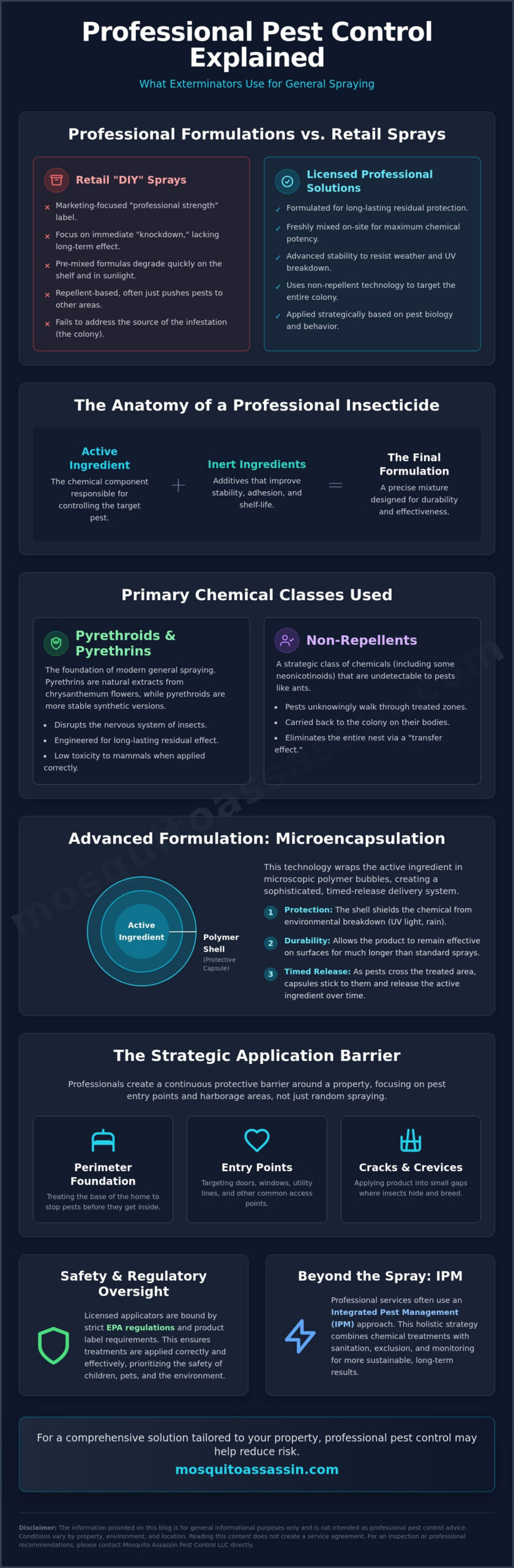
    For homeowners in Erie and Crawford Counties, general spraying is the professional application of liquid insecticides designed to create a protective barrier around a property. It targets common invaders like ants, spiders, and crickets before they can establish a presence indoors. When property owners ask what do exterminators use for general spraying, they’re often surprised to learn that the liquid in the tank is a complex mixture of active and inert ingredients. The active ingredient is the chemical responsible for controlling the pest; the inert ingredients are additives that improve the product’s shelf life, help it adhere to surfaces, or ensure it mixes properly with water.

    When investigating what do exterminators use for general spraying, it’s vital to recognize that professional formulations are built for durability. Licensed experts select specific products based on the unique biology of the target pest. They don’t rely on a one size fits all approach. While retail sprays often focus on immediate knockdown (killing a bug on contact), professional products emphasize residual protection. These chemicals are designed to remain active on surfaces for extended periods, providing a continuous shield against new arrivals for weeks or even months.

    To better understand this concept, watch this helpful video:

    Pyrethroids and Pyrethrins: The Foundation of Modern Spraying

    The most common chemical class used in general pest control includes pyrethrins and pyrethroids. Pyrethrins are natural compounds extracted from chrysanthemum flowers. Because natural pyrethrins break down quickly in sunlight, chemists developed Pyrethroids, which are synthetic versions engineered for greater stability and longer lasting results. These compounds work by disrupting the nervous systems of insects like ants and spiders. When applied according to the strict federal label, they offer a high level of efficacy while maintaining low toxicity for mammals, making them a staple for residential protection.

    Neonicotinoids and Non-Repellent Liquid Treatments

    Another critical category involves non-repellent treatments, which represent a significant shift in how professionals manage social insects. Standard repellent sprays act like a “keep out” sign; pests can sense the chemical and simply find a different way into the home. Non-repellent chemicals, including certain neonicotinoids, are undetectable to pests. Ants or cockroaches can walk directly through the treated area without realizing they’ve come into contact with the product. They then carry the chemical back to the colony, sharing it with other members through grooming and feeding. This “transfer effect” allows for the total elimination of the nest rather than just killing individual workers found on the kitchen counter.

    Why Professionals Choose Specific Formulations Over DIY Products

    A common myth found on online forums is that professional pest control relies simply on higher concentrations of the same chemicals found in hardware stores. In reality, the answer to what do exterminators use for general spraying involves advanced chemical engineering that retail products can’t match. Professional concentrates are designed for stability and precision. While a pre-mixed retail bottle begins to degrade the moment it’s manufactured; professional products are mixed fresh on-site to ensure maximum potency and chemical integrity.

    One of the most effective tools in a professional’s arsenal is microencapsulation (CS). This technology wraps the active ingredient in microscopic polymer bubbles. These capsules protect the chemical from environmental breakdown and provide a timed-release effect. As pests walk across treated surfaces, they pick up these tiny capsules, which then burst or wear down, delivering a lethal dose over time. This sophisticated delivery system is a primary reason why hired services are more effective than DIY attempts.

    Residual Life and Environmental Stability

    Chemical engineers specifically design these products to adhere to diverse surfaces like vinyl siding, porous brick, or treated wood. In regions like Erie, PA, where high humidity and frequent rain are common, retail sprays often wash away within days. Professional-grade formulations are built to withstand UV light and precipitation, often providing a reliable barrier for 60 to 90 days. This durability is maintained by adhering to Federal certification standards, which ensure that applicators understand the environmental impact and longevity of the materials they use. Utilizing a general pest control plan can help maintain this protective shield throughout the changing seasons.

    Targeted Modes of Action

    Professional pest management moves beyond just killing adult insects. When considering what do exterminators use for general spraying, you must include Insect Growth Regulators (IGRs). These specialized compounds don’t kill the insect immediately; instead, they mimic juvenile hormones to prevent larvae from reaching reproductive maturity. By disrupting the life cycle, professionals can stop an infestation from growing. This targeted approach is far superior to the “one size fits all” strategy of retail products, as it allows for specific treatments based on whether the target is in the egg, larval, or adult stage.

    The equipment used to apply these products matters just as much as the chemistry. Professional sprayers are calibrated to produce a consistent droplet size. This ensures even coverage across every crack and crevice, preventing the pooling or drifting common with low-quality hand-pump sprayers. Consistent application ensures that the chemical remains exactly where it’s needed to protect the structure.

    The Strategic Application: Where and How Professionals Spray

    Professional pest control is a discipline of precision. While many people assume that “spraying” means treating every square inch of a property, modern experts prioritize targeted applications. This shift away from broadcast spraying (treating large, open areas) is a hallmark of responsible pest management. It ensures that products are placed exactly where pests travel and hide, minimizing environmental impact while maximizing results. When property owners ask what do exterminators use for general spraying, they’re often referring to a multi-layered defense strategy that begins at the foundation and extends to the smallest interior gaps.

    Strategic application relies on a deep understanding of pest highways. Pests don’t wander aimlessly across a kitchen floor; they follow baseboards, utility lines, and structural seams. By focusing on these specific zones, professionals can intercept pests before they become a visible problem. This methodical approach is particularly important in regions like Ashtabula County and Crawford County, where seasonal shifts drive different types of insects toward the warmth and shelter of human structures.

    Perimeter Barriers and Foundation Treatments

    The primary line of defense for any home is the perimeter barrier. This involves applying a liquid treatment to the exterior foundation to stop pests from migrating from the soil into the house. A professional barrier typically covers a zone approximately two to three feet up the foundation wall and two to three feet out onto the adjacent soil or mulch. This creates a continuous “dead zone” that insects must cross to enter the building. In Crawford County, these treatments are often adjusted during the spring and fall to account for the increased activity of moisture-seeking pests like earwigs or overwintering invaders like boxelder bugs.

    Crack and Crevice vs. Spot Treatments

    Indoor protection is even more refined. Professionals use a technique known as crack and crevice treatment. Rather than applying product to open surfaces where residents or pets might come into contact with it, the applicator uses specialized fine-tipped wands to inject the product into the tiny gaps where pests actually live. These areas include:

    • The spaces behind baseboards and crown molding.
    • Gaps around plumbing penetrations under sinks.
    • Expansion joints in the foundation or basement walls.
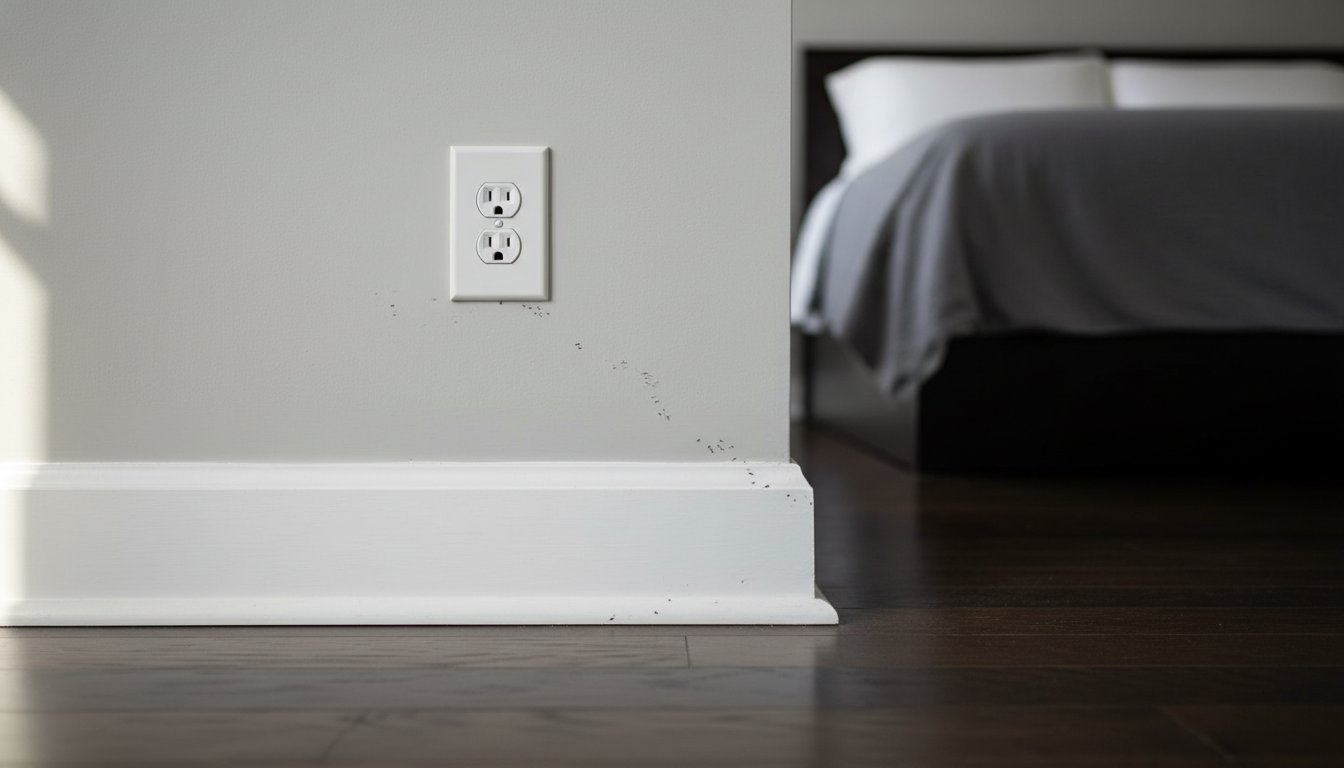
    • The voids behind electrical outlets and switch plates.

    This method is highly effective because it places the product directly into the pest’s nesting and harborage sites. It also significantly reduces the risk of human or pet exposure, as the product is hidden deep within the structure’s anatomy. When considering what do exterminators use for general spraying, it’s clear that the precision of the application is just as vital as the active ingredient itself. This level of accuracy is why professional pest control may help reduce risk more effectively than standard retail methods.

    Disclaimer: The information provided on this blog is for general informational purposes only and is not intended as professional pest control advice. Conditions vary by property, environment, and location. Reading this content does not create a service agreement. For an inspection or professional recommendations, please contact Mosquito Assassin Pest Control LLC directly.
    What Do Exterminators Use for General Spraying? A Professional Overview

    Safety and Regulatory Oversight of Professional Pesticides

    A primary concern for property owners in Erie and Crawford Counties involves the safety of the chemicals applied around their families and pets. When asking what do exterminators use for general spraying, it’s essential to look beyond the active ingredients to the federal oversight that governs their use. In the United States, every professional-grade pesticide must undergo a rigorous registration process with the Environmental Protection Agency (EPA). This process involves years of testing to evaluate potential risks to human health and the environment before a product is ever cleared for residential use. The EPA frequently updates these standards; for instance, new rules regarding pesticide residue tolerances took effect on February 20, 2026, and April 22, 2026, reflecting the agency’s ongoing commitment to public health.

    Professional pest control may help reduce risk because licensed applicators are trained to prioritize safety through precision. Modern formulations are designed to be highly effective against target pests while maintaining a profile that, when applied according to the label, allows for residential occupancy shortly after treatment. The focus is always on minimizing exposure through the strategic methods discussed in previous sections, such as crack and crevice applications. This methodical approach ensures that the products remain where they are needed and away from common contact surfaces.

    EPA Registration and the Pesticide Label

    In the pest control industry, the phrase “the label is the law” is a literal legal standard. The EPA-approved label on every professional product is a legally binding document that dictates exactly where, how, and how much of a product can be used. It includes specific instructions for protecting non-target animals and ensuring the safety of household members. Professional training ensures that every application in Ashtabula County adheres to these strict legal requirements. Misuse of these products by an unlicensed individual isn’t just ineffective; it can carry significant legal and safety risks. To ensure your home is treated according to these rigorous federal standards, you can view the available general pest control plans for your property.

    Low-Impact and Green Alternatives

    For residents who prefer a different approach, botanical-based sprays offer a viable alternative. These products often utilize concentrated essential oils like rosemary, peppermint, or geraniol to manage pests. While these green options are derived from natural sources, they work differently than traditional chemistry. They typically provide immediate knockdown but lack the long-term residual life of the microencapsulated products professionals often use for general spraying. Experts often use these in sensitive environments or as part of a more frequent service cycle. Understanding these limitations is key to choosing the right strategy for your specific property. If you have questions about which method fits your home, you can check the local service details to see what options are best for your area.

    Disclaimer: The information provided on this blog is for general informational purposes only and is not intended as professional pest control advice. Conditions vary by property, environment, and location. Reading this content does not create a service agreement. For an inspection or professional recommendations, please contact Mosquito Assassin Pest Control LLC directly.

    Beyond the Spray: Integrated Pest Management (IPM)

    Professional pest control is more than a simple chemical application. It’s a comprehensive strategy known as Integrated Pest Management (IPM). This holistic approach views chemical treatments as just one tool in a much larger kit. When people ask what do exterminators use for general spraying, they should realize that the spray is most effective when it’s part of a broader plan that includes biological and structural considerations. For property owners in Erie and Crawford Counties, this means that a technician won’t just arrive and start spraying. They’ll first evaluate the ecosystem of the home to determine why pests are attracted to the structure in the first place. In an IPM framework, chemicals are used as a targeted intervention rather than a broad, repetitive solution.

    This methodical approach ensures that the products are used responsibly and only when necessary. By focusing on the root cause of an infestation, professionals can achieve long-term results that a single spray cannot provide. Ongoing monitoring is a standard part of professional services in our region, allowing for adjustments as weather patterns change and new pests emerge throughout the year.

    Inspection and Identification: The Critical First Steps

    Accurate identification is the foundation of any successful treatment. Different species require different active ingredients and application methods. For example, a treatment designed for pavement ants might be completely ineffective against carpenter ants. Professionals look for “conducive conditions” such as standing water, wood-to-soil contact, or overgrown vegetation that provides a bridge to the siding. Understanding these factors is a key part of general pest control for homeowners. By identifying the specific threat, the applicator can select the precise chemical class needed, ensuring that the intervention is as targeted as possible before any product is applied.

    Exclusion and Sanitation Strategies

    A professional spray creates a vital barrier, but physical exclusion and sanitation maintain it. Pests are constantly searching for food, water, and shelter. Removing debris from near the foundation and keeping gutters clear reduces the pressure on the chemical barrier. Professionals often provide specific recommendations on sealing cracks around windows or installing door sweeps to block entry points. These professional pest control services near me often involve these consultative elements to help residents preserve the integrity of their property. When you understand what do exterminators use for general spraying, it becomes clear that the liquid barrier works best when it’s supported by a clean, well-sealed home environment. This partnership between the professional and the homeowner is the most effective way to keep homes in Ashtabula County pest-free.

    Disclaimer: The information provided on this blog is for general informational purposes only and is not intended as professional pest control advice. Conditions vary by property, environment, and location. Reading this content does not create a service agreement. For an inspection or professional recommendations, please contact Mosquito Assassin Pest Control LLC directly.
    Securing Your Property with Scientific Precision

    Professional pest management is a precision-engineered science that far exceeds the capabilities of retail solutions. Gaining a clear understanding of what do exterminators use for general spraying reveals a sophisticated world of microencapsulated formulations and insect growth regulators designed to break the pest life cycle at the source. These advanced products, combined with strategic application methods, provide a durable barrier that withstands the unique environmental challenges found throughout Northwest PA and Northeast Ohio. By adhering to strict Integrated Pest Management (IPM) standards, licensed experts prioritize long-term prevention and structural integrity over temporary fixes.

    Customized protection plans for residential and commercial properties ensure that every treatment is tailored to the specific biology of the target pest. This methodical approach provides confidence that the property is secure and household members remain protected. Professional pest control may help reduce risk. For a detailed inspection and expert recommendations, contact Mosquito Assassin Pest Control LLC. Taking a proactive stance today prevents minor sightings from becoming major infestations tomorrow.

    Disclaimer: The information provided on this blog is for general informational purposes only and is not intended as professional pest control advice. Conditions vary by property, environment, and location. Reading this content does not create a service agreement. For an inspection or professional recommendations, please contact Mosquito Assassin Pest Control LLC directly.
    Frequently Asked Questions

    Is the spray used by exterminators harmful to my pets?

    Professional sprays are applied with pet safety in mind, following strict EPA guidelines. Once the application has completely dried, it’s safe for cats and dogs to return to the treated area. The active ingredients are typically applied in such low concentrations that they don’t pose a significant risk to mammals when used according to the label instructions.

    How long do I need to stay out of the house after a general spray treatment?

    Most treatments require residents and pets to remain outside for approximately two to four hours. This window allows the liquid to dry and bond to surfaces. Drying times can vary based on humidity levels in Ashtabula County, so it’s best to wait until the surfaces are no longer damp to the touch before re-entering.

    Will the rain wash away the outdoor pest control spray?

    Rain won’t wash away a professional treatment once it has had time to dry. Modern formulations use microencapsulation technology to bond with surfaces like brick, wood, and vinyl. These products are engineered to remain effective even after exposure to the heavy rain and snow common in Northwest Pennsylvania.

    Do exterminators spray the same chemicals inside and outside?

    Applicators often use different products for indoor and outdoor environments. Outdoor treatments focus on creating a durable perimeter barrier that can withstand the elements. Indoor applications are much more targeted, focusing on cracks and crevices where pests hide. The choice of what do exterminators use for general spraying depends entirely on the specific location and the target pest species.

    Can I buy professional-grade pest control sprays at a retail store?

    Professional-grade concentrates are not available in retail stores. Retail products are often pre-mixed and have a much shorter shelf life. Licensed professionals have access to specialized formulations that are regulated by the EPA and require specific certification to purchase and apply safely, ensuring higher stability and efficacy.

    How often should general spraying be performed for the best results?

    Quarterly applications provide the most consistent protection against seasonal pest migrations. Each season in Crawford County brings different threats, from spring ants to fall spiders. Regular service ensures that the protective barrier is replenished before the previous treatment begins to break down, maintaining a pest-free environment year-round.

    What should I do to prepare my home before the exterminator arrives?

    Preparing for a visit involves clearing baseboards and moving pet food bowls away from the walls. It’s helpful to pick up toys and clutter from the floor to allow the technician easy access to the perimeter. For outdoor treatments, ensure that gates are unlocked and any debris is cleared from the foundation area.

    Does professional spraying kill pests instantly or over time?

    While some products provide immediate results, most professional sprays are designed to work over several days. This delayed action allows pests to carry the product back to their colony, leading to total nest elimination through a transfer effect. This strategy is a key part of what do exterminators use for general spraying to ensure long-term control rather than a temporary fix.

    Disclaimer: The information provided on this blog is for general informational purposes only and is not intended as professional pest control advice. Conditions vary by property, environment, and location. Reading this content does not create a service agreement. For an inspection or professional recommendations, please contact Mosquito Assassin Pest Control LLC directly.

  • How to Check for Bed Bugs in a Hotel: A Professional Inspection Guide

    How to Check for Bed Bugs in a Hotel: A Professional Inspection Guide

    Recent data from April 2026 reveals that 1 in 7 U.S. travelers reported encountering bed bugs in the past year. Even more surprising is that 20% of these sightings occurred in luxury 5-star hotels, proving that a high price point doesn’t guarantee a pest-free stay. It’s completely normal to feel anxious when setting your luggage down in a new room. You don’t want the stress of bringing hitchhikers back to your home, and you shouldn’t have to waste your vacation performing an inefficient search. Understanding how to check for bed bugs in a hotel is the most effective way to protect your family and your peace of mind.

    This guide provides the systematic inspection protocol used by professionals to identify bed bugs before they follow you home. You’ll learn a clear, fast routine that focuses on high-risk harborages instead of wasting time on unlikely spots. The following sections cover everything from spotting early warning signs to knowing the correct steps if you find evidence, ensuring you can unpack with confidence. For travelers returning to Erie and Crawford Counties in Pennsylvania or Ashtabula County in Ohio, staying vigilant is the first line of defense against residential infestations.

    Disclaimer: The information provided on this blog is for general informational purposes only and is not intended as professional pest control advice. Conditions vary by property, environment, and location. Reading this content does not create a service agreement. For an inspection or professional recommendations, please contact Mosquito Assassin Pest Control LLC directly.
    Key Takeaways

    • Master a professional inspection routine that targets high-risk harborages like mattress corners and headboards to save time and increase accuracy.
    • Learn how to check for bed bugs in a hotel by starting with a luggage-safe zone, such as the bathtub or a tiled floor, to prevent hitchhikers from entering your bags.
    • Identify critical visual evidence like dark fecal spotting and shed skins, which are often easier to find than the nocturnal insects themselves.
    • Protect your belongings throughout your stay by utilizing inspected luggage racks and keeping suitcases zipped shut when not in use.
    • Understand the proper protocol for documenting evidence and notifying hotel management to ensure a swift resolution if an infestation is discovered.

    Understanding Why Hotel Inspections Are Necessary

    Many travelers mistakenly believe that bed bugs only appear in budget motels or properties with poor housekeeping. This is a dangerous assumption. These pests don’t feed on dirt; they feed on blood. Because of this, even the most pristine 5-star luxury resorts are vulnerable. In fact, research from April 2026 indicates that 20% of bed bug sightings occurred in high-end accommodations. Learning how to check for bed bugs in a hotel isn’t a commentary on the hotel’s quality. It’s a necessary step for any traveler who wants to avoid the high cost and emotional toll of a residential infestation.

    A proactive search takes less than five minutes but can prevent a situation that costs thousands of dollars to remediate once it reaches your home. Bed bugs are nocturnal insects that possess a flat body shape, allowing them to squeeze into crevices as thin as a credit card. For a comprehensive overview of bed bugs and their biology, it’s helpful to understand that they are expert hiders that remain inactive during the day. This behavior makes a deliberate, systematic inspection the only way to ensure your room is truly safe before you settle in for the night.

    The Hitchhiker Mechanism

    Bed bugs are among the most efficient travelers in the world. They don’t fly or jump; instead, they crawl onto personal items and wait to be transported to a new location. In a hotel environment, they move through shared wall voids, electrical outlets, or even on housekeeping carts that travel from room to room. This high turnover of guests creates a constant cycle of potential introduction from all over the globe. Once they latch onto your luggage or clothing, they can easily follow you back to Erie, Crawford, or Ashtabula Counties. Stopping the hitchhiking process at the hotel is much easier than treating an established colony in your own bedroom.

    When to Perform Your Inspection

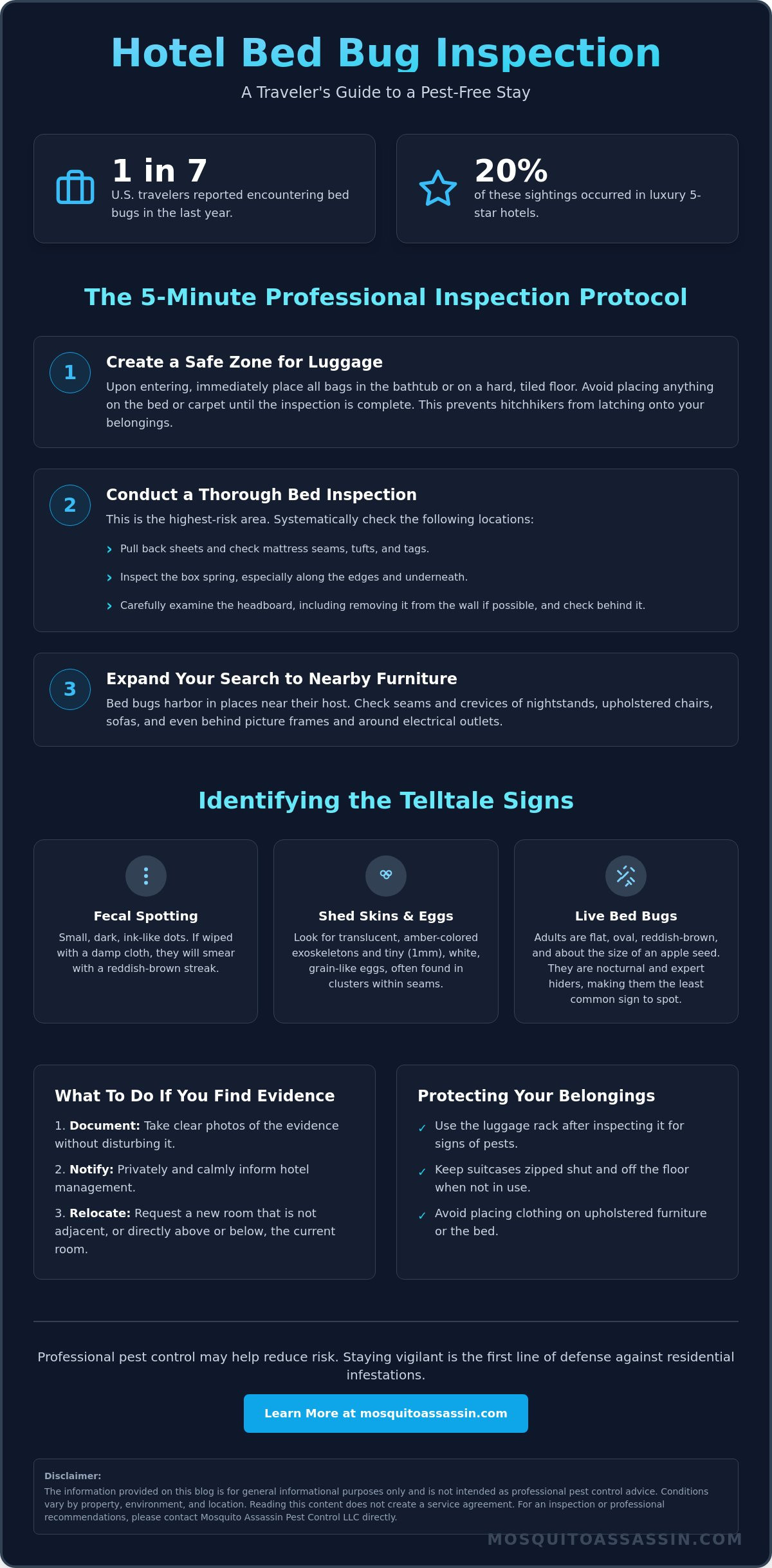
    The first ten minutes of your stay are the most critical for prevention. You must perform your inspection before you unpack a single item or sit on the bed. Professional protocols suggest a strict “nothing on the floor” policy during this window. Upon entering the room, place your suitcases and bags immediately into the bathtub or on a high, hard-surfaced tiled floor. These areas are unlikely to harbor pests and provide a clear visual field. Only after you have confirmed that the room is clear should you move your belongings to the living area. Knowing how to check for bed bugs in a hotel before you get comfortable is the difference between a relaxing trip and a long-term pest problem.

    Disclaimer: The information provided on this blog is for general informational purposes only and is not intended as professional pest control advice. Conditions vary by property, environment, and location. Reading this content does not create a service agreement. For an inspection or professional recommendations, please contact Mosquito Assassin Pest Control LLC directly.
    Identifying the Visual Signs of an Infestation

    Finding a live insect is the most definitive proof of an infestation, but it’s also the least common discovery during a daytime search. These pests are light-sensitive and remain tucked deep within structural voids when the sun is up. When learning how to check for bed bugs in a hotel, you must focus on the secondary evidence they leave behind. This biological trail is often easier to spot than the insects themselves and provides a clear picture of the room’s history. Focusing on these biological markers is your best defense against bringing pests home.

    Fecal spotting is the most reliable indicator for travelers. These appear as small, dark, ink-like dots. Unlike common lint or dirt, these spots are actually digested blood that has dried. If you find dark specks on the mattress or headboard, you can perform a simple test: dampen a tissue and wipe the spot. If it smears or leaves a reddish-brown streak, it is likely fecal matter. You should also watch for translucent, amber-colored exoskeletons. These shed skins indicate a growing, active population that is successfully feeding and molting. Eggs are another critical sign; they are tiny, white, and grain-like, usually tucked into deep seams or crevices.

    The Evidence Trail

    Beyond fecal dots, look for small blood smears on pillowcases or sheets. These often occur when a guest accidentally rolls over and crushes an engorged bug during the night. In rooms with a significant population, you might notice a characteristic odor. Professionals often describe this as a musty, sweet, or “sickly” smell, similar to rotting raspberries or coriander. While smaller infestations may not produce a detectable scent, it’s a critical warning sign in larger outbreaks. If you suspect you’ve returned home to Erie or Ashtabula with unwanted guests, seeking professional bed bug treatment can help protect your property and family.

    What Do Bed Bugs Actually Look Like?

    Knowing exactly what to look for prevents confusion with common household pests. An adult bed bug is flat, oval-shaped, and roughly the size of an apple seed (5 to 7 millimeters). They are reddish-brown but can appear bright red and swollen immediately after a meal. Nymphs, or juvenile bugs, are much harder to see. They are smaller and nearly translucent or pale yellow, only becoming visible once they have consumed blood. These nymphs are often found near the same harborages as adults.

    Be careful not to confuse them with look-alikes. Carpet beetles are a common misidentification; they are rounder and covered in tiny hairs. Small spiders or booklice might also cause alarm, but they lack the distinct segmented abdomen of a true bed bug. Understanding these physical differences is a vital part of knowing how to check for bed bugs in a hotel effectively and accurately.

    Disclaimer: The information provided on this blog is for general informational purposes only and is not intended as professional pest control advice. Conditions vary by property, environment, and location. Reading this content does not create a service agreement. For an inspection or professional recommendations, please contact Mosquito Assassin Pest Control LLC directly.
    A Step-by-Step Hotel Room Inspection Protocol

    Establishing a “Safe Zone” for your belongings is the most critical first step when entering a new room. Professional inspectors never place their gear on the bed or the carpeted floor until the area is cleared. Instead, move all luggage directly into the bathtub or onto a high, tiled bathroom floor immediately upon entry. These hard, cold surfaces are poor harborages for pests and provide a clear visual field where insects cannot easily hide. This protocol ensures that while you are busy learning how to check for bed bugs in a hotel, your suitcases remain protected from potential hitchhikers.

    Once your bags are secure, begin a systematic sweep of the room using a high-powered flashlight or the light on your smartphone. You must be methodical. Bed bugs are experts at utilizing structural gaps, so a surface-level glance is never sufficient. Focus your efforts on the area within five to ten feet of the bed, as this is where the majority of infestations are concentrated. If you find evidence during this process, do not attempt to move your luggage back into the hallway; keep it in the bathtub to avoid spreading the problem further.

    The Bed and Bedding Check

    Start by stripping the bed linens back to the mattress protector. Pay close attention to all four corners of the mattress, specifically focusing on the “piping” or the thick fabric seams that run along the edges. Use a credit card or a similar flat tool to firmly run along these seams, which can force hidden insects or eggs into view. After checking the mattress, examine the box spring. You must inspect the plastic corner guards, as these are one of the most common hiding spots in hotel environments. Finally, look at the underside of the bed frame and the slats, where dark, secluded gaps provide ideal shelter.

    The Furniture and Decor Sweep

    While the bed is the primary focus, headboards are often the number one hiding spot because they are frequently bolted to the wall and rarely moved for cleaning. Use your light to peer into the gap between the headboard and the wall. Next, move to the nightstands. Open the drawers and inspect the tracks and the back of the unit. Don’t overlook the decor; examine the folds of the curtains and check behind hanging picture frames. Knowing how to check for bed bugs in a hotel requires looking at every crevice where a thin insect could fit. For residents returning to Erie and Crawford Counties in Pennsylvania or Ashtabula County in Ohio, this thoroughness is the best way to ensure your home stays protected.

    Disclaimer: The information provided on this blog is for general informational purposes only and is not intended as professional pest control advice. Conditions vary by property, environment, and location. Reading this content does not create a service agreement. For an inspection or professional recommendations, please contact Mosquito Assassin Pest Control LLC directly.

    How to Check for Bed Bugs in a Hotel: A Professional Inspection Guide

    Protecting Your Belongings During Your Stay

    Once you have completed your initial search and confirmed the room is clear, you must maintain a defensive strategy throughout your stay. A successful inspection reduces your risk significantly, but it isn’t a guarantee of total safety. Maintaining high standards for your belongings is just as important as knowing how to check for bed bugs in a hotel. These pests are opportunistic; they wait for a guest to become complacent before finding a way into personal items. By following a few professional habits, you can ensure that your luggage remains a secure environment rather than a transport vehicle for pests.

    The luggage rack is a valuable tool, but only if used correctly. Before placing your bags on the stand, inspect the nylon webbing and the joints where the frame folds. Bed bugs often hide in the tight spaces where the fabric meets the metal or wood. If the rack is clear, it’s a much safer option than the floor or the bed. Additionally, you should keep your suitcases zipped shut whenever you aren’t actively reaching for an item. Bed bugs are incapable of operating zippers, so a closed bag is your best physical barrier against an accidental hitchhiker.

    Luggage Management Best Practices

    The type of luggage you choose can impact your level of protection. Hard-sided suitcases made of polycarbonate or aluminum are superior to fabric bags because they have fewer external seams and a smoother surface that is difficult for insects to climb. If you must use fabric luggage, consider using a protective liner or an encasement designed for travel. If you ever feel uncertain about the room’s status, the bathroom remains the safest storage area. Because it’s typically tiled and lacks the fabric harborages these pests prefer, it’s a low-risk zone for your bags. If you suspect you’ve encountered pests during your travels, professional bed bug treatment can help eliminate the problem before it spreads through your home.

    Safe Unpacking Strategies

    Avoid the temptation to use the hotel dresser. Wooden drawers are porous and full of joints and crevices that are difficult to inspect thoroughly. Instead, hang your clothes in the closet using metal hangers, which are less likely to harbor pests than wooden ones. Keep your shoes away from the baseboards and the bed, as these are common travel paths for nocturnal insects. Before you check out, conduct a quick mini-inspection of your bags and the surrounding area. This final check ensures you aren’t accidentally packing away any evidence of an infestation that may have developed during your visit. For travelers returning to Erie, Crawford, or Ashtabula Counties, these small steps provide a powerful defense for your household.

    Disclaimer: The information provided on this blog is for general informational purposes only and is not intended as professional pest control advice. Conditions vary by property, environment, and location. Reading this content does not create a service agreement. For an inspection or professional recommendations, please contact Mosquito Assassin Pest Control LLC directly.
    What to Do If You Find Evidence of Bed Bugs

    If your inspection reveals signs of an infestation, your immediate priority is containment. Finding evidence after knowing how to check for bed bugs in a hotel allows you to act before the problem becomes permanent. Start by documenting everything. Use your phone to take high-resolution photographs and videos of the insects, fecal spotting, or cast skins. This evidence is crucial for your interactions with management and for your own records if you need to justify a refund or room change. Keep your luggage in the “Safe Zone” you established earlier in the bathtub or on a tiled floor to prevent any further contact with infested surfaces.

    Do not attempt to treat the room yourself or move your luggage into the hallway. Instead, keep your belongings contained while you prepare to switch rooms. The goal is to minimize the movement of pests from the infested area to other parts of the hotel or into your own vehicle. A calm, methodical approach is the most effective way to handle this stressful situation.

    Communicating with Hotel Management

    Approach the front desk with a calm, professional demeanor. Present your visual evidence clearly and request an immediate room change. It’s essential to ensure your new room is not adjacent to the infested one. Bed bugs frequently travel through wall voids, electrical outlets, and plumbing lines; this means rooms directly next door, above, or below are at the highest risk for spreading. Ask the manager for a log of when the room was last professionally inspected. As a guest, you have the right to a habitable environment, and most reputable chains will prioritize your relocation to a safe area of the building.

    Post-Travel Decontamination

    The risk doesn’t end when you leave the hotel. For residents returning to Erie, Crawford, or Ashtabula Counties, a strict decontamination protocol is the only way to ensure pests don’t enter your home. Upon arrival, keep your suitcases in the garage or another outdoor area for a final inspection. Immediately wash all travel clothing, including items you didn’t wear, in hot water. Follow this with at least 30 minutes in a dryer on the highest heat setting. Sustained heat is the most effective way to kill all life stages of bed bugs, including eggs.

    If you’re concerned that your luggage was compromised despite your best efforts, professional pest control may help reduce the risk of a residential outbreak. A preventative home inspection provides peace of mind and can catch a potential problem before it requires extensive treatment. Taking these final steps ensures that your trip remains a memory of travel rather than the start of a pest infestation.

    Disclaimer: The information provided on this blog is for general informational purposes only and is not intended as professional pest control advice. Conditions vary by property, environment, and location. Reading this content does not create a service agreement. For an inspection or professional recommendations, please contact Mosquito Assassin Pest Control LLC directly.

    Ensuring a Pest-Free Return Home

    Adopting a professional inspection routine is the most reliable way to prevent unwanted insects from invading your living space. By mastering how to check for bed bugs in a hotel, you transform from a passive guest into an active defender of your home environment. The combination of early detection, smart luggage management, and post-travel heat treatment creates a multi-layered defense that is difficult for pests to penetrate. These small habits ensure your travels remain enjoyable and free from the long-term consequences of an infestation.

    Vigilance is the foundation of effective pest management. For residents returning to Erie or Crawford Counties in Pennsylvania and Ashtabula County in Ohio, maintaining these standards is essential for the security of your household. If you are concerned that pests may have successfully entered your property despite your best efforts, professional pest control may help reduce risk. You can contact Mosquito Assassin Pest Control LLC for a professional inspection to assess your situation and receive expert recommendations. Staying proactive is the best way to keep your home a safe sanctuary.

    Disclaimer: The information provided on this blog is for general informational purposes only and is not intended as professional pest control advice. Conditions vary by property, environment, and location. Reading this content does not create a service agreement. For an inspection or professional recommendations, please contact Mosquito Assassin Pest Control LLC directly.

    Frequently Asked Questions

    Can you see bed bugs with the naked eye?

    Yes, you can see bed bugs without the use of a magnifying glass. Adult bed bugs are reddish brown and roughly the size of an apple seed. While nymphs are smaller and nearly translucent, they become much easier to spot after they have consumed blood and turned bright red. Understanding how to check for bed bugs in a hotel involves looking for these physical insects along with their tiny, grain-like eggs.

    Do luxury hotels have bed bugs more or less often than budget motels?

    Luxury hotels are just as susceptible to infestations as budget motels. Statistics from April 2026 indicate that 20% of reported sightings occur in 5-star properties. These pests are attracted to human hosts rather than the cleanliness or price point of the building. High guest turnover in premium resorts provides constant opportunities for new pests to hitchhike into the property on luggage.

    What should I do with my luggage if I found a bed bug in my room?

    Keep your luggage in the bathtub or on a tiled floor if you discover evidence of a pest. Do not move your bags into the hallway or another room until you have spoken with management. This prevents the accidental spread of the infestation to other areas of the hotel. Bathtubs are a safe zone because the smooth, vertical surfaces are very difficult for bed bugs to climb.

    Will bed bugs bite me the first night I am in a hotel?

    Bed bugs will often bite during the first night of your stay if an active population is present. They are attracted to the carbon dioxide and body heat you produce while sleeping. Because they are nocturnal, they typically emerge from harborages once the room is dark and quiet. Some people don’t react to bites immediately, which can lead to a delay in realizing an infestation exists.

    Is it possible to get bed bugs from a hotel even if I don’t see any?

    It is entirely possible to bring pests home even if you never see a live insect during your stay. They are expert hiders that remain tucked away in structural gaps during the day. This is why knowing how to check for bed bugs in a hotel for secondary signs like fecal spotting or shed skins is so important. These biological markers are often more visible than the insects themselves.

    How do I make sure I don’t bring bed bugs home from my trip?

    Prevent an introduction by washing all travel clothing in hot water and drying it on high heat for at least 30 minutes. Inspect your suitcases in a garage or driveway before bringing them into your living space. These steps are the best way to protect your residence in Erie, Crawford, or Ashtabula Counties from unwanted hitchhikers. High heat is the most effective way to eliminate all life stages of the pest.

    What do bed bug eggs look like in a hotel room?

    Bed bug eggs are tiny, white, and resemble individual grains of salt or rice. They are often found in clusters tucked deep into the seams of mattresses, behind headboards, or in the corners of box springs. Because they are coated in a sticky substance, they remain firmly attached to surfaces until they hatch. They are roughly one millimeter in length, making them difficult but not impossible to see.

    Can bed bugs travel through hotel vents or electrical outlets?

    Bed bugs easily travel through hotel vents, electrical outlets, and shared wall voids. This mobility allows them to move between adjacent rooms or floors in search of new hosts. If a room next to yours is infested, there is a high probability the insects will attempt to migrate through these utility gaps. This is why professional protocols recommend moving at least two floors away if you find evidence in your current room.

    Disclaimer: The information provided on this blog is for general informational purposes only and is not intended as professional pest control advice. Conditions vary by property, environment, and location. Reading this content does not create a service agreement. For an inspection or professional recommendations, please contact Mosquito Assassin Pest Control LLC directly.

  • Understanding Termite Treatment Cost Factors in Erie PA: 2026 Guide

    Understanding Termite Treatment Cost Factors in Erie PA: 2026 Guide

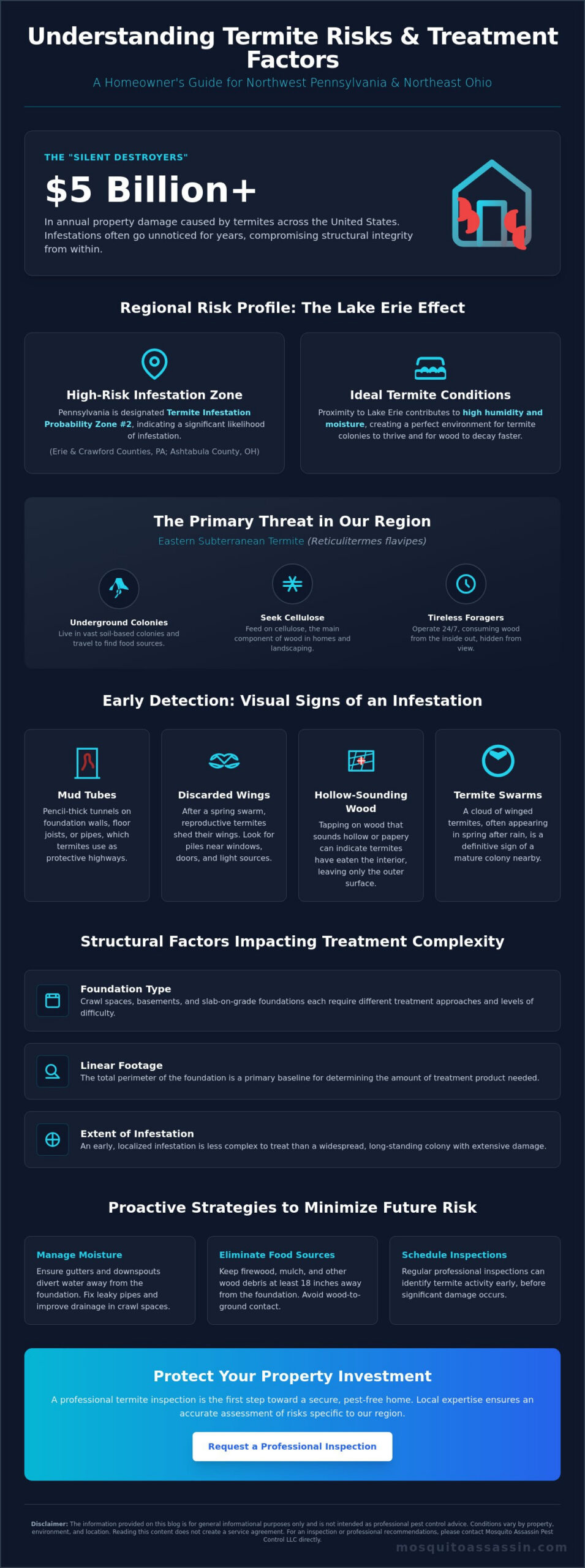
    Termites cause more than $5 billion in property damage across the United States every year, often operating as “silent destroyers” for years before a homeowner notices the first sign of trouble. If you’ve discovered mud tubes along your foundation or hollow-sounding wood in the basement, it’s natural to feel a surge of anxiety regarding the potential termite treatment cost Erie PA property owners must navigate. Pennsylvania sits in a high-risk infestation zone, and most neighbors in Northwest Pennsylvania share your fear of structural collapse and the frustration of trying to distinguish between a basic inspection and a comprehensive remediation strategy.

    It’s stressful to realize your largest investment is under attack by pests that thrive in our local climate. This 2026 guide clarifies the specific variables that influence remediation expenses in Erie, Crawford, and Ashtabula Counties, allowing you to protect your property investment with total confidence. You’ll learn how your home’s unique construction, the specific behavior of the Eastern Subterranean Termite, and the importance of proactive monitoring systems dictate the scope of a professional response. Understanding these drivers is the first step toward a secure, pest-free home.

    Disclaimer: The information provided on this blog is for general informational purposes only and is not intended as professional pest control advice. Conditions vary by property, environment, and location. Reading this content does not create a service agreement. For an inspection or professional recommendations, please contact Mosquito Assassin Pest Control LLC directly.
    Key Takeaways

    • Discover how your home’s foundation type and total linear footage directly influence the termite treatment cost Erie PA homeowners can expect for professional remediation.
    • Understand why the high humidity of the Lake Erie region makes Eastern subterranean termites a persistent threat to property investments in Northwest Pennsylvania.
    • Learn practical landscaping and grading techniques that minimize wood-to-ground contact and moisture buildup to help prevent future termite activity.
    • Identify the differences between a standard termite assessment and a formal Wood Destroying Insect (WDI) report required for regional property transactions.
    • Gain insights into why local knowledge regarding Erie and Crawford County building codes and soil conditions ensures a more accurate and effective risk assessment.

    Termite Activity and Structural Risks in the Lake Erie Region

    Property owners in Northwest Pennsylvania face a specific set of environmental challenges not found in drier parts of the state. The eastern subterranean termite is the most prevalent and destructive wood-destroying insect in Erie and Crawford counties. These pests live in underground colonies and forage tirelessly for cellulose, the organic compound found in structural lumber and landscaping materials. Because Pennsylvania is classified in Termite Infestation Probability Zone 2, homeowners live in a region where infestation is a significant statistical likelihood.

    To better understand the factors that drive professional remediation and the overall termite treatment cost Erie PA property owners navigate, watch this helpful video:

    The proximity to Lake Erie plays a massive role in local pest pressure. High humidity levels and frequent lake-effect moisture create ideal conditions for colony expansion and rapid wood decay. When wood stays damp, it becomes softer and more attractive to foraging termites. These insects often remain undetected for years, operating behind drywall, inside floor joists, or within dark crawl spaces. By the time visible signs appear, the structural damage can already be extensive, potentially compromising the safety and resale value of your property. Professional termite inspections and treatment can help identify these hidden risks before they escalate.

    The Biology of Termites in Northwest Pennsylvania

    Termite colonies in our region are highly organized. They rely on local soil moisture to survive and build protective tunnels to reach food sources above ground. In the spring, usually following a warm rain, mature colonies produce swarms of winged reproductives. These swarms are often the first clear indicator of an active infestation nearby. The unique moisture profile of the Lake Erie shoreline accelerates the breakdown of cellulose, making local homes particularly vulnerable to these silent foragers.

    Signs of Activity Homeowners Should Monitor

    Early detection is the best way to manage long term expenses. Homeowners should regularly inspect foundation walls and floor joists for mud tubes, which are pencil-thick tunnels made of soil and saliva. You might also find discarded wings near windowsills or entry points after a spring swarm. While several factors influence the total termite treatment cost Erie PA residents pay, the level of existing damage is often the most significant. It’s vital to distinguish between termite damage and standard wood rot. While rot is caused by fungi in wet wood, termite damage often looks like galleries or tunnels carved along the grain of the wood, frequently filled with bits of soil.

    Disclaimer: The information provided on this blog is for general informational purposes only and is not intended as professional pest control advice. Conditions vary by property, environment, and location. Reading this content does not create a service agreement. For an inspection or professional recommendations, please contact Mosquito Assassin Pest Control LLC directly.

    Structural Factors That Impact Termite Treatment Complexity

    While many property owners assume that home size is the only factor in determining expenses, the architectural reality of Northwest Pennsylvania homes tells a different story. The total linear footage of your foundation perimeter is the primary baseline for liquid treatments, but the technical difficulty of the application often dictates the final termite treatment cost Erie PA residents encounter. A larger home with easy foundation access may actually be less complex to treat than a smaller, historic residence with a stone foundation and a finished basement.

    Foundation type is arguably the most significant variable in labor and equipment requirements. Slab-on-grade homes, common in newer developments, often require specialized drilling through concrete floors to create a continuous chemical barrier in the soil beneath. In contrast, homes with full basements or crawl spaces present different challenges. The soil composition in Erie and Crawford counties, which can be heavy in clay or rock, influences how effectively liquid termiticides move through the earth. This makes a thorough understanding of how to identify and control termites essential for any remediation plan.

    Foundation Types and Remediation Challenges

    Older homes in the Lake Erie region frequently feature stone or brick foundations. These porous materials provide numerous tiny entry points for termites to bypass traditional barriers. Treating these structures requires a methodical approach to ensure every potential gallery is addressed. Crawl space clearance also impacts the professional labor needed; tight, low-clearance areas require more time and specialized protective gear for technicians to navigate safely. If you’re concerned about the integrity of your foundation, professional termite inspections and treatment can clarify the specific needs of your property.

    Severity and Scope of the Infestation

    The scope of the problem also dictates the technical difficulty. While a localized spot treatment might address a visible mud tube, it doesn’t provide the comprehensive protection of a full-perimeter barrier. If an inspection reveals multiple colonies or activity in several areas of the home, the scope of work increases significantly. Identifying structural damage before beginning any chemical application is a best practice. It ensures that the treatment reaches the heart of the infestation rather than just the surface. Professional assessments prioritize finding every hidden colony, especially in finished basements where drywall and flooring can mask the pests mentioned previously.

    Disclaimer: The information provided on this blog is for general informational purposes only and is not intended as professional pest control advice. Conditions vary by property, environment, and location. Reading this content does not create a service agreement. For an inspection or professional recommendations, please contact Mosquito Assassin Pest Control LLC directly.
    Comparing Local Inspection Types and Remediation Strategies

    Selecting the right path for property protection requires a clear distinction between a basic assessment and a formal regulatory report. Many homeowners feel anxious when they realize a standard visual check isn’t the same as a comprehensive Wood Destroying Insect (WDI) inspection. While a standard assessment focuses on identifying active colonies and immediate risk factors, a WDI report is a specialized legal document. These reports are often mandatory for real estate transactions in Northwest Pennsylvania, particularly for those utilizing FHA or VA loans.

    WDI Inspections for Erie Real Estate

    Lenders and buyers rely on WDI reports to verify the structural integrity of a home before a sale is finalized. A certified inspector must document evidence of past or present infestations, including termites, carpenter ants, and wood-boring beetles. It’s important to understand that a routine general pest control visit differs significantly from a WDI inspection. While general plans manage common household pests, a WDI inspection is a rigorous, point-by-point examination of the entire structure. Professional documentation ensures that all parties in a real estate transaction have a transparent view of the property’s history.

    Professional Treatment Methods

    Determining the final termite treatment cost Erie PA property owners pay often starts with selecting the right remediation strategy. There are two primary approaches used by licensed professionals: liquid soil barriers and baiting systems. Liquid barriers involve applying a termiticide to the soil around the foundation, creating a continuous zone of protection. This method provides immediate results by preventing insects from entering the structure from the ground. Because Eastern subterranean termite behavior involves constant foraging, a liquid barrier is a highly effective way to intercept them before they reach the wood.

    Baiting technology offers a different, targeted approach. Professionals install monitoring stations around the perimeter of the property. When termites find the bait, they share it with the rest of the colony, eventually leading to the elimination of the entire nest. This method is often preferred for properties where drilling into concrete or stone foundations is difficult. Ongoing professional monitoring plans are essential for both methods. These plans help detect new activity early and prevent re-infestation, protecting your long-term investment. Choosing between these strategies depends on your home’s construction and the specific level of termite pressure in your neighborhood.

    Disclaimer: The information provided on this blog is for general informational purposes only and is not intended as professional pest control advice. Conditions vary by property, environment, and location. Reading this content does not create a service agreement. For an inspection or professional recommendations, please contact Mosquito Assassin Pest Control LLC directly.
    Understanding Termite Treatment Cost Factors in Erie PA: 2026 Guide

    Proactive Strategies to Minimize Future Infestation Expenses

    Investing in preventative maintenance is the most effective way to manage the long term termite treatment cost Erie PA property owners face. While structural factors and foundation types dictate the price of active remediation, specific home maintenance habits can significantly reduce the likelihood of a colony ever establishing itself. Termites are attracted to moisture and accessible cellulose; by removing these attractants, you create a less hospitable environment for foraging pests. Regular attention to your home’s exterior and foundation can save thousands of dollars in future repair and treatment bills.

    Maintaining proper grading is a fundamental step in property protection. Soil should always slope away from the foundation to ensure that rainwater flows toward the yard rather than pooling against the basement walls. Saturated soil near the structure provides the perfect high-moisture highway for subterranean colonies to reach your floor joists. Additionally, any wood-to-ground contact, such as wooden deck posts or porch lattices resting directly on the dirt, acts as a bridge for insects to bypass soil treatments and enter the home undetected.

    Moisture Management in Northwest Pennsylvania

    The Lake Erie region’s high humidity and frequent precipitation make moisture control a top priority. Clogged gutters and misdirected downspouts are common culprits for soil saturation. When water overflows from a gutter, it dumps directly at the base of the foundation, creating a localized damp zone that termites love. Using dehumidifiers in basements and crawl spaces also helps keep structural wood dry and less appealing to pests. Understanding how pest control prices are influenced by the state of your property highlights the value of these simple, low-cost maintenance tasks. Keeping your home dry is a scientific approach to pest prevention.

    Landscaping and Exterior Maintenance

    Your landscaping choices directly impact the risk of infestation. Mulch is a popular choice for Erie gardens, but when it’s piled against the siding, it provides both food and moisture for termites. It’s better to keep a six-inch gap of bare soil or gravel between your mulch beds and the foundation. Similarly, firewood should never be stacked against the house; store it on a raised rack at least twenty feet away. Trimming shrubs and trees ensures adequate airflow around the structure, which helps the foundation dry out after rain. Avoid using untreated wood for garden borders or fence posts, as these materials will quickly rot and attract colonies to your yard. For those who want to verify their property’s risk level, professional termite inspections and treatment may help identify hidden vulnerabilities before they become expensive problems.

    Disclaimer: The information provided on this blog is for general informational purposes only and is not intended as professional pest control advice. Conditions vary by property, environment, and location. Reading this content does not create a service agreement. For an inspection or professional recommendations, please contact Mosquito Assassin Pest Control LLC directly.

    The Value of Local Expertise in Erie and Crawford Counties

    Choosing a professional who understands the specific environmental demands of Northwest Pennsylvania is vital for long term property security. Local experts possess a deep understanding of regional building codes and the unique soil types found throughout Erie and Crawford counties. Whether dealing with the heavy clay near the lake or the rocky terrain further inland, these factors influence how remediation is applied. While structural variables often dictate the termite treatment cost Erie PA residents face, the value of a professional who recognizes regional termite pressure cannot be overstated. These specialists provide more accurate risk assessments because they live and work in the same neighborhoods they protect.

    Ongoing protection plans offer essential peace of mind for high risk properties in Zone 2. Professional pest control may help reduce the risk of significant structural loss by identifying activity before it compromises the integrity of the home. Relying on a neighborly expert ensures that the service is tailored to the specific behavior of local colonies rather than a generic national template. Scientific methods combined with regional experience allow for a more disciplined and effective operational approach to termite management.

    Selecting a Qualified Professional

    Verifying state licensing and insurance is a non-negotiable step when choosing a provider for termite remediation. A qualified professional should provide a detailed service agreement that clearly outlines the scope of work and the specific methods used. Clear communication regarding the multi step service procedure helps alleviate the anxiety often associated with hidden infestations. Community-rooted companies often offer better insights into local pest trends because they track colony movements across specific regional territories over several seasons. This historical data is an invaluable tool for preventing future outbreaks.

    Next Steps for Property Protection

    Preparing your home for a professional termite assessment ensures the most thorough results. It’s helpful to clear a path around the interior basement walls and the exterior foundation so the inspector can check for mud tubes or wood damage. Understanding the timeline for a comprehensive treatment plan is also important; while some barriers are established quickly, baiting systems require a steady, methodical approach to eliminate a colony entirely. For an inspection or professional recommendations, please visit the Mosquito Assassin contact page. Taking proactive steps today is the most reliable way to secure your property investment for the years ahead.

    Disclaimer: The information provided on this blog is for general informational purposes only and is not intended as professional pest control advice. Conditions vary by property, environment, and location. Reading this content does not create a service agreement. For an inspection or professional recommendations, please contact Mosquito Assassin Pest Control LLC directly.

    Securing Your Property Against Northwest Pennsylvania Termite Pressure

    Managing the termite treatment cost Erie PA homeowners face starts with understanding that structural integrity depends on proactive maintenance and local expertise. Foundation type and moisture levels are the most significant variables in any remediation plan. Professionals who are licensed and insured in Pennsylvania and Ohio bring specialized knowledge of Erie and Crawford county soil conditions to every inspection. It’s essential to remember that structural complexity, such as finished basements or stone foundations, dictates the technical scope of work more than simple square footage.

    Comprehensive year-round protection plans are available to help monitor for early activity and prevent the silent destruction often associated with subterranean species. Addressing moisture issues and maintaining proper landscaping grading are the most effective ways to lower your long term risk. Professional pest control may help reduce risk and preserve your property’s value for the long term. To secure your investment, request a professional termite inspection for your property and gain clarity on your home’s current risk level.

    Disclaimer: The information provided on this blog is for general informational purposes only and is not intended as professional pest control advice. Conditions vary by property, environment, and location. Reading this content does not create a service agreement. For an inspection or professional recommendations, please contact Mosquito Assassin Pest Control LLC directly.

    Frequently Asked Questions

    How often should I have my Erie home inspected for termites?

    Annual inspections are recommended for properties in Northwest Pennsylvania. Because Erie is in a high risk infestation zone, yearly checks help catch activity before it becomes a major expense. Regular monitoring is the best way to manage your long term termite treatment cost Erie PA by preventing extensive structural damage before it starts. This proactive approach is especially important for homes near the lake where moisture levels are high.

    Does homeowners insurance cover the cost of termite treatment?

    Standard homeowners insurance policies typically don’t cover termite treatment or the resulting structural damage. Insurance companies view termite activity as a preventable maintenance issue rather than a sudden, accidental event. This makes proactive inspections and professional treatment plans a vital investment for protecting your home’s equity. It’s best to verify your specific policy details with your insurance provider to understand your coverage limitations.

    Is a WDI report different from a standard home inspection?

    A Wood Destroying Insect (WDI) report is a specialized document that focuses exclusively on termites, carpenter ants, and wood boring beetles. While a standard home inspection covers general systems like plumbing and electrical, it doesn’t provide the rigorous, point by point examination required for WDI certification. Lenders often require this specific report before approving real estate transactions to ensure the structural integrity of the property.

    Can I treat a termite infestation myself with store-bought products?

    DIY products rarely reach the heart of a subterranean colony located deep in the soil. While store-bought sprays might kill a few visible insects, they don’t address the queen or the larger nest structure. Professional remediation involves specialized equipment and training to ensure a continuous barrier is established around the foundation. Attempting to manage a colony alone often leads to hidden damage that increases future repair expenses.

    How long does a professional termite treatment typically last?

    A professional liquid soil treatment typically provides protection for five to ten years depending on soil conditions and environmental factors. Baiting systems require ongoing maintenance and monitoring to remain effective over time. Factors like heavy rain or significant soil disruption can impact how long a barrier remains fully intact. Annual professional assessments help ensure that the protective zone hasn’t been compromised by landscaping or construction changes.

    What happens if termites return after a professional treatment?

    If termites are detected after a professional application, the service team will typically return to address the specific area of activity. Professional service agreements often include provisions for re-treatment if new colonies are discovered within a certain timeframe. This ensures your property remains protected and provides peace of mind for the homeowner. It’s a standard practice that reflects the methodical and disciplined operational approach of licensed experts.

    Are termite treatments safe for my family and pets?

    Modern termite treatments are designed for targeted application and are safe for households when applied by licensed professionals. Technicians follow strict guidelines to ensure products are placed exactly where they’re needed, often deep in the soil or inside specialized bait stations. Professional pest control focuses on the safety of all residents, including children and pets, while effectively eliminating the infestation. This scientific approach minimizes exposure while maximizing the efficacy of the treatment.

    What is the most common time of year for termites to swarm in Pennsylvania?

    Termites in Pennsylvania most commonly swarm during the spring months, typically between March and May. These swarms usually occur on warm days following a period of rainfall. Recognizing these winged insects near your foundation or windowsills is a clear signal that a nearby colony is mature and actively expanding. If you see a swarm, it’s a good time to request a professional assessment to determine if your structure is at risk.

    Disclaimer: The information provided on this blog is for general informational purposes only and is not intended as professional pest control advice. Conditions vary by property, environment, and location. Reading this content does not create a service agreement. For an inspection or professional recommendations, please contact Mosquito Assassin Pest Control LLC directly.

  • Residential Pest Control Services in Ashtabula: A Homeowner’s Guide

    Residential Pest Control Services in Ashtabula: A Homeowner’s Guide

    Imagine walking into your kitchen for a late-night glass of water only to find a line of ants claiming your countertops as their own. For many residents in Northeast Ohio, this frustrating discovery is a common reality that brings immediate concerns about property damage and hygiene. Securing reliable residential pest control services ashtabula homeowners can trust is the first step toward reclaiming a sense of security within your own walls.

    It’s understandable to feel stressed when recurring spider issues or the fear of rodents create a sense of unease in your living space. You deserve a home that feels like a sanctuary, not a place where you have to worry about ticks or mosquitoes every time you step into the yard. This guide provides the essential knowledge needed to identify common local pests, implement effective prevention steps, and manage infestations through professional residential strategies. You will learn the difference between one-time treatments and year-round protection, ensuring you have a clear roadmap for maintaining a pest-free environment through every season.

    Key Takeaways

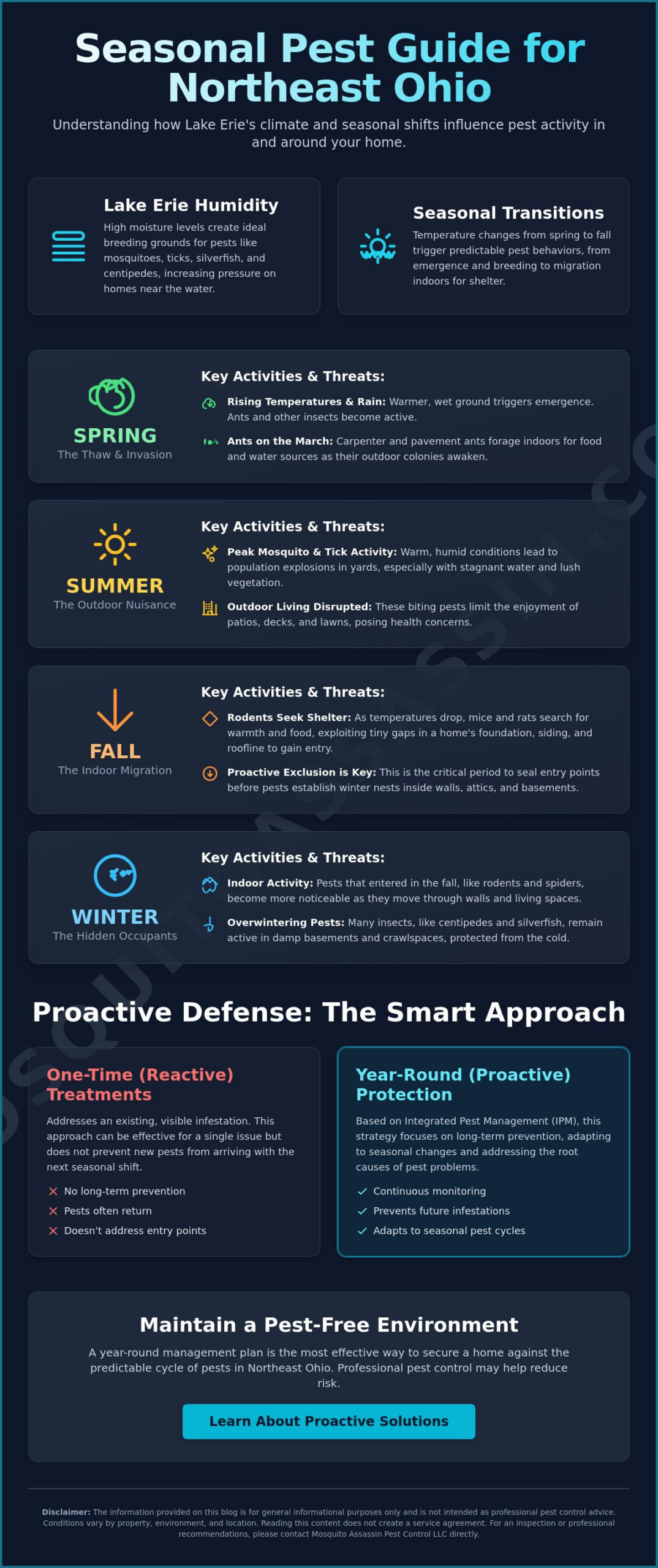
    • Discover how Lake Erie humidity and seasonal transitions influence pest activity and migration into Northeast Ohio homes.
    • Learn why Integrated Pest Management (IPM) is a science-based approach that prioritizes long-term prevention over reactive measures.
    • Compare the effectiveness of one-time interventions against the consistent protection provided by residential pest control services ashtabula families rely on for year-round security.
    • Identify practical home maintenance and sanitation strategies that significantly reduce the likelihood of an infestation.
    • Understand the professional inspection process and how customized management plans are tailored to the unique layout of your property.

    Understanding the Ashtabula Residential Pest Landscape

    Ashtabula County’s unique geography is more than just a backdrop for lakefront living; it’s a primary driver of local pest activity. The proximity to Lake Erie creates a specific microclimate characterized by higher humidity and distinct weather patterns that influence how insects and rodents behave. Homeowners in this region face challenges that differ from inland areas, primarily because moisture is a fundamental requirement for many of the most common household invaders. Understanding these environmental factors is the first step in protecting a property from unwanted guests.

    To better understand the professional approach to managing these local challenges, watch this helpful video:

    The Impact of Lake Erie on Local Pest Pressure

    High humidity levels near the shoreline support larger populations of moisture-seeking insects. Pests like silverfish, centipedes, and certain species of spiders gravitate toward damp environments, often finding their way into basements and crawlspaces. The lakefront climate also plays a significant role in the breeding cycles of mosquitoes and ticks. Stagnant water and lush vegetation, common in the humid Northeast Ohio environment, provide ideal conditions for these pests to multiply. Homes located directly near the water or in heavily wooded areas of the county often experience higher pest pressure, which makes consistent monitoring vital. Utilizing Integrated Pest Management strategies helps address these environmental variables by focusing on exclusion and habitat modification rather than just temporary fixes.

    Seasonal Pest Cycles in Northeast Ohio

    Pest activity in Ashtabula follows a predictable, albeit intense, seasonal rhythm. In the spring, rising temperatures and frequent rainfall trigger the emergence of ants and stinging insects. Homeowners often notice carpenter ants or pavement ants searching for food sources inside as the ground thaws. During the summer, mosquito and tick activity peaks in residential yards, posing a nuisance for outdoor activities. As the weather cools in the fall, the migration pattern shifts. Rodents like mice and rats begin seeking warmth and shelter, often identifying small gaps in a home’s exterior to gain entry. This transition makes professional residential pest control services ashtabula residents trust essential for sealing these entry points before winter sets in. Without a proactive approach, these seasonal shifts can lead to recurring infestations that are difficult to manage with DIY methods alone. The local environment requires a strategy that adapts to these changes, ensuring that residential pest control services ashtabula homeowners utilize are effective throughout the entire year.

    Disclaimer: The information provided on this blog is for general informational purposes only and is not intended as professional pest control advice. Conditions vary by property, environment, and location. Reading this content does not create a service agreement. For an inspection or professional recommendations, please contact Mosquito Assassin Pest Control LLC directly.

    The Science of Integrated Pest Management for Homeowners

    Modern pest management has evolved far beyond simple chemical application. Effective residential pest control services ashtabula residents rely on are built on the foundation of Integrated Pest Management (IPM). This is a science-based decision-making process that identifies and reduces risks from pests and pest management tools. Unlike traditional extermination that focuses only on killing visible insects, IPM emphasizes long-term prevention through a combination of biological and environmental techniques. According to EPA’s IPM Principles, this approach considers the life cycle of the pest and its interaction with the environment to manage damage by the most economical means. This methodology ensures that every action taken is deliberate and based on the specific biological needs of the situation.

    Identification and Assessment

    A successful strategy begins with precise identification. It isn’t enough to simply see an ant; a professional must determine if it’s a carpenter ant nesting in damp wood or a pavement ant entering through foundation cracks. Each species requires a different management tactic. Similarly, recognizing signs of rodent activity, such as specific gnaw marks or nesting materials in attic insulation, allows for a targeted response. Assessing property vulnerabilities is equally critical. Identifying gaps around utility lines, moisture buildup in crawlspaces, or accessible food sources in the pantry helps address the root cause of the infestation. This thorough assessment prevents the cycle of “spray and repeat” that many homeowners experience when trying to manage pests on their own.

    Disrupting the Pest Lifecycle

    Focusing only on visible pests is a common mistake that leads to recurring issues. If the queen of an ant colony or the breeding pair of rodents remains undisturbed, the population will quickly recover. Professional general pest control strategies use biological knowledge to disrupt these lifecycles at various stages. This might involve residual treatments that remain effective as new eggs hatch or larvae emerge. By understanding the specific habits, feeding patterns, and growth rates of local pests, experts can create a barrier of protection that lasts. For those facing persistent issues, professional pest control may help reduce risk by providing a more thorough analysis than standard retail products. Consistent monitoring ensures that any new activity is caught before it becomes a full-blown infestation.

    Disclaimer: The information provided on this blog is for general informational purposes only and is not intended as professional pest control advice. Conditions vary by property, environment, and location. Reading this content does not create a service agreement. For an inspection or professional recommendations, please contact Mosquito Assassin Pest Control LLC directly.

    One-Time Treatments vs. Year-Round Protection Plans

    Selecting the right approach for your home depends on your specific goals. One-time treatments are designed to handle immediate crises, like a sudden influx of ants in the kitchen. They provide a high-intensity response to an active problem. However, the residential pest control services ashtabula homeowners find most effective are typically those that address the root causes over time. Reactive control often misses the seasonal migration patterns that drive pests indoors as the weather changes. Understanding the biological cycles of pests, as detailed in the University of California’s Guide to IPM, shows that a single application rarely accounts for every life stage. It might eliminate the adults you see today while leaving eggs or larvae to emerge weeks later.

    Implementing year-round pest control actually reduces the total volume of chemical applications over time. By maintaining a consistent protective barrier, you prevent massive infestations that would eventually require heavy-handed interventions. This proactive strategy focuses on keeping the pest population near zero rather than waiting for a visible problem to manifest. It’s a more efficient way to manage the property and ensures that the residential environment remains stable through every season.

    The Case for Ongoing Maintenance

    Consistent maintenance is the most reliable way to keep a property secure. Pests like rodents and spiders are constantly looking for opportunities to establish colonies within the home structure. During the colder months in Northeast Ohio, “overwintering” pests become a significant threat as they seek warmth and shelter. Scheduled maintenance provides continuous property monitoring, ensuring that any new entry points are identified and addressed immediately. This provides peace of mind that the home’s perimeter is always being watched. Stay ahead of the problem by identifying vulnerabilities before they become expensive repairs. Residential pest control services ashtabula families utilize for ongoing protection focus on keeping the exterior barrier strong enough to withstand the local environment’s pressure.

    When a One-Time Service May Be Appropriate

    There are specific scenarios where a single visit is a practical choice. A bald-faced hornets nest hanging from a low branch or a yellow jacket nest near a doorway requires immediate, targeted intervention. These situations are isolated and don’t necessarily indicate a larger structural failure. However, don’t confuse a quick fix with a long-term solution. Most one-time services don’t address the underlying environmental factors, such as moisture or sanitation issues, that invited the pests in the first place. Transitioning from a reactive state to a preventative maintenance plan is the best way to ensure lasting results. Professional pest control may help reduce risk by providing an initial clean-out followed by a strategy to prevent the problem from returning.

    Disclaimer: The information provided on this blog is for general informational purposes only and is not intended as professional pest control advice. Conditions vary by property, environment, and location. Reading this content does not create a service agreement. For an inspection or professional recommendations, please contact Mosquito Assassin Pest Control LLC directly.

    Residential Pest Control Services in Ashtabula: A Homeowner’s Guide

    Residential Prevention Strategies for Ashtabula Homeowners

    Prevention is a collaborative effort between the property owner and professional management. While expert intervention addresses active populations and creates protective barriers, consistent maintenance by the homeowner ensures the property remains unattractive to new invaders. By focusing on structural integrity and sanitation, you can significantly reduce the environmental pressure on your home. These proactive steps complement the residential pest control services ashtabula families use to maintain a secure living space throughout the year.

    Exclusion and Sanitation Basics

    Physical barriers are your first line of defense against insects and rodents. Many pests enter through microscopic gaps that are easy to overlook during a casual walk-through. Homeowners should regularly inspect the foundation for small cracks and use high-quality sealant to close them. Utility entry points, where pipes or wires pass through the exterior walls, are common highways for mice and ants. Using steel wool or specialized mesh before sealing these areas can deter gnawing pests.

    Sanitation is equally vital. Eliminating food sources removes the primary reason pests enter a structure. Store dry goods in airtight containers rather than original cardboard packaging. Keep trash bins tightly sealed and move them away from the home’s exterior walls. Outside, manage your landscaping by keeping woodpiles at least 20 feet away from the foundation. Trim tree branches and shrubs so they don’t touch the roof or siding, as these often act as bridges for ants and spiders.

    Moisture Management in the Home

    Controlling moisture is essential in the humid climate of Northeast Ohio. Many pests, including silverfish and certain species of cockroaches, cannot survive without a consistent water source. Repair leaky pipes under sinks and in basements immediately to prevent damp wood and high humidity levels. In crawlspaces or unfinished basements, using a dehumidifier can make the environment much less hospitable to moisture-seeking insects.

    Exterior drainage also plays a role in pest prevention. Ensure that gutters are clear of debris and that downspouts direct water at least five to ten feet away from the house foundation. Standing water in the yard is a primary breeding ground for mosquitoes, so empty birdbaths, flowerpot saucers, and clogged drains after every rainfall. When homeowner actions are paired with professional residential pest control services ashtabula residents see better long-term results. If you are concerned about specific vulnerabilities on your property, scheduling a professional location assessment can help identify hidden entry points.

    Disclaimer: The information provided on this blog is for general informational purposes only and is not intended as professional pest control advice. Conditions vary by property, environment, and location. Reading this content does not create a service agreement. For an inspection or professional recommendations, please contact Mosquito Assassin Pest Control LLC directly.

    What to Expect from Professional Pest Management

    Professional intervention is a methodical process that goes beyond the simple application of products. It’s a disciplined approach designed to identify, target, and eliminate the biological factors that allow pests to thrive. When you engage residential pest control services ashtabula homeowners trust, you’re transitioning from a state of reactive concern to a state of managed resolution. This systematic procedure ensures that every action taken is based on the specific architectural and environmental needs of your property.

    The Professional Inspection Process

    A comprehensive inspection is the foundation of any successful management plan. A licensed technician evaluates both the interior and exterior of the residential structure with a focus on identifying specific pest species and their primary entry points. This isn’t a surface-level walk-through. It involves examining high-risk areas like basements, attics, and utility penetrations where pests often hide or enter. Following the inspection, you should receive a detailed report of the findings. This document outlines the current pest pressure, identifies structural vulnerabilities, and provides recommended actions to secure the home. This transparency ensures you understand the “why” behind every treatment step.

    Customized Treatment and Follow-Up

    Every home in Ashtabula County is unique, and a one-size-fits-all approach is rarely effective. Based on the inspection findings, a customized plan is developed to address the specific challenges of your property. This might involve specialized methods for rodent removal or targeted insect control using professional-grade tools. A critical component of this strategy is establishing a perimeter of protection around the home’s exterior. This barrier is designed to stop pests before they gain entry, reducing the need for intensive interior treatments.

    Consistency is the key to long-term efficacy. Regular follow-up visits allow for the monitoring of the protective barrier and the identification of new environmental pressures. Professional pest control may help reduce risk by ensuring that the management strategy adapts as seasons change and new pests emerge. Throughout this process, the safety and well-being of residents, children, and pets remain the highest priority. Licensed professionals use precise application methods and follow strict safety protocols to protect the household environment. To begin securing your property, you can start a dialogue with a professional through an online booking portal or a direct contact form. Taking this step ensures that your home remains a sanctuary, free from the stress of recurring infestations.

    Disclaimer: The information provided on this blog is for general informational purposes only and is not intended as professional pest control advice. Conditions vary by property, environment, and location. Reading this content does not create a service agreement. For an inspection or professional recommendations, please contact Mosquito Assassin Pest Control LLC directly.

    Secure Your Home for Every Season

    Managing a property in Northeast Ohio requires a deep understanding of how Lake Erie microclimates drive local pest activity. You’ve seen that science-based Integrated Pest Management and proactive maintenance provide a much stronger defense than reactive treatments alone. By combining homeowner actions like moisture control with professional residential pest control services ashtabula families can maintain a stable and secure living environment through every seasonal transition.

    Experts licensed in Ohio and Pennsylvania bring specialized knowledge of Lake Erie regional pest cycles to every inspection. These professionals prioritize family and pet-conscious treatment methods, ensuring that your property is protected without compromising the well-being of your household members. This methodical approach identifies vulnerabilities before they become costly infestations, providing a level of security that retail products simply cannot match.

    Professional pest control may help reduce risk. For an inspection or professional recommendations, please contact Mosquito Assassin Pest Control LLC today. Reclaiming your peace of mind starts with a single proactive step toward long-term protection.

    Disclaimer: The information provided on this blog is for general informational purposes only and is not intended as professional pest control advice. Conditions vary by property, environment, and location. Reading this content does not create a service agreement. For an inspection or professional recommendations, please contact Mosquito Assassin Pest Control LLC directly.

    Frequently Asked Questions

    Is professional pest control in Ashtabula safe for my children and pets?

    Licensed professionals prioritize the safety of your household by strictly adhering to product labels and EPA regulations during every visit. Targeted application methods focus on specific areas where pests congregate, such as wall voids and crevices, which minimizes contact with common living spaces. Professional pest control may help reduce risk while ensuring the environment remains secure for children and animals.

    How often should a residential property be treated for pests in Ohio?

    A quarterly service schedule is the standard recommendation for residential pest control services ashtabula homeowners use to maintain a consistent protective barrier. This frequency is designed to address the four distinct seasonal migrations that occur in the Northeast Ohio climate. Regular visits ensure that the exterior perimeter is reinforced before new pests have a chance to gain entry as the weather changes.

    Can I handle a rodent infestation on my own or do I need a professional?

    While retail traps may catch an occasional mouse, they rarely address the root cause of a larger infestation or the rapid reproduction rates of rodents. Professionals utilize advanced exclusion techniques to identify and seal microscopic entry points in the home structure that DIY methods often miss. This comprehensive approach is necessary to stop the cycle of return and prevent long term property damage.

    What is the most common pest problem for homeowners in Ashtabula County?

    Ants and spiders are the most frequent issues reported by residents, followed closely by rodent activity during the fall and winter months. The high humidity levels generated by Lake Erie create an ideal environment for these pests to thrive and expand their populations. These environmental factors make the region particularly susceptible to moisture-seeking insects that often seek refuge inside residential structures.

    How long does a typical residential pest control service visit take?

    A standard residential service visit typically lasts between 45 and 75 minutes depending on the size of the property and the specific pests being managed. This timeframe allows for a thorough inspection of both the interior and exterior, followed by the application of a customized management plan. More complex issues or larger estates may require additional time to ensure every vulnerability is addressed correctly.

    Does year-round pest control really save money in the long run?

    Consistent preventive maintenance reduces the likelihood of expensive structural repairs and the need for high-intensity emergency treatments. By keeping pest populations near zero throughout the year, homeowners avoid the steep costs associated with major infestations like wood-destroying insects or large scale rodent clean-outs. It is a more efficient use of resources that protects the overall value of the home.

    What should I do to prepare my home for a pest control professional?

    Preparation involves clearing access to baseboards and ensuring that the perimeter of the home’s exterior is free from clutter. Removing food debris from countertops and securing pets in a separate area allows the technician to perform a more thorough and efficient inspection. These simple steps ensure that the treatment is applied to the most critical areas without unnecessary obstacles.

    Are mosquito treatments effective for large yards near Lake Erie?

    Specialized treatments are highly effective for large properties when they focus on the specific vegetation and resting areas where mosquitoes congregate. Even with the high humidity of the lakefront, professional residential pest control services ashtabula residents rely on can significantly reduce the local population by disrupting the breeding cycle. Managing standing water on the property alongside these services provides the best results for outdoor comfort.

    Disclaimer: The information provided on this blog is for general informational purposes only and is not intended as professional pest control advice. Conditions vary by property, environment, and location. Reading this content does not create a service agreement. For an inspection or professional recommendations, please contact Mosquito Assassin Pest Control LLC directly.

  • Preventing Pests in a New Construction Home: A Complete Guide

    Preventing Pests in a New Construction Home: A Complete Guide

    What if the construction process itself is the primary reason pests are targeting your brand-new property? It’s a common and deeply frustrating experience for homeowners across Erie, Crawford, and Ashtabula Counties to find insects or rodents in a home that was finished only weeks ago. You expect a modern, airtight build to be a fortress, but the reality of habitat disruption often leads to unexpected visitors. Successfully preventing pests in a new construction home requires a shift in perspective, focusing on how construction moisture and soil disturbance attract local wildlife and insects to your foundation.

    You likely feel a sense of urgency to protect your investment from structural threats like termites, which affect approximately 600,000 homes in the United States every year. This guide will help you understand the biological drivers that push pests toward new structures and reveal the specific entry points often overlooked during the final walk-through. By the end of this article, you’ll have the knowledge needed to create a proactive prevention plan for your first year of homeownership. This ensures your new space remains the clean, secure environment you worked so hard to build.

    Key Takeaways

    • Understand how habitat displacement and construction moisture create an immediate draw for local pests on cleared lots.
    • Learn to identify common new-build invaders like springtails and clover mites that capitalize on damp materials and fresh sod.
    • Master the art of preventing pests in a new construction home by addressing structural gaps in utility lines and brick veneers.
    • Adopt simple maintenance habits, including proper drainage and mulch placement, to keep the perimeter of your new home dry and secure.
    • Recognize why professional monitoring is vital during the first two years as your structure settles and seasonal migrations occur.

    Understanding Why New Construction Homes Attract Pests

    A new home represents a fresh start for you, but for local wildlife, it’s a massive disruption of their established environment. When a wooded or grassy lot is cleared in Erie County, Crawford County, or Ashtabula County, the existing ecosystem is stripped away in days. This creates what professionals often call a pest vacuum. Local populations of insects and rodents don’t simply vanish; they seek the nearest available shelter, which often happens to be your rising foundation. Successfully preventing pests in a new construction home starts with recognizing that your building site is an active target from the moment the first shovel hits the dirt.

    To better understand this concept, watch this helpful video:

    During the framing stage, the site becomes even more attractive. Open structures allow nocturnal insects to be drawn in by high-intensity construction lights. These pests often find permanent hiding spots within the wall voids before the drywall is even hung. It’s a scientific reality that pests are looking for warmth and security, and a house under construction provides both in abundance. The combination of easy access and artificial light makes a framing-stage house irresistible to local insect populations.

    The Role of Habitat Disruption

    Habitat disruption is the primary driver for early-stage infestations because it forces established colonies to relocate immediately. When heavy machinery disturbs the soil, it often unearths dormant colonies of subterranean termites or ants that have lived on that lot for years. Removing trees and brush doesn’t just clear the view; it destroys the nesting sites of mice and voles. These displaced rodents will naturally migrate toward the warmth of a new basement or crawlspace to survive. Without their original dens, your subfloor and insulation become the next best thing.

    Moisture Management in New Materials

    New construction involves a surprising amount of water. Green lumber used in the framing process often carries a high moisture content, which is a specific attractant for various wood-boring beetles. As the house dries out over its first year, these insects may emerge from the wood. Concrete foundations also play a role. A standard concrete slab or basement wall can take months to cure fully, releasing gallons of water vapor into the air. This elevated humidity creates a perfect breeding ground for moisture-loving pests like springtails and fungus gnats.

    Site grading is another critical factor. If the soil isn’t sloped away from the foundation early in the process, rainwater can pool against the new masonry. This standing water invites mosquitoes and provides the damp conditions termites require to tunnel upward. Implementing principles of Integrated Pest Management (IPM) during the early phases of homeownership helps you monitor these moisture levels and address vulnerabilities before they become permanent problems. This methodical approach ensures your new investment remains secure from the ground up.

    Disclaimer: The information provided on this blog is for general informational purposes only and is not intended as professional pest control advice. Conditions vary by property, environment, and location. Reading this content does not create a service agreement. For an inspection or professional recommendations, please contact Mosquito Assassin Pest Control LLC directly.

    Common Pests in New Builds Across Pennsylvania and Ohio

    Homeowners in Erie and Ashtabula Counties face unique environmental challenges due to the high humidity and frequent lake-effect precipitation characteristic of the Great Lakes region. These climate factors significantly increase moisture-related risks for new properties. While a house is being built, it’s often exposed to the elements for weeks. This exposure creates a perfect habitat for specific local species that thrive in damp, disturbed environments. Successfully preventing pests in a new construction home requires identifying these regional threats before they establish a permanent presence in your crawl space or wall voids.

    Moisture-Loving Nuisance Pests

    Springtails and fungus gnats are among the most common early invaders in new builds. Springtails are tiny, jumping insects that often appear by the thousands near water sources or in damp basements where concrete is still curing. Fungus gnats typically emerge from the soil of indoor plants or damp crawl spaces, drawn to the fungi that grow on moist building materials. Another frequent visitor is the clover mite. These tiny red specks often migrate from freshly laid sod into the home interior, appearing on windowsills in large numbers after the final landscaping is completed. You can find more details on common household insects in Pennsylvania through regional extension resources to help with early identification.

    Structural and Wood-Destroying Organisms

    The most serious threats to a new investment are wood-destroying organisms like subterranean termites and carpenter ants. Subterranean termites don’t need much room to enter; they can pass through cracks in the foundation as thin as a credit card or follow utility penetrations into the structure. Carpenter ants are opportunistic and often establish satellite colonies in damp wall framing that was exposed to rain during the construction process. Because these pests work behind the scenes, their presence isn’t always obvious until structural damage has already occurred. The climate in Erie and Ashtabula counties specifically encourages these pests because the consistent moisture keeps wood soft and attractive for nesting.

    Rodents are equally opportunistic, taking advantage of gaps in the building envelope before the final sealing and siding are finished. Mice and rats can squeeze through openings the size of a dime, making unsealed vents and pipe entries easy targets. Establishing general pest control plans early in the first year of homeownership can help identify these structural vulnerabilities before they lead to a full-scale infestation. Proactive monitoring ensures that small gaps don’t become permanent highways for local wildlife.

    Disclaimer: The information provided on this blog is for general informational purposes only and is not intended as professional pest control advice. Conditions vary by property, environment, and location. Reading this content does not create a service agreement. For an inspection or professional recommendations, please contact Mosquito Assassin Pest Control LLC directly.

    Identifying Structural Vulnerabilities During and After Construction

    Even the most advanced building techniques in Erie and Ashtabula Counties can leave behind tiny openings that local pests are quick to exploit. These structural vulnerabilities are rarely the result of poor craftsmanship; instead, they often stem from the complex intersection of different building systems. Successfully preventing pests in a new construction home involves looking beyond the surface to find where utilities, foundations, and rooflines provide unintended access. Addressing these gaps during the first year of homeownership is a critical part of maintaining a secure property.

    Utility and Foundation Gaps

    Utility penetrations for plumbing, electricity, and HVAC systems are some of the most common entry points in new builds. Often, the holes cut for these lines are significantly larger than the pipes themselves. If these gaps aren’t properly sealed behind the wall or under the siding, they become permanent highways for insects and rodents. You should specifically check for gaps where the HVAC lines enter the exterior siding, as these are frequently overlooked during the final walk-through. A simple bead of silicone or specialized sealant can close these paths effectively.

    The foundation itself remains a dynamic part of the structure during the first year. As the house settles into the soil of Crawford or Erie County, small hairline cracks can develop in the masonry or concrete. While these are often non-structural, they are large enough for ants or spiders to navigate. It’s also vital to examine basement window wells. Ensure they are properly drained and clear of construction debris, as trapped moisture and organic matter provide a perfect staging ground for pests to move toward the foundation wall. Keeping these areas clean reduces the biological pressure on your home’s lower levels.

    The Building Envelope and Roofline

    The exterior finish of your home can also harbor hidden entries. For homes with brick veneers, weep holes are essential for moisture drainage, but they provide a direct path for insects if left unscreened. Installing specialized mesh covers allows the wall to breathe while keeping pests out. Additionally, garage door seals and thresholds often require adjustment in a settling home. If you notice light peeking through the bottom or sides of your garage door, the seal isn’t tight enough to stop a determined rodent. These seals often shift as the concrete slab cures and settles over several months.

    Higher up, the roofline presents its own set of risks. Roof eaves and soffit vents are prime targets for stinging insects, bats, and squirrels. Verify that all soffit vents are securely fastened to the structure to prevent wasps from nesting in the attic space. Inspect the seals around chimney flashing and roof peaks, as even a small gap can invite trouble. Addressing these high-altitude vulnerabilities is a key step in exclusion; otherwise, you might find yourself searching for rodent removal services sooner than expected. Taking the time to seal the building envelope completely protects your investment from the top down.

    Disclaimer: The information provided on this blog is for general informational purposes only and is not intended as professional pest control advice. Conditions vary by property, environment, and location. Reading this content does not create a service agreement. For an inspection or professional recommendations, please contact Mosquito Assassin Pest Control LLC directly.

    Preventing Pests in a New Construction Home: A Complete Guide

    Practical Prevention Strategies for New Homeowners

    Cleanliness alone does not stop invaders in a brand-new build. Many homeowners in Erie and Crawford Counties are surprised to find pests in a spotless kitchen shortly after moving in. This happens because preventing pests in a new construction home is primarily about managing environmental factors like moisture and shelter rather than food waste. Implementing a systematic approach to your property’s perimeter and interior humidity is the most effective way to protect your investment during its first year. By focusing on the structural environment, you address the biological reasons why pests are attracted to your home in the first place.

    Exterior Landscaping and Grading

    Maintaining a dry perimeter is the foundation of any exclusion strategy. Ensure that gutters are clear of construction debris and that downspouts direct water at least five to ten feet away from the home. If water saturates the soil near the foundation, it creates an inviting environment for subterranean termites. Proper grading is also essential; the soil should slope away from the foundation at a minimum grade of six inches over the first ten feet. This prevents water from pooling against the masonry. Additionally, the type of mulch you choose matters. While wood mulch is popular, it traps moisture and provides ideal cover for insects. Using gravel or stone borders in high-moisture areas creates a buffer zone that is less attractive to pests. Keep all shrubs and trees trimmed at least 12 inches away from the siding to eliminate natural bridges that ants or spiders use to bypass ground-level treatments.

    Interior Moisture and Humidity Control

    New homes go through a significant drying out phase as building materials like concrete and lumber cure. To assist this process in the climate of Ashtabula County, run dehumidifiers in basements and crawl spaces. Use a hygrometer to monitor these areas; keeping relative humidity levels below 50 percent is a standard goal for pest exclusion. High humidity attracts moisture-loving insects that have little interest in how clean your floors are. Consistently running exhaust fans in bathrooms and kitchens also helps reduce the overall moisture load. Regularly check under sinks and around water heaters for any signs of slow leaks that might go unnoticed in a new plumbing system.

    As the structure settles over the first 24 months, use high-quality caulk or expandable foam to seal any new interior or exterior gaps that appear. This is a dynamic process that requires periodic inspection as the house shifts. For those who want a professional eye to identify these shifting vulnerabilities, general pest control plans can provide the consistent monitoring necessary to catch entry points before they are exploited. Proactive maintenance ensures that your new home remains the secure environment you intended it to be.

    Disclaimer: The information provided on this blog is for general informational purposes only and is not intended as professional pest control advice. Conditions vary by property, environment, and location. Reading this content does not create a service agreement. For an inspection or professional recommendations, please contact Mosquito Assassin Pest Control LLC directly.

    Establishing a Long-Term Pest Management Plan

    The first two years of a home’s life are a period of significant transition. As the foundation settles and building materials reach their final equilibrium with the local climate in Northwest Pennsylvania and Northeast Ohio, new vulnerabilities often emerge. Successfully preventing pests in a new construction home is not a one-time event; it’s a continuous process of monitoring and adaptation. While the initial exclusion steps mentioned in previous sections provide a strong defense, a long-term strategy ensures that the natural shifting of your home doesn’t create new opportunities for local wildlife or wood-destroying insects.

    The Importance of Professional Monitoring

    A professional eye is trained to see subtle signs that most homeowners miss. Licensed professionals can identify the early tracks of subterranean termites or the specific foraging patterns of carpenter ants before they result in structural damage. This is particularly vital as your house settles, as even a hairline crack in a basement wall or a slight shift in a door frame can invite an infestation. Engaging in general pest control provides the benefit of ongoing maintenance and expert eyes on your property throughout the year. Professional pest control may help reduce risk for homeowners in Northwest Pennsylvania and Northeast Ohio by addressing these structural changes in real time.

    Year-round protection plans are designed to address the specific seasonal migrations of the Tri-State area. From the emergence of spring swarms to the late-autumn push of rodents seeking warmth, a consistent plan provides a permanent barrier that DIY methods often miss. These plans typically include regular inspections of the building envelope, foundation, and utility penetrations to ensure that previous exclusion work remains intact and effective. This methodical approach transforms your home from a target of opportunity into a secure fortress.

    Transitioning from Construction to Homeownership

    The ideal time to formalize your long-term plan is immediately after all landscaping is finalized. Fresh sod, new mulch, and newly planted shrubs significantly alter the moisture profile and pest pressure of your lot. You should schedule a thorough post-construction inspection once the heavy machinery is gone and the final grading is complete. This allows for a final check of all weep holes, soffit vents, and utility entries that may have been disturbed during the final stages of building. A customized plan can then be developed based on the specific environmental factors of your property lot, whether you are near the wooded areas of Crawford County or the humid lakefront in Ashtabula County.

    Taking this final step secures your investment and provides peace of mind as you settle into your new space. For an inspection or professional recommendations, please contact Mosquito Assassin Pest Control LLC directly. By establishing a professional partnership early, you ensure that your new home remains pest-free for years to come.

    Disclaimer: The information provided on this blog is for general informational purposes only and is not intended as professional pest control advice. Conditions vary by property, environment, and location. Reading this content does not create a service agreement. For an inspection or professional recommendations, please contact Mosquito Assassin Pest Control LLC directly.

    Protecting Your New Investment for the Long Term

    Protecting your property starts with recognizing that a new build is a dynamic structure. The combination of habitat disruption and curing building materials creates a unique environment that draws in local pests. Successfully preventing pests in a new construction home requires a methodical approach to sealing utility penetrations and managing perimeter moisture as the house settles into the landscape of Erie, Crawford, or Ashtabula County.

    If you don’t address these vulnerabilities early, minor gaps can quickly become permanent entry points. Utilizing local expertise and a detailed three-step process for rodent exclusion ensures your building envelope remains secure. For total peace of mind, Platinum year-round protection plans offer consistent monitoring during the critical first years of homeownership. Professional pest control may help reduce risk and keep your living space exactly as you intended it. Contact Mosquito Assassin Pest Control LLC for a professional evaluation to secure your new home today.

    Disclaimer: The information provided on this blog is for general informational purposes only and is not intended as professional pest control advice. Conditions vary by property, environment, and location. Reading this content does not create a service agreement. For an inspection or professional recommendations, please contact Mosquito Assassin Pest Control LLC directly.

    Frequently Asked Questions

    Is it normal to have bugs in a brand-new house?

    Yes, it is very common to see insects in a newly finished property. The construction process disrupts local habitats and uses materials like green lumber and curing concrete that are naturally high in moisture. These factors create an immediate draw for local species searching for new shelter after their original nesting sites were disturbed by heavy machinery.

    Should I get a termite inspection for a new construction home?

    You should definitely schedule a termite inspection for a new build. While many builders apply a pre-treatment to the soil, the house settling can create new cracks in the foundation that bypass these initial barriers. Additionally, many lenders for FHA and VA loans require official documentation of a termite inspection as a condition of the mortgage to protect the investment.

    How do pests get inside a newly built, airtight home?

    Pests enter through tiny gaps that are often invisible to the naked eye. Utility penetrations for HVAC and plumbing lines often have oversized openings behind the walls that aren’t fully sealed. Weep holes in brick veneers and gaps in the roof eaves also provide direct access points that allow insects to bypass the airtight seals of modern windows and doors.

    What are the tiny jumping bugs in my new basement?

    These are likely springtails, which are moisture-loving insects that thrive in damp environments. They are attracted to the high humidity levels found in new basements as concrete foundations release water vapor during the curing process. Successfully preventing pests in a new construction home involves reducing this basement humidity with dehumidifiers to make the area less hospitable to these jumping invaders.

    Does homebuilders insurance cover pest infestations?

    Most standard homebuilder warranties and insurance policies do not cover pest infestations. These policies typically focus on structural defects or appliance failures rather than biological issues like insects or rodents. It’s the homeowner’s responsibility to maintain a prevention plan to protect the property from damage caused by wood-destroying organisms or local wildlife once the keys are handed over.

    How long does it take for a new home to “dry out” and stop attracting moisture-loving pests?

    It generally takes 18 to 24 months for a new home to fully reach moisture equilibrium with its environment. During this period, concrete foundations and framing lumber are slowly releasing trapped water into the air. This extended dry out phase is why many moisture-loving pests persist through the first two years of homeownership before the environment naturally stabilizes.

    Can landscaping choices cause pest problems in a new build?

    Landscaping choices are a frequent cause of pest issues in new builds. Fresh sod can bring in clover mites, while thick layers of wood mulch against the foundation trap the moisture that termites require to thrive. Ensuring that soil and plants are kept away from the siding is a vital part of preventing pests in a new construction home as your yard matures.

    When is the best time to start a pest control plan for a new home?

    The best time to start a plan is immediately after you move in or once the final landscaping is installed. Establishing professional monitoring during the first year allows you to catch structural vulnerabilities as the house settles into the soil. Early intervention ensures that temporary construction-related issues don’t turn into long-term infestations that could damage your new space.

    Disclaimer: The information provided on this blog is for general informational purposes only and is not intended as professional pest control advice. Conditions vary by property, environment, and location. Reading this content does not create a service agreement. For an inspection or professional recommendations, please contact Mosquito Assassin Pest Control LLC directly.

  • Avoiding Business Reputation Damage from Pests: A Strategy for 2026

    Avoiding Business Reputation Damage from Pests: A Strategy for 2026

    Did you know that 73% of consumers immediately lose trust in a local business after reading negative reviews? In an era where a single smartphone photo of a rodent can go viral in minutes, the stakes for commercial property owners have never been higher. Most professionals in Erie, Crawford, and Ashtabula counties understand that maintaining a clean environment is vital. However, many still view pest management as a reactive expense rather than a proactive shield. This shift in perspective is the first step in avoiding business reputation damage from pests and ensuring your brand remains a trusted name in the community.

    It’s understandable to feel anxious about health department inspections or the potential loss of high-value commercial contracts. This article provides a clear strategy for shielding your brand from the catastrophic reputational and financial impacts of infestations. You’ll gain a thorough understanding of current reputation risks and a practical framework for proactive prevention. By prioritizing these professional standards, you can ensure long-term business sustainability and maintain the customer trust that keeps your doors open.

    Disclaimer: The information provided on this blog is for general informational purposes only and is not intended as professional pest control advice. Conditions vary by property, environment, and location. Reading this content does not create a service agreement. For an inspection or professional recommendations, please contact Mosquito Assassin Pest Control LLC directly.

    Key Takeaways

    • Understand why customers view a single pest sighting as a direct reflection of your company’s hygiene and professional standards.
    • Explore the long-term impact of digital footprints and how avoiding business reputation damage from pests requires monitoring viral social media trends.
    • Recognize the significant financial risks involved, including the potential for structural damage and the revenue loss associated with business interruptions.
    • Implement a proactive strategy centered on exclusion and sanitation to prevent pests from entering your commercial facility in the first place.
    • Evaluate the benefits of consistent, year-round pest management plans compared to the risks of waiting for a visible problem to occur.

    Reputation damage is more than a momentary embarrassment; it is the fundamental erosion of consumer trust that occurs immediately following a pest sighting. For local businesses in Erie and Meadville, this trust is the lifeblood of daily operations. When a customer sees a cockroach or a rodent, they don’t just see an insect; they see a proxy for your overall business hygiene. They instinctively assume that if pests are visible in public areas, the “behind the scenes” areas like kitchens or storage rooms are likely worse. This mental leap happens in seconds and can permanently alter how your brand is perceived in the community.

    Many business owners overlook “hidden” damage. This occurs when a customer spots a pest and quietly decides never to return. They often take their business to a competitor without ever filing a formal complaint or speaking to a manager. For high-stakes sectors like food service, hospitality, and healthcare, the margin for error is zero. Maintaining a professional standard involves a commitment to Integrated Pest Management (IPM), which focuses on long-term prevention and environmental health. This strategic approach is essential for avoiding business reputation damage from pests in an increasingly competitive market.

    To better understand how these incidents impact your bottom line, watch this helpful video:

    The Psychology of the “Single Sighting” Rule

    Customers rarely view a single pest as an isolated incident. Instead, psychological studies on consumer behavior suggest that one sighting triggers an immediate association with poor management and systemic neglect. The emotional response is usually one of visceral disgust. This feeling is difficult to overwrite; once a brand is associated with filth in a customer’s mind, loyalty is often permanently severed. In a local economy where word-of-mouth travels fast, one bad experience can ripple through an entire neighborhood, making it difficult to win back lost ground.

    First Impressions in Commercial Environments

    Entryways and lobbies set the tone for your entire facility. If these high-traffic zones are compromised, the perceived quality of your service drops instantly. Professional commercial pest control services focus on these critical areas to ensure that your first impression is one of safety and cleanliness. By securing the perimeter and maintaining common areas, businesses can project an image of total competence and care. Consistent monitoring ensures that pests are intercepted before they ever reach the eyes of a client or guest, protecting the professional atmosphere you’ve worked hard to build.

    Disclaimer: The information provided on this blog is for general informational purposes only and is not intended as professional pest control advice. Conditions vary by property, environment, and location. Reading this content does not create a service agreement. For an inspection or professional recommendations, please contact Mosquito Assassin Pest Control LLC directly.

    The Digital Ripple Effect: Social Media and Viral Reviews

    In the digital age, news travels at the speed of a single click. A customer in Ashtabula or Erie who spots a rodent or insect doesn’t just tell a friend; they take a high-resolution photo and upload it to a local community group or a review platform. These images often go viral within hours, reaching thousands of potential patrons before a business owner even has a chance to respond. Avoiding business reputation damage from pests in 2026 requires acknowledging that your facility is always under the lens of a smartphone camera. Once an image of a pest infestation is linked to your brand online, it becomes a permanent part of your digital footprint.

    Search engines like Google and Yelp index specific keywords within reviews. If terms like “roach,” “rat,” or “dirty” appear frequently, they can haunt your search results for years. This hinders customer acquisition because 76% of consumers regularly read online reviews before choosing a local service or restaurant. Digital complaints are notoriously difficult to remove, especially when they involve health concerns. These public reports often trigger immediate scrutiny regarding FDA Food Code requirements, as health inspectors frequently monitor social media for potential violations. Proactive commercial pest control is the most effective way to ensure these digital nightmares never begin.

    The Anatomy of a Viral Pest Complaint

    A viral complaint typically starts with a smartphone in a customer’s hand. From there, the path leads to Facebook, Instagram, or Nextdoor. Pest-related content generates exceptionally high engagement because it triggers a strong emotional response of disgust and concern for public safety. Unlike a complaint about slow service, a pest sighting is viewed as a systemic failure of management. Digital archives mean that even if you resolve the issue, the original post or review may still appear when someone searches for your business name years later. It’s a permanent record that demands a zero-tolerance approach to pest presence.

    Outdoor Reputation: Mosquitoes and Ticks on the Patio

    Reputation management isn’t limited to the interior of your building. For businesses with outdoor dining or recreation areas in Crawford County, seasonal pests like mosquitoes and ticks can be just as damaging to your brand. Customers often associate a high volume of biting insects with a lack of property care and general neglect. If a guest’s primary memory of your patio is being bitten, they’re unlikely to recommend your venue to others. Implementing a targeted mosquito control program helps protect the outdoor experience and ensures your brand remains associated with comfort and relaxation rather than irritation. Maintaining a pest-free exterior is a clear signal to the community that you prioritize their wellbeing in every square inch of your property.

    Disclaimer: The information provided on this blog is for general informational purposes only and is not intended as professional pest control advice. Conditions vary by property, environment, and location. Reading this content does not create a service agreement. For an inspection or professional recommendations, please contact Mosquito Assassin Pest Control LLC directly.

    Financial stability for a commercial property rests on more than just revenue; it requires aggressive risk mitigation. When an infestation occurs, the immediate direct costs can be staggering. Rodents are known to gnaw through electrical wiring and insulation, while termites cause over $5 billion in property damage across the United States annually. These structural issues require expensive repairs that often interrupt daily operations. Beyond the building itself, inventory contamination in warehouses and commercial kitchens leads to total product loss. Avoiding business reputation damage from pests is, at its core, a strategy to protect your bottom line from these sudden and avoidable expenses.

    Direct vs. Indirect Financial Impacts

    It’s helpful to distinguish between immediate repair costs and the long-term erosion of brand equity. While fixing a structural issue has a clear price tag, the loss of customer trust is far more expensive over time. Reactive treatments are almost always more costly than consistent maintenance because they involve emergency service fees and potential revenue loss during mandatory closures. By implementing proactive IPM strategies, businesses shift from a state of crisis management to one of predictable, manageable protection. This transition is vital for maintaining the financial health of any local enterprise.

    Regulatory Compliance in PA and OH

    In Erie and Crawford counties, health department inspections are rigorous. Inspectors look for any sign of pest activity, from droppings to nesting materials. Documented general pest control plans are often the first thing an official asks to see during a visit. Failing to provide evidence of a professional plan can lead to heavy fines or immediate closure orders. In competitive regions like Ashtabula, a public record of a failed health inspection can be a death sentence for a small business. Professional commercial pest control provides the necessary documentation to prove you are meeting all local and state safety standards, which is a key component in avoiding business reputation damage from pests.

    Employee Morale and Workplace Safety

    Your staff’s productivity is directly linked to their environment. A pest-infested workplace reduces morale and can lead to increased employee absenteeism due to health concerns or general discomfort. Employers have a legal and ethical duty to provide a safe, pest-free workplace. When this duty is neglected, the risk of “insider” reputation damage grows. Disgruntled employees who witness unresolved pest issues are often the first to share photos or stories with the public. Maintaining a clean facility protects your team and ensures they remain your brand’s strongest advocates rather than its loudest critics.

    Disclaimer: The information provided on this blog is for general informational purposes only and is not intended as professional pest control advice. Conditions vary by property, environment, and location. Reading this content does not create a service agreement. For an inspection or professional recommendations, please contact Mosquito Assassin Pest Control LLC directly.

    Avoiding Business Reputation Damage from Pests: A Strategy for 2026

    Proactive Strategies for Reputation Management

    Effective reputation management starts with a zero-tolerance policy for pest activity. Waiting for a customer to complain is already too late. Avoiding business reputation damage from pests requires a daily commitment to sanitation and facility maintenance that goes beyond occasional cleaning. A structured checklist for facility managers should include specific tasks to eliminate attractants. This involves removing waste from the building at the end of every shift, cleaning floor drains to prevent fly breeding, and ensuring all food materials are stored in airtight containers. By standardizing these tasks, businesses in Erie and Ashtabula create an environment that is naturally hostile to pests.

    The Exclusion and Maintenance Framework

    Commercial buildings often have numerous entry points that go unnoticed by staff but are easily found by pests. Loading docks, roof vents, and utility gaps are prime highways for intruders. The exclusion process focuses on physically blocking these routes with professional-grade materials. This is particularly critical for rodent removal, where sealing gaps as small as a quarter-inch is necessary to prevent entry. Additionally, managing moisture levels is a vital maintenance step. Leaky pipes or poor exterior drainage can attract termites and ants, creating long-term structural and reputational risks for the property.

    Staff Training and Internal Reporting

    Employees are the eyes and ears of your facility. Training them to recognize early warning signs, such as droppings, gnaw marks, or unusual odors, allows for intervention before a problem becomes public. It’s helpful to teach staff the difference between a single sighting, which might be an opportunistic pest entering through an open door, and an infestation, where pests are living and breeding on-site. Providing a clear, non-punitive internal reporting framework ensures that small issues are documented and addressed by licensed professionals immediately. This internal vigilance is your first line of defense against viral reviews.

    If a pest incident does become public, transparency is the best recovery tool. Having a pre-planned communication strategy helps address concerns without appearing defensive. Acknowledge the issue, explain the corrective steps taken, and highlight your ongoing commitment to professional standards. Proactive commercial pest control services help ensure you have the documentation needed to prove your dedication to safety and cleanliness to both the public and local health officials.

    Disclaimer: The information provided on this blog is for general informational purposes only and is not intended as professional pest control advice. Conditions vary by property, environment, and location. Reading this content does not create a service agreement. For an inspection or professional recommendations, please contact Mosquito Assassin Pest Control LLC directly.

    The Role of Year-Round Professional Protection

    Pest management is often misunderstood as a seasonal task, yet the biological reality of common intruders demands a constant defensive posture. For commercial property owners, treating a pest issue as a one-and-done event is a significant risk to brand safety. Avoiding business reputation damage from pests requires a shift from reactive crisis management to a consistent, year-round strategy. Bi-monthly protection plans provide this stability by maintaining a refreshed chemical or physical barrier around the facility. This schedule ensures that professional monitoring stations are inspected regularly, allowing for the detection of subtle signs of activity that an untrained eye would likely miss.

    Professional documentation is perhaps the most undervalued asset of a recurring service plan. In the event of a health department inquiry or a customer complaint, having a detailed history of professional inspections and treatments serves as tangible proof of due diligence. It demonstrates to officials and the public that the business prioritizes hygiene and follows a disciplined operational approach. This record-keeping is a vital shield against legal liabilities and regulatory fines, positioning professional intervention as the most reliable way to remain pest-free and compliant with local standards.

    Why One-Time Fixes Fail Commercial Brands

    The primary reason one-time treatments fail is the rapid reproductive cycle of common pests. Cockroaches, for example, can produce dozens of offspring from a single egg casing that may be hidden in a wall void or under a heavy appliance where initial treatments might not reach. Similarly, rodents have short gestation periods, meaning a small population can explode in size within weeks. Temporary solutions often eliminate the visible adults but leave the next generation behind, leading to a “re-infestation” that surprises the business owner. Furthermore, in commercial districts where buildings are closely packed, pests constantly migrate from neighboring properties. A one-time fix provides a false sense of security that can lead to a catastrophic brand failure when the population inevitably rebounds.

    Partnering with Local Licensed Professionals

    Specialized knowledge of the local environment is essential for effective commercial pest control. The pests found in Northwest Pennsylvania and Northeast Ohio have specific behaviors influenced by the regional climate, such as the high moisture levels near Lake Erie that drive termite and ant activity. Local experts understand these patterns and the unique challenges faced by businesses in Erie, Crawford, and Ashtabula counties. By working with professionals who live and work in the same community, business owners gain a partner who is familiar with the specific pressures of the Tri-State area. You can learn more about Mosquito Assassin and their commitment to regional expertise, which is a key component in maintaining long-term business sustainability and customer trust.

    Disclaimer: The information provided on this blog is for general informational purposes only and is not intended as professional pest control advice. Conditions vary by property, environment, and location. Reading this content does not create a service agreement. For an inspection or professional recommendations, please contact Mosquito Assassin Pest Control LLC directly.

    Securing Your Commercial Legacy for 2026 and Beyond

    Protecting a commercial brand requires more than just quality service; it demands a sterile and safe environment. As digital platforms continue to amplify consumer voices, the most effective method for avoiding business reputation damage from pests is moving from a reactive mindset to a proactive, year-round defensive strategy. Businesses that prioritize specialized commercial exclusion and consistent maintenance protocols ensure they’re never at the mercy of a single viral review or a failed health inspection. It’s about building a foundation of trust that can withstand the scrutiny of the modern marketplace.

    Maintaining this standard is a continuous process. Licensed professionals serving Erie, Crawford, and Ashtabula counties provide the expertise needed to navigate regional pest pressures and strict regulatory requirements. Proven year-round protection plans allow facility managers to focus on growth while knowing their reputation is shielded from the financial and legal risks of an infestation. Professional pest control may help protect your business reputation. For an inspection or professional recommendations, please contact Mosquito Assassin Pest Control LLC directly.

    Disclaimer: The information provided on this blog is for general informational purposes only and is not intended as professional pest control advice. Conditions vary by property, environment, and location. Reading this content does not create a service agreement. For an inspection or professional recommendations, please contact Mosquito Assassin Pest Control LLC directly.

    Frequently Asked Questions

    How quickly can a pest infestation damage my business reputation?

    Reputation damage can occur in the time it takes to upload a photo to social media. In a connected community like Erie, a single viral post about a rodent sighting can reach thousands of people in just a few hours. This rapid spread makes proactive prevention the only reliable way of avoiding business reputation damage from pests before a digital crisis begins.

    What are the most common pests that affect businesses in Pennsylvania and Ohio?

    Businesses in Northwest Pennsylvania and Northeast Ohio most frequently deal with rodents, cockroaches, and flies. Seasonal challenges also include ants and mosquitoes, which can disrupt outdoor service areas. These pests are attracted to the food sources and shelter found in commercial environments, especially during the extreme temperature shifts common in the Tri-State region.

    Can a single negative review about pests really hurt my sales?

    A single negative review mentioning pests can have a devastating impact on customer acquisition. Research indicates that a significant majority of consumers read online reviews before visiting a local business. Because pests are associated with poor hygiene, a public complaint can deter high-value commercial contracts and individual patrons for years after the incident.

    Is professional pest control required for health department compliance?

    Health department regulations in Erie and Crawford counties typically require establishments to maintain a pest-free environment. While specific language varies, inspectors often demand documentation of a professional pest management plan during routine visits. Failing to provide proof of professional oversight can lead to fines, lower health scores, or immediate closure orders.

    How can I tell if my business has a hidden pest problem?

    Hidden infestations are often signaled by small, physical clues before a pest is actually seen. Facility managers should look for droppings in dark corners, gnaw marks on packaging, or greasy rub marks along baseboards. Unusual odors or shredded paper nesting materials in storage areas are also clear indicators that professional pest control may help reduce risk.

    What should I do if a customer sees a pest in my establishment?

    Immediate and professional communication is essential if a customer spots a pest. Acknowledge the situation without being defensive and explain that a professional management plan is currently in place. Following up with your service provider to document the sighting and adjust your strategy is a critical step in avoiding business reputation damage from pests.

    Why is year-round pest protection better than one-time treatments?

    Year-round protection is superior because it addresses the continuous reproductive cycles of pests. One-time treatments often fail to eliminate eggs or hidden colonies, allowing the population to rebound quickly. Consistent bi-monthly or monthly visits ensure that defensive barriers are maintained and that new pests migrating from neighboring properties are intercepted.

    How much does professional commercial pest control typically cost?

    The cost of commercial pest management depends on several factors, including the square footage of the facility and the specific industry requirements. High-risk environments like restaurants or healthcare facilities often require more frequent monitoring than standard retail spaces. Property owners should consult with a licensed professional to determine a plan that fits their specific environmental needs and budget.

    Disclaimer: The information provided on this blog is for general informational purposes only and is not intended as professional pest control advice. Conditions vary by property, environment, and location. Reading this content does not create a service agreement. For an inspection or professional recommendations, please contact Mosquito Assassin Pest Control LLC directly.

  • Overcoming the Embarrassment: A Guide to Managing Cockroaches in Your Apartment

    Overcoming the Embarrassment: A Guide to Managing Cockroaches in Your Apartment

    Finding a pest scurrying across your kitchen floor at midnight feels like a personal failure, but it’s actually one of the most common issues in multi-unit housing. You might feel deeply embarrassed by cockroaches in my apartment, worrying that guests or neighbors will judge your hygiene or lifestyle. The truth is that these resilient insects are masters of navigation; they often travel through shared walls, plumbing, and electrical lines that connect every unit in the building.

    It’s completely natural to feel anxious about food contamination or health risks when pests appear. However, a clean home isn’t a barrier to an insect that can squeeze through a gap the size of a credit card. This guide will help you understand why these infestations happen and how to effectively regain control of your living space. You’ll learn the difference between structural vulnerabilities and cleaning habits, practical steps for mitigation, and how residents in Erie and Crawford Counties in Pennsylvania and Ashtabula County in Ohio can achieve lasting peace of mind. By focusing on professional, science-based strategies, you can eliminate the stigma and the pests simultaneously.

    Disclaimer: The information provided on this blog is for general informational purposes only and is not intended as professional pest control advice. Conditions vary by property, environment, and location. Reading this content does not create a service agreement. For an inspection or professional recommendations, please contact Mosquito Assassin Pest Control LLC directly.

    Key Takeaways

    • Understand that you should not feel embarrassed by cockroaches in my apartment because these pests are attracted to structural moisture and warmth rather than a lack of cleanliness.
    • Learn how cockroaches travel through shared building infrastructure, such as plumbing and electrical lines, to move between units in multi-family housing.
    • Discover how to differentiate between a single stray insect and an established infestation by looking for specific biological signs and activity patterns.
    • Gain practical knowledge on using exclusion methods, such as caulking and weather stripping, to create a physical barrier against recurring pests.
    • Explore why professional-grade baits and growth regulators are more effective for managing high-density housing infestations than standard retail sprays.

    Understanding the Stigma and Reality of Apartment Cockroaches

    Many tenants feel deeply embarrassed by cockroaches in my apartment, often believing a sighting reflects their personal hygiene or lifestyle choices. This “pest shame” is a significant hurdle because it prevents people from reporting the issue to property management or seeking help. When you hide a problem, you allow the population to grow and spread. In reality, cockroaches are biological opportunists looking for moisture and shelter. They don’t check your cleaning schedule before moving into your kitchen or bathroom.

    Apartment living in regions like Erie and Crawford Counties in Pennsylvania, or Ashtabula County in Ohio, creates a unique challenge. Because you share walls, floors, and ceilings with neighbors, an infestation in one unit can easily migrate through the entire building. A single roach in your kitchen is rarely an isolated incident. It’s often a scout or a surplus member of a larger colony living in the building’s infrastructure. Understanding basic cockroach facts helps demystify their behavior and reduces the undeserved stigma attached to them. These pests are highly adapted to survive in human-made structures, regardless of the building’s age or the tenant’s income level.

    To better understand this concept, watch this helpful video:

    The Psychology of Pest-Related Shame

    Humans have evolved a natural disgust for insects that carry pathogens. This survival mechanism is helpful in the wild, but it becomes a source of intense anxiety in a modern home. Social media often portrays “perfect” living spaces, making a pest encounter feel like a personal failure. This leads to isolation. You might stop inviting guests over or avoid talking to neighbors because you’re embarrassed by cockroaches in my apartment. This isolation is counterproductive. Open communication is actually the best tool for identifying building-wide issues and coordinating a effective response.

    Why the Dirty House Myth Persists

    The association between pests and neglect is a historical relic that doesn’t align with modern pest management science. While clutter can provide more hiding spots, German cockroaches can thrive in a laboratory-clean environment as long as they have access to water and a tiny bit of food. They are excellent hitchhikers. They can enter your home inside a cardboard box from an online delivery or a bag of groceries from the store. Once they’re inside, they use shared plumbing and electrical conduits to navigate the building complex. You can’t clean your way out of a structural problem that allows pests to travel freely between units. Professional pest control is about managing the environment, not just scrubbing surfaces.

    Disclaimer: The information provided on this blog is for general informational purposes only and is not intended as professional pest control advice. Conditions vary by property, environment, and location. Reading this content does not create a service agreement. For an inspection or professional recommendations, please contact Mosquito Assassin Pest Control LLC directly.

    Why Cockroaches Infest Even Clean Apartments

    The most frustrating part of finding a pest in your home is the feeling that your hard work has been undermined. You might feel embarrassed by cockroaches in my apartment despite your daily cleaning routine, but these insects don’t rely on mess to survive. They are world-class hitchhikers. A cockroach can enter your home inside a corrugated cardboard box from an online delivery, a bag of groceries, or even the folds of a used piece of furniture. Once they arrive, they find everything they need behind your walls, regardless of how often you scrub your counters.

    In regions like Erie and Crawford counties, seasonal shifts and humidity levels often drive pests indoors. Local weather patterns can push outdoor species toward the warmth of residential buildings, while indoor species like the German cockroach remain active year-round. These pests are highly specialized at living alongside humans. Because they can survive on microscopic amounts of organic matter, such as the glue on a postage stamp or the residue in a floor drain, a “clean” apartment is still a viable habitat for them.

    The Shared Infrastructure Problem

    Multi-unit buildings are essentially giant, interconnected ecosystems. Cockroaches utilize the shared infrastructure of the building to move between units with ease. They travel through wall voids, common ventilation shafts, and the gaps around plumbing and electrical conduits. If a neighbor has an active infestation and doesn’t address it, the population will eventually overflow into surrounding units. This is why “spot treating” with a retail spray in just one room rarely solves the root problem; it often just pushes the insects deeper into the walls. Utilizing Integrated Pest Management for cockroaches is a more effective strategy because it addresses these structural pathways and environmental factors rather than just the visible insects.

    Biological Resilience of the German Cockroach

    The German cockroach is the most common species found in apartments, and its biology is designed for rapid expansion. A single female can produce an egg capsule containing up to 40 offspring every few weeks. This exponential growth means a few “hitchhikers” can become a significant population in less than a month. These insects have also developed a high level of resistance to many over-the-counter sprays and powders found in big-box stores. These retail products often act as repellents that scatter the colony rather than eliminating it. If you find that DIY methods aren’t working, seeking general pest control plans may help reduce the risk of a long-term infestation.

    Disclaimer: The information provided on this blog is for general informational purposes only and is not intended as professional pest control advice. Conditions vary by property, environment, and location. Reading this content does not create a service agreement. For an inspection or professional recommendations, please contact Mosquito Assassin Pest Control LLC directly.

    Assessing the Situation: Isolated Incident or Building-Wide Issue?

    Identifying the specific type of insect is the first step toward a definitive resolution. You might feel embarrassed by cockroaches in my apartment, but knowing if you’re dealing with a lone traveler or a colony member is vital for your peace of mind. Wood roaches, for instance, are accidental invaders that often enter homes from firewood or through window screens in Erie and Crawford Counties. They don’t typically survive or breed indoors. In contrast, finding a German cockroach usually indicates a localized or building-wide population that requires a methodical response. For a broader look at residential pest management, you can review General Pest Control: The Complete Guide for Homeowners.

    A thorough inspection is the only way to determine the scale of the problem. Look for evidence that doesn’t involve seeing a live insect. Small, dark specks that resemble coffee grounds or black pepper are a classic indicator of cockroach fecal matter. You might also find oothecae, which are small, brownish, purse-shaped egg cases. These signs often cluster in warm, humid areas where the insects feel protected from light and movement.

    Identifying Common Entry Points in Multi-Unit Housing

    Focus your search on high-moisture zones and structural gaps. Check the dark corners under kitchen and bathroom sinks, particularly where plumbing lines enter the wall. Appliance motor housings, such as the back of a refrigerator or dishwasher, provide the consistent warmth these pests crave for breeding. Residents in older apartment complexes throughout Ashtabula County should also inspect gaps in baseboards and unsealed utility conduits. If you find evidence in these structural voids, it’s a strong indicator that pests are moving through the building’s shared skeleton. This University of Kentucky guide to cockroach elimination provides additional technical details on how these insects navigate the complex pathways of apartment buildings.

    Signs of a Deep-Seated Infestation

    Population density often dictates insect behavior. Cockroaches are naturally nocturnal; seeing them during the day usually means their primary hiding spots are overcrowded. This is a clear sign of a significant, established population. The presence of nymphs, which are smaller, wingless versions of the adults, confirms that active breeding is occurring within the structure. In more severe cases, you may notice a distinct, musty odor. This smell is produced by pheromones and secretions from a large colony and indicates a situation that requires professional intervention to resolve effectively.

    Disclaimer: The information provided on this blog is for general informational purposes only and is not intended as professional pest control advice. Conditions vary by property, environment, and location. Reading this content does not create a service agreement. For an inspection or professional recommendations, please contact Mosquito Assassin Pest Control LLC directly.

    Overcoming the Embarrassment: A Guide to Managing Cockroaches in Your Apartment

    Practical Steps to Regain Control and Confidence

    Moving from a state of distress to a state of action is the most effective way to handle a pest problem. While you might still feel embarrassed by cockroaches in my apartment, focusing on environmental modifications will produce better results than worry. These pests require three things to survive: food, warmth, and moisture. By systematically removing these resources, you make your living space much less hospitable to unwanted guests. Professional technicians rely on your observations to build a treatment plan, so keeping a simple log of where and when you see activity can significantly speed up the resolution process.

    Sanitation and Exclusion Techniques for Tenants

    Eliminating water is your highest priority. Cockroaches are highly dependent on moisture; they often congregate near leaky pipes or standing water in sink drains. You should also check refrigerator drip pans and pet water bowls, as these provide easy hydration. Beyond moisture, physical exclusion is a powerful non-chemical tool. Using silicone caulk to seal small cracks in baseboards or gaps where pipes enter the wall can block the pathways these insects use to travel between units. Storing all food in airtight glass or plastic containers further reduces the easy food sources that keep a colony thriving. These simple habits create a defensive barrier that supports long term success.

    Navigating Landlord and Neighbor Relations

    In Pennsylvania and Ohio, landlords are generally required to maintain a habitable environment under the implied warranty of habitability. This legal standard usually includes keeping the property free from vermin infestations. Reporting an issue early is not a sign of a dirty home; it’s a sign of a responsible tenant protecting the property. When you speak with management, frame the conversation around building maintenance and structural integrity. This approach removes the personal stigma and focuses on the building’s health.

    Successful eradication in multi-unit housing often requires building-wide cooperation. If only one unit is treated while the source remains in a common area or an adjacent apartment, the problem will likely return. Transparent communication with neighbors can help identify if the issue is widespread, which often prompts landlords to take more decisive building-wide action. For residents in Erie, Crawford, or Ashtabula counties seeking regional expertise, professional services at mosquitoassassin.com/location can help you navigate these complex apartment dynamics.

    Disclaimer: The information provided on this blog is for general informational purposes only and is not intended as professional pest control advice. Conditions vary by property, environment, and location. Reading this content does not create a service agreement. For an inspection or professional recommendations, please contact Mosquito Assassin Pest Control LLC directly.

    Professional Management and Long-Term Protection

    Transitioning from temporary fixes to a definitive resolution requires a shift in strategy. Many people feel deeply embarrassed by cockroaches in my apartment, which often leads them to rely on retail bug sprays. However, professional grade baits and insect growth regulators (IGRs) are fundamentally superior to standard aerosol sprays. While a spray might kill an individual insect on contact, it often acts as a repellent that scatters the rest of the colony deeper into the wall voids. In contrast, professional baits are designed to be shared within the colony, targeting the population at its source. IGRs add another layer of protection by disrupting the reproductive cycle, ensuring that juvenile roaches cannot reach maturity or reproduce.

    Modern professional pest management is designed to be discreet and minimally invasive. Technicians understand the social stigma associated with pests in high density housing and prioritize a professional, low profile approach. By focusing on targeted applications in specific harborages, such as behind appliances and inside cabinet crevices, professionals can achieve results without requiring you to empty your entire kitchen. If you’re looking for specialized residential options in Erie, Crawford, or Ashtabula counties, reviewing Mosquito Assassin Services can provide a clearer picture of how these advanced methods work.

    When to Seek Professional Pest Management

    It’s time to seek professional help when DIY attempts fail to show progress within a week or two. Because cockroaches are biologically resilient, a small population can quickly grow into a building-wide issue if the initial treatment is ineffective. Professionals don’t just treat the symptoms; they identify the primary nesting sites and structural entry points that allow insects to move between units. A customized treatment plan is essential because every apartment layout and building history is different. Licensed professionals have the expertise to recognize the specific behavioral patterns of German cockroaches and can apply products in areas that are inaccessible to the average tenant.

    The Importance of Ongoing Protection Plans

    In the world of multi-unit housing, a one-time treatment is rarely enough for permanent relief. Because tenants frequently move in and out of buildings in regions like Pennsylvania and Ohio, new “hitchhikers” can be introduced to the complex at any time. Recurring protection plans, such as bi-monthly or quarterly visits, create a persistent safety net for your home. These regular inspections allow for the early detection of new activity before it becomes a full-blown infestation. A proactive approach significantly reduces the likelihood of future “embarrassing” sightings and provides the peace of mind that comes with a professionally managed environment. Professional pest control may help reduce risk and ensure your home remains a sanctuary rather than a source of stress.

    Disclaimer: The information provided on this blog is for general informational purposes only and is not intended as professional pest control advice. Conditions vary by property, environment, and location. Reading this content does not create a service agreement. For an inspection or professional recommendations, please contact Mosquito Assassin Pest Control LLC directly.

    Regaining Control of Your Living Space

    Managing a pest issue in a multi-family building requires shifting from a mindset of shame to one of strategic action. You shouldn’t feel embarrassed by cockroaches in my apartment; instead, recognize that these insects exploit structural gaps and shared utilities that are often beyond your individual control. By focusing on moisture reduction, sealing entry points, and maintaining clear communication with property management, you can effectively disrupt their survival cycle and protect your living area.

    Licensed professionals in PA and OH utilize discreet, systematic treatment methods that prioritize long-term exclusion and maintenance. These professional-grade strategies address the heart of the colony rather than just scattering visible pests. If you are concerned about pests in your home, professional pest control may help reduce risk. You have the tools and information necessary to reclaim your home. With a methodical approach and the right professional support, a pest-free environment is well within reach.

    Disclaimer: The information provided on this blog is for general informational purposes only and is not intended as professional pest control advice. Conditions vary by property, environment, and location. Reading this content does not create a service agreement. For an inspection or professional recommendations, please contact Mosquito Assassin Pest Control LLC directly.

    Frequently Asked Questions

    Is it normal to be embarrassed by cockroaches in an apartment?

    Feeling embarrassed by cockroaches in my apartment is a very common reaction, but it is important to remember that these pests are drawn to structural factors like warmth and moisture rather than a lack of cleanliness. Social stigma often prevents people from seeking the help they need, which only allows the population to grow. Understanding that infestations are a common challenge in high density housing can help you focus on effective solutions rather than self-criticism.

    Can I get rid of cockroaches on my own in a multi-unit building?

    Eliminating an infestation on your own in a multi-family building is rarely successful because you cannot control the environment outside your own walls. If the source of the insects is in a neighboring unit or a shared wall void, retail products will only provide temporary relief. Professional intervention is usually necessary to coordinate a comprehensive strategy that addresses the building’s interconnected infrastructure and prevents the population from simply moving back and forth between units.

    Do cockroaches mean my apartment building is unsanitary?

    A cockroach sighting does not automatically mean a building is unsanitary. While poor sanitation can provide more food sources, these resilient insects can survive on microscopic amounts of organic matter found in even the cleanest homes. Factors like aging plumbing, unsealed utility lines, and the high turnover of tenants in apartment complexes are often more significant drivers of pest activity than the cleaning habits of a single resident.

    How do cockroaches travel between apartments in Erie or Ashtabula?

    In regional complexes throughout Erie or Ashtabula, cockroaches primarily travel through shared structural pathways. They utilize the gaps around plumbing pipes, electrical wiring conduits, and common ventilation shafts to move between floors and units. Because these insects are thin enough to fit through a gap the size of a credit card, the internal skeleton of a building acts as a highway that connects every apartment to its neighbors.

    Will my neighbors know if I have a professional pest control service?

    Modern professional pest management is designed to be highly discreet to protect your privacy. Technicians often use specialized equipment and low profile application methods that don’t draw unnecessary attention from neighbors or guests. The goal is to resolve the issue efficiently while maintaining a professional and quiet presence on the property. You can focus on achieving a pest free home without worrying about the social stigma of a service visit.

    What is the most effective way to prevent cockroaches in a clean apartment?

    The most effective prevention strategy involves a combination of moisture control and physical exclusion. Ensure that all sinks, tubs, and refrigerator drip pans remain dry, as cockroaches cannot survive long without a water source. Additionally, use silicone caulk to seal cracks in baseboards and gaps where utilities enter your walls. Storing all food in airtight containers further reduces the likelihood that a wandering scout will choose your unit as a new home.

    Should I tell my landlord if I see a cockroach?

    You should report a cockroach sighting to your landlord or property manager as soon as possible. Most lease agreements in Pennsylvania and Ohio require tenants to notify management of pest issues to protect the structural integrity of the building. Early reporting allows the landlord to address the problem before it spreads to other units, which is a responsible action that benefits the entire community and ensures a faster resolution.

    What do professional pest control companies do that I can’t do with store-bought sprays?

    Professional companies use advanced tools like insect growth regulators and specialized baits that are not available in retail stores. Unlike store bought sprays that often act as repellents and scatter the colony, professional products are designed to be shared among the insects to eliminate the population at its source. Professionals also have the training to identify specific species and apply systematic treatments in hard to reach areas like wall voids and appliance motors.

    Disclaimer: The information provided on this blog is for general informational purposes only and is not intended as professional pest control advice. Conditions vary by property, environment, and location. Reading this content does not create a service agreement. For an inspection or professional recommendations, please contact Mosquito Assassin Pest Control LLC directly.

  • Protecting Your Family from Pest-Borne Diseases: A Comprehensive Guide

    Protecting Your Family from Pest-Borne Diseases: A Comprehensive Guide

    In 2024, Pennsylvania recorded 16,624 lab-confirmed cases of Lyme disease, and health officials caution that the actual number of infections could be ten times higher due to underreporting. For residents in Erie, Crawford, and Ashtabula counties, the challenge of protecting my family from pest-borne diseases is a serious, year-round priority. It’s natural to feel anxious about ticks in the yard or the threat of rodents entering the home as temperatures drop. You deserve to feel secure in your own living space, knowing that your loved ones are shielded from risks like West Nile virus or anaplasmosis.

    This guide provides a clear path to safety by identifying regional pest threats and explaining how a layered defense strategy can secure your property. You’ll learn which home maintenance steps are most effective and how professional pest control may help reduce risk without the confusion of unproven DIY treatments. By the end of this article, you’ll have the actionable knowledge needed to maintain a healthy household and regain peace of mind.

    Disclaimer: The information provided on this blog is for general informational purposes only and is not intended as professional pest control advice. Conditions vary by property, environment, and location. Reading this content does not create a service agreement. For an inspection or professional recommendations, please contact Mosquito Assassin Pest Control LLC directly.

    Key Takeaways

    • Identify the specific regional threats posed by black-legged ticks and Culex mosquitoes in Pennsylvania and Ohio.
    • Establish a “Tip, Toss, and Take Action” routine to remove standing water and maintain landscaping to disrupt pest habitats.
    • Recognize the dual threat of rodents, which carry serious illnesses and often introduce secondary pests like fleas into the home.
    • Implement a seasonal defense strategy as a vital part of protecting my family from pest-borne diseases all year long.
    • Utilize Integrated Pest Management (IPM) principles to create a science-based, professional plan tailored to your property’s unique risks.

    Common Disease-Carrying Pests in Pennsylvania and Ohio

    Understanding how pests transmit illness is the first step in protecting my family from pest-borne diseases. These illnesses are technically known as vector-borne diseases, which are conditions transmitted through the bite of an infected arthropod or disease vector. In our region, the primary culprits are black-legged ticks and Culex mosquitoes. Our local geography makes this a high-stakes issue for homeowners. The transition zones where residential yards meet the dense woodlots of Erie and Crawford counties create ideal breeding grounds. These “edge environments” provide the moisture and cover that pests need to thrive near human activity.

    To better understand how these pests impact your household, watch this helpful video:

    The geography of Northwest Pennsylvania and Northeast Ohio provides a perfect environment for these vectors. High humidity from Lake Erie, combined with heavy leaf litter and tall grasses, offers pests a sanctuary from the sun. Over the last decade, our area has seen a significant rise in tick-borne illnesses. In 2024, Pennsylvania recorded 16,624 lab-confirmed cases of Lyme disease. Because many cases go unreported, the actual number of infections could be ten times higher according to health officials. This trend highlights the necessity of a proactive defense strategy for every property owner.

    The Threat of Ticks and Lyme Disease

    The black-legged tick, often called the deer tick, is a persistent threat in Pennsylvania and Ohio. These pests have a complex two-year lifecycle, but they are most dangerous during the nymph stage. Nymphs are roughly the size of a poppy seed, making them incredibly difficult to spot on the skin. While they’re most active during the spring and fall, they can quest for a host whenever temperatures rise above freezing. Lyme disease is the most common result of a bite. Symptoms usually include a “bullseye” rash, fever, and joint pain. Early detection is vital for effective recovery. Residents should also be aware of Anaplasmosis, which has nearly doubled every year for the past five years in Pennsylvania, and the rare but serious Powassan virus.

    Mosquito-Borne Risks: West Nile and Beyond

    West Nile Virus is the primary mosquito-borne concern for the Great Lakes region. Culex mosquitoes typically pick up the virus from local bird populations. Once a mosquito is infected, it can transmit the virus to humans through a single bite. While many people don’t show symptoms, the virus can cause severe neurological issues in vulnerable individuals. Activity in Ashtabula and surrounding areas usually peaks in late summer when temperatures are highest and mosquito populations are at their largest. Staying informed about these local threats is a critical part of protecting my family from pest-borne diseases throughout the warmer months. Consistent yard maintenance and professional evaluations can significantly reduce the presence of these flying vectors.

    Disclaimer: The information provided on this blog is for general informational purposes only and is not intended as professional pest control advice. Conditions vary by property, environment, and location. Reading this content does not create a service agreement. For an inspection or professional recommendations, please contact Mosquito Assassin Pest Control LLC directly.

    Personal and Yard Protection Strategies for Insects

    Taking control of your property is the most effective way to reduce the health risks associated with local pests. When I focus on protecting my family from pest-borne diseases, I start with a layered defense that combines personal habits with property modifications. Individual protection begins with using EPA-registered repellents. Products containing DEET, picaridin, or oil of lemon eucalyptus are proven to provide reliable protection against bites. Beyond sprays, establishing a “safe zone” for children is vital. Place swing sets and play areas in the center of the lawn, well away from wooded edges or tall grass where ticks are most likely to quest for a host.

    Property management is equally important. A simple “Tip, Toss, and Take Action” routine can significantly disrupt the lifecycle of many flying insects. This involves inspecting your yard after every rainfall to ensure no water is collecting in hidden spots. Maintaining a well-manicured landscape by keeping grass short and clearing away leaf litter removes the damp, shaded environments that ticks require to survive. Professional mosquito and tick control services can provide a supplemental barrier that reinforces these manual steps, helping to secure the perimeter of your home.

    Eliminating Mosquito Breeding Grounds

    Mosquitoes only need a small amount of stagnant water to lay hundreds of eggs. Check your gutters at least twice a year; clogged leaves create perfect, elevated breeding pools. Weekly inspections of birdbaths, flowerpots, and discarded tires are necessary to dump any standing water. Address drainage issues in low-lying areas of the lawn where puddles persist after a storm. Inside the home, ensure all window screens fit tightly and are free of even the smallest tears to prevent insects from entering your living space.

    Tick-Safe Landscaping Practices

    Modifying the border of your property can drastically reduce tick migration into your yard. Create a three-foot-wide barrier of woodchips or gravel between your lawn and any wooded areas. This creates a dry, hot zone that ticks are reluctant to cross. It is also helpful to remove invasive plants like Japanese Barberry. Research has shown that these dense, humid shrubs provide a sanctuary for ticks and the mice that carry them. Finally, stack firewood neatly in a dry, sunlit area away from the house. This discourages rodents from nesting near your home, which in turn keeps the ticks they carry at a distance. Protecting my family from pest-borne diseases is a continuous process of making your yard less hospitable to these vectors.

    Disclaimer: The information provided on this blog is for general informational purposes only and is not intended as professional pest control advice. Conditions vary by property, environment, and location. Reading this content does not create a service agreement. For an inspection or professional recommendations, please contact Mosquito Assassin Pest Control LLC directly.

    Protecting Your Family from Pest-Borne Diseases: A Comprehensive Guide

    The Overlooked Threat: Rodents as Disease Vectors

    While many homeowners focus on mosquitoes and ticks during the warmer months, rodents represent a significant, year-round risk to household health. Protecting my family from pest-borne diseases involves looking beyond the backyard and into the structure of the home itself. Mice and rats are not just a nuisance; they are carriers of serious illnesses such as Hantavirus and Leptospirosis. In 2025, the United States saw 38 reported cases of Hantavirus, which was a 192% increase from 2022. Although the last known case in Pennsylvania was in 2022, the rising national trend serves as a reminder that these threats remain active in temperate climates like Erie and Crawford counties.

    The danger of a rodent infestation is often invisible. Disease transmission frequently occurs when dried droppings or urine are disturbed, causing microscopic particles to become airborne. When inhaled, these contaminants can lead to severe respiratory issues. Additionally, rodents act as transport for secondary pests. A single mouse can carry dozens of the black-legged ticks or fleas discussed earlier in this guide, effectively bringing outdoor threats directly into your bedrooms and living spaces. Addressing a rodent problem requires a disciplined three-step approach: professional removal of the current population, rigorous property maintenance, and physical exclusion to prevent future entry.

    Identifying Signs of a Rodent Infestation

    Early detection is the best way to prevent a small problem from becoming a health crisis. Look for distinct gnaw marks on food packaging, baseboards, or even electrical wiring, which can create a fire hazard. Droppings are another clear indicator; they are typically found in dark, secluded areas like pantries, under kitchen sinks, or along the perimeter of the basement. During the evening hours, listen for scratching or scurrying sounds within the walls or ceilings. Because rodents are nocturnal, these sounds are often the first sign that the home’s perimeter has been breached.

    Professional Exclusion and Maintenance

    Rodents are survivalists capable of squeezing through gaps as small as a dime. Effective exclusion involves sealing these entry points with durable materials that pests cannot chew through, such as steel wool or heavy-duty caulk. Beyond physical barriers, maintaining a clean environment is essential. Store all pantry items in airtight glass or plastic containers to remove the scent of food that attracts pests. For a deeper look at the methodology behind reclaiming your space, consider reading our detailed resource on Professional Rodent Removal: A Complete Guide to Reclaiming Your Home. Combining these sanitation efforts with professional pest control may help reduce risk and ensure long-term protection.

    Disclaimer: The information provided on this blog is for general informational purposes only and is not intended as professional pest control advice. Conditions vary by property, environment, and location. Reading this content does not create a service agreement. For an inspection or professional recommendations, please contact Mosquito Assassin Pest Control LLC directly.

    A Seasonal Calendar for Year-Round Family Protection

    Effective pest management is not a one-time event; it is a continuous cycle of prevention and intervention. In the Great Lakes region, the changing weather patterns dictate which threats are most prominent at any given time. Protecting my family from pest-borne diseases requires a dynamic approach that shifts focus as temperatures rise and fall. Ongoing management remains the most reliable way to stay ahead of infestations before they become health hazards. By following a structured calendar, you can address vulnerabilities before pests have a chance to establish a presence on your property.

    Spring and Summer: The Height of Insect Pressure

    Spring is the critical window for yard cleanup. As the ground thaws in Erie and Crawford counties, focus on removing accumulated debris and clearing out gutters. These actions address the early stages of mosquito larvae prevention by eliminating the damp environments where they thrive. Scheduling initial barrier sprays before the first major mosquito hatch is a proactive step that pays dividends throughout the season. As summer arrives and insect activity peaks, the focus shifts to personal protection and maintaining those barriers. This is also the time for high vigilance; perform tick checks on children and pets daily after they spend any time outdoors. For a deeper understanding of how these preventive measures work, you can explore our Mosquito Control Program: How It Works & Why You Need One.

    Fall and Winter: Securing the Home Envelope

    When the first frost hits Ashtabula County and the surrounding areas, outdoor insect populations begin to decline, but the threat of rodents increases. Mice and rats aggressively seek the warmth of the home envelope as the ground hardens and food sources become scarce. Fall is the time to inspect the foundation and roofline for any new gaps or cracks that may have opened over the year. During the winter, the focus moves to monitoring internal structures like attics, basements, and crawlspaces. It is also helpful to manage indoor humidity levels, as dry air is less attractive to overwintering pests like spiders or silverfish. Reviewing the effectiveness of your yearly plan during the winter months allows for strategic adjustments before the spring thaw brings the next wave of activity. Scheduling a professional evaluation for pest control in your area can help identify structural vulnerabilities before the seasons change.

    Disclaimer: The information provided on this blog is for general informational purposes only and is not intended as professional pest control advice. Conditions vary by property, environment, and location. Reading this content does not create a service agreement. For an inspection or professional recommendations, please contact Mosquito Assassin Pest Control LLC directly.

    Professional Integrated Pest Management and Risk Reduction

    Integrated Pest Management (IPM) is a science-based, common-sense approach that focuses on long-term prevention. Rather than relying on a single treatment, IPM uses a combination of biological, cultural, and physical tactics to manage pest populations effectively. For homeowners, this means that protecting my family from pest-borne diseases isn’t just about applying a product; it’s about understanding the specific ecosystem of your property. Licensed professionals conduct thorough evaluations to identify unique risks, such as structural gaps or specific vegetation that attracts regional vectors. This methodical approach ensures that interventions are targeted and purposeful, reducing the reliance on broad-spectrum applications while maximizing results.

    Customized treatment plans offer a significant advantage over generic DIY solutions. Off-the-shelf products often fail to address the root cause of an infestation, leading to a cycle of recurring problems. Professionals possess the technical knowledge to handle specialized infestations like bed bugs or termites, which require precise methodologies to eliminate entirely. Termite inspections and treatment, for instance, are critical in Pennsylvania and Ohio where structural damage can go unnoticed for years. By addressing these high-stakes pests with professional-grade strategies, you ensure a higher standard of safety for your household and your property’s integrity.

    Why Professional Oversight Matters

    Expert identification is the cornerstone of effective pest control. Many pests look similar to the untrained eye, but they often require vastly different management strategies. Professionals use specialized tools and methods that aren’t available to the general public, allowing them to reach nesting sites deep within walls or in dense foliage. This expertise ensures that the right treatment is applied to the right pest at the right time. For a comprehensive look at how these strategies come together, you can read our General Pest Control: The Complete Guide for Homeowners. Professional pest control may help reduce risk by maintaining consistent pressure on pest populations throughout the year.

    Choosing a Local Service Provider

    Selecting a provider with deep roots in the Erie, Crawford, and Ashtabula communities is essential. Local experts understand the specific environmental factors of Northwest Pennsylvania and Northeast Ohio, from Lake Erie’s humidity to the local bird populations that influence West Nile virus cycles. When evaluating a provider, verify that they offer comprehensive options like the Platinum Year-Round Protection plan. These structured General Pest Control Plans provide the consistent oversight necessary to adapt to seasonal shifts. Protecting my family from pest-borne diseases is a significant responsibility, and partnering with a neighborly, dependable expert provides the peace of mind that your home is being monitored by those who truly understand the local landscape.

    Disclaimer: The information provided on this blog is for general informational purposes only and is not intended as professional pest control advice. Conditions vary by property, environment, and location. Reading this content does not create a service agreement. For an inspection or professional recommendations, please contact Mosquito Assassin Pest Control LLC directly.

    Securing Your Home Against Regional Pest Threats

    Maintaining a safe living environment requires a proactive stance against the unique biological challenges found in Northwest Pennsylvania and Northeast Ohio. By identifying local vectors like the black-legged tick and implementing a seasonal defense calendar, property owners can significantly disrupt the lifecycle of dangerous insects and rodents. Achieving peace of mind regarding the health of your household starts with a commitment to protecting my family from pest-borne diseases through consistent yard maintenance and structural exclusion.

    While individual efforts provide a baseline of protection, professional pest control may help reduce risk by applying specialized tools and scientific methodologies. Licensed and insured local experts serving Erie, Crawford, and Ashtabula counties can identify vulnerabilities that are often overlooked. Options like the Platinum Year-Round Protection plans ensure that your property remains under constant supervision as environmental conditions shift. To begin a comprehensive strategy for your home, contact Mosquito Assassin Pest Control LLC for an inspection or visit mosquitoassassin.com for more information. Taking these steps today creates a lasting barrier that keeps your loved ones secure throughout every season.

    Disclaimer: The information provided on this blog is for general informational purposes only and is not intended as professional pest control advice. Conditions vary by property, environment, and location. Reading this content does not create a service agreement. For an inspection or professional recommendations, please contact Mosquito Assassin Pest Control LLC directly.

    Frequently Asked Questions

    What are the most common diseases carried by pests in Northwest Pennsylvania?

    Lyme disease and anaplasmosis are the primary tick-borne threats in our region. Pennsylvania recorded 16,624 lab-confirmed cases of Lyme disease in 2024, though actual numbers are likely much higher. West Nile virus remains the top mosquito-borne concern, especially in counties bordering Lake Erie where humidity levels remain high throughout the summer months.

    Can rodents in my house actually make my family sick?

    Yes, rodents transmit dangerous illnesses like Hantavirus and Leptospirosis through their urine, droppings, and saliva. When these waste materials dry, microscopic particles can become airborne and cause severe respiratory distress if inhaled. Rodents also carry secondary pests like ticks and fleas into your living spaces, which introduces additional disease vectors to your household.

    Is it safe to have my yard treated for mosquitoes if I have pets and children?

    Licensed professionals apply products that are specifically registered for use in residential environments. These treatments are applied following strict safety protocols, and the yard is safe for children and pets to enjoy once the application has completely dried. This professional intervention is a vital component of protecting my family from pest-borne diseases by reducing the local insect population.

    How often should I have my home inspected for pests to ensure safety?

    A quarterly inspection schedule is the most effective way to maintain a secure perimeter against seasonal threats. These regular evaluations allow professionals to identify new structural gaps before rodents seek warmth in the fall or insects hatch in the spring. Consistent monitoring ensures that your prevention strategies remain effective as environmental conditions change throughout the year.

    Does professional pest control help with tick prevention better than store-bought products?

    Professional treatments provide more comprehensive coverage by targeting specific habitats like woodlot edges, leaf litter, and tall grass. Licensed applicators use specialized equipment to reach the underside of foliage where ticks often congregate. Store-bought products often lack the residual strength and precision application needed to create a lasting barrier across an entire property.

    What should I do if I find a tick on my child or pet?

    Remove the tick immediately using fine-tipped tweezers to grasp it as close to the skin’s surface as possible. Pull upward with steady, even pressure and avoid twisting the tick, which can cause the mouthparts to break off. After removal, clean the bite area thoroughly with rubbing alcohol or soap and water, and monitor for symptoms like fever or a bullseye rash.

    Can pests carry diseases that affect indoor air quality?

    Rodents significantly impact indoor air quality when their waste products decompose and circulate through the home. Particles from dried droppings and urine can enter HVAC systems, triggering allergies, asthma, or more serious respiratory conditions like Hantavirus. Professional rodent control and exclusion are necessary steps to ensure the air inside your home remains clean and breathable.

    Why is year-round pest control better than one-time treatments for disease prevention?

    Year-round management addresses the distinct lifecycles of pests as they adapt to the changing seasons in Pennsylvania and Ohio. A one-time treatment only addresses a current infestation, while ongoing plans maintain constant pressure to prevent pests from returning. This consistent approach is the most reliable method for protecting my family from pest-borne diseases during every month of the year.

    Disclaimer: The information provided on this blog is for general informational purposes only and is not intended as professional pest control advice. Conditions vary by property, environment, and location. Reading this content does not create a service agreement. For an inspection or professional recommendations, please contact Mosquito Assassin Pest Control LLC directly.

  • What Is a Peace of Mind Pest Control Plan and Why Homeowners Need One

    What Is a Peace of Mind Pest Control Plan and Why Homeowners Need One

    Imagine the frustration of clearing a line of ants from a kitchen counter only to find them back the very next morning. For many homeowners in Erie and Crawford Counties, Pennsylvania, and Ashtabula County, Ohio, the battle against seasonal pests often feels like an endless cycle of reaction and anxiety. Whether it’s the fear of ticks in the backyard or the sound of rodents in the attic during winter, waiting for a problem to appear before taking action is a stressful way to manage a property. A comprehensive peace of mind pest control plan shifts the focus from emergency response to consistent, year-round protection.

    It’s exhausting to feel like a home is under constant siege by recurring spiders or seasonal invaders. Most property owners simply want a predictable environment where they don’t have to worry about the next infestation. This article explores how a professional pest management strategy provides lasting security by addressing vulnerabilities before they become active problems. You’ll discover the core components of an effective plan, the benefits of scheduled maintenance, and how expert oversight ensures a living environment remains comfortable and pest-free throughout the entire year.

    Key Takeaways

    • Understand the fundamental shift from reactive emergency calls to a proactive management strategy for a more stable home environment.
    • Learn how a peace of mind pest control plan uses a three-step cycle of removal, maintenance, and exclusion to stop pests before they enter.
    • Discover why one-time treatments often fail to solve the root cause of infestations and lead to a recurring cycle of pest issues.
    • Identify the unique seasonal threats facing properties in Erie, Crawford, and Ashtabula counties, from humid-weather insects to winter rodents.
    • Access a practical checklist to help you evaluate and choose a licensed professional who understands local environmental factors and community needs.

    Defining the Peace of Mind Pest Control Concept

    A peace of mind pest control plan is a strategic, year-round approach to property maintenance that prioritizes prevention over emergency response. Traditionally, many homeowners only contact a professional when they see a line of ants in the kitchen or a spider web in the basement. This reactive mindset often leads to a cycle of infestation and treatment that never truly addresses the root of the problem. By contrast, a proactive plan creates a permanent barrier around the home, ensuring that pests are stopped before they ever cross the threshold.

    This methodology relies heavily on the principles of Integrated Pest Management (IPM). Instead of simply applying chemicals after a sighting, this approach focuses on long-term prevention through habitat manipulation, biological controls, and structural modifications. It’s a comprehensive way to safeguard a property by understanding how pests live, feed, and breed in specific environments like Erie and Crawford Counties. To better understand this concept, watch this helpful video:

    The Difference Between Extermination and Management

    Extermination is often a short-term, high-intensity response to a visible crisis. It aims to kill the pests currently inside your home but rarely addresses the entry points or environmental factors that drew them there in the first place. This often results in a “revolving door” effect where pests return as soon as the initial treatment wears off. Professional pest management is a more sophisticated, ongoing process of risk reduction. It looks at the big picture, identifying why a property is vulnerable and implementing exclusion techniques to keep pests out for good. This shift from reactive to proactive care is the foundation of professional services designed for long-term security.

    Why Consistency Matters for Property Protection

    Nature doesn’t follow a business schedule. Common invaders like ants and spiders have rapid lifecycles; a single missed season can allow a small colony to explode into a full-blown infestation. In regions like Ashtabula County, the transition from humid summers to freezing winters triggers different pest behaviors. A peace of mind pest control plan provides the consistency needed to combat these shifts. Regular inspections allow professionals to catch structural vulnerabilities, such as small cracks in the foundation or gaps in window seals, before they become highways for rodents and insects. Consistent barrier maintenance ensures that the protective treatments remain potent, even as the harsh Pennsylvania and Ohio weather tries to break them down. Gaps in service represent an invitation for pests to re-establish themselves, making year-round monitoring essential for total exclusion.

    Core Components of a Comprehensive Protection Plan

    An effective peace of mind pest control plan relies on a disciplined framework rather than guesswork. It’s not enough to simply treat visible pests; a professional approach addresses the entire ecosystem of the property. This strategy is built on three essential pillars: removal, maintenance, and exclusion. By combining these elements, licensed specialists create an environment where pests can’t thrive. Understanding how IPM works in this context helps homeowners see the value in a multi-faceted defense. Documentation also plays a vital role, as detailed service reports provide a history of treatments and highlight potential risks before they escalate.

    The Removal Phase: Clearing the Slate

    The process begins with an intensive initial service designed to clear the slate. Professionals conduct a thorough inspection to identify active nesting sites and specific entry points. Instead of a broad application, they use targeted treatments to address existing populations of ants, spiders, or rodents. This phase is crucial because it eliminates the current pressure on the home. However, removal is only the first step. Without the subsequent pillars, new pests will eventually find their way back into the structure once the initial treatments dissipate. Identifying the root cause of an infestation is the only way to ensure the removal phase is successful.

    Exclusion and Maintenance: The Long-Term Shield

    Exclusion is the practice of physically barring pests from entering. This involves sealing cracks in the foundation, installing door sweeps, or screening vents. It’s a permanent solution that reduces the reliance on chemical treatments over time. A consistent peace of mind pest control plan ensures that these exclusion points are inspected during every visit. When combined with seasonal maintenance, it forms a long-term shield around the property. These recurring visits allow for the application of exterior barriers that adapt to changing behaviors. For example, treatments in late autumn focus on preventing rodents from seeking warmth, while spring services target emerging insects. Utilizing general pest control methods ensures that the home’s perimeter remains secure regardless of the weather. For those seeking a comprehensive solution, a professional services plan provides the most reliable protection.

    Documentation is a critical component of professional management. Service reports detail what was found, what actions were taken, and what steps the homeowner can take to reduce attractants like standing water or overgrown vegetation. This transparency ensures the strategy remains effective over time. Licensed professionals apply specialized products to the home’s exterior, creating a protective barrier. This barrier is designed to withstand the heavy rainfall common in Erie County and the fluctuating temperatures of Crawford County. It targets pests where they live, in the soil and mulch near the foundation, before they ever reach the walls. If you’re concerned about vulnerabilities in your home, a professional pest control assessment can help identify the best path forward.

    What Is a Peace of Mind Pest Control Plan and Why Homeowners Need One

    Reactive vs. Proactive: Why One-Time Treatments Fall Short

    Reactive pest control is a constant cycle of crisis management. Many homeowners wait for a visual confirmation of an infestation, such as a trail of ants or a spider in the corner, before calling for help. This one-time fix approach creates a revolving door effect. While a single visit may kill the pests that are visible, those hiding deep inside walls or nesting under the foundation often remain untouched. A peace of mind pest control plan breaks this cycle by establishing a permanent defensive perimeter that remains active even when no pests are seen.

    Relying on the principles of Integrated Pest Management (IPM), a proactive strategy focuses on the home’s environment rather than just the insects. This methodology is particularly effective in Pennsylvania and Ohio, where dramatic seasonal shifts drive pests indoors. Instead of heavy chemical applications every time a bug appears, a managed plan uses consistent monitoring and exclusion to reduce the need for reactive measures. It’s a more surgical and sustainable way to protect a property over the long term.

    The Hidden Risks of ‘Waiting and Seeing’

    Waiting until you see a pest is a dangerous gamble that can lead to unexpected costs. Rodents often cause significant structural damage to insulation and electrical wiring long before they are spotted in a living area. A small ant problem in the spring can quickly escalate into massive satellite colonies by mid-summer if the source isn’t neutralized. Beyond that, ignoring a primary pest can lead to secondary infestations, as the presence of certain insects can attract larger predators into the home. Proactive monitoring catches these issues in their infancy.

    Value Analysis of Year-Round Protection

    Think of a year-round plan as an insurance policy for your home’s hygiene and structural integrity. Emergency visits for sudden infestations are often more expensive and disruptive than scheduled maintenance. Professional plans typically include re-treatment assurances; if pests return between scheduled visits, the service team returns to resolve the issue at no extra cost. This provides a level of financial and psychological predictability that one-time services lack. Knowing that your home is being monitored by experts alleviates the anxiety of waiting for the next invasion to occur.

    Protecting property value over time requires a disciplined approach to maintenance. In Erie and Crawford Counties, where moisture levels are high, wood-destroying organisms and moisture-loving pests are constant threats. A professional pest control plan ensures these risks are monitored regularly, preventing the kind of long-term damage that can devalue a home during a future sale. If you want to secure your property against seasonal invaders, professional pest control may help reduce risk.

    Regional Factors Affecting Pest Plans in PA and OH

    Properties in Northwest Pennsylvania and Northeast Ohio face environmental conditions that are significantly different from other parts of the country. The proximity to Lake Erie creates a unique microclimate characterized by high humidity and consistent lake-effect moisture. These factors don’t just affect the weather; they create ideal breeding grounds for a variety of invaders. A peace of mind pest control plan in this region must be specifically calibrated to handle the local ecology of Erie, Crawford, and Ashtabula Counties. Without a strategy that accounts for these geographic variables, a standard treatment plan will likely fail to provide long-term security.

    High moisture levels often lead to damp soil and decaying organic matter near foundations, which attracts wood-destroying insects and moisture-loving pests. Because of this, mosquito control programs are a vital addition to any comprehensive property management strategy. Throughout the local region, standing water from frequent rains can turn a backyard into a breeding site in just a few days. Effective management requires a professional who understands how these regional weather patterns influence pest lifecycles.

    Spring and Summer: The Surge of Crawling Pests

    Spring rains in Northwest Pennsylvania act as a primary trigger for ant activity. As the ground becomes saturated, colonies often migrate toward the drier, stable environment of a home’s crawlspace or foundation. This season also marks the emergence of stinging insects like wasps, hornets, and carpenter bees. In Ashtabula County, establishing early-season barriers is critical. These barriers prevent queens from nesting in eaves or siding, stopping an infestation before it can grow into a mid-summer crisis. A proactive approach ensures that these seasonal surges don’t disrupt outdoor activities.

    Fall and Winter: The Rodent Exclusion Window

    When the temperature drops, the threat shifts from the yard to the structure itself. Mice and other rodents are opportunistic; they can sense heat escaping from small cracks and vents. As winter approaches, these pests begin a seasonal migration toward warmth and food. Professional exclusion is the most effective way to winterize a property against these invaders. This process involves sealing physical entry points that are often overlooked by homeowners. Even when snow covers the ground, indoor maintenance and monitoring continue. This ensures that any pests that managed to sneak in during the transition are identified and removed quickly. If a property requires protection against these regional threats, professional pest control may help reduce risk.

    The transition between these seasons is when properties are most vulnerable. A peace of mind pest control plan provides the necessary oversight to adapt as the threats change. Whether it’s the humid heat of July or the freezing winds of January, the defense remains consistent. Licensed professionals who live and work in the same community understand exactly what a property is up against. This local expertise is what transforms a basic service into a reliable shield for the home and family.

    Evaluating Your Next Steps for Total Home Protection

    Selecting the right partner for property maintenance is a decision that impacts the long-term health and security of your home. A peace of mind pest control plan is most effective when it’s managed by a team that understands the specific environmental pressures of the Great Lakes region. Because pest behavior is so closely tied to local weather patterns, choosing a provider with deep roots in the community ensures they are prepared for the exact challenges your property will face. Professional pest control may help reduce risk by identifying these issues before they escalate into costly repairs or structural damage.

    When evaluating different providers, it’s helpful to use a standard set of criteria to ensure you’re receiving comprehensive care. Look for companies that emphasize transparency and detailed reporting. A high-quality provider won’t just apply treatments; they’ll explain why those treatments are necessary and what you can do to support the exclusion process. Consider the following checklist when making your choice:

    • Verified Licensing: Ensure the company holds all necessary state certifications for pesticide application in Pennsylvania or Ohio.
    • Local Expertise: Prioritize firms that have a history of serving Erie, Crawford, or Ashtabula Counties.
    • Integrated Approach: Look for a focus on exclusion and habitat modification rather than just chemical use.
    • Clear Communication: Choose a provider that offers written service reports and clear explanations of their findings.

    What to Ask a Potential Service Provider

    Before signing a service agreement, it’s important to understand the specifics of the proposed strategy. Inquire about the frequency of maintenance visits; a consistent schedule is necessary to break the pest lifecycle and maintain an effective barrier. Ask about the specific exclusion techniques used for the property, such as how they handle gaps in siding or foundation cracks. It’s also critical to verify the company’s experience in location specific pest issues, such as the seasonal migration of rodents or the impact of lake-effect moisture on wood-destroying organisms. Understanding their methodology helps you feel confident in the security of your home.

    Starting Your Protection Journey

    The most effective way to secure a property is to transition from a reactive mindset to a proactive one. Scheduling a professional inspection is the first step in this journey. This initial assessment provides a baseline for your home’s health and identifies vulnerabilities that might be hidden from the untrained eye. Reviewing professional services allows you to tailor a peace of mind pest control plan to your specific needs, whether you’re dealing with recurring ant issues or want to prevent winter rodent infestations. Proactive care isn’t just about removing pests; it’s about creating a lasting environment of safety and predictability. For professional recommendations or to begin an inspection, property owners can visit the contact page or use the online booking portal.

    Disclaimer: The information provided on this blog is for general informational purposes only and is not intended as professional pest control advice. Conditions vary by property, environment, and location. Reading this content does not create a service agreement. For an inspection or professional recommendations, please contact Mosquito Assassin Pest Control LLC directly.

    Securing Your Property for the Long Term

    Proactive management is the only way to break the cycle of recurring infestations and the stress they cause. By focusing on exclusion and consistent maintenance, you protect your home’s structural integrity and your family’s comfort. Waiting for a visible problem often results in unnecessary damage and higher costs. A strategic approach ensures that vulnerabilities are sealed before pests can exploit them, providing a level of security that one-time treatments simply cannot match.

    Implementing a peace of mind pest control plan ensures your defense adapts to the unique moisture and temperature shifts in Pennsylvania and Ohio. Licensed professionals provide specialized mosquito and tick control solutions alongside a comprehensive three-step rodent removal process to address every regional vulnerability. This methodical oversight transforms your property into a fortress against seasonal invaders. For an inspection or professional recommendations, please contact Mosquito Assassin Pest Control LLC directly. Taking action today creates a predictable, pest-free environment for the future.

    Disclaimer: The information provided on this blog is for general informational purposes only and is not intended as professional pest control advice. Conditions vary by property, environment, and location. Reading this content does not create a service agreement. For an inspection or professional recommendations, please contact Mosquito Assassin Pest Control LLC directly.

    Frequently Asked Questions

    Is a year-round pest control plan worth it if I don’t see bugs?

    Yes, year-round care is worth it because it focuses on prevention and maintaining a barrier rather than reacting to a crisis. Many pests, like rodents or wood-destroying insects, can cause damage behind walls before they are ever spotted by a homeowner. A peace of mind pest control plan ensures that experts catch these subtle signs early, preventing a small vulnerability from becoming an expensive infestation.

    What pests are typically covered in a general protection plan?

    A general protection plan typically covers the most common regional household invaders, including ants, spiders, cockroaches, and silverfish. These plans are designed to address the pests that enter homes seeking food or shelter throughout the changing seasons. While these programs provide a broad shield, they are often complemented by specialized services for specific threats like mosquitoes or rodents depending on the property’s unique environmental needs.

    How often should a professional visit my home for maintenance?

    Professional maintenance visits are usually scheduled on a quarterly basis to align with seasonal pest behavior. In the Great Lakes region, each season brings a new set of challenges, from spring ant surges to winter rodent migrations. Regular visits every three months ensure that the exterior barrier remains potent and that exclusion points are inspected for wear caused by harsh weather conditions in Pennsylvania and Ohio.

    Can I cancel a pest control plan if the bugs are gone?

    You can cancel a plan, but doing so often invites pests to return once the protective treatments dissipate. The absence of bugs is a sign that the maintenance strategy is working, not that the threat has been permanently eliminated. Stopping service removes the barrier that keeps local invaders out, which frequently leads to a revolving door effect where infestations re-establish themselves within a few months.

    Are the treatments used in these plans safe for my pets?

    Modern professional treatments are applied with the safety of household members and animals as a top priority. Licensed professionals use specific products and application methods designed to minimize risk to non-target animals. By following Integrated Pest Management (IPM) principles, specialists focus on targeted applications and exclusion techniques that reduce the overall reliance on broad-spectrum chemicals, ensuring a secure environment for your pets.

    What happens if pests return between scheduled service visits?

    If pests return between your regularly scheduled maintenance visits, professional plans typically include a re-treatment assurance. This means a service team will return to your property to identify the source of the new activity and resolve the issue at no additional cost. This provides the predictability and security that a peace of mind pest control plan is designed to offer, ensuring your home remains protected year-round.

    Does a general plan cover specialized pests like bed bugs or termites?

    General plans usually don’t cover specialized pests like bed bugs or termites, as these require distinct inspection and treatment protocols. While a general plan focuses on common crawling insects, termites and bed bugs involve more intensive, targeted strategies. However, a general plan often includes inspections that can catch early signs of these specialized threats, allowing homeowners to address them before they cause significant damage.

    How does professional exclusion differ from DIY caulking?

    Professional exclusion is a comprehensive structural strategy that goes far beyond simply applying caulk to visible cracks. It involves using specialized materials like copper mesh, heavy-duty hardware cloth, and professional-grade sealants that pests can’t chew through or bypass. Specialists also have the training to identify hidden entry points, such as roof vents or foundation gaps, that most homeowners would miss during a standard DIY walkthrough.

    Disclaimer: The information provided on this blog is for general informational purposes only and is not intended as professional pest control advice. Conditions vary by property, environment, and location. Reading this content does not create a service agreement. For an inspection or professional recommendations, please contact Mosquito Assassin Pest Control LLC directly.

  • How Fast Do Bed Bugs Spread? Timelines and Movement Patterns

    How Fast Do Bed Bugs Spread? Timelines and Movement Patterns

    A single pregnant female can lead to an infestation of over 13,000 bed bugs in just six months. This staggering statistic is why many homeowners in Erie, Crawford, and Ashtabula counties feel an immediate sense of urgency when they suspect a problem. You are likely wondering exactly how fast do bed bugs spread from one bedroom to the next, especially when you’re worried about the safety of your children or the potential cost of a whole-home treatment. It’s common to feel overwhelmed by the confusion of whether these pests are crawling through your floorboards or hitching a ride on your clothing.

    We recognize that facing an infestation is a high-stakes situation that requires a methodical approach. You deserve to know the biological and mechanical factors that determine how quickly these pests move through a property. This article provides a clear timeline of infestation growth and highlights actionable signs that the spread is worsening. By understanding the difference between a lone traveler and an established colony, you can make informed decisions to protect your household and restore your peace of mind.

    Disclaimer: The information provided on this blog is for general informational purposes only and is not intended as professional pest control advice. Conditions vary by property, environment, and location. Reading this content does not create a service agreement. For an inspection or professional recommendations, please contact Mosquito Assassin Pest Control LLC directly.

    Key Takeaways

    • Bed bugs are efficient crawlers that move at a rate of approximately five feet per minute, allowing them to traverse a standard bedroom in a very short amount of time.
    • Understanding how fast do bed bugs spread requires looking at their reproductive cycle, as a single female can lead to a colony of thousands in just a few months.
    • Temperature plays a critical role in development; central heating in regions like Pennsylvania and Ohio allows infestations to grow steadily throughout the winter.
    • Infestations often migrate beyond the mattress to adjacent furniture and neighboring rooms via electrical outlets and wall voids within just a few weeks.
    • Conducting a thorough inspection of upholstery and curtains near the primary sleeping area can help identify if the population has already begun to expand its radius.

    Understanding Bed Bug Locomotion and Travel Speed

    Bed bugs are often misunderstood as pests that can jump like fleas or fly like mosquitoes. In reality, their movement is strictly limited to crawling. This fundamental aspect of bed bug characteristics explains why they are so reliant on human behavior to travel long distances. While they lack wings, they are surprisingly agile on their six legs, allowing them to navigate complex environments with ease.

    On average, an adult bed bug can travel at a speed of about five feet per minute. In a standard bedroom, this means a bug can move from a baseboard to your mattress in under sixty seconds. Because they are primarily nocturnal, they use the cover of darkness to navigate toward a host. They identify their targets by sensing body heat and the carbon dioxide we exhale while sleeping. This biological GPS allows them to find a meal with precision while residents remain completely unaware of the activity.

    This behavior is a survival mechanism designed to keep them hidden. Bed bugs don’t just wander aimlessly; they stay tucked away in cracks and crevices during the day to avoid detection. Their ability to remain undetected while moving is what makes an early infestation so difficult to spot. By the time a homeowner sees a bug crawling in broad daylight, the population has likely reached a point of significant overcrowding, forcing individuals to seek new hiding spots.

    To better understand this concept, watch this helpful video:

    Mechanical vs. Biological Spread

    To fully grasp how fast do bed bugs spread, you must distinguish between their natural movement and human-assisted transport. Biological spread occurs when the bugs crawl between rooms through wall voids or under doors. This is a relatively slow and steady process. In contrast, mechanical spread happens when they hitchhike on luggage, backpacks, or clothing. This method is nearly instantaneous and accounts for the majority of new infestations.

    In regional hubs like Erie, Meadville, and Ashtabula, common transit points include high-turnover environments like hotels, public transportation, and shared laundry facilities. A single trip to a laundromat can result in a bug being transported miles away in minutes. Furthermore, movement between multi-family housing units is a major factor. Bed bugs can crawl through the plumbing gaps or electrical wiring that connects apartments, meaning an infestation in one unit can become a building-wide issue if not addressed decisively.

    The Limitations of Bed Bug Mobility

    Despite their agility, certain physical barriers can hinder their progress. They struggle to climb smooth surfaces like polished metal or high-quality plastic. This is why interceptor traps placed under bed legs can be effective at stopping their journey to the mattress. Surface texture also plays a role; deep, shag carpeting requires more energy to navigate than hardwood or laminate flooring, which can slightly slow their travel speed between rooms.

    Most importantly, bed bugs are biologically programmed to stay close to their food source. Research suggests they prefer to remain within eight feet of a sleeping host. They only begin to wander further when the population becomes overcrowded or the host is no longer present. If you suspect they have moved beyond the bedroom, professional pest control may help reduce risk. For an inspection or professional recommendations, you can reach out through the services portal to identify the extent of the movement.

    Disclaimer: The information provided on this blog is for general informational purposes only and is not intended as professional pest control advice. Conditions vary by property, environment, and location. Reading this content does not create a service agreement. For an inspection or professional recommendations, please contact Mosquito Assassin Pest Control LLC directly.

    The Biological Clock: How Fast Bed Bug Populations Multiply

    While their physical movement is quick, the true engine behind an infestation is their reproductive speed. A single female bed bug is a biological powerhouse, capable of laying between one and five eggs every single day. Over the course of her life, this can total more than 500 eggs. These eggs are resilient, coated in a sticky substance that allows them to adhere to the undersides of furniture, deep within mattress seams, or inside electrical outlets where they remain protected from casual cleaning.

    The journey from a freshly laid egg to a reproductive adult typically takes between 21 and 35 days, depending heavily on environmental factors for bed bugs. During this development, nymphs must pass through five distinct stages. Each stage requires a successful blood meal to molt and progress to the next level. Without this nourishment, the lifecycle pauses, but the pest does not necessarily die; adult bed bugs are famously hardy and can survive for up to a year without feeding.

    When you analyze how fast do bed bugs spread, the numbers become staggering. An infestation can grow from just two insects to over 13,000 in only six months. This exponential growth is why early intervention is so critical for property owners in Erie and Crawford counties. If the biological clock is allowed to run uninterrupted, a minor nuisance quickly transforms into a structural crisis.

    Reproductive Rates and Egg Laying Patterns

    Bed bugs don’t leave their eggs in the open. They tuck them into tight, dark spaces to ensure maximum survival rates. In the temperate climates of Northwest Pennsylvania and Northeast Ohio, indoor heating provides the perfect year-round incubator. Higher temperatures accelerate their metabolism, shortening the time it takes for a nymph to become an egg-laying adult. This creates a feedback loop where the population expands faster as the home gets warmer.

    The “Silent” Phase of Infestation

    Most residents don’t realize they have a problem for the first 30 to 60 days. During this silent phase, the population is small enough that bites may be dismissed as skin irritation or mosquito activity. By the time you find a live bug, you are likely looking at a multi-generational colony that has already begun to migrate. Under optimal conditions, a bed bug population can double in size every sixteen days. Discovering this reality can be a significant psychological burden for families, but identifying the growth early allows for a more focused resolution. If you suspect your home has reached this stage, professional bed bug treatment may help reduce the risk of further expansion.

    Disclaimer: The information provided on this blog is for general informational purposes only and is not intended as professional pest control advice. Conditions vary by property, environment, and location. Reading this content does not create a service agreement. For an inspection or professional recommendations, please contact Mosquito Assassin Pest Control LLC directly.

    How Fast Do Bed Bugs Spread? Timelines and Movement Patterns

    Timelines of Infestation: From One Bed to the Entire Property

    Bed bugs are experts at finding secure hiding spots within a few feet of their food source. Within days of an initial introduction, they will migrate from the mattress seams to the bed frame, headboard, and nearby nightstands. If left unaddressed for two to four weeks, the population often begins to explore the perimeter of the room, seeking out baseboards and even the folds of curtains. This initial radius is the most critical time for intervention before the problem expands beyond the primary sleeping area.

    The transition from a single infested room to the rest of the property depends largely on population density. Once the primary hiding spots become overcrowded, bed bugs use electrical outlets, wall voids, and plumbing gaps to access adjacent rooms. This structural spread can happen in as little as three to five weeks. In multi-family properties and apartment buildings across Ashtabula and Erie, this spread is often accelerated by shared walls and common ventilation systems, allowing a single unit’s problem to become a building-wide issue.

    Shared laundry facilities are another high-risk environment for rapid transmission. While the heat of a commercial dryer is effective at killing all life stages of the pest, the journey to and from the laundry room provides ample opportunity for spread. Bed bugs can easily crawl out of a laundry basket or hitch a ride on a neighbor’s folding table. In these high-traffic areas, a localized infestation can jump between households in a single afternoon.

    The Danger of Moving Rooms

    Many residents instinctively move to a couch or a guest room after discovering bites or seeing a bug. This is a common mistake that significantly increases how fast do bed bugs spread throughout the home. Bed bugs are highly sensitive to the carbon dioxide you exhale and your body heat. If you move your sleeping location, they will eventually detect your new position and crawl through the walls or across the floor to find you. This “host-shifting” behavior can turn a contained bedroom problem into a whole-home crisis in a matter of days.

    Cross-Property Transmission

    Infestations aren’t limited by your four walls. Social visits are a primary way for bed bugs to travel between households in Crawford County. A single bug on a jacket, handbag, or even a child’s backpack can easily start a new colony at a friend’s house. Additionally, the risk associated with second-hand items cannot be overstated. Used furniture, electronics, and even picture frames can harbor eggs or nymphs that are nearly invisible to the naked eye.

    Maintaining a proactive stance is vital for any property owner. While bed bugs are a specialized challenge, understanding broader general pest control strategies can help you maintain a more resilient and easily inspected home. Professional pest control may help reduce risk if you suspect a spread has already occurred between rooms or properties.

    Disclaimer: The information provided on this blog is for general informational purposes only and is not intended as professional pest control advice. Conditions vary by property, environment, and location. Reading this content does not create a service agreement. For an inspection or professional recommendations, please contact Mosquito Assassin Pest Control LLC directly.

    Environmental Factors Influencing the Rate of Spread

    The rate at which a population expands is not just a matter of biology; it is heavily influenced by the environment provided within the home. In Northwest Pennsylvania and Northeast Ohio, the unique climate plays a significant role in determining how fast do bed bugs spread throughout a property. During humid summers near Lake Erie, moisture levels help protect bed bugs from drying out, while the consistent indoor temperatures of local homes provide a stable breeding ground during the harsh winters.

    Host availability also dictates the speed of colony expansion. If a room is left empty, bed bugs will naturally begin to wander in search of a blood meal. This is why an infestation in a guest room or a vacant apartment can spread to neighboring units much faster than one in a room that is occupied every night. They are driven by survival, and a lack of food triggers their instinct to explore new territory.

    Temperature Extremes and Bed Bug Metabolism

    Bed bugs are most active and reproduce most efficiently when temperatures are between 70 and 80 degrees Fahrenheit. This is the exact range where most residents in Crawford and Ashtabula counties keep their thermostats. There is a persistent myth that the harsh winter cold will naturally kill off an infestation inside a house. In reality, as long as your home is heated for human comfort, bed bugs remain fully active and continue to reproduce year-round. While bed bugs are resilient, they cannot survive sustained temperatures above 113 degrees Fahrenheit, a level far beyond the comfort range of a standard home furnace.

    The Impact of Clutter on Inspection and Spread

    Clutter is a primary ally for a growing infestation. Items like cardboard boxes, stacks of paper, and magazines act as highways that allow insects to move safely between furniture and walls without being seen. When you consider how fast do bed bugs spread in a cluttered home, it becomes clear that physical barriers are just as important as biological ones. In high-clutter environments, detecting a spreading population becomes nearly impossible until the numbers are overwhelming.

    These items provide thousands of tiny crevices where eggs are deposited far away from the reach of standard cleaning tools. Interestingly, professional rodent removal often reveals hidden bed bug issues, as both pests frequently utilize the same shared wall spaces and insulation to navigate through a building. When clutter is removed and access points are inspected, the true extent of a colony’s reach often comes to light. If you are struggling to identify the source of bites in a cluttered space, seeking professional bed bug treatment is a dependable way to reclaim your environment.

    Disclaimer: The information provided on this blog is for general informational purposes only and is not intended as professional pest control advice. Conditions vary by property, environment, and location. Reading this content does not create a service agreement. For an inspection or professional recommendations, please contact Mosquito Assassin Pest Control LLC directly.

    Evaluating the Extent of an Infestation and Professional Steps

    Determining the severity of a problem requires a methodical assessment of your living space. To understand how fast do bed bugs spread in your specific environment, you should conduct a “radius check” starting from the primary sleeping area. Begin by stripping the bed and examining the seams of the mattress and box spring. From there, expand your search to the bed frame and headboard. If you find activity here, the next step is to inspect nightstands, baseboards, and electrical outlets within a five to eight foot radius of the bed.

    Identifying signs of spread in other areas of the home is equally important. Living rooms are common secondary sites because of upholstered sofas and recliners. Examine the piping of cushions and the underside of furniture for small dark spots, which are signs of bed bug excrement. Curtains and window treatments near beds or couches should also be checked, as these offer vertical pathways for movement. Early detection at this stage is the most effective way to prevent a localized issue from becoming a total home infestation.

    Professional Inspection vs. DIY Assessment

    Visual inspections by untrained homeowners have significant limitations. Bed bug eggs are nearly transparent and the size of a pinhead, making them almost impossible to spot without specialized training. Professionals utilize high intensity lighting and magnification tools to identify these life stages. In many cases, they must also inspect wall voids and flooring gaps where bugs hide during the day. For residents in our service areas, visiting the Mosquito Assassin location page can provide more information on regional pest pressures and professional inspection standards.

    Next Steps for Homeowners

    If you confirm an infestation, immediate containment is vital. Avoid moving furniture or clothing from the infested room to other parts of the house, as this is the primary way human behavior influences how fast do bed bugs spread. Heat laundering is a highly effective first step; wash and dry all bedding and clothing on the highest possible heat setting for at least thirty minutes. This process kills all life stages, including resilient eggs. While these steps help manage the population, a professional evaluation of bed bug treatment options may be necessary for escalating cases. Professional pest control may help reduce risk and ensure the problem is resolved completely.

    Disclaimer: The information provided on this blog is for general informational purposes only and is not intended as professional pest control advice. Conditions vary by property, environment, and location. Reading this content does not create a service agreement. For an inspection or professional recommendations, please contact Mosquito Assassin Pest Control LLC directly.

    Taking Control of Your Home Environment

    Bed bugs are resilient pests that rely on a combination of steady biological growth and rapid mechanical transport to colonize a property. Recognizing early signs within the primary sleeping area and avoiding mistakes like moving rooms helps you limit the population’s reach. Understanding how fast do bed bugs spread is the first step in moving from anxiety to a clear resolution. You don’t have to manage this stress alone when expert resources are available in your community.

    Professional pest control may help reduce the risk of an escalating infestation. As a local, family owned and operated business licensed in Pennsylvania and Ohio, Mosquito Assassin Pest Control LLC utilizes specialized bed bug treatment protocols to protect your home. Reclaiming your peace of mind starts with a methodical, expert assessment. Contact Mosquito Assassin Pest Control LLC for an inspection.

    Taking decisive action today ensures the long term comfort and security of your household.

    Disclaimer: The information provided on this blog is for general informational purposes only and is not intended as professional pest control advice. Conditions vary by property, environment, and location. Reading this content does not create a service agreement. For an inspection or professional recommendations, please contact Mosquito Assassin Pest Control LLC directly.

    Frequently Asked Questions

    Can bed bugs spread from one house to another on your clothes?

    Bed bugs can definitely spread between properties on your clothing. They are passive travelers that latch onto fabric or hide in pockets and seams when you sit on infested furniture. This is a primary way that infestations move between social circles in Erie and Crawford counties. Once you enter a new environment, the bugs crawl off the clothing to find a new hiding spot near a host.

    How long does it take for one bed bug to turn into an infestation?

    A single pregnant female can initiate a massive colony in a very short time. Under optimal indoor conditions, an infestation can grow to over 13,000 individuals in just six months. Because a female lays up to five eggs per day, the population can double every sixteen days. This rapid growth explains how fast do bed bugs spread once they have established a foothold in a bedroom or living area.

    Do bed bugs travel through walls and electrical outlets?

    Bed bugs frequently utilize wall voids and electrical outlets to migrate through a building. They are small enough to fit through the gaps around wiring, plumbing, and ventilation ducts. In multi-family housing units in Ashtabula, this structural movement allows them to travel from one apartment to another without ever being seen in a hallway or common area. Professional pest control may help reduce risk in these scenarios.

    Can you spread bed bugs by moving from the bed to the couch?

    Moving to the couch is one of the most common ways to accelerate the spread within your home. Bed bugs are attracted to the carbon dioxide you exhale and your body heat. If you move your sleeping location, the insects will eventually detect your presence and crawl across the floor or through the walls to find you. This behavior often results in the living room becoming infested within days.

    How fast do bed bugs move when they are disturbed?

    When bed bugs are disturbed by light or movement, they can crawl at a speed of three to four feet per minute. While this might seem slow, it is fast enough to allow them to disappear into a crack or crevice before you can catch them. Their agility on various surfaces, including wood and fabric, makes them difficult to pin down once they have been startled from their hiding place.

    What is the most common way bed bugs spread to new locations?

    Passive transport, or hitchhiking, is the most common way these pests reach new locations. They do not have wings and cannot jump, so they rely on humans to carry them on luggage, backpacks, or used furniture. This mechanical spread is significantly faster than their natural crawling speed, allowing them to move across cities or even states in a single day. This is how fast do bed bugs spread when assisted by human travel.

    Does washing clothes stop bed bugs from spreading?

    Washing clothes is an effective part of the process, but the drying cycle is what actually eliminates the pests. To stop the spread, clothing and bedding must be dried on high heat for at least thirty minutes. This sustained temperature kills all life stages, including eggs. Simply washing in cold or warm water may not be enough to ensure the insects are fully removed from the fabric.

    Can bed bugs spread to your car?

    Bed bugs can easily spread to your vehicle if they are carried on your clothing or luggage. Once inside the car, they find hiding spots in seat seams, floor mats, or under the dashboard. While they cannot survive the extreme heat of a car parked in the sun for long periods, they can remain active in a climate-controlled vehicle for several months while waiting for a host.

    Disclaimer: The information provided on this blog is for general informational purposes only and is not intended as professional pest control advice. Conditions vary by property, environment, and location. Reading this content does not create a service agreement. For an inspection or professional recommendations, please contact Mosquito Assassin Pest Control LLC directly.