The most decisive weapon against a bed bug infestation isn’t just a treatment method; it’s a meticulously coordinated partnership between a property owner and a trained technician. For residents in Erie and Crawford Counties in Pennsylvania or Ashtabula County in Ohio, discovering these pests often triggers immediate anxiety about chemical safety and the overwhelming task of preparation. It’s a heavy burden to carry alone, and the fear that a treatment might fail can make the situation feel impossible.
Understanding exactly what to expect during a bed bug treatment is the first step toward reclaiming your peace of mind and your home. This guide provides a professional roadmap of the entire process, from the precision of the initial inspection to the critical post-treatment protocols required for success. You’ll learn about the timeline of the treatment day and the specific role you play in ensuring these pests are removed for good. By following a methodical, expert-led approach, you can move forward with confidence that a bug-free environment is within reach.
Key Takeaways
- Professional inspections identify hidden harborages in mattress seams and furniture, ensuring no nesting sites are overlooked during the assessment.
- Eradication success depends heavily on homeowner preparation; following a detailed prep sheet is the essential foundation of a professional plan.
- Understanding what to expect during a bed bug treatment helps you navigate the integrated approach of mechanical and chemical applications used by technicians.
- Safety protocols require residents and pets to stay out of the treated area until all materials have dried and the space is properly ventilated.
- Long term protection involves identifying how these pests hitchhike into the home and why ongoing monitoring is the best defense against future infestations.
The Initial Professional Bed Bug Inspection
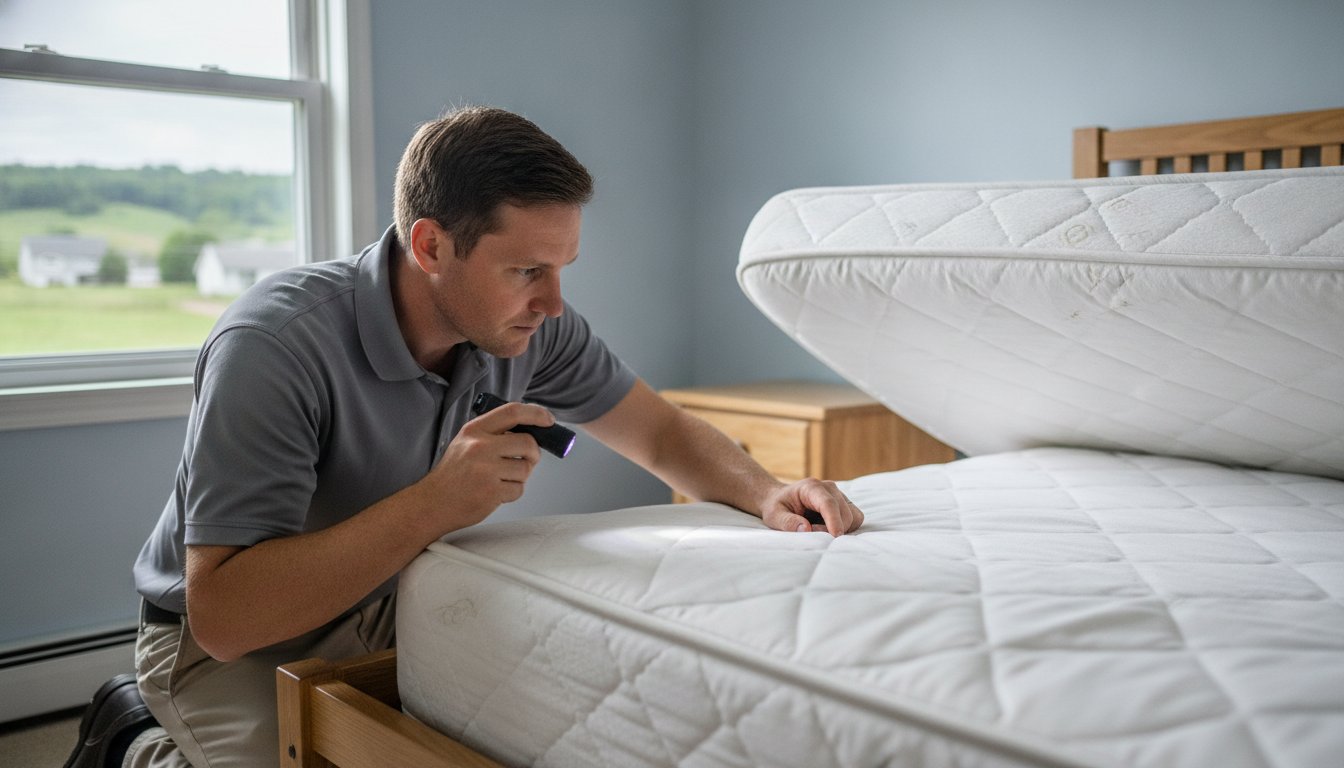
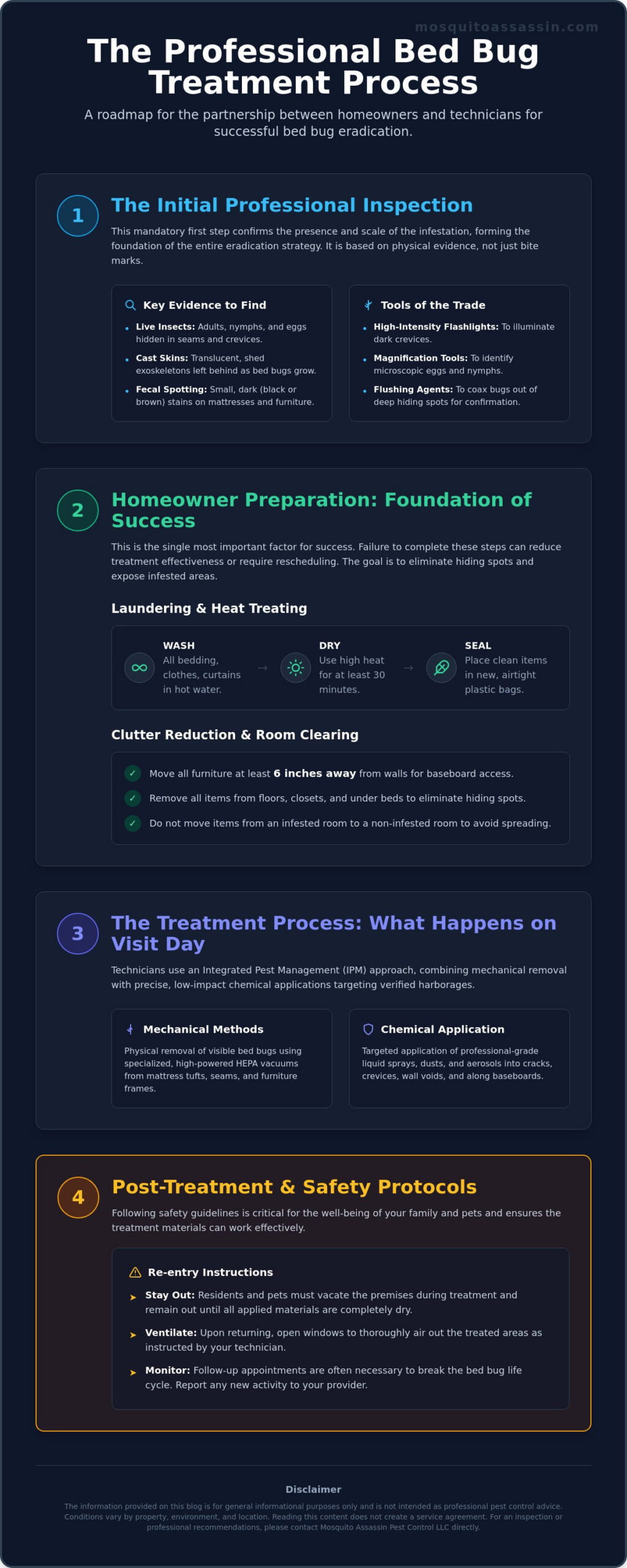
A professional inspection isn’t just a suggestion; it’s the mandatory foundation for any successful eradication plan. Property owners in Erie and Crawford Counties in Pennsylvania, alongside those in Ashtabula County, Ohio, should prepare for a meticulous walkthrough of all sleeping and lounging areas. This initial visit confirms the presence of pests and determines the scale of the problem. While itchy welts are often what first alert a resident to an issue, technicians don’t rely on bite patterns alone. Bites can look like many other insect reactions or skin conditions. Instead, the focus remains on physical evidence like live insects, translucent cast skins, and dark fecal spotting found in mattress seams, headboards, and upholstered furniture.
Tools of the Trade
Professionals rely on a specific toolkit to uncover hidden populations. High-intensity flashlights are essential for spotting tiny nymphs and eggs tucked into dark crevices where ambient light doesn’t reach. Magnification tools help identify microscopic signs of activity that the naked eye might miss. In some cases, technicians use flushing agents (a specialized aerosol that irritates the insects) to coax them out of deep cracks and crevices for visual confirmation. These bed bug control techniques ensure that the assessment is based on hard data rather than guesswork. Technicians also look behind picture frames, inside electrical outlets, and along baseboards to ensure no harborage point is overlooked during the evaluation.
Defining the Scope of Treatment
The results of the inspection dictate the entire strategy. The level of infestation determines the specific treatment method and the number of follow-up visits required to break the life cycle. It’s common for technicians to inspect rooms adjacent to the primary area of activity, even if no bites or sightings have been reported there. Bed bugs move easily through wall voids and electrical outlets; verifying the perimeter is vital for total removal. Following the walkthrough, the property owner receives detailed documentation outlining the findings. This report provides a clear explanation of what to expect during a bed bug treatment moving forward, including the specific areas targeted and the intensity of the infestation. Understanding this scope helps residents in the tri-county area prepare for the next steps in the process with realistic expectations.
Homeowner Preparation: The Foundation of Success
Preparation is the single most important factor in determining the success of a professional intervention. While the technician brings the expertise and materials, the property owner provides the necessary access. Licensed professionals typically provide a detailed prep sheet that must be completed before the technician arrives at your home in Erie or Ashtabula County. Failure to follow these instructions can lead to the postponement of service or a significant reduction in the efficacy of the application. The primary objective is to expose as many hiding spots as possible. When you understand what to expect during a bed bug treatment, you realize that a technician cannot treat what they cannot reach. A home that hasn’t been properly prepared acts as a shield for the infestation, allowing survivors to linger and rebuild their population.
Laundering and Heat Treating
Heat serves as a non-chemical ally in the eradication process. You should wash all bedding, curtains, and clothing in the hottest water the fabric can safely tolerate. After washing, dry these items on a high heat setting for at least 30 minutes. This step is non-negotiable because the high temperature is what actually neutralizes the insects and their eggs. Immediately after drying, seal the clean items in airtight plastic bags. This prevents hitchhikers from re-entering your clean laundry. For delicate items like shoes, stuffed animals, or dry-clean-only fabrics, check with your provider for specific instructions. Guidance on EPA bed bug control suggests that while heat is effective, it must be applied consistently to work. Handling delicate items might involve specialized solutions such as dry cleaning, heat boxes, or careful manual inspection.
Clutter Reduction and Room Clearing
Technicians need a clear path to every corner of the room. You must move all furniture at least six inches away from the walls to provide unobstructed access to the baseboards. This gap is where bed bugs frequently hide and where many treatment materials are applied. Additionally, remove all items from under beds and the floor of closets. Clutter reduction is the removal of unnecessary hiding spots like cardboard boxes and old newspapers. These porous materials are favorite harborages for bed bugs and make it difficult for treatments to penetrate. By clearing the floor and perimeter, you ensure that the professional application reaches the insects directly. Following these steps through professional bed bug services transforms your home from a maze of hiding spots into a targeted zone for eradication.
The Treatment Process: What Happens During the Visit
When a technician arrives at a property in Erie, Crawford, or Ashtabula County, they follow a systematic workflow designed for total elimination. Understanding what to expect during a bed bug treatment visit helps alleviate the stress of the process. The visit typically begins with a final check of the preparation work before moving into a combination of mechanical and chemical interventions. This integrated approach is more effective than relying on a single method alone. It focuses on the specific biology of the pest to ensure no life stage is overlooked. By combining physical removal with targeted applications, professionals create a hostile environment for bed bugs while maintaining a high standard of safety for the household.
Mechanical Removal Methods
Mechanical methods provide immediate results by physically reducing the insect population. High-efficiency particulate air (HEPA) vacuuming is a primary tool used during the visit. This specialized equipment allows technicians to physically remove live bugs, cast skins, and eggs from mattress seams, carpet edges, and furniture crevices. Following vacuuming, steam treatment may be applied to mattresses, box springs, and upholstered furniture. The high temperature of the steam kills eggs and nymphs on contact, reaching into areas where liquids might not penetrate. To finish the mechanical phase, mattress encasements are often installed. These serve as a permanent barrier, trapping any remaining insects inside where they cannot feed or reproduce, while simultaneously preventing new ones from nesting in the fabric. These Purdue University bed bug control strategies highlight the importance of non-chemical steps in a comprehensive plan.
Targeted Professional Applications
Once mechanical removal is complete, the technician moves to targeted professional applications. This phase involves the precise placement of residual materials to baseboards, bed frames, and furniture joints. These areas are known harborage points where bed bugs rest between feedings. Additionally, dust formulations may be injected into wall voids or behind electrical outlet plates. These dusts are particularly effective because they remain active in undisturbed areas for an extended period. Modern professional materials are designed for long-term control rather than just an immediate knockdown effect. This means the treatment remains active to neutralize insects that may emerge from hidden spots days or weeks after the initial visit. This methodical approach ensures that the treatment reaches the smallest cracks and crevices where bed bugs hide. Safety protocols are strictly followed throughout the process to ensure the environment is prepared for re-entry once the materials have dried. Residents in the local service area can rest assured that the process is disciplined and focused on results.
Post-Treatment Protocols and Re-entry
The completion of the application marks a turning point, but the work isn’t finished once the technician leaves. For families in Erie, Crawford, and Ashtabula counties, understanding the rules for returning home is a vital part of what to expect during a bed bug treatment. Safety remains the priority. Homeowners must remain out of the treated area until all materials have completely dried. While the professional has completed the application, the environment must settle before it’s ready for occupancy. This waiting period allows the residual materials to bond to the surfaces, creating a long-term barrier against the infestation.
Re-entry Safety Guidelines
Standard re-entry times typically range from two to four hours, though this can vary based on the specific materials used and the humidity levels in the home. It’s essential to verify the exact timeframe with the professional on-site before you leave the property. Upon re-entry, opening windows to ensure fresh air circulation is often recommended. This simple step helps the home feel more comfortable and speeds up the final drying process. Keep children and pets away from treated surfaces, such as baseboards and furniture joints, until they’re confirmed dry to the touch. A critical rule for success is to avoid using any DIY sprays or foggers after a professional treatment. These over-the-counter products often act as repellents that can interfere with professional residual materials, causing bed bugs to scatter into untreated areas and complicating the eradication process.
The Follow-Up Schedule
It’s common to see a few bed bugs in the days following the initial service. This is actually a sign that the treatment is working. As the insects emerge from their harborages to seek a meal, they come into contact with the residual materials applied to the bed frame and perimeter. Most infestations require at least one follow-up visit ten to fourteen days after the initial service. This specific timeline is based on the bed bug life cycle. Follow-up visits ensure that any newly hatched nymphs are eliminated before they reach maturity and begin to reproduce. Learn more about professional pest services to understand how these layered visits create a definitive resolution for your property.
Success depends on following specific post-treatment instructions regarding cleaning and furniture placement. Avoid deep cleaning or mopping right against the baseboards for a few weeks; this could prematurely remove the protective barrier. By maintaining this discipline, you protect the investment made in your home’s security. For homeowners in the tri-county area, professional pest control may help reduce risk and ensure the eradication is successful.
Long-Term Prevention and Protection Plans
Bed bugs are opportunistic hitchhikers that enter the home through travel, public transportation, or used furniture. Unlike many other pests, their presence isn’t an indicator of sanitation levels; they simply go where people go. For residents in Ashtabula, Ohio, and the surrounding regions, long-term security requires a transition from reactive treatment to proactive defense. Beyond knowing what to expect during a bed bug treatment, it’s vital to implement a strategy that prevents a single hitchhiker from becoming a full-blown infestation again. Ongoing monitoring is the most effective way to catch a re-infestation before it becomes widespread and costly to manage.
Proactive Monitoring Strategies
The use of passive interceptors is a highly effective method for early detection. These small, plastic dishes are placed under the legs of beds and upholstered furniture to trap insects as they attempt to climb up or down. Because bed bugs are nocturnal and expert hiders, these traps often provide the first physical evidence of a new problem. Additionally, routine inspections of luggage and clothing after returning from travel are essential. Heat treating clothes in a dryer on high heat for 30 minutes after a trip can neutralize any hidden travelers. For business owners and multi-unit managers, protecting your property with commercial services ensures that professional eyes are regularly checking for signs of activity in high-traffic areas.
The Value of Year-Round Management
General pest management provides a proactive shield against a variety of household invaders. While bed bug treatments are specialized, regular service visits allow a professional to identify potential entry points and harborage areas for multiple pests. This consistent oversight is often more cost-effective than reactive emergency treatments. A technician familiar with your property can spot subtle changes in pest activity that an untrained eye might miss. Understanding the broader context of household protection is helpful for any property owner. You can explore this further in General Pest Control: The Complete Guide for Homeowners.
Residents in Erie and Crawford Counties benefit from this disciplined, professional oversight. By maintaining a clean, clutter-free environment and utilizing professional monitoring, you reduce the likelihood of a major infestation taking hold. Professional pest control may help reduce risk by ensuring that your home remains a fortress against pests throughout the changing seasons. When you know what to expect during a bed bug treatment and follow up with a solid prevention plan, you secure the long-term comfort and safety of your household.
Disclaimer: The information provided on this blog is for general informational purposes only and is not intended as professional pest control advice. Conditions vary by property, environment, and location. Reading this content does not create a service agreement. For an inspection or professional recommendations, please contact Mosquito Assassin Pest Control LLC directly.
Reclaiming Your Home and Peace of Mind
Eradicating bed bugs requires a disciplined approach. Success depends on a partnership between your careful preparation and a technician’s professional precision. By understanding what to expect during a bed bug treatment, you can navigate each stage from the initial walkthrough to the final follow-up with confidence. Licensed professionals serving Erie, Crawford, and Ashtabula Counties utilize a methodical multi-step eradication process that prioritizes your family’s safety and education at every turn. This systematic strategy ensures that every hidden harborage is addressed and the insect’s life cycle is broken for good.
Consistency is the key to maintaining a pest-free environment long after the initial visit. Implementing proactive monitoring and considering year-round protection plans will help shield your property from future invaders. If you suspect an infestation, professional pest control may help reduce risk. You don’t have to face this challenge alone. With the right expert guidance and a clear plan of action, your home can once again be the secure sanctuary you deserve.
Disclaimer: The information provided on this blog is for general informational purposes only and is not intended as professional pest control advice. Conditions vary by property, environment, and location. Reading this content does not create a service agreement. For an inspection or professional recommendations, please contact Mosquito Assassin Pest Control LLC directly.
Frequently Asked Questions
How long does a professional bed bug treatment take?
A single room treatment typically requires between 45 minutes and two hours, while a whole-home service often takes a full business day. The exact duration depends on the level of clutter and the severity of the infestation in your Erie or Ashtabula County property. Technicians must work methodically to inspect every small crevice. Missing even one nesting site can lead to a resurgence; therefore, thoroughness is more important than speed.
Do I have to throw away my mattress if I have bed bugs?
You generally don’t need to discard your mattress after an infestation is discovered. High-quality, bed-bug-proof encasements effectively salvage your bed by trapping remaining insects inside where they eventually perish. These covers also prevent new bugs from nesting in the mattress seams. Disposal is usually only recommended in cases of extreme physical damage or heavy soiling that prevents effective treatment or poses a separate hygiene risk.
Is the bed bug treatment safe for my pets?
Professional treatments are safe for pets when strict safety protocols are followed by licensed technicians. All animals must be removed from the home during the application and can return once every treated surface is completely dry. If you have fish tanks or exotic pets, you should take specific precautions like covering the tank or temporary relocation. Understanding what to expect during a bed bug treatment helps ensure the safety of every household member.
Can I stay in my house during the treatment?
Occupants are required to leave the home for the entire duration of the treatment and the subsequent drying period. This protocol ensures you don’t come into contact with materials while they’re being applied and gives the technician unobstructed access to every room. Most families can safely return to their property after two to four hours. This window allows for proper ventilation and ensures all materials have bonded to the target surfaces.
How many treatments are needed to get rid of bed bugs?
Most professional protocols require at least two separate treatments spaced approximately ten to fourteen days apart. This specific timeline is designed to break the bed bug life cycle by eliminating newly hatched nymphs before they reach maturity and begin laying eggs. Severe or widespread infestations in the tri-county area may require additional follow-up visits to ensure total eradication. Knowing what to expect during a bed bug treatment ensures you understand why a single visit is rarely sufficient.
Will I see bed bugs after the first treatment?
It’s normal to see bed bugs in the days following the initial service as they emerge from their hiding spots. The treatment process disrupts their harborages and forces them to move across treated surfaces where they contact residual materials. These insects are in the process of being eliminated. If you continue to see significant activity after two weeks, a follow-up inspection is necessary to assess the situation and prepare for the next application.
Disclaimer: The information provided on this blog is for general informational purposes only and is not intended as professional pest control advice. Conditions vary by property, environment, and location. Reading this content does not create a service agreement. For an inspection or professional recommendations, please contact Mosquito Assassin Pest Control LLC directly.