Dragging your mattress straight to the curb might seem like the fastest way to reclaim your home, but it’s often the exact opposite of what you should do. When faced with an infestation, many homeowners in Erie County or Ashtabula County immediately panic and wonder what to throw away after bed bugs invade their living spaces. The truth is that a panic-driven purge rarely solves the problem, and it can actually spread these resilient pests into other rooms or neighboring properties.
Dealing with bugs brings immense emotional stress over losing personal belongings, a constant fear of re-infestation, and deep concerns about the high cost of replacing furniture. Fortunately, the vast majority of your possessions don’t need to go to the landfill. This guide outlines which items can be safely salvaged and how to properly dispose of ruined belongings without worsening the infestation. By understanding specific safety protocols and following a clear breakdown of salvageable goods, property owners can build a confident remediation plan to eliminate the threat completely.
Key Takeaways
- Most household items can be saved through professional treatment, meaning you rarely need to purge your entire home during an infestation.
- Use specific criteria like the age and material of an item to determine if the cost of treatment outweighs the value of replacement.
- Learn exactly what to throw away after bed bugs by identifying high-risk items that are too damaged or infested to salvage safely.
- Follow strict safety protocols, including sealing items in airtight plastic, to prevent spreading pests during the removal process to the curb.
- A professional inspection can identify precisely where pests are hiding, often revealing that expensive furniture is still treatable through heat remediation.
The Reality of Bed Bug Infestations and Your Belongings
Discovering an infestation often triggers an immediate fight-or-flight response. The urge to drag every piece of furniture to the curb is understandable but usually counterproductive. Property owners in Erie and Crawford Counties frequently worry about what to throw away after bed bugs are found, fearing that every fabric and crevice is permanently compromised. It’s a stressful situation, but the goal of professional management is total eradication without excessive property loss.
Bed bugs are distinct from other pests because they don’t burrow into solid materials like wood or plastic. They are hitchhikers that prefer to hide in tight crevices, seams, and dark corners near their host. Because they live on the surface rather than inside your belongings, most items are salvageable. Maintaining a calm, methodical approach is vital to ensuring the infestation doesn’t spread through panicked movement.
To better understand how to manage your home after a professional intervention, watch this helpful video:
Why Tossing Everything Is Not Always Necessary
Modern bed bug control techniques have shifted away from total disposal toward targeted remediation. Professional heat treatments can reach lethal temperatures that penetrate seams and cracks where insects hide, effectively cleaning items in place. When you compare the cost of professional remediation to the expense of replacing a bedroom set, living room furniture, and a full wardrobe, keeping your belongings makes significant financial sense. Professional pest control services focus on saving your property rather than filling landfills.
The Risks of Premature Item Disposal
Prematurely tossing furniture can actually backfire. As you drag a mattress or chair through your home, you risk dropping eggs or live bugs into hallways and clean rooms. Additionally, leaving infested items on the street in Ashtabula or Meadville without proper labeling invites others to take them, continuing the cycle of infestation in the community. Professional guidance should always precede any major furniture removal to ensure the process doesn’t inadvertently expand the problem. Before deciding what to throw away after bed bugs appear, wait for a thorough inspection to determine which items are truly beyond repair.
Criteria for Deciding What to Keep or Discard
Deciding what stays and what goes requires a systematic evaluation of your belongings. Instead of letting emotional stress dictate your choices, you can use objective criteria to determine if an object is worth saving. Property owners must balance the item’s age, physical condition, material composition, and overall sentimental or monetary value against the effort required to treat it. A methodical inspection helps clarify what to throw away after bed bugs have been detected, ensuring you do not waste energy on ruined goods or prematurely discard expensive furniture.
Assessing the Level of Infestation
Determining the severity of the insects’ presence on a specific item is the first critical step. Look closely at the seams, tufts, and zippers for clear evidence of activity, including:
- Dark brown or black fecal spotting that resembles small marker dots.
- Translucent, empty egg casings left behind by growing nymphs.
- Live bugs clustered together in tight, dark recesses.
Surface-level activity on a mattress seam is highly treatable, whereas a deep structural infestation inside a torn box spring or broken sofa frame may indicate the item is beyond saving. When an object suffers from severe physical damage or contains extreme nesting throughout its interior cavities, disposal becomes a practical necessity. For a definitive assessment of an item’s condition, a professional bed bug treatment inspection can provide clarity before you start hauling items away.
Material Porosity and Structural Integrity
The composition of your belongings plays a major role in how easily they can be cleared of pests. Solid wood, metal, and hard plastic items are the easiest to salvage because they lack deep, hidden voids. These non-porous surfaces allow for straightforward physical cleaning and targeted professional applications. Conversely, upholstered furniture features thick padding, fabric layers, and complex internal springs that require intensive professional intervention to ensure heat or treatments penetrate completely. According to official EPA bed bug control guidance, treating these complex items requires careful planning, and items made from cheap particle board or those with inaccessible, hollow voids are often the primary candidates for disposal if the structural integrity is already compromised.
Category Specific Disposal Checklist
Managing an infestation requires a clear understanding of which household goods are truly compromised. Homeowners often struggle to categorize their belongings, leading to unnecessary financial loss. By separating your items into distinct groups, you can easily determine what to throw away after bed bugs are discovered and what can be safely preserved. While a comprehensive general pest control assessment is always the safest first step, this checklist provides a practical breakdown for common bedroom and living area items.
Clothing, bedding, and curtains are rarely candidates for the dumpster. These fabric items can be entirely decontaminated using standard household appliances. Washing them in hot water and drying them on a high heat cycle for at least 30 minutes effectively destroys all life stages of the insect, including resilient eggs.
Furniture and Large Household Items
Large furniture items represent the highest replacement costs, making careful evaluation essential. Consider the following guidelines for major household pieces:
- Mattresses and Box Springs: Discarding these is rarely required. Investing in high quality, tear resistant, bed bug proof encasements seals any remaining pests inside, starving them over time while protecting the exterior.
- Couches and Recliners: Professional heat remediation is highly effective for upholstered seating, meaning treatment is almost always preferred over disposal.
- Nightstands and Bed Frames: Because hard wood, metal, and plastic surfaces lack deep internal padding, they are low risk and easily sanitized through physical cleaning and targeted professional applications.
If a piece of furniture is structurally ruined or too heavily infested to save, following Purdue’s furniture disposal protocol ensures you wrap, seal, and deface the item to prevent others from bringing it back into the community.
Personal Belongings and Electronics
Small personal items require a different approach since they cannot simply be tossed into a washing machine. Books, magazines, and loose paperwork can sometimes harbor pests in their bindings or pages, but they can be treated successfully using specialized professional heat chambers. Electronics such as televisions, desktop computers, or laptops are rarely infested because they do not provide a viable food source. However, they should still be inspected by a professional if they were located immediately next to a heavily infested bed. For children’s toys and plush animals, a simple trip through a high heat dryer cycle for 30 to 45 minutes is usually enough to salvage them safely without causing damage.

Best Practices for Safe Disposal and Removal
Once you’ve decided what to throw away after bed bugs have damaged an item beyond repair, the physical removal process must be handled with extreme care. Moving an infested dresser or mattress through your home without a plan is a major risk factor for spreading the problem to previously clean areas. Residents in Erie, PA and Ashtabula, OH should prioritize containment above all else during the transition from the bedroom to the curb. Proper disposal prevents a localized issue from becoming a neighborhood-wide infestation.
Bagging and Labeling Contaminated Items
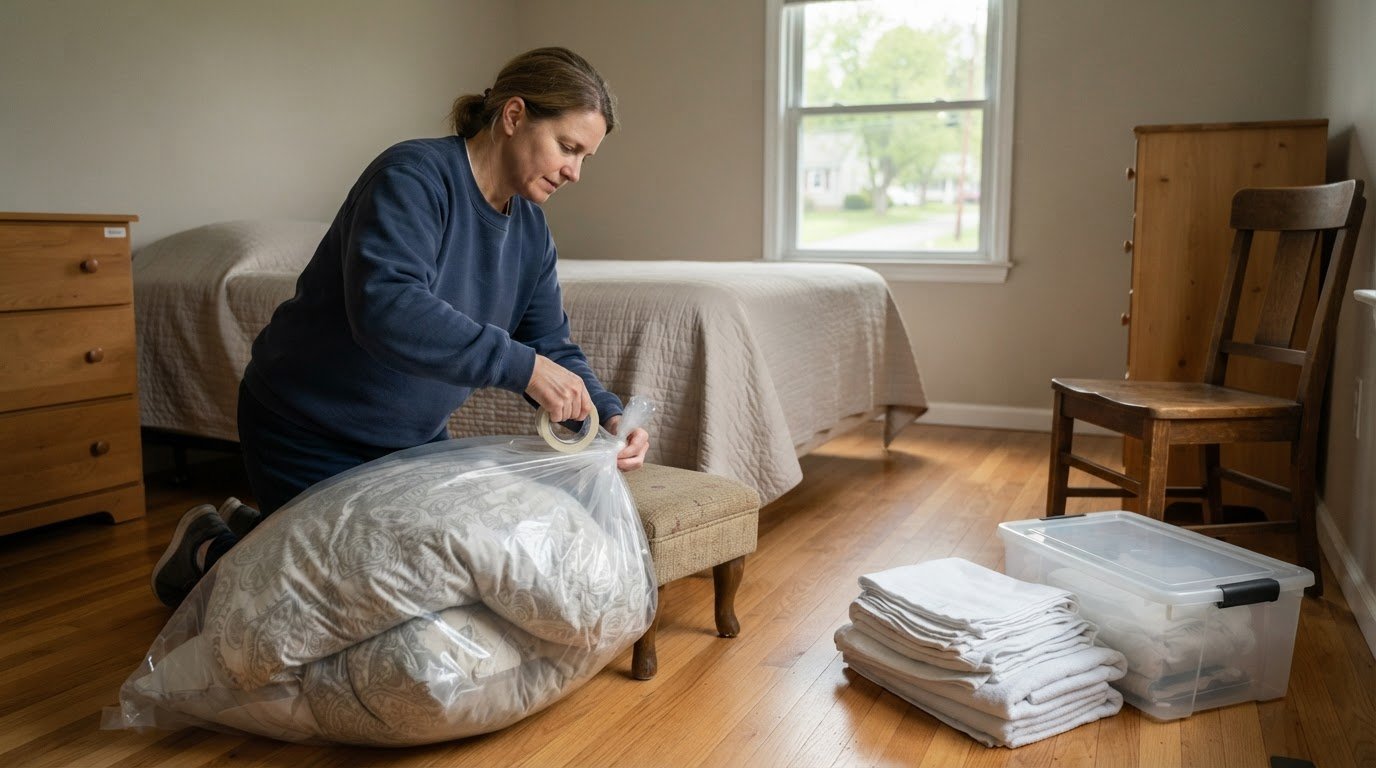
Use heavy duty plastic bags that are at least 3 mil thick for all smaller items and clothing destined for the trash. Standard kitchen bags are too thin and can easily puncture, allowing pests to escape. Once filled, seal these bags tightly with duct tape rather than simple twist-ties. For larger furniture, wrap the entire piece in heavy plastic sheeting and secure it completely. You must explicitly label every item with “Bed Bugs” or “Infested” using a bold permanent marker. This warning is a critical safety step that protects waste management workers and prevents neighbors from unknowingly bringing infested goods into their own homes.
Preventing Community Spread in the Tri-County Area
Preventing the spread of pests throughout your neighborhood is a shared responsibility. Before placing a couch or chair at the curb, use a utility knife to slash the upholstery or damage the frame. This ensures the item cannot be salvaged by others who might see it as a free find. If you live in an apartment complex, never leave infested items in shared hallways, laundry rooms, or common areas; take them directly to the dumpster or a designated pickup zone. In Pennsylvania, remember that the Covered Device Recycling Act bans electronics like televisions from landfills, so these must be taken to a dedicated recycler even if they are infested. Coordinating with your local waste management provider for a scheduled bulk pickup can also reduce the time infested items spend sitting outside.
If you are unsure about the safety of your belongings, professional bed bug treatment can often save your property and eliminate the need for disposal.
Professional Remediation vs Total Replacement
Choosing between throwing away your furniture and investing in professional remediation is a critical turning point. Many property owners operate under the assumption that a total replacement is the only way to ensure a clean home. However, a thorough inspection by a licensed professional reveals that most items are fully salvageable. Instead of guessing what to throw away after bed bugs have entered a room, relying on expert identification clarifies the exact state of your belongings. This prevents the unnecessary loss of expensive assets.
How Professional Heat Treatments Save Belongings
Professional heat treatments provide a definitive solution that eliminates the need for mass disposal. Ambient heat safely penetrates deep into the complex seams, tufts, and hidden structural voids that standard sprays or DIY methods simply cannot reach. This methodology is entirely safe for the vast majority of household items when executed by trained technicians. When you evaluate the overall financial impact, the cost of a single professional treatment is far lower than the price of replacing an entire room of bedroom or living room furniture. For a deeper look at how these systems work alongside other eradication methods, consult the comprehensive bed bug guide.
Integrating Disposal into a Long Term Protection Plan
Discarding furniture alone rarely solves an infestation because these insects frequently harbor inside baseboards, electrical outlets, and wall voids. If you throw away a mattress but leave the surrounding structure untreated, the new bed will likely become infested within weeks. Selective disposal must be part of a broader, professional strategy to achieve true success.
Long-term protection plans from Mosquito Assassin Pest Control LLC focus on thorough monitoring and multi-step management. Regular follow-up inspections are highly recommended in Erie and Crawford counties to confirm that all life stages, including hidden eggs, are completely gone. Knowing what to throw away after bed bugs are treated depends entirely on these follow-up assessments. Ultimately, professional pest control may help reduce risk of future occurrences and provide lasting peace of mind.
Disclaimer: The information provided on this blog is for general informational purposes only and is not intended as professional pest control advice. Conditions vary by property, environment, and location. Reading this content does not create a service agreement. For an inspection or professional recommendations, please contact Mosquito Assassin Pest Control LLC directly.
Reclaim Your Home and Protect Your Property
Managing an infestation is an exhausting experience, but you don’t have to face it alone or lose your valuable belongings in the process. Determining what to throw away after bed bugs are found is a tactical decision that should be based on professional evidence rather than panic. By utilizing specialized bed bug remediation expertise, property owners can often save their mattresses, couches, and personal items through targeted heat treatments that outperform DIY methods. Containment and proper labeling remain the most effective ways to protect your neighbors and prevent the spread of pests throughout your community.
Serving Erie, Crawford, and Ashtabula Counties, the focus remains on providing definitive solutions and year-round protection plans that keep your household secure. For a professional inspection or recommendations, please contact Mosquito Assassin Pest Control LLC today. With a methodical approach and the right local experts by your side, you can move forward with confidence and a pest-free home.
Disclaimer: The information provided on this blog is for general informational purposes only and is not intended as professional pest control advice. Conditions vary by property, environment, and location. Reading this content does not create a service agreement. For an inspection or professional recommendations, please contact Mosquito Assassin Pest Control LLC directly.
Frequently Asked Questions
Do I have to throw away my mattress if I have bed bugs?
You don’t have to throw away your mattress in most cases. Most mattresses are salvageable with professional heat treatment and the application of high-quality, tear-resistant encasements. These specialized covers trap any remaining insects inside, preventing them from feeding or escaping. You should only consider disposal if the mattress has significant physical damage, such as large internal tears that allow for deep nesting that treatment cannot reach.
Can bed bugs live in electronics like my TV or computer?
Bed bugs can occasionally hide in the vents or ports of electronics like TVs and computers, but they don’t live inside them as a primary habitat. These devices don’t provide a food source or ideal nesting material. If an electronic device was located very close to a heavy infestation, a professional inspection is necessary. Specialized heat chambers can often clear these sensitive items without damaging the delicate internal circuitry.
How do I safely throw away a couch infested with bed bugs?
To safely discard an infested couch, you must contain the pests before moving the item through your home. Wrap the entire piece in heavy plastic sheeting and seal all edges tightly with duct tape. Before placing it at the curb, use a utility knife to slash the cushions or damage the frame. This prevents others from salvaging the furniture and spreading the infestation elsewhere in your local neighborhood.
Is it possible to save books and papers after an infestation?
It is possible to save books and papers using specific professional decontamination methods. Because you can’t wash these items, professional pest control services often use portable heat chambers that maintain a lethal temperature without damaging the paper or bindings. For non-essential documents, sealing them in airtight plastic bags for at least a year is another option, as this ensures any trapped insects eventually die from a lack of food.
Will a regular trash pickup take bed bug infested furniture?
Regular trash pickup in areas like Erie or Ashtabula often requires special arrangements for bulk items. Most waste management companies will take infested furniture, but only if it is properly wrapped in plastic and labeled. Knowing what to throw away after bed bugs in Pennsylvania or Ohio involves contacting your local waste department to schedule a specific bulk pickup day. Never leave items out without a scheduled pickup.
Should I throw away my clothes if I find bed bugs in my room?
You shouldn’t throw away your clothes because high-heat laundering is incredibly effective at killing all life stages of these pests. Wash your garments in hot water and dry them on a high-heat setting for at least 30 minutes. Once clean, place them in sealed plastic bags or bins to prevent re-infestation while the rest of your home is being treated by a professional remediation team.
How can I tell if an item is too infested to save?
Determining what to throw away after bed bugs depends on the item’s condition and the depth of the infestation. An item is usually too infested to save if it has deep structural damage, such as hollow furniture legs or torn upholstery that allows for massive internal nesting. If the physical labor and cost required to clean a low-value or heavily damaged item exceed its replacement price, disposal is the more practical choice.
What is the best way to label infested items for the trash?
The best way to label infested items is to use a bold, permanent marker directly on the plastic wrapping. Write “BED BUGS” or “INFESTED” in large, clear capital letters on multiple sides of the package. This warning protects sanitation workers and discourages people from bringing the items back into the community. Clear communication is a vital part of a responsible disposal and remediation plan for your property.
Disclaimer: The information provided on this blog is for general informational purposes only and is not intended as professional pest control advice. For an inspection or professional recommendations, please contact Mosquito Assassin Pest Control LLC directly.