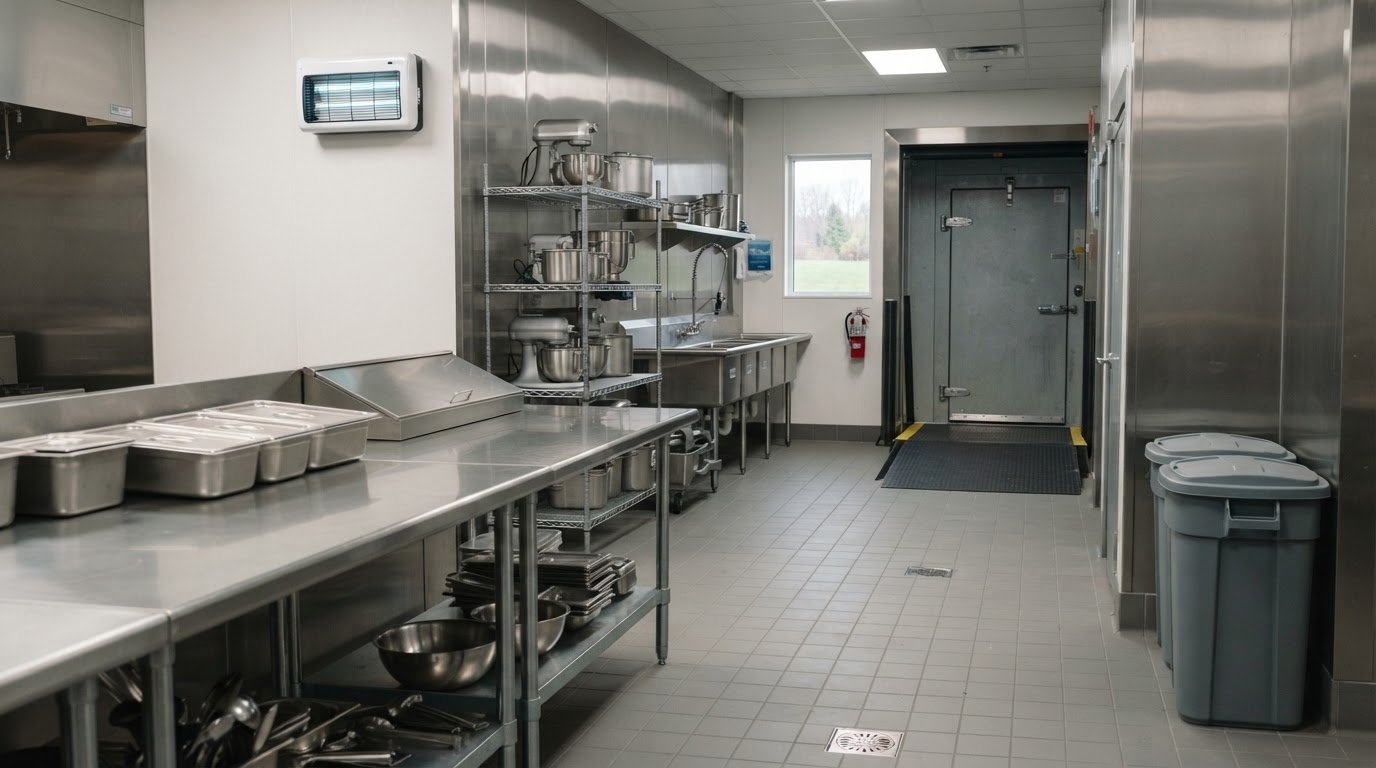
When restaurant patrons spot a pest indoors, 95% of those sightings involve flies, which carry even more disease-causing pathogens than cockroaches. Retail sprays and hanging sticky ribbons rarely solve the problem, because effective fly control for commercial kitchens requires much more than a temporary fix. A single fly landing on food prep surfaces can jeopardize customer health and trigger critical citations during routine inspections.
Dealing with drain flies around prep sinks or house flies near delivery doors creates constant stress during service. Kitchen managers often ask what system eliminates flies quickly without risking health code violations or misplacing equipment. True success occurs only when hardware selection and monitoring protocols match specific fly biology and facility zones.
Discover how to select the right fly control hardware, sanitation protocols, and commercial management strategies to keep food prep environments compliant. This 2026 guide breaks down legal trap positioning, physical exclusion practices, and zone-by-zone defense methods to keep your facility fully inspection-ready all year long.
Key Takeaways
- Pinpoint specific fly species to uncover structural moisture issues and hidden organic buildup behind kitchen equipment and floor drains.
- Select proper fly control for commercial kitchens by choosing glue-board light traps that capture insects without contaminating surrounding food contact surfaces.
- Implement a zonal defense framework to intercept flies at loading docks and dumpsters before they ever enter interior prep lines.
- Evaluate trap placement, wattage, and ambient lighting interference using a systematic facility checklist to avoid regulatory citations.
- Integrate physical exclusion and routine sanitation audits with commercial pest management to maintain continuous health inspection readiness.
Identifying Common Kitchen Fly Species and Food Safety Risks
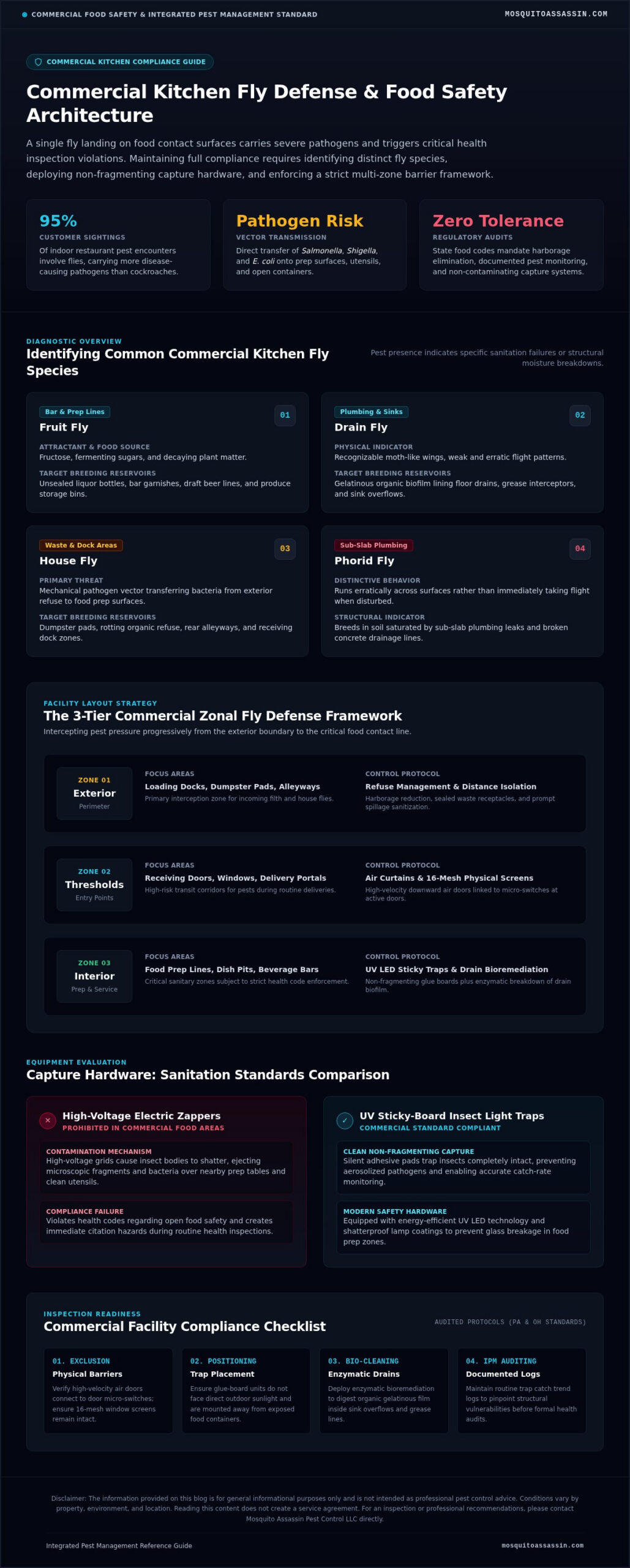
Every commercial food facility faces flying pests, but treating them with a one-size-fits-all approach guarantees failure. Successful fly control for commercial kitchens begins with accurate species identification. Because different flies target distinct food sources and reproductive substrates, the presence of specific insects reveals exactly where sanitation or structural barriers have broken down.
Fruit Flies and Drain Flies in Preparation Areas
Small filth flies thrive inside active prep zones and beverage stations:
- Fruit Flies: Attracted to fructose and fermenting sugars, these pests rapidly colonize unsealed liquor bottles, bar garnishes, draft beer lines, and produce storage.
- Drain Flies: Recognizable by their moth-like wings, drain flies breed directly inside the gelatinous organic film that accumulates in floor drains, grease interceptors, and sink overflows.
Buying generic retail fly traps rarely solves these problems. Small indoor flies do not respond well to hardware engineered for agricultural settings, which means kitchen staff must pinpoint the exact moisture reservoirs sustaining the breeding cycle.
House Flies and Phorid Flies Around Waste Zones
Loading docks, rear alleyways, and dumpster pads introduce larger and more destructive pests. House flies feed on rotting refuse and transfer severe pathogens like Salmonella, Shigella, and E. coli onto prep tables and clean utensils. Phorid flies present a different hazard. While similar in size to fruit flies, they run erratically across surfaces rather than flying immediately when disturbed. Phorid flies thrive in soil saturated by sub-slab plumbing leaks. Persistent phorid activity often signals broken drainage lines hidden beneath concrete kitchen floors, requiring plumbing intervention alongside sanitation efforts.
Regulatory Food Safety Standards and Contamination Hazards
Public health inspectors hold commercial kitchens to strict regulatory criteria. Live insects landing near open food containers constitute high-risk violations that can lower inspection scores or prompt immediate shutdown orders. State food codes in Pennsylvania and Ohio mandate ongoing harborage elimination and documented pest monitoring. Implementing a structured Integrated Pest Management (IPM) program provides the inspection trail required by regulatory bodies. Scheduling professional commercial pest control services helps facilities identify structural vulnerabilities before health audits occur, keeping culinary operations compliant and safe.
Evaluating Commercial Fly Control Hardware: Traps, Lights, and Air Curtains
Selecting the right fly control for commercial kitchens requires balancing sanitation standards, guest aesthetics, and capture efficiency. Traditional high-voltage bug zappers have no place in a commercial food facility. When an insect strikes an electric grid, the impact shatters its body, throwing microscopic particles and bacteria across nearby prep counters. Modern commercial code demands non-fragmenting capture devices and active physical barriers.
Insect Light Traps (ILTs) and UV Sticky Boards
Glue-board insect light traps capture incoming pests cleanly and silently. By securing insects onto adhesive pads, these units keep flies intact so technicians can monitor catch rates and identify emerging pest trends during inspections. Upgrading to UV LED technology reduces operating energy costs compared to traditional fluorescent tubes while sustaining the specific ultraviolet wavelengths flies seek. Compliant fixtures also require shatterproof lamp coatings (protective plastic sheaths) to prevent broken glass from contaminating open food zones.
Air Curtains and Physical Exclusion Barriers
Exclusion hardware stops pests at exterior building thresholds before they reach sensitive prep lines. High-velocity air doors mounted above delivery entrances generate a powerful downward curtain of air that flying insects cannot penetrate. Connecting these units to micro-switches activates the airflow automatically whenever doors open for receiving deliveries. Pairing air curtains with durable 16-mesh window screens creates an unbroken physical boundary that keeps kitchens properly ventilated without admitting pests.
Bioremediation and Enzymatic Drain Systems
Surface hardware cannot address larval reproduction occurring deep inside plumbing infrastructure. Enzymatic bioremediation products consume the organic grease and protein biofilms where flies lay their eggs. Automated peristaltic dosing units dispense these biological cleaners directly into floor sinks and grease lines during overnight hours. Foaming delivery equipment expands solutions across the entire inner diameter of pipes, coating inaccessible corners where liquid flushes simply drain away.
Partnering with licensed specialists for commercial pest control helps facilities choose code-compliant hardware and establish ideal trap placement away from exposed food preparation tables.
Zonal Fly Defense: Matching Control Methods to Kitchen Layouts
Dividing a facility into distinct operational zones is essential for effective fly control for commercial kitchens. A trap designed for a rugged loading dock creates immediate safety hazards if installed over a cook line. By mapping equipment to specific facility zones, restaurant operators intercept pests systematically before they reach customer plates.
Receiving Docks and Waste Disposal Enclosures
External entryways represent your frontline defense against invading filth flies. Mount industrial-grade light traps on interior walls perpendicular to loading bay doors rather than directly opposite them. Traps positioned directly across from an open bay act as beacons, drawing outdoor insects inside whenever doors cycle open. Outside the building, keep dumpster enclosures sealed. Tight lids, functional dock seals, and scheduled pad degreasing eliminate the intense odor plumes that attract blow flies and house flies to the building exterior.
Active Food Preparation and Warewashing Lines
Interior prep spaces demand careful hardware positioning to satisfy regulatory mandates. Always mount insect light traps at least five feet away from exposed food preparation tables, clean dish storage, and open cooking equipment. Hanging hardware directly above food contact areas violates standard food codes due to the risk of dislodged debris falling into ingredients.
Lighting competition also dictates capture rates. Position traps away from direct sunlight or intense overhead kitchen illumination, which overpowers ultraviolet attractant lamps. In steamy dishwashing stations, specify splash-resistant hardware built to endure high ambient humidity without short-circuiting. Because fruit flies and phorid flies stay low to the ground, installing traps three to five feet above the floor near problem drains delivers the best catch rates.
Dining Rooms and Customer Service Counters
Front-of-house dining areas require complete discretion to protect guest comfort. Commercial wall sconce traps disguise adhesive boards behind attractive decorative facades, keeping captured insects completely hidden from patron view while casting ultraviolet light across seating zones. In bar areas, tuck compact monitoring units beneath service wells and near soda syrup lines. Combining discreet front-of-house traps with robust back-of-house barriers ensures complete coverage without disturbing customer dining experiences.
Commercial Kitchen Fly Control Selection Checklist
Purchasing commercial hardware without an assessment plan leads to wasted investment and recurring health violations. An underpowered light trap cannot protect a large dishwashing room, just as poorly placed sticky boards fail to attract flies away from hot cook lines. Establishing a systematic evaluation checklist ensures that every piece of fly control for commercial kitchens fits the facility layout and satisfies local health department codes.
Auditing Facility Dimensions and Ambient Light
Calculate the exact square footage and ceiling height of each room before purchasing hardware. Manufacturers rate insect light traps for specific room volumes, but ambient lighting changes those coverage zones. Competing illumination from prep station heat lamps, bright neon signage, and large exterior dining windows can easily overpower ultraviolet lure bulbs. Check potential mounting sites to ensure traps can be installed horizontally, keeping the UV glow unobstructed throughout the primary flight corridors of target pests.
Assessing Moisture Sources and Organic Buildup
Traps only capture flying adults, so staff must audit the physical conditions sustaining pest larvae. Walk through the kitchen to inspect cracked floor tile grout, recessed floor drains, and moisture trapped beneath walk-in refrigeration gaskets. Standard mop water often pushes food starch into wall junctions, creating rich organic breeding zones. Determine whether floor drains require mechanical wire brushing or biological foaming treatments to eliminate structural grease deposits. Enforce nightly kitchen closing routines that eliminate uncovered food waste and empty beverage containers.
Reviewing Regulatory Compliance and Maintenance Access
Review municipal regulations to ensure trap styles meet food safety laws. Most jurisdictions strictly prohibit open-grid bug zappers inside food production rooms, requiring shielded glue-board designs with shatterproof bulbs. Verify that all equipment features tool-free latching mechanisms. If staff need screwdrivers to access adhesive boards, monthly glue-board swaps and annual UV lamp replacements will get delayed, causing capture rates to drop quickly.
Facility managers can review broader facility guidelines in this comprehensive commercial pest control guide. When internal cleaning and hardware upgrades do not resolve ongoing insect issues, professional pest control may help reduce risk. Restaurant operators can request an evaluation through www.mosquitoassassin.com/contact-us to address hidden structural entryways and keep facilities inspection-ready.
Integrating Professional Management for Total Kitchen Protection
Hardware traps capture adult insects, but traps alone cannot stop active breeding cycles. Sustainable fly control for commercial kitchens requires an integrated approach that connects physical exclusion, disciplined sanitation, and ongoing professional oversight. Maintaining detailed service logs and trend reports establishes an auditable defense when health inspectors arrive. Ultimately, professional pest control may help reduce risk, protect food safety margins, and preserve hard-earned commercial dining reputations.
Why Hardware Alone Fails Without Structural Management
Adhesive boards reflect pest population spikes, but they cannot repair cracked plumbing or degraded slab foundations. Unsealed gaps around beverage conduits and plumbing lines continuously invite exterior filth flies indoors. Without physical exclusion, reproduction outpaces capture rates. Licensed technicians spot subtle harborage zones, tracing hidden moisture issues behind stainless steel walls and underneath tile sub-flooring that routine kitchen closing crews cannot access.
Sanitation Schedules and Kitchen Staff Protocols
Daily shift procedures dictate whether flies establish permanent breeding zones. Kitchen managers should enforce structured closing protocols:
- Scrub floor drains with stiff bristle brushes to eliminate organic biofilm before larvae develop.
- Hang mops with heads up in ventilated areas rather than leaving wet strands resting inside stagnant mop buckets.
- Dry standing wash water beneath prep tables, refrigeration motors, and soda fountain equipment nightly.
- Transfer all fresh produce and open ingredients into airtight containers inside walk-in coolers instead of leaving them out on prep tables.
Selecting a Licensed Commercial Pest Partner
Food facilities need service providers versed in regional climate shifts and state sanitation codes. Establishments operating across Northwest Pennsylvania and Northeast Ohio face distinct seasonal surges in fly activity across Erie, Crawford, and Ashtabula counties. Reviewing specialized options through a dedicated commercial services hub ensures facilities receive tailored monitoring routines, documented trap servicing, and expert exclusion guidance. Combining daily staff accountability with professional support delivers reliable fly control for commercial kitchens throughout every season.
Securing Long-Term Food Safety and Audit Readiness
Maintaining an audit-ready culinary space requires far more than reactive swatters or random retail traps. Reliable fly control for commercial kitchens relies on a coordinated defense: installing code-compliant glue-board hardware, establishing rigorous floor drain sanitation, and enforcing daily exclusion protocols at delivery bays. When staff consistently eliminate organic residues and seal structural gaps, flies lose the breeding grounds they need to multiply.
Every commercial facility presents unique layout challenges, especially during seasonal pest surges across Northwest Pennsylvania and Northeast Ohio. Licensed pest professionals apply a methodical multi-step inspection, exclusion, and ongoing monitoring approach to protect commercial food environments. Professional pest control may help reduce risk and protect your hard-earned culinary reputation. For professional facility inspections and customized commercial solutions, contact Mosquito Assassin Pest Control LLC directly to maintain compliance and peace of mind year-round.
Disclaimer: The information provided on this blog is for general informational purposes only and is not intended as professional pest control advice. Conditions vary by property, environment, and location. Reading this content does not create a service agreement. For an inspection or professional recommendations, please contact Mosquito Assassin Pest Control LLC directly.
Frequently Asked Questions
Are bug zappers allowed inside commercial restaurant kitchens?
No, electrocuting bug zappers are generally prohibited inside food preparation and storage areas. When insects contact high-voltage grids, their bodies shatter, dispersing microscopic fragments and bacteria over nearby prep tables and equipment. Health codes mandate glue-board light traps instead. These silent capture systems secure flying insects intact on adhesive surfaces, eliminating physical airborne contamination while keeping fly control for commercial kitchens compliant with local inspection standards.
Where should insect light traps be placed in a commercial kitchen?
Position traps at least five feet away from exposed food prep tables, cooking ranges, and clean warewashing racks. Mount units three to six feet above the floor, matching the natural cruising altitudes of house flies and fruit flies. Avoid placing units near bright exterior windows or competing high-intensity kitchen fixtures. Install traps perpendicular to loading docks and service doors to intercept invading insects before they penetrate interior prep zones.
How often do commercial kitchen fly trap glue boards and bulbs need replacement?
Glue boards typically require replacement every 30 days, or sooner if dust and trapped insects saturate the adhesive surface. UV bulbs require annual replacement, even if they still emit visible blue light. The ultraviolet output that attracts flying pests degrades significantly after nine to twelve months of continuous operation. Establishing a routine maintenance schedule ensures traps remain effective during peak warm seasons across Pennsylvania and Ohio.
Why do fruit flies keep coming back despite deep cleaning the kitchen?
Fruit flies persist because standard surface sanitation misses microscopic organic buildup hidden inside structural crevices. Adult females lay hundreds of eggs in fermenting sugars trapped behind loose wall cove base, inside damaged tile grout, or under hollow prep table legs. Uncleaned draft beer lines, soda dispenser drip trays, and rotting organic slime within floor drains provide endless breeding resources that everyday floor mops simply cannot reach.
What is the difference between fruit flies, drain flies, and phorid flies?
Fruit flies are light tan with red eyes, typically congregating near fermenting produce and sugary bar stations. Drain flies feature fuzzy, moth-like wings and breed specifically within the slimy biofilm lining floor drains and pipes. Phorid flies have a distinctive humpbacked shape and run rapidly across surfaces instead of flying away immediately. Phorid infestations often indicate serious sub-floor sewage leaks under concrete slabs.
Can air curtains completely prevent flies from entering loading docks?
Air curtains dramatically lower fly infiltration, but they cannot achieve 100% prevention on their own. Strong exterior wind gusts can disrupt downward airflow velocities, allowing occasional pests to slip through delivery doors. To achieve dependable fly control for commercial kitchens, air doors must be paired with magnetic door sensors, tight weather seals, and interior glue-board traps positioned just inside the bay to intercept stragglers.
How do commercial drain fly treatments differ from pouring boiling water down drains?
Pouring boiling water down drains merely washes past the top layer of organic matter, quickly cooling before penetrating thick gelatinous biofilms. Larvae and pupae burrowed inside the slime easily survive hot flushes. Professional treatments use specialized enzymatic foams or bioremediation solutions that cling to vertical pipe walls. These biological formulas digest the grease matrix completely, starving developing larvae and permanently breaking the fly reproductive cycle.