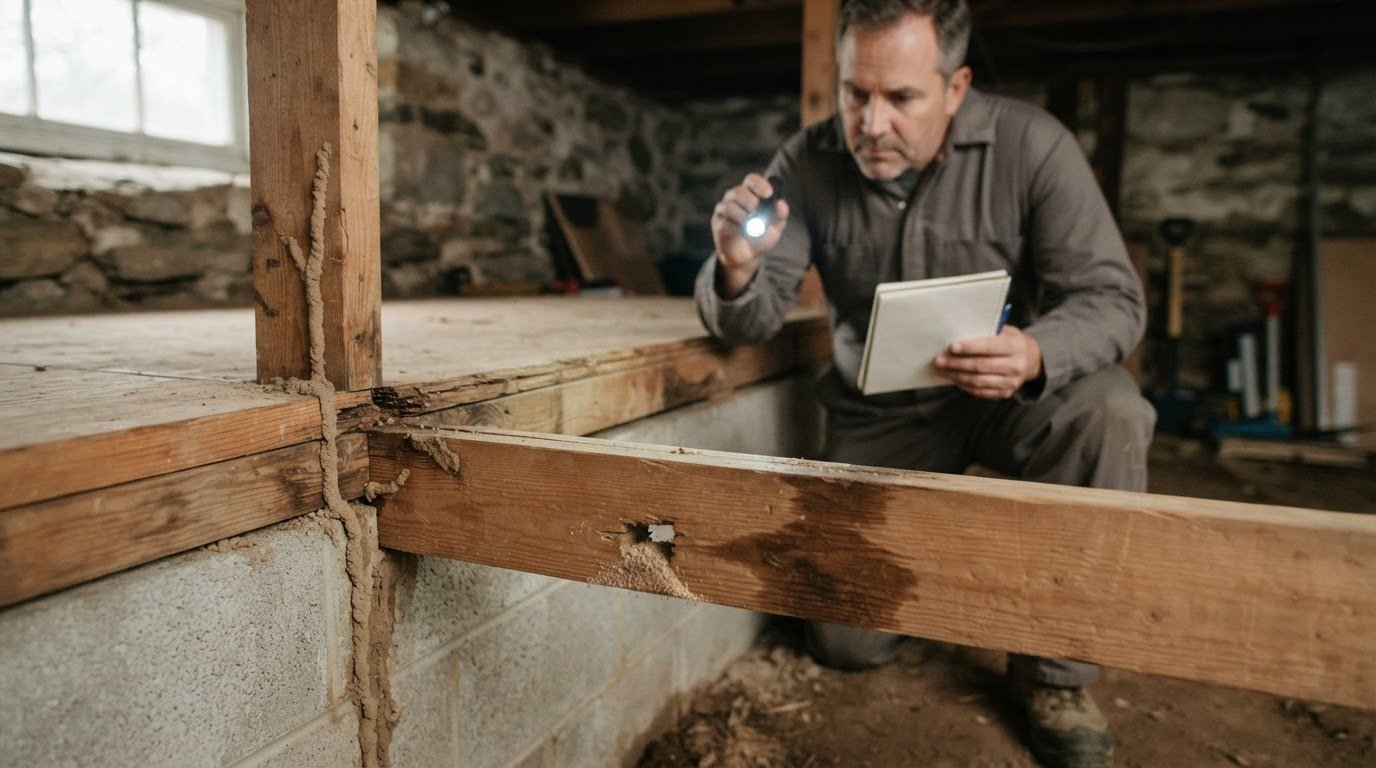
A pest in the house doesn’t automatically mean the structure is at risk, but some pests can damage wood and other building materials over time. So, can pests cause structural damage? Yes, depending on the pest and its behavior. Termites consume wood, while carpenter ants excavate it for nesting. A small clue may deserve attention, but it doesn’t always reveal the cause or extent of a problem.
It’s understandable to worry about damage hidden behind walls, under floors, or in other hard-to-see areas. At the same time, stains, soft wood, and other changes can have causes unrelated to pests, including moisture or ordinary wear. Looking at the evidence in context can help avoid assumptions.
This article explains which pests can affect building materials, how their behaviors differ, and what signs may be useful to document. It also covers sensible next steps, including when an assessment may help determine whether pest activity is connected to observed damage. The goal is to help you assess concerns calmly and understand when professional input could clarify what’s happening.
Key Takeaways
- Can pests cause structural damage? Some can, but their presence alone doesn’t establish whether building materials are damaged or how serious the issue may be.
- Learn how pest behavior affects different materials and why similar-looking clues can have more than one explanation.
- Document where and when you notice changes, and avoid disturbing potential evidence before it can be assessed.
- A professional pest assessment may help clarify whether pest activity is connected to observed damage and inform possible next steps.
Can Pests Cause Structural Damage? The Short Answer
If you’re asking, “can pests cause structural damage?” the answer is yes, some pests can harm wood or other building components. But finding a pest, or evidence that one has been present, doesn’t prove that structural damage exists or show how extensive it may be. The pest’s behavior, the material affected, and the material’s condition all matter.
Structural damage means harm to parts of a building that support it, enclose it, or help protect it from the elements. This differs from damage to belongings, stored items, insulation, or wiring. Those issues can still affect a home, but they don’t automatically mean a supporting component has been weakened.
For another perspective on how pest damage may affect a property, watch this video:
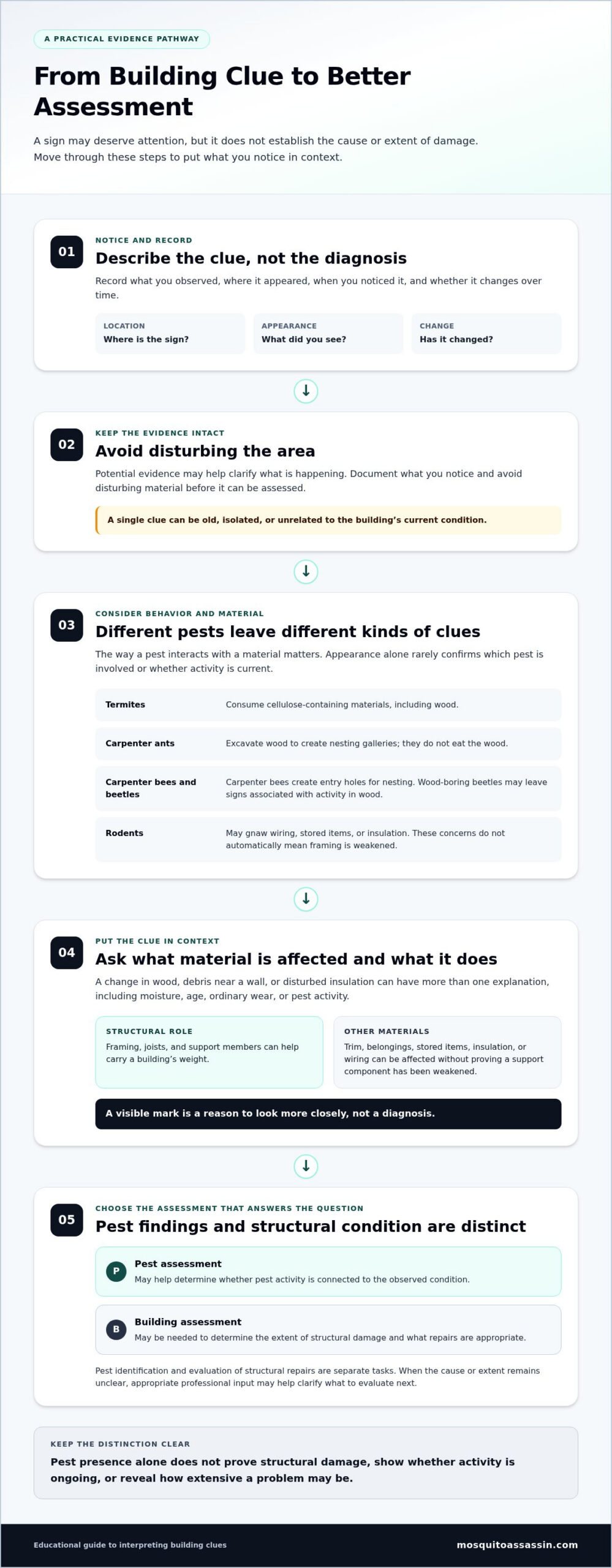
A visible clue is a reason to look more closely, not a diagnosis. A damaged board, debris near a wall, or a change in insulation could have several explanations, including moisture, age, or pest activity. A clue alone may not identify the cause, show whether activity is ongoing, or indicate whether an important building component is affected.
What counts as structural damage in a home?
Framing, joists, and support members can help carry a building’s weight. Damage to these components may have different implications from damage to wooden trim, which is often a finish rather than a support. The location and role of the affected material matter, so a mark on wood shouldn’t be treated as proof that the home’s structure is compromised.
A qualified building assessment may be needed to determine the extent of damage and what repairs are appropriate. A pest assessment can help determine whether pest activity may be related to the observed condition, but identifying pests and evaluating structural repairs are distinct tasks.
Why pest presence does not automatically mean structural damage
Pests interact with materials in different ways. Some feed on material, others excavate it for nesting, and some may occupy an area without damaging the structure. Their presence in a room or near a building component doesn’t establish that the material has deteriorated.
One observation also differs from evidence of ongoing activity. A clue may be old, isolated, or unrelated to the building’s current condition. Consider what you saw, where it appeared, and whether the condition changes, rather than assuming the worst from a single sign.
Keep the questions focused: Is there evidence of pest activity? What material appears affected? Could that material serve a structural function? These details help guide a measured assessment. If the cause or extent remains unclear, appropriate professional input may help determine what to evaluate next.
How Termites, Carpenter Ants, Bees, and Rodents Affect Building Materials
Pests affect buildings through different behaviors. Some consume wood, some excavate it, and others chew or nest in materials without feeding on structural components. Understanding the behavior behind a clue can help narrow down what may be happening, though appearance alone rarely identifies a pest with certainty.
These distinctions matter when considering whether pests can cause structural damage. The University of Maryland Extension’s structural-pest information offers an overview of wood-damaging insects, but it isn’t evidence that a particular pest is present at a local property.
Wood-damaging insects: different behaviors, different clues
Termites consume cellulose-containing materials, including wood. Carpenter ants don’t eat wood; they excavate galleries to create nesting spaces. The difference matters: feeding and excavation affect wood in different ways, and the insects aren’t interchangeable.
Carpenter bees create entry holes in wood for nesting. Wood-boring beetles may also leave signs associated with activity in wood. Small openings or nearby debris can prompt closer assessment, but their appearance alone can’t reliably confirm which insect caused them or whether activity is current. Surface clues need context, including the material’s location and condition.
Rodents and damage beyond the building frame
Rodents may gnaw on wiring, stored items, or insulation. These are property concerns, but they don’t automatically mean framing or another structural component has been weakened. Sounds in a wall, droppings, or disturbed insulation can be clues worth documenting, not proof of structural harm or a specific pest.
Note where signs appear and whether they change over time. Avoid disturbing material that may help clarify the issue. For more on rodent-related concerns, see this professional rodent removal guide.
Consider the pest’s behavior and the affected material together. A hole in wood, for example, isn’t enough on its own to distinguish carpenter bees from beetles or another cause. Damaged insulation may point to activity in an enclosed space, but it doesn’t show whether the building frame is affected. Recording the location, appearance, and any changes gives an inspector more useful context than assigning a pest label based on one clue.
When the cause remains uncertain, an assessment may help determine whether pest activity is connected to observed material damage. Mosquito Assassin Pest Control LLC provides pest control services in Erie and Crawford Counties, Pennsylvania, and Ashtabula County, Ohio. Pest findings can inform next steps, while a separate building assessment may be needed to evaluate structural condition or repair needs.
Structural Damage or Surface Clue? How to Interpret the Evidence
A mark or change in a building material can raise questions, but it rarely tells the whole story. Hollow-sounding wood, small holes, debris, damaged insulation, and gnaw marks can have different causes. Moisture, age, construction details, and previous repairs may also affect how materials look or sound. Use clues as reasons to observe and document, not as stand-alone proof of a pest or structural weakness.
The comparison below shows what a sign might suggest and what it cannot establish by itself.
| Observed sign | Possible explanations | What it cannot prove alone |
|---|---|---|
| Wood sounds hollow when tapped | Possible insect activity, decay, voids in construction, or differences in the wood | Which cause is responsible, whether activity is current, or whether the wood is structurally weakened |
| Small holes in wood | Possible insect emergence or entry, old damage, or holes related to construction or repairs | The pest species, the age of the holes, or the extent of any damage inside the wood |
| Fine, frass-like debris near wood | Possible insect-related material, dust from a repair, or other loose debris | That insects produced it or that a nearby structural component is affected |
| Insulation appears disturbed or damaged | Possible animal activity, settling, maintenance work, or another disturbance | That framing is damaged or that a particular pest is present |
| Gnaw marks on material | Possible rodent chewing, wear, or marks from tools or other contact | Which animal or object made the marks, whether the activity continues, or whether a support is compromised |
Clues that may warrant a closer look
Recurring debris, fresh-looking damage, discarded wings, or repeated pest sightings are useful observations to record. Note the date and exact location, and take photographs from a safe distance if practical. Patterns and location can add context, but they don’t definitively identify a pest. Avoid disturbing suspected nesting areas or damaged materials, since doing so may remove clues or change what can be assessed.
When a mark may have another explanation
Look at the surrounding conditions, too. Water staining or softened material may relate to moisture; cracks or gaps may reflect settling or construction details; patches, fasteners, or mismatched materials may indicate earlier repairs. Similar appearances can have different causes, so don’t assume pest activity explains every change. This article can’t determine whether a building component is compromised.
Pest identification and structural evaluation answer different questions. A pest assessment may help determine whether activity is connected to the observed evidence. A qualified building assessment may be needed to judge a component’s condition and repair needs. Keep repair decisions separate from pest-control decisions, and use the relevant assessment to clarify each issue.
What to Do If You Suspect Pest-Related Damage
Once you’ve noticed a concern, make the question clear. Are you trying to identify a pest, understand why it may be active in a particular area, or determine what kind of evaluation the affected material needs? Defining the concern helps keep an assessment focused and makes it easier to understand what the findings can and can’t tell you.
Use this framework to prepare:
- Describe the concern. Explain what prompted you to seek help, without presenting a suspected cause as confirmed.
- Identify what you want clarified. For example, you may want to know whether the evidence is consistent with pest activity or whether additional evaluation is appropriate.
- Review the findings. Ask for a clear explanation of what was observed and what remains uncertain.
- Consider the next step. Use the findings to decide whether pest management, further evaluation, or both may be relevant.
Prepare for a useful assessment
Think about property details that may help explain the concern. Recent maintenance, renovations, changes in how a space is used, or known moisture issues can be relevant background. You don’t need to interpret these details yourself. Sharing them can help an inspector consider possible factors alongside pest evidence, rather than viewing one sign in isolation.
For broader context on household pest prevention, the general pest control guide covers common considerations. General prevention information can help you think about the property as a whole, but it won’t determine the cause of a particular condition.
Use findings to guide the next decision
An assessment is most useful when its conclusions are specific. Clarify which observations support the findings, whether the evidence indicates current activity, and what questions remain unanswered. If the assessment identifies a pest concern, pest management may be a relevant next step. If the main concern is the condition or repair of a building component, that requires an evaluation suited to the building itself.
A pest inspection can inform decisions, but it doesn’t resolve every uncertainty or replace repairs. The appropriate next step depends on the findings and the question that still needs an answer. Avoid treating a suggested possibility as a confirmed diagnosis, and use the relevant professional input for each concern.
When Professional Pest Assessment Can Help Protect a Property
Professional pest assessment may be useful when signs keep appearing, the suspected pest is unclear, or you want help determining whether pest activity may be related to observed damage. An assessment can focus on evidence of pests, the areas affected, and conditions that may support activity. It can help inform next steps, but it doesn’t establish a building’s structural integrity or determine what repairs are needed.
That distinction matters. A pest professional can assess pest-related evidence, while a qualified building professional may be needed to evaluate framing or other building components. The two assessments address different questions, and neither should be treated as a substitute for the other. If you’ve been asking whether can pests cause structural damage, an inspection may help clarify the pest-related part of the concern without assuming the extent or cause of building damage.
What a pest-focused assessment can clarify
An assessment can consider where evidence appears, what materials or areas are affected, and whether conditions such as access points may be contributing to pest activity. Findings can help distinguish a possible pest issue from clues that need further investigation. They don’t automatically confirm that a component is weakened or identify necessary repairs.
Mosquito Assassin Pest Control LLC provides pest control services, including Termite Inspections and Treatment, Rodent Control, and Carpenter Bee Control. For a business property, commercial pest control services may be relevant when assessing pest concerns in a commercial setting. The appropriate assessment depends on the concern and the evidence available.
Local expertise for properties in Pennsylvania and Ohio
Mosquito Assassin Pest Control LLC’s technicians are licensed, insured, and certified. A pest assessment can provide an opportunity to discuss observed evidence and possible next steps in the context of the property, without assuming that every mark or material change has the same cause.
Before an assessment, it can help to have your notes and photographs ready. Describe what prompted concern and what you hope to clarify. These details give the assessment a clear starting point, though they don’t replace a separate evaluation of building condition when that is the concern.
After the pest findings are reviewed, next steps may involve pest management, monitoring, or further assessment of the building material. The right path depends on what the evidence shows. No single pest inspection can be assumed to resolve every possible cause of damage, and pest findings alone shouldn’t determine structural repairs.
Choose a Clear Next Step
Make pest awareness part of routine property care, not just a response to a worrying discovery. Paying attention to changes around the home can help you notice concerns and understand them. The question “can pests cause structural damage” has a practical answer, but what matters for your property is identifying the cause and choosing a suitable response.
For an inspection or professional recommendations about pest activity, contact Mosquito Assassin Pest Control LLC. A clear, informed next step can make property concerns feel more manageable.
Frequently Asked Questions
Can pests damage a home even when no insects are visible?
Yes, some pest activity can occur out of sight, but hidden damage alone doesn’t prove pests are present. If you’re wondering whether can pests cause structural damage without visible insects, focus on patterns rather than assuming a cause. Record where a change appears and whether it develops or recurs. A professional pest assessment may help evaluate signs of pest activity, but a building assessment may be needed to evaluate structural components.
Is every hole in wood a sign of pest damage?
No. A hole could be related to an insect, a removed fastener, construction, a previous repair, or ordinary wear. A row of holes near hardware, for example, may have a different explanation from isolated openings in an older board. Don’t infer a pest species or active infestation from appearance alone. Note whether the openings are new or changing and whether there are other signs nearby before seeking an assessment.
Can carpenter ants damage wood without eating it?
Yes. Carpenter ants excavate wood to form nesting galleries rather than eating it for food. That differs from termites, which consume cellulose-containing material. If you find a small pile of coarse debris near a wooden feature, note its precise location and whether it reappears, but don’t treat the material as conclusive identification. A pest professional can assess the evidence and help clarify whether carpenter ants or another cause may be involved.
Can rodents cause structural damage, or only damage belongings?
Rodents can affect materials beyond stored belongings. Chewing may damage wiring or insulation, but those signs don’t establish whether framing or another structural component is weakened. If you hear activity near a ceiling or wall, record when and where it occurs and note any visible changes. Avoid opening enclosed spaces to investigate. Pest assessment and evaluation of building damage are separate concerns, so repairs may require a building professional’s input.
What should I do if I find sawdust-like material near wood?
Record where the material is, when you noticed it, and whether it returns. A photo can preserve a reference for comparison, but don’t sweep, move nearby materials, or disturb a possible nest just to identify the source. Dust from work or repairs can resemble insect-related debris. If it recurs or appears with other signs, a pest assessment may help investigate its source without relying on appearance alone.
Can pest damage be mistaken for water damage or normal wear?
Yes. A discolored or softened area, surface change, or damaged finish can have more than one explanation, including moisture, age, settling, repairs, or pest activity. Consider whether the change is near a past repair or an area exposed to moisture, and record any pattern over time. If the condition involves a component that may support the building, have its condition evaluated separately from pest identification.
What happens if suspected pest damage is left unassessed?
The outcome depends on the cause, material, and whether pest activity is continuing, so one sign can’t predict what will happen. An unrelated mark may remain unchanged, while ongoing activity may produce additional evidence. If you’re concerned, preserve a record of what you’ve observed and arrange an appropriate assessment. Neither this information nor a pest assessment alone determines structural safety or the repairs a building may need.
Disclaimer: The information provided on this blog is for general informational purposes only and is not intended as professional pest control advice. Conditions vary by property, environment, and location. Reading this content does not create a service agreement. For an inspection or professional recommendations, please contact Mosquito Assassin Pest Control LLC directly.
Leave a Reply