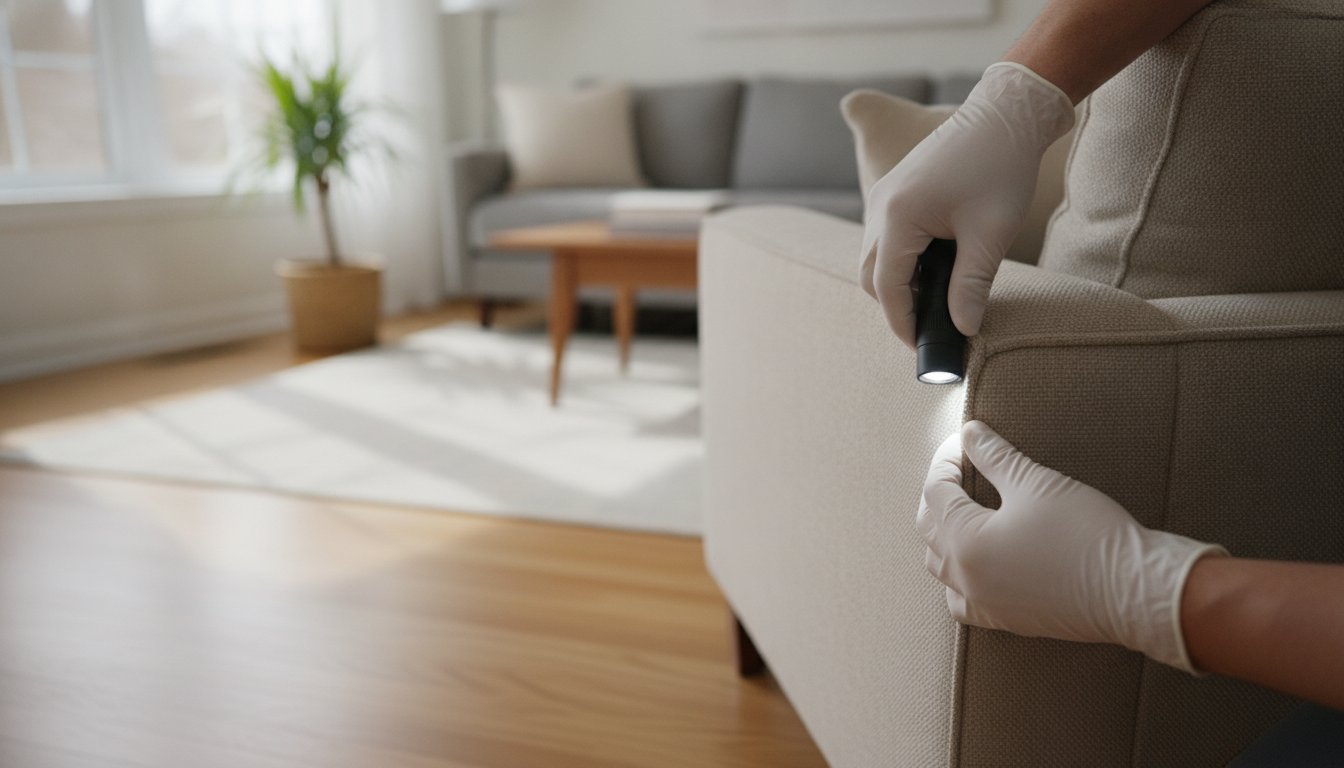
According to the Professional Pest Management Alliance, 73 percent of Americans do not know how to inspect furniture for bed bugs properly. This gap in knowledge is particularly concerning in regional travel corridors like Erie and Crawford Counties in Pennsylvania and Ashtabula County in Ohio, where the circulation of secondhand goods increases the risk of introduction. Overlooking early warning signs often allows a minor issue to become a widespread infestation before it is even noticed.
It is natural to feel anxious when you cannot distinguish between common household lint and potential pest activity. This systematic guide provides professional methods for identifying bed bug behavior in household furniture to protect your property and restore your peace of mind. By following a disciplined, evidence-based approach, you can confirm the presence or absence of these pests with total confidence.
You will discover the essential tools required for a thorough inspection, including high-lumen flashlights and magnification. This overview covers the specific physical indicators to watch for, such as fecal spotting and cast skins, while detailing the most common hiding spots in upholstered and hard furniture. Understanding these technical details ensures you know exactly when a situation requires professional intervention.
Key Takeaways
- Identify physical indicators like live insects and dark fecal spotting to distinguish bed bugs from common household debris.
- Mastering how to inspect furniture for bed bugs requires specific tools like high-lumen flashlights and magnification to find eggs in deep crevices.
- Follow a systematic approach for upholstered items by checking cushion seams, zipper folds, and the undersides of furniture frames.
- Examine hard surfaces by inspecting screw holes, drawer tracks, and joint connections where pests often find refuge.
- Understand why isolating suspected items and seeking professional guidance is more effective than attempting unguided treatments.
Identifying the Key Signs of Bed Bugs on Furniture
Successful identification is the foundation of effective pest management. Adult bed bugs are reddish brown insects, typically measuring 4 to 5 millimeters, which is roughly the size of an apple seed. Younger nymphs are much smaller and can appear translucent or pale yellow. Because they’re nocturnal and avoid light, you may not always see the insects themselves during the day. Instead, you must look for the physical evidence they leave behind, such as fecal spotting, shed skins, and egg clusters.
To see these signs in a real-world setting, watch this helpful visual guide:
Visual Indicators of an Infestation
Fecal spotting is often the most visible sign when learning how to inspect furniture for bed bugs. These spots appear as small, dark, ink-like dots that resemble a felt-tip marker bleed on fabric. If you find a suspicious spot on a hard surface, wipe it with a damp cloth. Bed bug excrement consists of digested blood and will often leave a rusty smear. You might also find exuviae, which are translucent, yellowish exoskeletons cast off as the insects grow. For a deeper understanding of these life stages, researching bed bug biology and behavior can help you distinguish between active pests and harmless household debris like lint or dust. In cases of significant activity, a distinct musty odor, often described as sweet or similar to coriander, may be present.
Where Bed Bugs Prefer to Hide
Bed bugs are experts at concealment. They prefer tight, dark spaces that offer security. They don’t typically live on the open surfaces of a sofa or chair. Instead, they retreat into crevices where their flat bodies can remain protected. While they’re most common in mattresses and bed frames, they readily inhabit any piece of furniture where people remain stationary for long periods, such as recliners or office chairs. These pests are not limited to fabric. They frequently colonize solid materials, including:
- Screw holes and furniture joints
- The undersides of wooden drawer slides
- Decorative carvings or trim on headboards
- Gaps in the backing of dressers or nightstands
Focusing your efforts on these high-probability areas near sleeping or sitting zones increases the likelihood of a successful detection. Professional pest control may help reduce risk if you identify these signs in multiple locations throughout your home.
Essential Tools for a Thorough Furniture Inspection
Using the right equipment is the difference between a successful detection and a missed infestation. Professionals rely on specific, accessible items to uncover pests that hide deep within furniture. When learning how to inspect furniture for bed bugs, your primary tool is a high-powered LED flashlight. This allows you to see into dark joints and crevices where ambient room light cannot reach. High lumen output is necessary because bed bugs often retreat into the deepest recesses of a furniture frame.
Supplement your flashlight with a magnifying glass to identify small eggs and translucent nymphs. According to this EPA guide on finding bed bugs, identifying physical evidence like shed skins and eggs is critical for a complete assessment. A 10x magnifying glass is usually sufficient to see the pearl white eggs, which are only about one millimeter long. These eggs are often glued to surfaces, making them difficult to see with the naked eye against light colored wood or fabric.
Preparing the Inspection Area
Clear a space around the furniture to allow for 360 degree access. In homes across Erie and Crawford Counties, this often means moving heavy sofas or recliners away from walls and other furniture pieces. This step prevents pests from escaping into nearby harborages during the disturbance. Ensure the room has strong overhead lighting to supplement your flashlight. It is also helpful to have a vacuum cleaner with a hose attachment nearby. If you encounter active insects, you can immediately contain them to prevent further spread throughout the property.
Using Probing Tools Effectively
A thin plastic card, such as an expired credit card, serves as an excellent probe. Slide the card into deep seams, welt cords, and fabric folds to dislodge hidden bugs or debris. Use your flashlight at a low angle across the surface of the material. This technique, known as side lighting, creates shadows that reveal the textures of eggs or fecal spotting that might be invisible under direct light. A magnifying glass is particularly critical when checking the grain of unpainted wood, where eggs can blend into the natural texture of the surface.
Collecting debris on a piece of white paper or a light colored cloth makes it easier to inspect the samples under a magnifier. If your search reveals signs of activity, professional bed bug treatment can help manage the situation effectively and prevent the infestation from growing.
Step-by-Step Inspection Process for Upholstered Pieces
Upholstered furniture provides an ideal environment for bed bugs because of the numerous hiding spots created by fabric folds and internal padding. A successful search requires moving beyond a simple visual scan. You must physically manipulate the furniture to reveal hidden harborages. Begin by removing all detachable cushions. Inspect every side of these cushions, paying close attention to the welt cords (the raised piping) and the fabric surrounding the zippers. Even if the cushions appear clean, the interior of the zipper tracks can hide eggs or small nymphs that are easily missed.
The main frame of the furniture requires the most focus. Bed bugs often congregate in the deep crevices where the arms meet the back and seat. Use your flashlight to peer into these dark recesses, using your plastic card to probe the gaps. If the furniture has a dust cover (the thin, usually black fabric stapled to the bottom) look for small holes, tears, or dark spotting. These indicators often suggest that pests are living inside the internal frame or among the springs of the piece. If you find evidence in these deep areas, professional pest control may help reduce risk by containing the infestation before it spreads.
Inspecting Seams and Piping
Fabric folds and piping are primary hiding spots because they offer tight, protected spaces. Use your probing tool to pull back these folds and look for clusters of insects or translucent shed skins. Decorative elements like buttons, tufts, and trim also provide shelter. It is important to follow a documented MSU Extension furniture inspection protocol to ensure no area is overlooked. This includes checking the interior of zipper tracks and the undersides of any decorative skirts or fringes that hang near the floor.
Checking the Underside and Legs
Flipping the furniture over is a necessary step when learning how to inspect furniture for bed bugs effectively. The wooden or metal frame on the underside provides a stable, dark environment for colonies to grow. Examine the points where the legs attach to the main body, as the joints and screw holes are common harborages. If your furniture has felt pads or floor protectors on the bottom of the legs, check them carefully. Bed bugs can easily hide between the pad and the leg or within the fibers of the felt itself. This systematic approach ensures that every potential harborage is evaluated, protecting your property and providing peace of mind.

Examining Hard Furniture and Wood Items
While many homeowners focus exclusively on mattresses and sofas, solid wood items often serve as critical secondary harborages. Understanding how to inspect furniture for bed bugs requires looking beyond soft fabrics and into the rigid structures of your home. Hard furniture provides stable, dark, and undisturbed environments where pests can thrive in close proximity to their hosts. To conduct a thorough check, start by completely emptying all drawers from dressers, nightstands, and desks. Inspect the back, bottom, and interior tracks of each drawer, as these areas offer the tight, protected spaces bed bugs prefer.
Examine the main frame of the piece, particularly the back panel. These panels are often made of thin plywood or fiberboard and are stapled to the frame, creating tiny gaps that are perfect for concealment. Don’t overlook the underside of tables and desks. If you have an extendable dining table, check the wooden tracks and the metal hinges of the leaf mechanisms. These moving parts contain numerous small crevices where eggs can be deposited without being disturbed by daily use. If you discover activity during your inspection, professional bed bug treatment is the most effective way to address the problem before it spreads to other rooms.
Nightstands and Dressers
Nightstands and dressers are high risk items because they are typically located within a few feet of the bed. Bed bugs are attracted to the carbon dioxide humans exhale, so they often settle in the nearest available crevice. Focus your flashlight on the gaps between the drawer and the cabinet frame. Inspect the underside of the top surface and the floor facing base of the unit. In many homes across Erie and Crawford Counties, these pieces have decorative carvings or recessed panels. Use your plastic probing card to check every joint and screw hole within these details, as even a hole the size of a pinhead can house several insects.
Bookshelves and Electronics
Bookshelves and electronics near sleeping areas are often overlooked during a DIY check. Bed bugs can hide within the spines of hardcover books or between the pages of items stored on lower shelves. Inspect the ventilation holes, ports, and battery compartments of alarm clocks, lamps, and televisions located on nightstands. The warmth generated by these devices can actually attract pests in some environments. Additionally, check the joints of picture frames and mirrors hanging on the walls near furniture. Bed bugs frequently hide behind the paper backing of frames or in the narrow space between the glass and the wood. Professional pest control may help reduce risk if you find signs of activity in these unexpected locations.
Managing Findings and Professional Consultation
If your systematic check reveals active pests or physical evidence, immediate containment is necessary. Do not drag infested items through the home. This movement often scatters insects into hallways and other rooms, which effectively expands the footprint of the infestation. Instead, isolate the piece of furniture by keeping it in place and limiting traffic to that specific area. When evidence is found, take clear, high resolution photographs of the insects, fecal spotting, or eggs before disturbing the area further. This documentation is invaluable for a professional assessment. It serves as proof of activity and helps identify the primary harborages within the room. It is also vital to avoid using over-the-counter sprays. Many of these products act as repellents that drive bed bugs deeper into wall voids or adjacent furniture, making the eventual professional resolution much more difficult.
When to Seek Professional Help
While mastering how to inspect furniture for bed bugs is a valuable skill for any property owner, visual inspections have inherent limitations. Bed bugs are biologically adapted to hide in areas unreachable by standard flashlights or plastic cards. They may reside inside the hollow metal frames of recliners, behind baseboards, or within the internal components of electronics near sleeping areas. Professionals bring years of field experience and technical proficiency to detect deep-seated infestations that a standard DIY check might overlook. Early intervention remains the most effective way to manage a population before it spreads throughout multiple rooms or neighboring properties.
Next Steps for Property Owners
For residents in Erie, Crawford, and Ashtabula counties, professional pest control may help reduce risk by providing a methodical assessment of the entire structure. Documenting findings allows a licensed expert to confirm the species and assess the biological activity level within your home. You can find broad prevention tips and strategies in this comprehensive guide on general pest control. If you have confirmed activity or remain concerned about a potential infestation, contact Mosquito Assassin Pest Control LLC for a professional inspection and recommendations tailored to the specific needs of your property.
Protecting Your Property Through Proactive Detection
A systematic approach is the most effective way to identify a potential infestation before it expands throughout your home. By utilizing high-powered lighting and magnification to examine deep seams and wooden joints, you can uncover evidence that a simple visual scan would overlook. Mastering how to inspect furniture for bed bugs empowers you to maintain a secure environment and provides the clarity needed to make informed decisions about your property’s health. Identifying these signs early is the first step toward a definitive resolution.
For residents in Erie, Crawford, and Ashtabula counties, professional-grade detection methods offer a level of precision that DIY checks cannot match. Utilizing a disciplined operational approach ensures that no harborage is ignored, from the internal frames of upholstered seating to the back panels of bedroom furniture. If you’ve identified activity or require a comprehensive assessment to restore your peace of mind, Contact Mosquito Assassin Pest Control LLC for a professional inspection. Taking decisive action now helps secure your household and ensures a swift return to comfort.
Disclaimer: The information provided on this blog is for general informational purposes only and is not intended as professional pest control advice. Conditions vary by property, environment, and location. Reading this content does not create a service agreement. For an inspection or professional recommendations, please contact Mosquito Assassin Pest Control LLC directly.
Frequently Asked Questions
Can bed bugs live on wood furniture or only on mattresses?
Bed bugs definitely inhabit wood furniture. They are attracted to dark, undisturbed crevices such as screw holes, joint connections, and the unpainted undersides of drawer slides. While mattresses provide easy access to a host, wood frames and nightstands offer stable harborages. When learning how to inspect furniture for bed bugs, you must check every rigid surface near sleeping areas. These pests are experts at squeezing into gaps as thin as a credit card.
How do I know if the spots on my furniture are from bed bugs?
Fecal spotting appears as small, dark, ink-like dots. They resemble a felt-tip marker bleed on fabric. You can confirm these are from bed bugs by wiping the spot with a damp cloth. If the spot smears into a rusty or reddish-brown color, it is digested blood. This indicates active or past infestation. This is a primary sign to look for when you determine how to inspect furniture for bed bugs.
What should I do if I find bed bugs on a piece of used furniture I just bought?
Isolate the item immediately to prevent pests from migrating. For homeowners in Erie, Crawford, or Ashtabula counties, leave the furniture in a garage or porch. Do not bring it inside. Document evidence with clear photographs for a professional. Avoid using unguided over-the-counter sprays. These often cause insects to scatter into deeper crevices. Professional pest control may help reduce risk by assessing the item and providing targeted recommendations.
Is it possible to see bed bug eggs with the naked eye?
Yes, you can see bed bug eggs with the naked eye. They are very small. They measure approximately one millimeter in length, which is about the size of a pinhead. The eggs are pearl white. They are often found in clusters, glued firmly to surfaces within seams or joints. While visible, using a 10x magnifying glass makes it much easier to distinguish them from household dust or salt-like debris.
How long can bed bugs survive on furniture that is not being used?
Bed bugs are remarkably resilient. They can survive for several months without a blood meal. In typical room temperatures of about 70 degrees Fahrenheit, adults can live for approximately two to three months without feeding. In cooler environments, their metabolism slows down. This potentially extends their survival time. It is dangerous to assume that leaving furniture in storage for a short period will resolve an infestation.
Do I need to throw away furniture if it has bed bugs?
Throwing away furniture is often unnecessary. It can actually spread the infestation if items are moved through the house without being wrapped. Most furniture can be successfully salvaged through professional-grade detection methods. If an item is heavily infested, it might be discarded. This should only be done after the item is sealed in plastic. This prevents insects from falling off during removal.
Why is it so hard to find bed bugs in a sofa or recliner?
Sofas and recliners have complex internal structures. These offer thousands of potential hiding spots. Between the wooden frame, metal springs, and various fabric folds, there are countless areas where a flashlight cannot reach. Recliners are particularly difficult. Their mechanical parts provide hollow metal tubes and joints where bugs find safety. Professional expertise is often required to navigate these intricate pieces and identify deep-seated harborages that a standard DIY check misses.
Disclaimer: The information provided on this blog is for general informational purposes only and is not intended as professional pest control advice. Conditions vary by property, environment, and location. Reading this content does not create a service agreement. For an inspection or professional recommendations, please contact Mosquito Assassin Pest Control LLC directly.