What if the treatment meant to protect your home from disease-carrying ticks actually posed a greater risk to your dog or cat than the pests themselves? It’s a common concern for homeowners, especially since roughly 66% of households in the United States share their living space with at least one animal. Finding reliable pet friendly pest control pennsylvania families can trust involves more than just reading a label. It requires a professional understanding of how treatments interact with a pet’s environment in Erie, Crawford, and Ashtabula Counties.
It’s natural to feel hesitant when balancing the need for a pest-free home with the well-being of your animals. You’ll learn how modern pest management techniques prioritize low-impact solutions that eliminate pests without leaving hazardous residues behind for curious paws to find. This guide provides a clear look at the differences between marketing buzzwords and truly safe practices, along with practical steps to prepare your home in Northwest Pennsylvania for a professional visit. By understanding local risks and proper preparation, you can maintain a secure environment for every member of the family.
Disclaimer: The information provided on this blog is for general informational purposes only and is not intended as professional pest control advice. Conditions vary by property, environment, and location. Reading this content does not create a service agreement. For an inspection or professional recommendations, please contact Mosquito Assassin Pest Control LLC directly.
Key Takeaways
- Understand the professional definition of pet-safe treatments, which prioritizes products with low mammalian toxicity to protect household animals.
- Identify common regional pests like ticks and fleas that pose year-round health risks to pets in Erie and Crawford Counties.
- Learn how science-based Integrated Pest Management (IPM) uses non-chemical methods and exclusion techniques to prevent infestations before they start.
- Discover practical preparation steps for homeowners, including how to manage pet food and belongings during a professional treatment.
- Gain insights on selecting a provider for pet friendly pest control pennsylvania that understands the local climate and specific pest challenges of the Tri-State area.
Defining Pet Friendly Pest Control in Pennsylvania
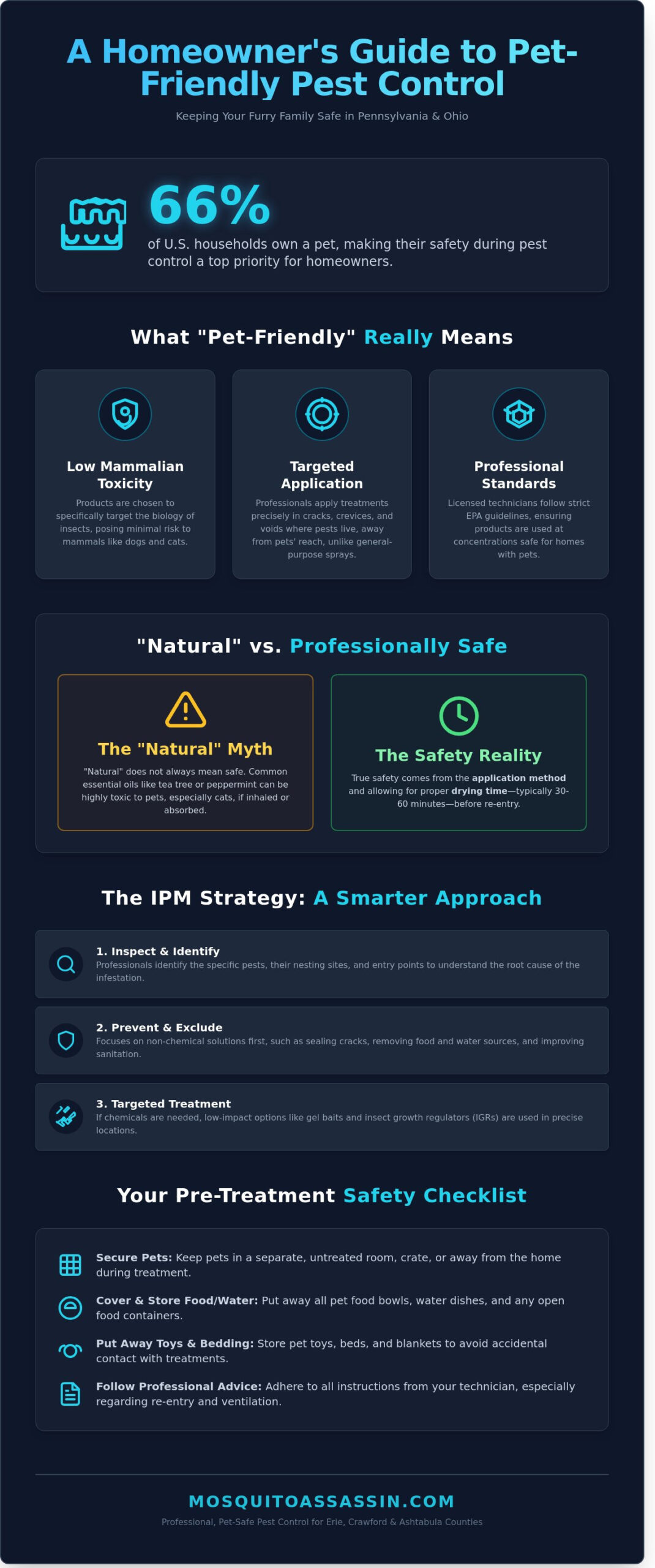
Pet owners in Erie and Crawford Counties often prioritize the safety of their animals when dealing with household invaders. In the context of professional management, pet friendly pest control pennsylvania refers to a strategic approach that minimizes risk to non-target species. This process focuses on selecting products with low mammalian toxicity, meaning the active ingredients are specifically designed to disrupt the biology of insects rather than mammals. According to the American Pet Products Association (APPA) 2023-2024 survey, 66% of U.S. households own a pet, making these safety protocols a standard requirement for residential services.
The Environmental Protection Agency (EPA) regulates these applications through strict labeling requirements under the Federal Insecticide, Fungicide, and Rodenticide Act (FIFRA). A professional application adheres to these federal mandates, ensuring that products are used at concentrations that are effective against pests but remain below thresholds that would harm a dog or cat. Unlike over-the-counter sprays, professional treatments often utilize bait stations or targeted crack and crevice applications that keep products out of reach of curious paws.
To better understand this concept, watch this helpful video:
The Difference Between Natural and Pet Safe
Many homeowners assume that “natural” means “safe,” but this is a common misconception. For instance, certain essential oils like peppermint or tea tree can be toxic to cats if inhaled or absorbed through the skin in high concentrations. A truly pet safe approach focuses on the application method and the necessary drying time. Most professional liquid treatments are considered safe for pets once they’ve completely dried, a process that typically takes 30 to 60 minutes depending on humidity levels in Northwestern Pennsylvania. Following the specific instructions on a product label is the only way to ensure the safety of every animal in the home.
Professional Standards for Residential Properties
In Pennsylvania and Ohio, technicians must meet rigorous licensing requirements overseen by the Pennsylvania Department of Agriculture and the Ohio Department of Agriculture. These professionals undergo training to understand pest biology, which allows for more targeted treatments. By using Integrated Pest Management (IPM), experts focus on removing the sources of food and water that attract pests first. This reduces the reliance on heavy chemical applications. Modern pest management has shifted toward low-impact formulations, such as gel baits and insect growth regulators (IGRs), which target specific life stages of insects without affecting the health of larger animals. This scientific approach ensures that pet friendly pest control pennsylvania remains effective while safeguarding the local environment in Ashtabula and surrounding counties.
Professional knowledge of pest behavior allows for the placement of products in areas where pets don’t typically travel. Technicians identify entry points and nesting sites, applying materials directly to the source of the infestation. This precision is a hallmark of licensed services, contrasting sharply with the broad, indiscriminate spraying often seen with DIY attempts. Homeowners who work with local professionals benefit from treatments tailored to the specific pests found in the Tri-State area, ensuring a higher level of safety for the entire family.
Disclaimer: The information provided on this blog is for general informational purposes only and is not intended as professional pest control advice. Conditions vary by property, environment, and location. Reading this content does not create a service agreement. For an inspection or professional recommendations, please contact Mosquito Assassin Pest Control LLC directly.
Common Pennsylvania Pests That Threaten Pet Health
Pennsylvania’s diverse ecosystem supports a wide range of wildlife and insects that present significant biological threats to domestic animals. In Erie County, the black-legged tick is a primary vector for Lyme disease. Statistics from the Pennsylvania Department of Health show that the state recorded 8,432 confirmed cases of Lyme disease in 2022, consistently ranking it among the highest in the United States. This isn’t just a human health issue; dogs and cats are equally susceptible to tick-borne illnesses that can cause chronic joint pain, lethargy, or even fatal kidney failure if left untreated.
Fleas represent a different but equally persistent challenge because they thrive in the Northwest Pennsylvania climate throughout the year. While outdoor activity increases exposure, fleas often hitchhike into homes on clothing or other animals. Once they establish a presence indoors, a single female flea can lay 50 eggs per day. This leads to a massive infestation within 21 days, causing pets to suffer from severe allergic dermatitis and potential tapeworm infections.
Mosquitoes serve as the sole vector for heartworm, a potentially fatal condition for both dogs and cats. The American Heartworm Society reports that mosquitoes can breed in as little as half an inch of standing water. In Pennsylvania, where humidity levels often exceed 70% during summer months, mosquito populations can explode rapidly. Professional management focuses on these breeding sites to protect outdoor play areas where pets spend their time. Understanding these threats is the first step toward implementing pet friendly pest control pennsylvania that works.
Rodents like mice and rats also pose direct risks to household pets. These pests carry internal parasites such as mites and roundworms. If a pet hunts or interacts with a rodent, they can contract these parasites, leading to digestive issues or long-term health complications. Homeowners seeking to minimize these biological threats may find that professional pest control helps reduce risk for the entire household.
Tick and Flea Risks in Northwest Pennsylvania
Wooded areas in Crawford County provide the perfect habitat for ticks to thrive. Peak activity usually occurs between April and October when temperatures stay above 45 degrees Fahrenheit. Professional yard treatments target high-risk zones like tall grass and leaf litter where ticks wait for a host. To maximize safety, homeowners should Protect Your Pets by coordinating property treatments with veterinary-prescribed flea and tick preventatives. This multi-layered approach is a cornerstone of effective pet friendly pest control pennsylvania.
Mosquito Management and Outdoor Safety
Standing water is the primary driver of mosquito populations in Pennsylvania yards. Common breeding grounds often go unnoticed by homeowners. These include:
- Clogged rain gutters that hold damp debris
- Birdbaths that aren’t scrubbed and emptied weekly
- Corrugated drainage pipes connected to downspouts
- Potted plant saucers and discarded tires
Professional mosquito control reduces these populations by addressing larvae before they reach adulthood. This safeguards pets during their peak outdoor hours at dawn and dusk. Identifying and eliminating these water sources significantly lowers the local mosquito count, providing a safer environment for pets to exercise and play without the constant threat of bites.
The Role of Integrated Pest Management (IPM) in Pet Safety
Integrated Pest Management, or IPM, represents a shift from traditional broadcast spraying to a science-based strategy. This approach focuses on long-term prevention by managing the environment rather than just reacting to pests. For residents seeking pet friendly pest control pennsylvania, IPM provides a framework where non-chemical solutions are the first line of defense. By understanding the biology and lifecycle of a pest, technicians disrupt their survival without introducing unnecessary risks to cats or dogs.
Exclusion techniques are a cornerstone of this process. It’s a physical way to keep pests out. For example, a house mouse can squeeze through a gap only 0.25 inches wide, which is roughly the width of a pencil. Sealing these entry points with hardware cloth or copper wool prevents the need for interior rodenticides. Sanitation is another primary tool. Pests enter homes in search of food, water, and shelter. Fixing a leaky pipe under a kitchen sink or storing pet food in airtight, hard-plastic containers eliminates the attractants that bring insects inside. When these environmental factors are managed, the footprint of any required treatment is significantly reduced.
When treatments are necessary, IPM dictates targeted applications. Instead of broad perimeter sprays that pets might walk through, professionals apply products in localized areas. This might include injecting gels into deep cracks or using tamper-resistant bait stations that keep products away from curious paws. According to the National Pesticide Information Center’s guide on Pets and Pesticide Use, minimizing the area of application is a key step in reducing accidental exposure. This methodical approach ensures the treatment hits the target pest while leaving the rest of the home untouched.
Inspection and Identification
Every effective IPM plan begins with a meticulous inspection of the property. In older Pennsylvania homes, particularly those in Erie and Crawford Counties, stone foundations and aging siding often provide easy access for ants and rodents. Technicians look for specific rub marks from grease on rodent fur or nesting materials in crawlspaces. By identifying the exact species, a customized plan is created for the specific layout of the residence. This prevents a generic approach that might include unnecessary products.
Monitoring and Targeted Treatments
Monitoring stations allow for real-time tracking of pest activity. These tools act as an early warning system, showing where pests are moving before an infestation becomes visible. If activity is found, treatments are applied only in inaccessible areas like wall voids or behind heavy appliances. Utilizing professional pest control services for ongoing monitoring ensures that problems are caught early. This proactive stance maintains a pest-free environment with the lowest possible risk profile for household animals. For property-specific questions, contacting a professional through the online booking portal can help clarify the best approach for a particular home.
Disclaimer: The information provided on this blog is for general informational purposes only and is not intended as professional pest control advice. Conditions vary by property, environment, and location. Reading this content does not create a service agreement. For an inspection or professional recommendations, please contact Mosquito Assassin Pest Control LLC directly.
How Homeowners Can Prepare for a Professional Pest Service
Preparation is the most critical step in ensuring that pet friendly pest control pennsylvania remains effective and safe. While professional technicians bring the expertise and specialized products, homeowners in Erie and Crawford Counties play a vital role in the process. A well prepared home allows the technician to work efficiently and prevents accidental exposure to sensitive animals. Most preparation tasks take approximately 30 to 45 minutes but provide long term peace of mind for the entire household.
Clear communication stands as the foundation of a successful treatment. It’s necessary to inform the service provider about every animal residing on the property. This includes not just dogs and cats, but also birds, reptiles, and small mammals like guinea pigs or hamsters. Different species have varying respiratory rates and metabolic sensitivities. For instance, birds possess highly efficient respiratory systems that make them more vulnerable to airborne particles than most mammals. By identifying these residents early, the professional can adjust the application methods to suit the specific environment.
Pre-Service Checklist for Pet Owners
Homeowners should begin their preparation by clearing the floor of all pet related items. This includes toys, chew bones, bedding, and food or water bowls. Removing these items prevents them from coming into contact with any mist or droplets during the application. If a pet has a favorite rug or bed that cannot be moved, it should be laundered or placed in a sealed plastic bag until the treatment is complete. Technicians recommend a 10 foot clearance around the perimeter of rooms where baseboard treatments are planned.
- Secure all pets: Animals should be placed in a crate or a room that isn’t scheduled for treatment. This prevents them from following the technician or accidentally stepping into wet product.
- Cover fish tanks: Use a heavy towel or plastic wrap to seal the top of the tank completely. Airborne particles can settle on the water surface and harm aquatic life.
- Turn off air pumps: Disconnect the power to fish tank aerators for at least 2 to 3 hours. This stops the pump from pulling room air into the water during the service.
During and After the Treatment
Safety doesn’t end when the technician leaves the driveway. The “dry to the touch” rule is the gold standard for re-entry. Most liquid applications require between 2 and 4 hours to dry completely, depending on the humidity levels in Pennsylvania or Ohio. If the weather is damp, drying times can extend by an additional 60 minutes. Keeping pets out of treated areas until they’re dry is the most effective way to prevent paw contact and subsequent grooming ingestion.
Ventilation is a key factor in post-treatment safety. Once the technician gives the all clear, opening windows for 15 to 20 minutes can help refresh the indoor air. Homeowners should also consult with their professional about specific wait times for different species. For example, while a dog might be fine after 2 hours, a sensitive reptile might benefit from a 4 to 6 hour waiting period. If a pet owner notices any unusual behavior in their animal after a service, they should contact a veterinarian immediately as a standard precaution. Following these protocols ensures the home remains a safe sanctuary for everyone. For those ready to begin the process, scheduling an inspection through the online portal can help identify the specific needs of the property.
Selecting a Professional Pest Service in Northwest Pennsylvania and Northeast Ohio
Choosing a provider in Erie, Crawford, or Ashtabula Counties requires looking past basic search results. A technician needs to understand why pests behave differently in Meadville compared to Conneaut. Local climate factors, like the high humidity and lake-effect moisture near Lake Erie, dictate pest activity levels throughout the year. A provider that fails to account for these specific regional variables often provides sub-par results. Professional services should focus on identifying the root cause of an infestation rather than just treating the visible symptoms.
Regional Expertise in Erie and Crawford Counties
Lake Erie influences more than just the local weather patterns. It creates a damp environment where pests like carpenter ants, spiders, and mosquitoes thrive. Selecting a locally owned and operated service ensures the team understands these specific environmental triggers. Pennsylvania has strict regulations regarding pesticide application through the Department of Agriculture. Local experts stay current on these rules to maintain high standards for safety and compliance. This deep community connection means the service is tailored to the unique challenges of the 814 and 440 area codes, rather than following a generic national script. Knowledge of local soil types and seasonal migration patterns of rodents in Northwest Pennsylvania is essential for effective prevention.
Evaluating Professional Credentials
Homeowners should always verify that a company holds valid, current licenses in both Pennsylvania and Ohio if they operate across the state line. Proper insurance protects the property owner during the treatment process. It’s also vital to find a team that prioritizes family and pet safety across their entire service area. A satisfaction guarantee provides peace of mind that the job will be handled correctly, as reputable companies stand behind their work. When looking for pet friendly pest control pennsylvania, transparency is the most important trait. A professional provider will explain exactly which products are used and why they’re chosen for a specific property. They should be able to provide Material Safety Data Sheets (MSDS) upon request without hesitation.
One-time treatments often fail because they don’t account for pest life cycles. For example, flea pupae can remain dormant for over 150 days in some environments. A single visit might eliminate the adults but miss the next generation entirely. Year-round protection plans offer more consistent safety by creating a permanent barrier around the home. These plans adapt to the seasons, addressing mice and rats in the winter and stinging insects or ticks in the summer. This proactive approach is usually more effective than reacting to a full-blown infestation after it starts. It’s a more sustainable way to manage pet friendly pest control pennsylvania because it uses targeted, preventative applications rather than heavy-handed emergency measures.
Transparency regarding methods is a non-negotiable standard for any modern pest professional. A qualified technician will provide a clear breakdown of the Integrated Pest Management (IPM) strategies they employ. This includes identifying entry points, moisture problems, and suggesting structural repairs. Knowing the specific ingredients in a treatment helps residents feel confident in their choices for their household. Effective communication ensures that everyone in the home understands the safety protocols following a service visit. Professional pest control may help reduce risk for homeowners concerned about local infestations. For those seeking a detailed property assessment, visiting the online booking portal can help start the process.
Protecting Pennsylvania Pets and Properties
Balancing a pest-free home with the safety of four-legged family members requires a strategic approach. Integrated Pest Management (IPM) stands as the professional standard for safety, focusing on long-term prevention and targeted treatments rather than broad chemical application. Homeowners in Erie, Crawford, and Ashtabula counties can maintain a safer environment by removing pet toys and food bowls before any scheduled service. It’s a simple step that helps minimize exposure while maximizing the effectiveness of the treatment plan. Following these guidelines helps ensure that pest management remains effective without compromising the living space.
Effective pet friendly pest control pennsylvania residents rely on utilizes these science-based methods and the expertise of licensed and insured professionals. Since every property presents unique challenges, professional pest control may help reduce risk by identifying specific vulnerabilities around the home. Taking these proactive steps helps ensure a comfortable and secure environment for every member of the household throughout the year.
Disclaimer: The information provided on this blog is for general informational purposes only and is not intended as professional pest control advice. Conditions vary by property, environment, and location. Reading this content does not create a service agreement. For an inspection or professional recommendations, please contact Mosquito Assassin Pest Control LLC directly.
Frequently Asked Questions
Is professional pest control safe for dogs and cats?
Professional pest control is safe for dogs and cats when the technician follows the specific application instructions on the product label. Licensed professionals in Pennsylvania use products registered by the Environmental Protection Agency (EPA), which undergo rigorous testing for safety around mammals. Once a liquid treatment has dried, which usually takes 30 to 60 minutes, it’s safe for pets to return to the area. This process ensures effective results without risking animal health.
How long should I keep my pets away from a treated area?
You should keep pets away from treated surfaces until they’re completely dry, which typically takes between 30 and 90 minutes. High humidity levels in Erie County can sometimes extend this drying period beyond the one-hour mark. Keeping animals in a separate room or a crate during the application and for the following hour ensures they don’t come into direct contact with wet products. This simple precaution prevents accidental ingestion or skin irritation.
Do I need to leave my house during a pet-friendly pest treatment?
Most homeowners don’t need to leave their house during a pet friendly pest control pennsylvania treatment. While the technician works, you and your pets can stay in an untreated room or on a different floor. If a specialized treatment like a fogger is required, the label might mandate a 2 to 4 hour vacancy period; however, standard perimeter sprays rarely require leaving the premises. Check with the technician about specific products used during your visit.
What should I do if my pet accidentally enters a treated area before it is dry?
If a pet enters a wet area, wash their paws and any contacted fur immediately with mild soap and water. This prevents them from licking the product off their skin or fur. You should also monitor the animal for 24 hours for any unusual behavior. If you notice vomiting or lethargy, contact a veterinarian or the Pet Poison Helpline at 855-764-7661. Quick action helps mitigate any potential risks from accidental exposure.
Are outdoor mosquito and tick treatments safe for my pets to play in?
Outdoor mosquito and tick treatments are safe for pets once the grass and foliage have dried. In the climate of Crawford County, this usually happens within 45 minutes of application. These treatments target specific pests like the Ixodes scapularis tick, which can carry Lyme disease. By reducing these pests, professional treatments actually help protect your pets from tick-borne illnesses. This proactive approach is a key part of maintaining a healthy outdoor environment for animals.
Can professional pest control help with my pets flea infestation?
Professional pest control helps eliminate environmental flea populations, but it doesn’t replace veterinary-prescribed flea preventatives. While 5 percent of a flea population lives on the pet, the other 95 percent lives in the carpet and yard as eggs or larvae. A comprehensive pet friendly pest control pennsylvania plan targets these life stages in the home to stop the cycle of re-infestation. Eliminating the source in the environment is the only way to achieve long-term relief.
How often should pet-friendly pest control be performed in Pennsylvania?
Most properties in Pennsylvania benefit from a quarterly service schedule, or one treatment every 90 days. This frequency maintains a consistent protective barrier as products naturally break down over 3 months. In areas like Ashtabula County with high seasonal pest pressure, a technician might recommend monthly visits during the peak summer months to ensure continuous protection for your household. Regular inspections help identify new pest entries before they become a problem.
Will pest control products affect my fish or birds?
Fish and birds are more sensitive to airborne particles than dogs or cats, so extra precautions are necessary. You should cover fish tanks with plastic wrap and turn off air pumps for 2 hours during indoor treatments. Birds should be moved to a room that isn’t being treated until the product has dried and the air has settled for at least 3 hours. These steps protect sensitive respiratory systems and prevent water contamination in aquatic environments.
Disclaimer: The information provided on this blog is for general informational purposes only and is not intended as professional pest control advice. Conditions vary by property, environment, and location. Reading this content does not create a service agreement. For an inspection or professional recommendations, please contact Mosquito Assassin Pest Control LLC directly.