
Imagine the frustration of clearing a line of ants from a kitchen counter only to find them back the very next morning. For many homeowners in Erie and Crawford Counties, Pennsylvania, and Ashtabula County, Ohio, the battle against seasonal pests often feels like an endless cycle of reaction and anxiety. Whether it’s the fear of ticks in the backyard or the sound of rodents in the attic during winter, waiting for a problem to appear before taking action is a stressful way to manage a property. A comprehensive peace of mind pest control plan shifts the focus from emergency response to consistent, year-round protection.
It’s exhausting to feel like a home is under constant siege by recurring spiders or seasonal invaders. Most property owners simply want a predictable environment where they don’t have to worry about the next infestation. This article explores how a professional pest management strategy provides lasting security by addressing vulnerabilities before they become active problems. You’ll discover the core components of an effective plan, the benefits of scheduled maintenance, and how expert oversight ensures a living environment remains comfortable and pest-free throughout the entire year.
Key Takeaways
- Understand the fundamental shift from reactive emergency calls to a proactive management strategy for a more stable home environment.
- Learn how a peace of mind pest control plan uses a three-step cycle of removal, maintenance, and exclusion to stop pests before they enter.
- Discover why one-time treatments often fail to solve the root cause of infestations and lead to a recurring cycle of pest issues.
- Identify the unique seasonal threats facing properties in Erie, Crawford, and Ashtabula counties, from humid-weather insects to winter rodents.
- Access a practical checklist to help you evaluate and choose a licensed professional who understands local environmental factors and community needs.
Defining the Peace of Mind Pest Control Concept
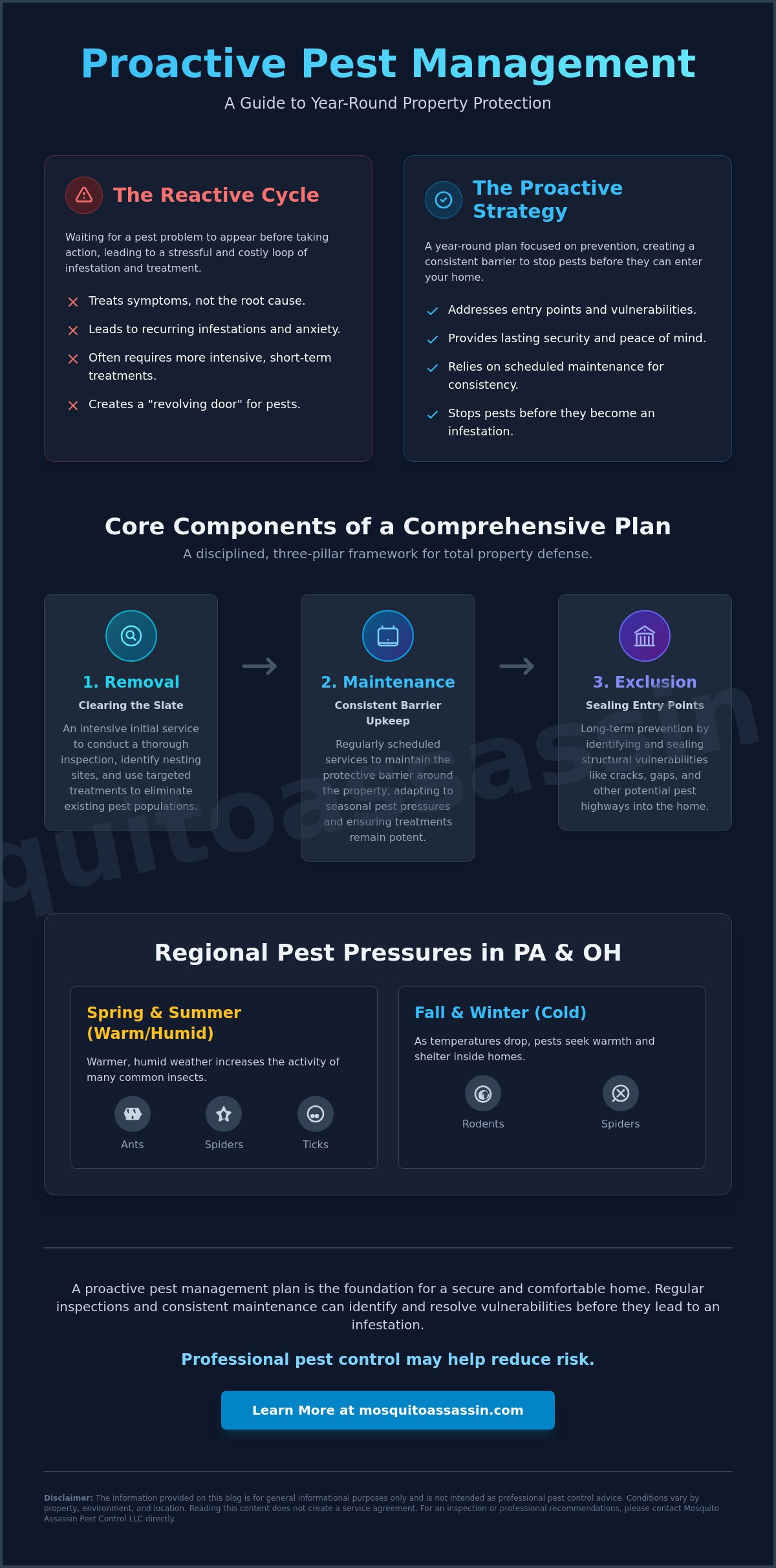
A peace of mind pest control plan is a strategic, year-round approach to property maintenance that prioritizes prevention over emergency response. Traditionally, many homeowners only contact a professional when they see a line of ants in the kitchen or a spider web in the basement. This reactive mindset often leads to a cycle of infestation and treatment that never truly addresses the root of the problem. By contrast, a proactive plan creates a permanent barrier around the home, ensuring that pests are stopped before they ever cross the threshold.
This methodology relies heavily on the principles of Integrated Pest Management (IPM). Instead of simply applying chemicals after a sighting, this approach focuses on long-term prevention through habitat manipulation, biological controls, and structural modifications. It’s a comprehensive way to safeguard a property by understanding how pests live, feed, and breed in specific environments like Erie and Crawford Counties. To better understand this concept, watch this helpful video:
The Difference Between Extermination and Management
Extermination is often a short-term, high-intensity response to a visible crisis. It aims to kill the pests currently inside your home but rarely addresses the entry points or environmental factors that drew them there in the first place. This often results in a “revolving door” effect where pests return as soon as the initial treatment wears off. Professional pest management is a more sophisticated, ongoing process of risk reduction. It looks at the big picture, identifying why a property is vulnerable and implementing exclusion techniques to keep pests out for good. This shift from reactive to proactive care is the foundation of professional services designed for long-term security.
Why Consistency Matters for Property Protection
Nature doesn’t follow a business schedule. Common invaders like ants and spiders have rapid lifecycles; a single missed season can allow a small colony to explode into a full-blown infestation. In regions like Ashtabula County, the transition from humid summers to freezing winters triggers different pest behaviors. A peace of mind pest control plan provides the consistency needed to combat these shifts. Regular inspections allow professionals to catch structural vulnerabilities, such as small cracks in the foundation or gaps in window seals, before they become highways for rodents and insects. Consistent barrier maintenance ensures that the protective treatments remain potent, even as the harsh Pennsylvania and Ohio weather tries to break them down. Gaps in service represent an invitation for pests to re-establish themselves, making year-round monitoring essential for total exclusion.
Core Components of a Comprehensive Protection Plan
An effective peace of mind pest control plan relies on a disciplined framework rather than guesswork. It’s not enough to simply treat visible pests; a professional approach addresses the entire ecosystem of the property. This strategy is built on three essential pillars: removal, maintenance, and exclusion. By combining these elements, licensed specialists create an environment where pests can’t thrive. Understanding how IPM works in this context helps homeowners see the value in a multi-faceted defense. Documentation also plays a vital role, as detailed service reports provide a history of treatments and highlight potential risks before they escalate.
The Removal Phase: Clearing the Slate
The process begins with an intensive initial service designed to clear the slate. Professionals conduct a thorough inspection to identify active nesting sites and specific entry points. Instead of a broad application, they use targeted treatments to address existing populations of ants, spiders, or rodents. This phase is crucial because it eliminates the current pressure on the home. However, removal is only the first step. Without the subsequent pillars, new pests will eventually find their way back into the structure once the initial treatments dissipate. Identifying the root cause of an infestation is the only way to ensure the removal phase is successful.
Exclusion and Maintenance: The Long-Term Shield
Exclusion is the practice of physically barring pests from entering. This involves sealing cracks in the foundation, installing door sweeps, or screening vents. It’s a permanent solution that reduces the reliance on chemical treatments over time. A consistent peace of mind pest control plan ensures that these exclusion points are inspected during every visit. When combined with seasonal maintenance, it forms a long-term shield around the property. These recurring visits allow for the application of exterior barriers that adapt to changing behaviors. For example, treatments in late autumn focus on preventing rodents from seeking warmth, while spring services target emerging insects. Utilizing general pest control methods ensures that the home’s perimeter remains secure regardless of the weather. For those seeking a comprehensive solution, a professional services plan provides the most reliable protection.
Documentation is a critical component of professional management. Service reports detail what was found, what actions were taken, and what steps the homeowner can take to reduce attractants like standing water or overgrown vegetation. This transparency ensures the strategy remains effective over time. Licensed professionals apply specialized products to the home’s exterior, creating a protective barrier. This barrier is designed to withstand the heavy rainfall common in Erie County and the fluctuating temperatures of Crawford County. It targets pests where they live, in the soil and mulch near the foundation, before they ever reach the walls. If you’re concerned about vulnerabilities in your home, a professional pest control assessment can help identify the best path forward.
Reactive vs. Proactive: Why One-Time Treatments Fall Short
Reactive pest control is a constant cycle of crisis management. Many homeowners wait for a visual confirmation of an infestation, such as a trail of ants or a spider in the corner, before calling for help. This one-time fix approach creates a revolving door effect. While a single visit may kill the pests that are visible, those hiding deep inside walls or nesting under the foundation often remain untouched. A peace of mind pest control plan breaks this cycle by establishing a permanent defensive perimeter that remains active even when no pests are seen.
Relying on the principles of Integrated Pest Management (IPM), a proactive strategy focuses on the home’s environment rather than just the insects. This methodology is particularly effective in Pennsylvania and Ohio, where dramatic seasonal shifts drive pests indoors. Instead of heavy chemical applications every time a bug appears, a managed plan uses consistent monitoring and exclusion to reduce the need for reactive measures. It’s a more surgical and sustainable way to protect a property over the long term.
The Hidden Risks of ‘Waiting and Seeing’
Waiting until you see a pest is a dangerous gamble that can lead to unexpected costs. Rodents often cause significant structural damage to insulation and electrical wiring long before they are spotted in a living area. A small ant problem in the spring can quickly escalate into massive satellite colonies by mid-summer if the source isn’t neutralized. Beyond that, ignoring a primary pest can lead to secondary infestations, as the presence of certain insects can attract larger predators into the home. Proactive monitoring catches these issues in their infancy.
Value Analysis of Year-Round Protection
Think of a year-round plan as an insurance policy for your home’s hygiene and structural integrity. Emergency visits for sudden infestations are often more expensive and disruptive than scheduled maintenance. Professional plans typically include re-treatment assurances; if pests return between scheduled visits, the service team returns to resolve the issue at no extra cost. This provides a level of financial and psychological predictability that one-time services lack. Knowing that your home is being monitored by experts alleviates the anxiety of waiting for the next invasion to occur.
Protecting property value over time requires a disciplined approach to maintenance. In Erie and Crawford Counties, where moisture levels are high, wood-destroying organisms and moisture-loving pests are constant threats. A professional pest control plan ensures these risks are monitored regularly, preventing the kind of long-term damage that can devalue a home during a future sale. If you want to secure your property against seasonal invaders, professional pest control may help reduce risk.
Regional Factors Affecting Pest Plans in PA and OH
Properties in Northwest Pennsylvania and Northeast Ohio face environmental conditions that are significantly different from other parts of the country. The proximity to Lake Erie creates a unique microclimate characterized by high humidity and consistent lake-effect moisture. These factors don’t just affect the weather; they create ideal breeding grounds for a variety of invaders. A peace of mind pest control plan in this region must be specifically calibrated to handle the local ecology of Erie, Crawford, and Ashtabula Counties. Without a strategy that accounts for these geographic variables, a standard treatment plan will likely fail to provide long-term security.
High moisture levels often lead to damp soil and decaying organic matter near foundations, which attracts wood-destroying insects and moisture-loving pests. Because of this, mosquito control programs are a vital addition to any comprehensive property management strategy. Throughout the local region, standing water from frequent rains can turn a backyard into a breeding site in just a few days. Effective management requires a professional who understands how these regional weather patterns influence pest lifecycles.
Spring and Summer: The Surge of Crawling Pests
Spring rains in Northwest Pennsylvania act as a primary trigger for ant activity. As the ground becomes saturated, colonies often migrate toward the drier, stable environment of a home’s crawlspace or foundation. This season also marks the emergence of stinging insects like wasps, hornets, and carpenter bees. In Ashtabula County, establishing early-season barriers is critical. These barriers prevent queens from nesting in eaves or siding, stopping an infestation before it can grow into a mid-summer crisis. A proactive approach ensures that these seasonal surges don’t disrupt outdoor activities.
Fall and Winter: The Rodent Exclusion Window
When the temperature drops, the threat shifts from the yard to the structure itself. Mice and other rodents are opportunistic; they can sense heat escaping from small cracks and vents. As winter approaches, these pests begin a seasonal migration toward warmth and food. Professional exclusion is the most effective way to winterize a property against these invaders. This process involves sealing physical entry points that are often overlooked by homeowners. Even when snow covers the ground, indoor maintenance and monitoring continue. This ensures that any pests that managed to sneak in during the transition are identified and removed quickly. If a property requires protection against these regional threats, professional pest control may help reduce risk.
The transition between these seasons is when properties are most vulnerable. A peace of mind pest control plan provides the necessary oversight to adapt as the threats change. Whether it’s the humid heat of July or the freezing winds of January, the defense remains consistent. Licensed professionals who live and work in the same community understand exactly what a property is up against. This local expertise is what transforms a basic service into a reliable shield for the home and family.
Evaluating Your Next Steps for Total Home Protection
Selecting the right partner for property maintenance is a decision that impacts the long-term health and security of your home. A peace of mind pest control plan is most effective when it’s managed by a team that understands the specific environmental pressures of the Great Lakes region. Because pest behavior is so closely tied to local weather patterns, choosing a provider with deep roots in the community ensures they are prepared for the exact challenges your property will face. Professional pest control may help reduce risk by identifying these issues before they escalate into costly repairs or structural damage.
When evaluating different providers, it’s helpful to use a standard set of criteria to ensure you’re receiving comprehensive care. Look for companies that emphasize transparency and detailed reporting. A high-quality provider won’t just apply treatments; they’ll explain why those treatments are necessary and what you can do to support the exclusion process. Consider the following checklist when making your choice:
- Verified Licensing: Ensure the company holds all necessary state certifications for pesticide application in Pennsylvania or Ohio.
- Local Expertise: Prioritize firms that have a history of serving Erie, Crawford, or Ashtabula Counties.
- Integrated Approach: Look for a focus on exclusion and habitat modification rather than just chemical use.
- Clear Communication: Choose a provider that offers written service reports and clear explanations of their findings.
What to Ask a Potential Service Provider
Before signing a service agreement, it’s important to understand the specifics of the proposed strategy. Inquire about the frequency of maintenance visits; a consistent schedule is necessary to break the pest lifecycle and maintain an effective barrier. Ask about the specific exclusion techniques used for the property, such as how they handle gaps in siding or foundation cracks. It’s also critical to verify the company’s experience in location specific pest issues, such as the seasonal migration of rodents or the impact of lake-effect moisture on wood-destroying organisms. Understanding their methodology helps you feel confident in the security of your home.
Starting Your Protection Journey
The most effective way to secure a property is to transition from a reactive mindset to a proactive one. Scheduling a professional inspection is the first step in this journey. This initial assessment provides a baseline for your home’s health and identifies vulnerabilities that might be hidden from the untrained eye. Reviewing professional services allows you to tailor a peace of mind pest control plan to your specific needs, whether you’re dealing with recurring ant issues or want to prevent winter rodent infestations. Proactive care isn’t just about removing pests; it’s about creating a lasting environment of safety and predictability. For professional recommendations or to begin an inspection, property owners can visit the contact page or use the online booking portal.
Disclaimer: The information provided on this blog is for general informational purposes only and is not intended as professional pest control advice. Conditions vary by property, environment, and location. Reading this content does not create a service agreement. For an inspection or professional recommendations, please contact Mosquito Assassin Pest Control LLC directly.
Securing Your Property for the Long Term
Proactive management is the only way to break the cycle of recurring infestations and the stress they cause. By focusing on exclusion and consistent maintenance, you protect your home’s structural integrity and your family’s comfort. Waiting for a visible problem often results in unnecessary damage and higher costs. A strategic approach ensures that vulnerabilities are sealed before pests can exploit them, providing a level of security that one-time treatments simply cannot match.
Implementing a peace of mind pest control plan ensures your defense adapts to the unique moisture and temperature shifts in Pennsylvania and Ohio. Licensed professionals provide specialized mosquito and tick control solutions alongside a comprehensive three-step rodent removal process to address every regional vulnerability. This methodical oversight transforms your property into a fortress against seasonal invaders. For an inspection or professional recommendations, please contact Mosquito Assassin Pest Control LLC directly. Taking action today creates a predictable, pest-free environment for the future.
Disclaimer: The information provided on this blog is for general informational purposes only and is not intended as professional pest control advice. Conditions vary by property, environment, and location. Reading this content does not create a service agreement. For an inspection or professional recommendations, please contact Mosquito Assassin Pest Control LLC directly.
Frequently Asked Questions
Is a year-round pest control plan worth it if I don’t see bugs?
Yes, year-round care is worth it because it focuses on prevention and maintaining a barrier rather than reacting to a crisis. Many pests, like rodents or wood-destroying insects, can cause damage behind walls before they are ever spotted by a homeowner. A peace of mind pest control plan ensures that experts catch these subtle signs early, preventing a small vulnerability from becoming an expensive infestation.
What pests are typically covered in a general protection plan?
A general protection plan typically covers the most common regional household invaders, including ants, spiders, cockroaches, and silverfish. These plans are designed to address the pests that enter homes seeking food or shelter throughout the changing seasons. While these programs provide a broad shield, they are often complemented by specialized services for specific threats like mosquitoes or rodents depending on the property’s unique environmental needs.
How often should a professional visit my home for maintenance?
Professional maintenance visits are usually scheduled on a quarterly basis to align with seasonal pest behavior. In the Great Lakes region, each season brings a new set of challenges, from spring ant surges to winter rodent migrations. Regular visits every three months ensure that the exterior barrier remains potent and that exclusion points are inspected for wear caused by harsh weather conditions in Pennsylvania and Ohio.
Can I cancel a pest control plan if the bugs are gone?
You can cancel a plan, but doing so often invites pests to return once the protective treatments dissipate. The absence of bugs is a sign that the maintenance strategy is working, not that the threat has been permanently eliminated. Stopping service removes the barrier that keeps local invaders out, which frequently leads to a revolving door effect where infestations re-establish themselves within a few months.
Are the treatments used in these plans safe for my pets?
Modern professional treatments are applied with the safety of household members and animals as a top priority. Licensed professionals use specific products and application methods designed to minimize risk to non-target animals. By following Integrated Pest Management (IPM) principles, specialists focus on targeted applications and exclusion techniques that reduce the overall reliance on broad-spectrum chemicals, ensuring a secure environment for your pets.
What happens if pests return between scheduled service visits?
If pests return between your regularly scheduled maintenance visits, professional plans typically include a re-treatment assurance. This means a service team will return to your property to identify the source of the new activity and resolve the issue at no additional cost. This provides the predictability and security that a peace of mind pest control plan is designed to offer, ensuring your home remains protected year-round.
Does a general plan cover specialized pests like bed bugs or termites?
General plans usually don’t cover specialized pests like bed bugs or termites, as these require distinct inspection and treatment protocols. While a general plan focuses on common crawling insects, termites and bed bugs involve more intensive, targeted strategies. However, a general plan often includes inspections that can catch early signs of these specialized threats, allowing homeowners to address them before they cause significant damage.
How does professional exclusion differ from DIY caulking?
Professional exclusion is a comprehensive structural strategy that goes far beyond simply applying caulk to visible cracks. It involves using specialized materials like copper mesh, heavy-duty hardware cloth, and professional-grade sealants that pests can’t chew through or bypass. Specialists also have the training to identify hidden entry points, such as roof vents or foundation gaps, that most homeowners would miss during a standard DIY walkthrough.
Disclaimer: The information provided on this blog is for general informational purposes only and is not intended as professional pest control advice. Conditions vary by property, environment, and location. Reading this content does not create a service agreement. For an inspection or professional recommendations, please contact Mosquito Assassin Pest Control LLC directly.
Leave a Reply