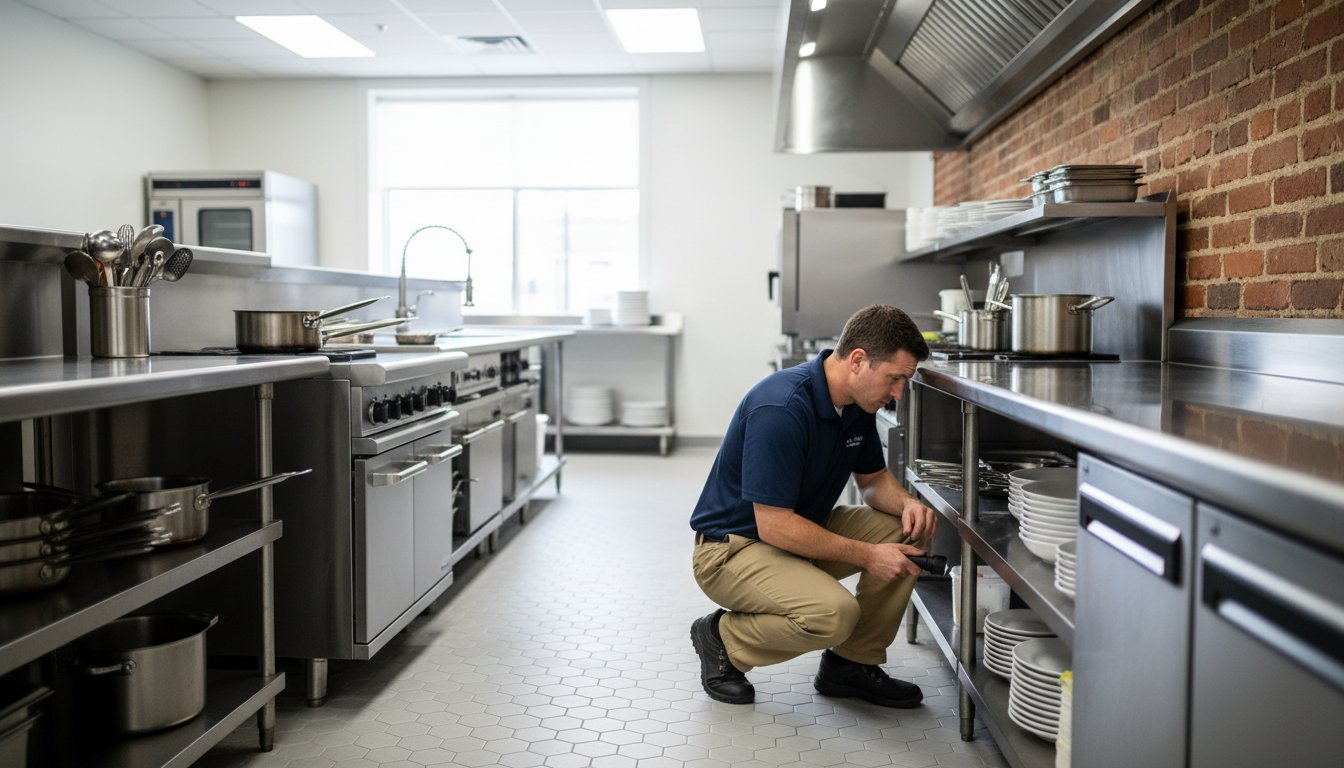
Last Tuesday, a local bistro owner in downtown Erie watched a health inspector walk through the front door right at the start of the lunch rush. Even with a spotless kitchen, the stress of managing a century-old building means the fear of a surprise visitor is always present. Maintaining high food safety standards in such environments often requires professional restaurant pest control services erie pa to address the unique structural vulnerabilities found near the lakefront.
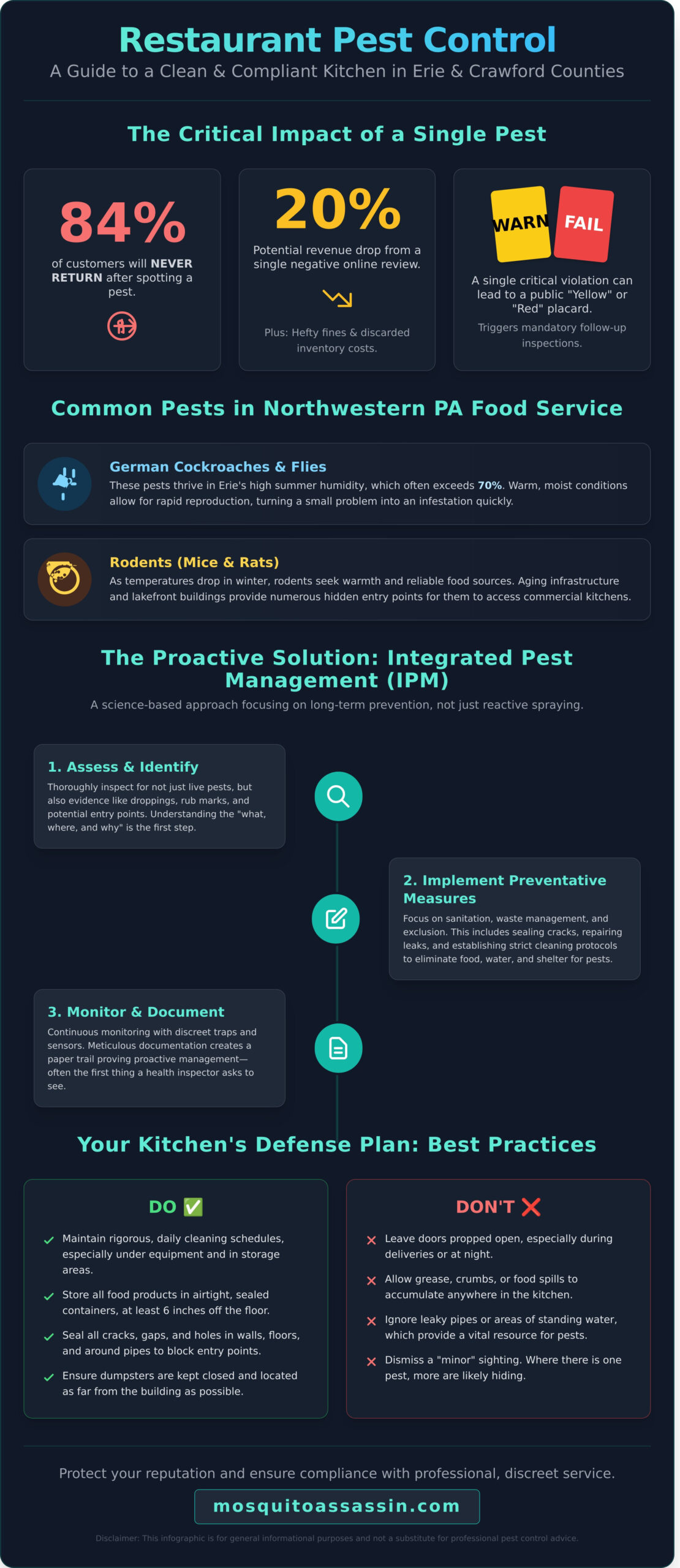
It’s a fact that 84% of customers will never return to a restaurant after spotting a pest; you likely agree that protecting your reputation is just as important as the food you serve. This guide explains how professional management helps you achieve a clean kitchen and total compliance with local health regulations in Erie and Crawford Counties. You’ll find information on common regional pests, the importance of discreet monitoring, and how to maintain peace of mind during your next surprise inspection.
Disclaimer: The information provided on this blog is for general informational purposes only and is not intended as professional pest control advice. Conditions vary by property, environment, and location. Reading this content does not create a service agreement. For an inspection or professional recommendations, please contact Mosquito Assassin Pest Control LLC directly.
Key Takeaways
- Understand the critical connection between pest activity and health department compliance to safeguard a restaurant’s reputation and customer reviews.
- Identify how local rodents and insects exploit aging urban infrastructure in downtown Erie and Crawford County to gain entry into food service facilities.
- Explore the benefits of Integrated Pest Management (IPM), a science-based approach that prioritizes long-term prevention over reactive chemical applications.
- Learn practical sanitation and waste management strategies designed to eliminate attractants and reduce pest pressure around commercial kitchen perimeters.
- Discover why specialized restaurant pest control services erie pa provide the local expertise necessary to address the unique environmental challenges of the Great Lakes region.
The Importance of Professional Pest Management for Erie Restaurants
Erie restaurants face a unique set of environmental challenges. The proximity to Lake Erie brings high humidity levels that frequently exceed 70% during the summer months. These conditions are ideal for German cockroaches and various fly species to thrive and reproduce rapidly. It isn’t just a seasonal issue. When temperatures drop below freezing in December, rodents seek the warmth and consistent food supplies found in commercial kitchens. Utilizing professional restaurant pest control services erie pa ensures that these biological cycles don’t disrupt daily operations or compromise food safety.
Local data from the Erie County Health Department indicates that sanitation and pest evidence are among the most cited violations during unannounced inspections. A single critical violation can lead to a “yellow” or “red” placard. This immediately signals a problem to every potential customer walking through the door. Beyond the public embarrassment, the financial consequences of a health code violation are steep. Fines can range from hundreds to thousands of dollars, and the cost of discarded inventory due to contamination can sink a small business’s profit margins for an entire quarter.
To better understand how these strategies work in a commercial kitchen, watch this helpful video:
Health Department Standards and Compliance
The Erie County Health Department inspection criteria are rigorous and focused on identifying active harborages and entry points. Inspectors don’t just look for live insects; they look for evidence like rub marks, gnawings, or droppings. Most professionals utilize Integrated Pest Management (IPM) to address these issues. This method focuses on long term prevention rather than just reactive treatments. It involves detailed documentation that proves a restaurant is following a proactive sanitation plan. This paper trail is often the first thing an inspector asks to see during a visit. Having a “zero tolerance” policy is the only way to ensure compliance, as even a minor sighting can trigger a mandatory follow up inspection within 48 hours.
Protecting the Brand and Customer Trust
A restaurant’s reputation is its most valuable asset. In the digital age, a single photo of a pest posted to a review site can cause a 20% drop in revenue within weeks. Modern diners in Erie and Crawford Counties rely on platforms like Yelp and Google Reviews to vet their dining choices. Consistent restaurant pest control services erie pa help maintain the “invisible layer” of protection that keeps the guest experience positive. Discreet service is vital to this process. Technicians usually work during off hours to ensure that pest management activities remain out of the public eye. This maintains the atmosphere while safeguarding the business from the financial ruin of a public relations crisis. When a guest sees a clean, pest free environment, it reinforces their trust in the kitchen’s overall hygiene and food quality.
Disclaimer: The information provided on this blog is for general informational purposes only and is not intended as professional pest control advice. Conditions vary by property, environment, and location. Reading this content does not create a service agreement. For an inspection or professional recommendations, please contact Mosquito Assassin Pest Control LLC directly.
Common Pests in Northwestern Pennsylvania Food Service
Northwestern Pennsylvania’s unique climate and aging urban landscape create specific challenges for food service providers. In Erie and Crawford Counties, the transition from humid summers to harsh winters drives pests indoors, looking for the warmth and steady food supply found in commercial kitchens. Maintaining high standards for hygiene and safety requires a deep understanding of the local pest biology. Adhering to the guidelines set by the FDA Food Code is a baseline requirement for any establishment, as these regulations are designed to prevent the contamination of food and equipment. Effective restaurant pest control services erie pa rely on identifying these threats before they escalate into health department violations.
Rodent Challenges in Historic Erie Buildings
Downtown Erie and Meadville are home to many structures built in the late 1800s and early 1900s. While these buildings offer character, they also present significant structural vulnerabilities. Mice only need a gap of 6 millimeters (about 1/4 inch) to enter a facility, while rats can squeeze through an opening the size of a half-dollar. Over time, settling foundations and aging brickwork in Lake Erie coastal properties create these entry points. Rodents often exploit loading docks, utility lines, and basement floor drains to gain access.
The presence of rodents in a food environment is a critical safety issue. They are known carriers of various pathogens and their droppings, urine, and nesting materials can quickly contaminate dry storage areas. In addition to health risks, rodents pose a fire hazard. They have a constant need to gnaw to keep their incisors sharp, often targeting electrical wiring behind kitchen walls. Implementing consistent restaurant pest control services erie pa ensures that these historic vulnerabilities don’t become permanent liabilities for a business. Identifying these entry points through professional inspections can help reduce the risk of a full-scale infestation.
Cockroach and Fly Management in Kitchens
The German cockroach is the most common species found in commercial kitchens in the tri-county area. These pests thrive in the micro-climates created by heavy-duty appliances. They prefer temperatures around 85 degrees Fahrenheit and high humidity, making the space behind reach-in coolers and under dishwashing stations ideal. Their reproduction cycle is incredibly fast; a single female can produce an egg capsule containing 30 to 40 eggs, which can reach maturity in as little as 28 days. This rapid growth means a few hitchhikers on a delivery pallet can become a significant problem within a single month.
- German Cockroaches: These pests are often introduced via cardboard boxes or food shipments rather than entering from the outdoors.
- Fruit Flies: Often found near bar areas or produce storage, these flies indicate overripe organic matter or fermenting liquids.
- Drain Flies: These pests breed in the gelatinous film that builds up inside floor drains, signaling a need for deep cleaning or plumbing maintenance.
Small flies are frequently more than just a nuisance; they are indicators of underlying sanitation or plumbing issues. While occasional invaders like house flies might enter through an open door, a persistent population of fruit or drain flies suggests that organic debris is accumulating somewhere in the facility. Distinguishing between a one-time visitor and an established infestation is vital for proper management. Professionals look for “hot spots” where moisture and food particles collect, such as the gaskets of refrigeration units or the undersides of prep tables, to address the root cause of the activity.
Integrated Pest Management (IPM) for Food Safety
Integrated Pest Management (IPM) is a science-based decision-making process that identifies and reduces risks from pests and pest management strategies. Instead of relying solely on the scheduled application of pesticides, IPM focuses on long-term prevention through a combination of techniques such as biological control, habitat manipulation, and modification of cultural practices. Implementing high-quality restaurant pest control services erie pa involves moving away from reactive treatments and toward a proactive system that prioritizes the structural integrity and cleanliness of the facility.
Adopting this science-based framework aligns with the 2022 FDA Food Code, which emphasizes the necessity of protecting food from contamination. Statistics from the food service industry indicate that environmental management can resolve up to 90% of recurring pest issues without the immediate need for chemical intervention. This approach is particularly effective in Erie and Crawford Counties, where seasonal temperature shifts drive rodents and insects toward the warmth of commercial kitchens. By managing the environment, restaurant operators create a sustainable defense that protects both their reputation and their customers.
Success depends on a collaborative relationship between kitchen staff and licensed pest professionals. Technicians provide the expertise to identify vulnerabilities, but the daily habits of employees determine the long-term effectiveness of the program. When staff members understand how their actions impact pest behavior, they become the first line of defense in maintaining a pest-free environment.
The Four Pillars of a Successful IPM Program
Effective restaurant pest control services erie pa rely on four foundational pillars to maintain a sterile environment. The first pillar is a comprehensive inspection. Professionals conduct site surveys to find the root cause of activity, looking for entry points as small as 1/16th of an inch for cockroaches or 1/4th of an inch for mice. This data drives the rest of the strategy.
Sanitation stands as the second pillar. Removing food and water sources is vital for long-term success. Practical prevention strategies often focus on deep cleaning schedules and proper waste management to discourage nesting. Third is exclusion, which involves using physical barriers like door sweeps and silicone sealants to keep pests outside where they belong. Finally, monitoring involves the use of non-toxic tracking tools to detect new activity 24 hours a day, allowing for rapid response before a single sighting becomes a full-blown crisis.
Documentation and Reporting for Inspectors
Detailed logbooks are a mandatory component of professional pest management in Pennsylvania. Health inspectors from the Erie County Department of Health specifically look for a chronological record of all pest control activities, including sightings, treatments, and corrective actions taken by the restaurant. A complete logbook proves that the management is exercising due diligence in protecting public health.
Digital reporting has transformed how managers track trends across their facilities. Modern systems provide data visualization that highlights problem areas, such as a specific floor drain or a loading dock door that stays open too long. When an inspector arrives, having instant access to these records via a digital portal demonstrates a high level of professional oversight. This transparency helps ensure that the restaurant remains compliant with all local and federal food safety regulations while providing peace of mind to the ownership team.
Disclaimer: The information provided on this blog is for general informational purposes only and is not intended as professional pest control advice. Conditions vary by property, environment, and location. Reading this content does not create a service agreement. For an inspection or professional recommendations, please contact Mosquito Assassin Pest Control LLC directly.
Practical Prevention Strategies for Commercial Kitchens
Maintaining a pest-free environment in Erie County requires more than reactive treatments; it demands a daily commitment to rigorous sanitation. Research from the Journal of Food Protection indicates that nearly 85 percent of pest sightings in commercial kitchens correlate directly with sanitation lapses or structural defects. Establishing a strict daily schedule ensures that food debris and grease don’t accumulate in hard-to-reach areas. This proactive approach is a cornerstone of effective restaurant pest control services erie pa, as it removes the primary attractants that draw insects and rodents indoors.
Waste management plays a vital role in reducing exterior pest pressure. Dumpsters should be located at least 25 feet away from the building’s entrance to prevent pests from migrating inside. Keeping lids tightly closed and scheduling power washing for the dumpster pad every 14 days can reduce fly populations by up to 50 percent. Additionally, managing incoming shipments is critical. German cockroaches and stored product pests often hitchhike into facilities inside corrugated cardboard boxes. Inspecting every delivery on the loading dock before it enters the storage area prevents a localized infestation from becoming a facility-wide crisis.
Staff members are the first line of defense against infestations. Training employees to spend 10 minutes at the end of each shift looking for early signs of activity (such as small droppings, smear marks along baseboards, or damaged packaging) allows for faster intervention. When employees understand the biology of common pests, they can identify risks before they escalate into health code violations.
Sanitation Protocols and Moisture Control
Deep cleaning must extend beyond visible surfaces. Organic buildup in floor drains is a primary breeding ground for small flies; using microbial cleaners can eliminate this “biofilm” where larvae thrive. Addressing plumbing leaks is equally urgent. A single dripping faucet can provide enough water to sustain a rodent colony indefinitely. Eliminating standing water in mop buckets and floor pans reduces the survival rate of pests by removing their most essential resource.
Structural Exclusion and Maintenance
Physical barriers are the most permanent form of pest control. Mice can squeeze through gaps as small as 1/4 inch, which is roughly the width of a pencil. Sealing utility penetrations with stainless steel wool and caulk prevents entry. Loading docks should be equipped with heavy-duty door sweeps and air curtains to deter flying insects. Maintaining window screens (using 16-mesh or finer) ensures that ventilation doesn’t become an invitation for flies during the humid summer months in Erie and Crawford Counties.
Implementing these practical steps creates a hostile environment for pests and protects the reputation of the establishment. For a detailed assessment of a facility’s specific vulnerabilities, professional pest control may help reduce risk by identifying hidden entry points and nesting sites.
Disclaimer: The information provided on this blog is for general informational purposes only and is not intended as professional pest control advice. Conditions vary by property, environment, and location. Reading this content does not create a service agreement. For an inspection or professional recommendations, please contact Mosquito Assassin Pest Control LLC directly.
Selecting a Professional Partner in Erie and Crawford Counties
Selecting a professional partner in Erie and Crawford counties requires more than just picking a name from a list. The unique climate of the Great Lakes region means pests behave differently here than in southern Pennsylvania or central Ohio. Business owners in Erie, Meadville, and Ashtabula must prioritize providers who understand these local variables. Choosing restaurant pest control services erie pa ensures that the unique architectural styles and older infrastructure found in downtown Erie are accounted for during inspections. Older buildings often have hidden entry points that generic, cookie-cutter treatment plans might miss. A customized approach focuses on these structural vulnerabilities and identifies specific risks, such as the 15% increase in rodent activity typically observed during the first frost in late October.
Evaluating the credentials and licensing of a commercial provider is a non-negotiable step in the selection process. In Pennsylvania, commercial pesticide applicators must hold valid certification in specific categories, such as Category 11 for household and health-related pests. Verifying these licenses ensures that the methods used align with modern Integrated Pest Management (IPM) practices. Professional pest control may help reduce risk for local business owners by providing a layer of documented compliance that health inspectors look for during unannounced visits. This proactive stance protects the reputation of the establishment and ensures the environment remains conducive to food safety.
What to Look for in a Commercial Service Plan
A robust plan prioritizes consistency and transparency. High-traffic food service environments usually require monthly or bi-monthly inspections to remain compliant with 2024 regional health standards. It’s vital that a provider delivers written reports after every visit. These documents should detail sightings, sanitation issues, and structural repairs needed to prevent future infestations. Availability of emergency support within 24 hours is another critical factor for businesses that can’t afford downtime. When evaluating restaurant pest control services erie pa, look for a partner that offers detailed service recommendations rather than just a quick application of product.
The Value of Local Knowledge and Support
Regional pest cycles dictate the timing of specific treatments. In Northwestern PA, the transition from humid summers to lake-effect snow creates distinct windows for pest migration. Local providers anticipate the surge of cluster flies in the spring or the movement of rats toward heat sources in December. They understand how local health regulations in Crawford and Ashtabula counties might differ slightly in their documentation requirements. For more information on tailored solutions, professional pest control services can provide a comprehensive assessment of these seasonal risks and structural needs.
Working with a provider who lives and works in the Erie and Crawford county areas ensures a faster response and a deeper understanding of the local environment. This local expertise is the most effective way to safeguard a commercial kitchen against the persistent threat of regional pests. By focusing on data-driven results and local pest behavior, business owners can maintain a clean, safe, and professional environment for their staff and customers throughout the year.
Disclaimer: The information provided on this blog is for general informational purposes only and is not intended as professional pest control advice. Conditions vary by property, environment, and location. Reading this content does not create a service agreement. For an inspection or professional recommendations, please contact Mosquito Assassin Pest Control LLC directly.
Maintaining Compliance and Food Safety Standards
Food safety standards in Northwestern Pennsylvania require constant vigilance to prevent infestations. Small oversights can lead to health code violations. Implementing a comprehensive Integrated Pest Management (IPM) approach helps maintain a sterile environment by focusing on exclusion and sanitation. Licensed and insured technicians who live in the Erie community understand the specific seasonal challenges of the local climate. Choosing professional restaurant pest control services erie pa ensures that a commercial kitchen remains compliant with the latest Pennsylvania Department of Agriculture food safety regulations. It’s a proactive step that protects the investment made into the business and the health of every customer. High standards build long-term trust with the community in Erie and Crawford counties. For those seeking to safeguard their establishment, scheduling a professional inspection for your restaurant through a locally owned provider can identify hidden risks before they become costly problems. Taking action today keeps the focus on serving the local community.
Disclaimer: The information provided on this blog is for general informational purposes only and is not intended as professional pest control advice. Conditions vary by property, environment, and location. Reading this content does not create a service agreement. For an inspection or professional recommendations, please contact Mosquito Assassin Pest Control LLC directly.
Frequently Asked Questions
How often should a restaurant have professional pest control services?
Most commercial kitchens in Erie, PA, schedule professional inspections at least 12 times per year to maintain compliance with local health codes. High-volume establishments often require bi-weekly visits to monitor traps and maintain sanitation standards. Monthly inspections help identify 100% of potential entry points before they lead to larger infestations.
Can a pest infestation cause a restaurant to be shut down in Erie, PA?
Yes, a severe infestation can lead to an immediate closure by the Erie County Department of Health. Inspectors categorize active pest activity as a high-risk violation; this often results in a 48-hour mandatory shutdown until the facility is cleared. Statistics show that roughly 15% of health code failures in commercial kitchens stem from inadequate pest management.
Are pest control treatments safe to use in food preparation areas?
Professional treatments are designed for use in food-handling environments when applied by licensed technicians. These experts follow EPA-approved labels that specify application methods, such as crack and void treatments, which keep products away from 100% of food contact surfaces. Integrated Pest Management (IPM) focuses on non-chemical solutions first to ensure the highest level of safety.
What are the most common signs of rodents in a commercial kitchen?
The most frequent indicators include droppings, which are typically 3 to 6 millimeters long, and gnaw marks on food packaging. You might also find nesting materials like shredded paper or cardboard tucked into dark corners or behind large appliances. Since a single pair of mice can produce up to 50 offspring in one year, identifying these signs early is critical for restaurant pest control services erie pa.
How do I get rid of fruit flies in my restaurant bar or kitchen?
Eliminating fruit flies requires removing their breeding grounds, which are usually fermenting organic matter in drains or under equipment. A single female fruit fly can lay up to 500 eggs in its brief 10-day lifespan. Deep cleaning floor drains with enzymatic cleaners every 7 days helps break the life cycle and reduces the population significantly.
What documentation do I need for a health department inspection?
Restaurants must maintain a detailed pest management logbook for health inspectors to review. This folder should contain 3 years of service reports, pesticide application records, and site maps showing the location of all bait stations. Providing these documents proves that the facility follows a consistent schedule for restaurant pest control services erie pa.
Will professional pest control help with cockroach problems in an old building?
Professional treatments are effective even in historic buildings where cracks and crevices are common. Since German cockroaches can fit through gaps as narrow as 1.5 millimeters, technicians use specialized baits and dusts that reach deep into wall voids. Regular monitoring helps detect 90% of new activity before it spreads through the plumbing or electrical chases of older structures.
Does professional pest control offer a guarantee for restaurants?
Most professional services include a service guarantee that ensures a technician will return if pests appear between scheduled visits. This typically includes a 24-hour response time for emergency sightings of high-risk pests like rodents or cockroaches. While no one can promise 0% pest presence forever, these agreements provide a 100% commitment to resolving issues as they arise.
For those managing a commercial kitchen, professional pest control may help reduce risk. To request an inspection or learn more about management plans, visit the online booking portal or contact a specialist at www.mosquitoassassin.com/contact-us.
Disclaimer: The information provided on this blog is for general informational purposes only and is not intended as professional pest control advice. Conditions vary by property, environment, and location. Reading this content does not create a service agreement. For an inspection or professional recommendations, please contact Mosquito Assassin Pest Control LLC directly.