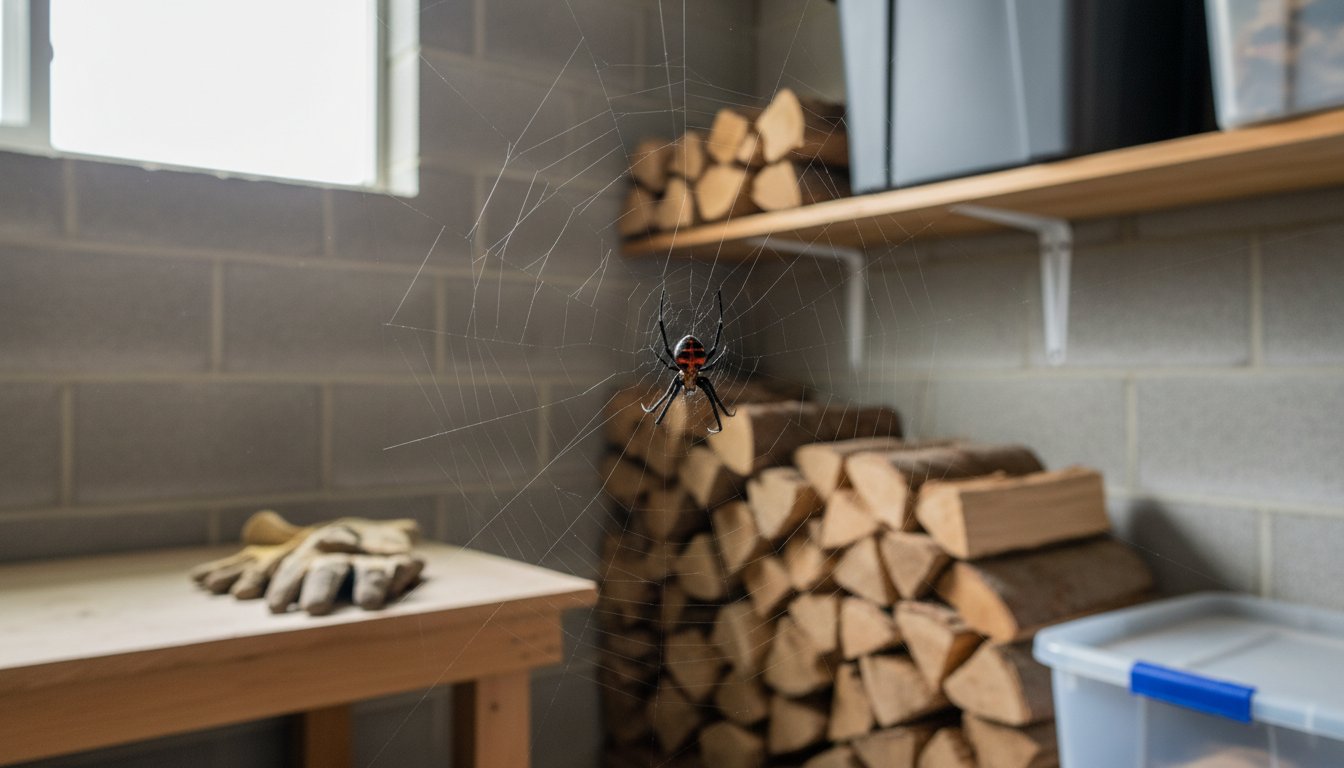
While many homeowners assume venomous spiders are strictly a concern for southern climates, the northern black widow is a permanent resident of the Keystone State. Pennsylvania is home to over 500 spider species, yet if you’ve wondered are black widows in pa, they remain one of only two species in the region with medically significant venom. It’s natural to feel unease when you spot a dark, spindly shape scuttling across a garage floor or tucked behind storage bins. Most people struggle to tell the difference between a harmless house spider and a species that requires caution.
This guide provides the specific visual markers you need to identify these spiders with confidence. You’ll learn exactly where these arachnids prefer to hide in Erie and Crawford Counties and discover practical, professional strategies to reduce the risk of an encounter. By understanding their behavior and habitat, you can effectively safeguard your home and family from unwanted guests.
Disclaimer: The information provided on this blog is for general informational purposes only and is not intended as professional pest control advice. Conditions vary by property, environment, and location. Reading this content does not create a service agreement. For an inspection or professional recommendations, please contact Mosquito Assassin Pest Control LLC directly.
Key Takeaways
- Confirm that both Northern and Southern black widow species reside in Pennsylvania and understand their distribution across the Northeast.
- Learn to identify the distinct red hourglass marking and physical characteristics that separate these spiders from common lookalikes.
- Identify preferred habitats in Erie and Crawford Counties, including woodpiles and basement corners, to better recognize potential risk areas.
- Understand the answer to are black widows in pa while exploring how Integrated Pest Management (IPM) strategies can reduce the insect populations that attract spiders.
- Implement practical safety precautions and protective gear recommendations to prevent bites during routine yard work or home cleaning.
Understanding Black Widow Populations in Pennsylvania
When residents ask are black widows in pa, the answer is a definitive yes. Pennsylvania serves as a meeting ground for two specific species within the Latrodectus genus. These spiders are members of the cobweb weaver family, known for their messy, tangled webs rather than the symmetrical designs of garden spiders. While their presence often causes concern, they’re generally reclusive and avoid human interaction. Records from the Penn State Department of Entomology confirm sightings in counties across the Commonwealth, including Erie and Crawford, where local populations have been documented for decades.
To better understand how these spiders behave and where they live, watch this helpful video:
The Southern Black Widow in PA
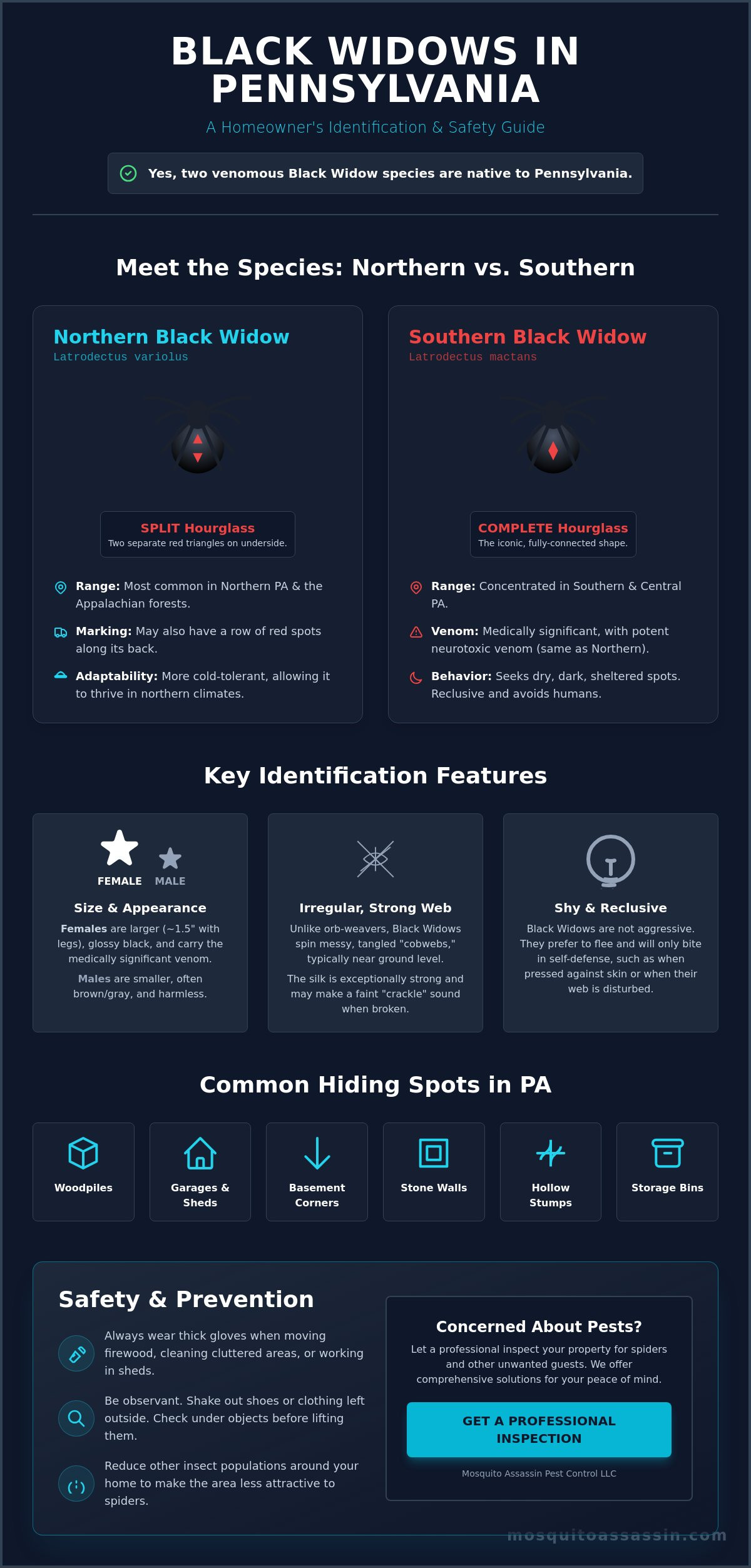
The Southern black widow (Latrodectus mactans) is the most recognizable member of the genus. These spiders are primarily concentrated in the southern and central regions of the state where temperatures remain slightly warmer. They’re famous for the bright red hourglass mark on the underside of their shiny, jet-black abdomen. The Southern black widow is a medically significant cobweb weaver common in PA. They often seek out dry, sheltered spots like stone walls, hollow stumps, or the dark corners of a garage. Because are black widows in pa, it’s helpful to know how to spot their distinctive webs, which are exceptionally strong and lack a clear pattern.
The Northern Black Widow and its Range
The Northern Black Widow (Latrodectus variolus) is the species most likely encountered by residents in the northern counties of Pennsylvania and into Ohio. Unlike the Southern variety, the red marking on the Northern species is often split into two distinct triangles or appears as a row of red spots along the back. This species is more cold-tolerant, allowing it to thrive in the Appalachian forests and rural landscapes of the northern tier. Both spiders possess similar neurotoxic venom, making them a concern if they establish themselves inside a home. Professional pest control may help reduce risk by managing the outdoor environments where these spiders prefer to hide. If you have concerns about spiders on your property, you can find more information at www.mosquitoassassin.com/contact-us.
Disclaimer: The information provided on this blog is for general informational purposes only and is not intended as professional pest control advice. Conditions vary by property, environment, and location. Reading this content does not create a service agreement. For an inspection or professional recommendations, please contact Mosquito Assassin Pest Control LLC directly.
How to Identify Black Widows and Common Lookalikes
Understanding the physical traits of these spiders helps homeowners distinguish between a harmless visitor and a medically significant pest. While many people ask are black widows in pa, the reality is that they’re native to the region but often remain hidden. The mature female is the most recognizable, featuring a glossy, jet-black exoskeleton that reflects light. She typically measures about 1.5 inches in length when her legs are extended; meanwhile, the males are significantly smaller, often appearing brown or gray with white streaks or spots on their backs.
The most famous marker is the red hourglass on the underside of the abdomen. In the Northern Black Widow (Latrodectus variolus), which is common in the Northeast, this hourglass is often “broken” or split into two distinct triangles. In contrast, the Southern Black Widow (Latrodectus mactans) usually displays a complete, joined hourglass. Their webs are another giveaway; they don’t spin symmetrical, circular patterns. Instead, they create irregular, tangled “cobwebs” made of incredibly strong silk that can even make a faint “crackle” sound when torn or pulled apart.
Key Identification Markers for Homeowners
Homeowners should look for the hourglass on the belly of the spider, as it’s rarely visible from the top. These spiders are reclusive and nocturnal; they’ll usually retreat into a corner or crevice if disturbed rather than attacking. Identification also extends to their offspring. A female widow produces smooth, tan, or white pear-shaped egg sacs that are about 0.5 inches in diameter. These sacs are distinct from the spiked or “fluffy” sacs produced by other species. If you find these markers in a garage or crawlspace, professional pest control may help reduce risk by identifying the extent of the activity.
Common PA Spiders Mistaken for Black Widows
Mistaken identity is frequent in Erie and Crawford counties. The False Black Widow (Steatoda grossa) is the most common lookalike. While it has a similar bulbous shape and dark color, it lacks the red hourglass and typically has a more purplish-brown or dull black hue. Common House Spiders also cause confusion because they build similar messy webs, but they’re generally smaller and much lighter in color. According to the guide on Commonly Encountered Pennsylvania Spiders, orb weavers are also frequently misidentified due to their dark bodies, though they’re easily distinguished by the large, wheel-shaped webs they build in gardens and near porch lights.
Typical Habitats and Seasonal Patterns in the Northeast
While many residents wonder are black widows in pa, the reality is that these spiders are native to the region and thrive in specific, quiet environments. They’re reclusive by nature and prioritize survival by nesting in dark, low traffic areas where they’re unlikely to be stepped on or brushed away. According to the Penn State Extension, both Northern and Southern Black Widows can be found in the state, typically tucked away in spots that offer protection from both predators and the elements.
Seasonal patterns dictate when sightings become more frequent. In Pennsylvania, activity levels usually rise as temperatures climb in late spring. However, sightings peak during the late summer and early autumn months, specifically between August and October. During this window, adult females are at their most active and their webs are more established. As the weather cools in Northwest Pennsylvania, these spiders don’t necessarily migrate into the center of homes, but they do seek more insulated crevices to survive the winter freeze.
Outdoor Hiding Spots in PA Landscapes
In the rural and suburban landscapes of Erie and Crawford counties, outdoor structures provide ideal nesting sites. Woodpiles are the most common hazard; spiders often hide in the gaps between logs to stay cool and damp. Stone walls, hollow tree stumps, and the undersides of porch steps also serve as prime real estate. These locations provide the perfect anchor points for their strong, irregular webbing.
Outbuildings like sheds, barns, and detached garages are particularly attractive because they offer shelter without the constant disruption of a main residence. The climate in Northwest PA, influenced by Lake Erie humidity, provides the moisture these spiders prefer. When moving stored firewood or clearing yard debris, it’s vital to wear heavy gloves. This simple precaution prevents accidental contact with a hidden spider that may be guarding an egg sac.
Indoor Environments and Prevention
Understanding that are black widows in pa is just the first step in prevention. These spiders rarely wander into the middle of a kitchen or bedroom. Instead, they’re found in transition zones like garages, basements, and crawl spaces. These areas often house cluttered storage boxes or seasonal equipment that remains untouched for months. Clutter provides the undisturbed environment these reclusive species need to build their tangled webs and hunt for insects.
Common entry points include gaps under doors, damaged window screens, or utility penetrations. Since these spiders are photophobic (light avoidant), they’re naturally deterred by bright, well lit areas. Increasing natural light in a basement or keeping storage areas organized and off the floor can significantly reduce the likelihood of a widow choosing your home for a nest. If you identify a potential habitat near your living space, professional pest control may help reduce risk.
Safety Precautions and Bite Prevention Strategies
Understanding that there are black widows in pa means taking practical steps to safeguard your home and family. These spiders prefer undisturbed, dim locations, which makes garages, basements, and crawl spaces high-risk areas. When you’re cleaning out a storage space or working in the yard, always wear heavy leather gloves and long sleeves. Thin fabric gloves don’t provide enough protection against a spider’s fangs if you accidentally press against one while moving boxes.
Before reaching into dark corners or moving storage bins, use a bright flashlight to inspect the area. Look for the characteristic messy, tangled webs that indicate a widow’s presence. It’s also vital to shake out any boots, work shoes, or gloves that have been sitting in a garage or mudroom for more than 24 hours. Spiders often crawl into these dark, enclosed spaces for shelter. If you spot a suspected black widow, don’t attempt to handle it or crush it with your hands. Use a vacuum with a long attachment to remove the spider from a safe distance, then dispose of the bag or empty the canister outside immediately.
Reducing Risk Around the Property
Managing the exterior of your home is the first line of defense. Keep woodpiles, rock piles, and general debris at least 20 feet away from your foundation. This removes the primary habitat for spiders and the insects they eat. You should also inspect your home’s exterior for entry points. Seal cracks in the foundation with high-quality silicone caulk and ensure door sweeps are tight against the threshold. Implementing general pest control strategies helps by reducing the population of crickets, beetles, and other insects that serve as the black widow’s food source.
Understanding Black Widow Behavior
While their reputation is fearsome, black widows are actually shy and non-aggressive. They spend most of their lives hanging upside down in their webs waiting for prey to stumble into their silk. Bites typically occur when a spider is accidentally squeezed or if a person reaches into a web without looking. However, a female guarding an egg sac becomes significantly more defensive. These sacs are usually round and papery, appearing white or tan. If you see one, stay away. Because children and small pets are more sensitive to venom due to their lower body mass, keeping these areas clear is a priority for household safety. Professional pest control inspections can help identify these hidden nesting sites before an accidental encounter occurs.
Long-Term Management and Professional Pest Control
Integrated Pest Management (IPM) is the gold standard for maintaining a home free of medically significant pests. This method doesn’t rely on a single treatment; instead, it focuses on long-term prevention by altering the environment that attracts spiders. Spiders are opportunistic predators that thrive where food is abundant. If a garage or basement has a steady supply of crickets, flies, or moths, spiders will naturally gravitate toward those areas. Reducing the general insect population by 80% to 90% through consistent habitat modification is often the most effective way to manage spider activity. While it’s true that there are black widows in PA, they typically prefer undisturbed locations like woodpiles or dark corners of outbuildings where prey is plentiful.
Seeking professional assistance is advisable when residents notice multiple egg sacs or see spiders in high-traffic areas of the home. Professional pest control may help reduce risk by providing a comprehensive assessment of the property’s exterior and interior. Technicians look for specific environmental triggers, such as moisture issues or structural gaps, that homeowners might overlook. Identifying the exact species is the first step in a successful management plan, as the behavior of a common house spider differs significantly from that of a northern black widow.
Benefits of Professional Monitoring
Consistent monitoring helps identify potential issues before they escalate into larger infestations. Professional pest control may help reduce risk through scheduled inspections that track pest activity over time. Technicians are trained to identify high-risk areas in Erie and Ashtabula counties, focusing on crawlspaces, attic eaves, and foundation perimeters. In Pennsylvania, where researchers have documented over 500 different spider species, distinguishing a harmless orb weaver from a medically significant spider requires specialized knowledge. Expert inspections provide peace of mind by confirming exactly what’s living on the property and ensuring that exclusion methods are working effectively.
Maintaining a Pest-Free Environment
Pennsylvania’s weather patterns significantly influence pest pressure throughout the year. High humidity levels, which often exceed 70% during the summer months in Erie and Crawford counties, create ideal breeding grounds for the insects that spiders hunt. Ongoing protection plans account for these seasonal shifts, addressing pests as they migrate indoors during cooler autumn temperatures. Proactive maintenance is a vital component of this process. Homeowners should focus on several key tasks:
- Sealing gaps larger than 1/16th of an inch around windows, doors, and utility lines to block entry points.
- Removing heavy mulch or dense vegetation that sits directly against the home’s foundation.
- Using yellow “bug lights” for exterior lighting to reduce the number of flying insects attracted to the home at night.
- Managing indoor humidity with dehumidifiers to make basements less attractive to moisture-loving prey.
Taking a proactive approach to home maintenance ensures the property remains a less hospitable environment for pests. For a professional evaluation of your property, you can visit the online booking portal to schedule an inspection. Understanding that there are black widows in PA is the first step in staying vigilant, but consistent management is what keeps a home safe and comfortable year-round.
Disclaimer: The information provided on this blog is for general informational purposes only and is not intended as professional pest control advice. Conditions vary by property, environment, and location. Reading this content does not create a service agreement. For an inspection or professional recommendations, please contact Mosquito Assassin Pest Control LLC directly.
Securing Your Property Against Medically Significant Spiders
Understanding spider behavior and identifying potential risks is the first step toward a safer home environment. While many homeowners ask are black widows in pa, these spiders are native to the state but generally avoid human activity, preferring dark, undisturbed areas like crawl spaces or woodpiles. Proper identification prevents unnecessary panic, but it also signals when professional intervention is necessary to manage a population. Focusing on long-term prevention strategies, such as sealing entry points and reducing clutter, helps minimize the chances of an encounter.
Expertise matters when dealing with spiders that pose a health risk. Licensed and insured local professionals provide thorough inspections and reliable management plans for residents throughout Erie, Crawford, and Ashtabula Counties. Choosing a five-star rated local service ensures the job is done with precision and care for the surrounding environment. For a professional inspection or recommendations, contact Mosquito Assassin Pest Control LLC directly. Taking these practical steps today provides peace of mind for everyone in the household.
Disclaimer: The information provided on this blog is for general informational purposes only and is not intended as professional pest control advice. Conditions vary by property, environment, and location. Reading this content does not create a service agreement. For an inspection or professional recommendations, please contact Mosquito Assassin Pest Control LLC directly.
Frequently Asked Questions
Are black widow spiders common in Pennsylvania?
Black widow spiders are native to the region, and it’s a reality that are black widows in pa. While they’re present throughout the state, they aren’t as common as standard cellar spiders or wolf spiders. Residents in Erie and Crawford Counties typically encounter the Northern variety, which prefers outdoor woodpiles or undisturbed sheds over active living areas.
How can I tell the difference between a Northern and Southern black widow?
You should look at the hourglass marking on the belly to distinguish between these two species. A Southern black widow has a solid, connected red hourglass, while the Northern black widow has an hourglass that’s split in the middle. Northern widows also frequently display a row of red dots or white lines along the top of their abdomen, which the Southern variety lacks.
What should I do if I find a black widow spider in my house?
Don’t attempt to handle the spider or crush it with your bare hands. If you spot one, keep pets and children clear of the room to prevent accidental contact. Professional pest control may help reduce risk by identifying the nesting site and implementing a safe removal plan. For an expert inspection, visit https://portal.gorilladesk.com/mosquitoassassin to book a consultation.
Are black widow spiders aggressive toward humans?
Black widows are timid creatures that prefer flight over fight when they encounter humans. They only bite as a last resort if they’re pinched, squeezed, or stepped on. Data from the American Association of Poison Control Centers shows that while 2,500 bites are reported in the U.S. annually, the majority of these incidents occur when humans accidentally disturb a spider’s dark hiding spot.
Where do black widows hide during the winter in PA?
These spiders seek out dry, insulated voids to survive the freezing temperatures in Western Pennsylvania. They often tuck themselves into rock walls, wood heaps, or the gaps around a home’s foundation. In areas like Ashtabula County, they’ve been known to overwinter in barn lofts or under the siding of houses where they stay protected from snow and wind during the coldest months.
Can black widow spiders live in garages and basements?
Garages and basements are common spots where you might find these pests, proving that are black widows in pa is a concern even in indoor storage areas. These spiders thrive in cluttered, low-traffic zones where they can build webs near the floor. They’re often found behind stacked boxes or under heavy workbenches in Erie County homes where other insects are plentiful.
Do black widows have any lookalike spiders in Pennsylvania?
The False Black Widow is the most frequent lookalike found in the state. It shares the same rounded abdomen and dark color, but it doesn’t have the bright red hourglass. You might also mistake a common cobweb spider for a widow because their webs look similar, but the cobweb spider is usually smaller and lacks the glossy, jet-black finish of a true widow.
Disclaimer: The information provided on this blog is for general informational purposes only and is not intended as professional pest control advice. Conditions vary by property, environment, and location. Reading this content does not create a service agreement. For an inspection or professional recommendations, please contact Mosquito Assassin Pest Control LLC directly.